

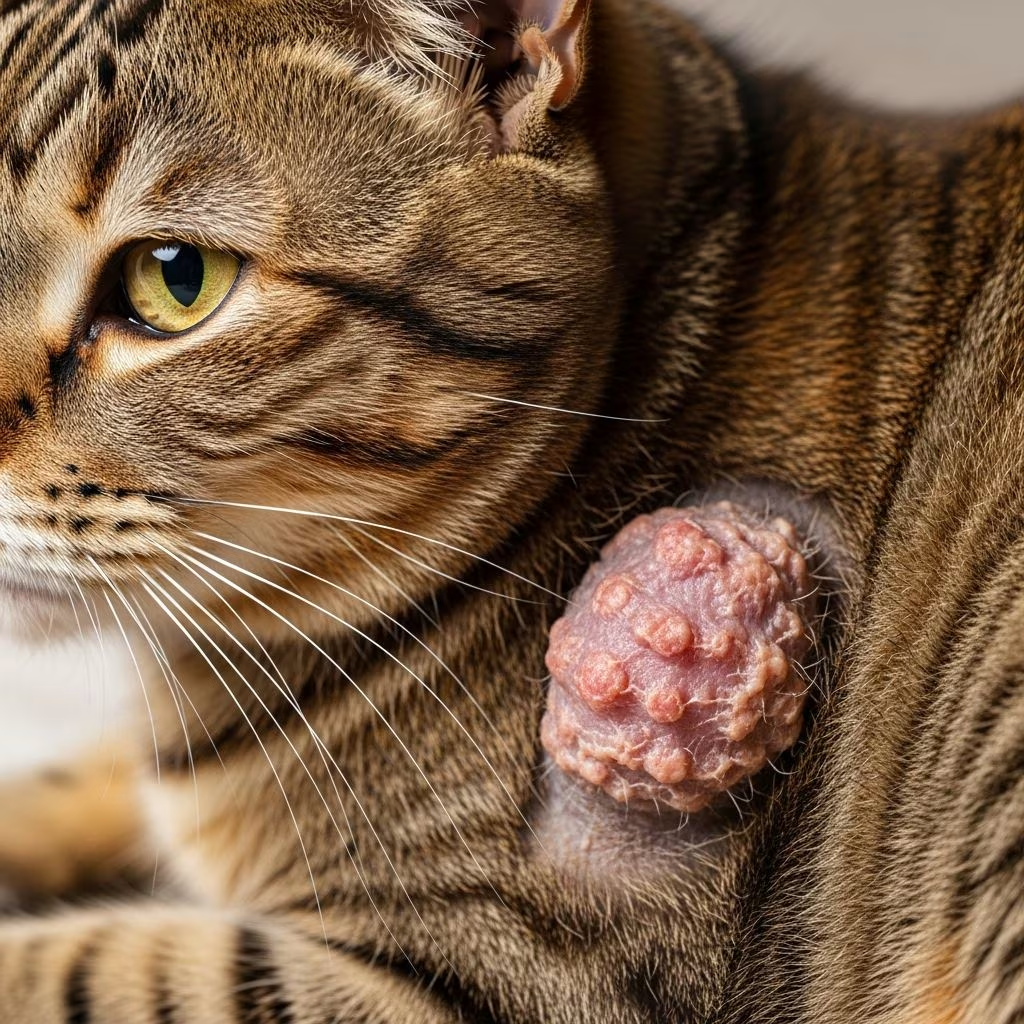
Skin tumors in cats represent a diverse group of growths ranging from harmless lumps to aggressive cancers that demand prompt attention. These abnormalities can appear anywhere on a cat’s body, often starting as subtle changes that owners might overlook. Early identification plays a crucial role in improving prognosis, as many tumors respond well to intervention when caught in initial stages. This guide delves into the nature of these tumors, helping cat owners recognize potential issues and understand veterinary approaches to management.
Recognizing Abnormal Skin Growths
Owners should routinely inspect their cats’ skin during grooming or playtime. Common indicators include persistent lumps, sores that fail to heal, discolored patches, or areas of crusting. These signs warrant a veterinary visit, as most skin anomalies in cats prove benign, yet distinguishing them from malignant forms requires professional evaluation. Regular checks, particularly on sun-exposed areas like ears, nose, and eyelids, can make a significant difference.
- Lumps or bumps: Firm or soft masses under the skin that grow over time.
- Non-healing ulcers: Open wounds that persist despite home care.
- Crusty or scaly patches: Black, red, or weeping areas, especially on lightly furred regions.
- Color changes: Darkening, reddening, or unusual pigmentation shifts.
- Associated symptoms: Itching, bleeding, hair loss, or behavioral changes like excessive grooming.
Benign vs. Malignant Skin Tumors
Skin tumors fall into two broad categories: benign, which do not invade surrounding tissues or spread, and malignant, which can metastasize and pose life-threatening risks. Benign tumors often require monitoring or removal only if they cause discomfort, while malignant ones necessitate aggressive therapy. Understanding this distinction guides treatment decisions.
| Type | Examples | Behavior | Typical Locations |
|---|---|---|---|
| Benign | Lipomas, cysts, basal cell tumors, adenomas | Non-invasive, slow-growing | Trunk, limbs, head |
| Malignant | Squamous cell carcinoma, mast cell tumors, fibrosarcomas | Invasive, may spread | Ears, nose, head, injection sites |
Common Benign Growths in Feline Skin
Many skin lumps in cats pose no serious threat. Lipomas, composed of fat cells, feel soft and movable, typically appearing on the abdomen or chest. Cysts, fluid-filled sacs, may rupture and become infected, prompting surgical drainage. Basal cell tumors, the most frequent benign type, present as small, hairless nodules often on the head or neck. Adenomas arise from sweat glands and resemble firm, raised bumps. These growths rarely require intervention unless they interfere with movement or cause secondary issues like ulceration.
For instance, a sebaceous cyst might ooze or inflame, treatable with antibiotics or excision. Melanomas can be benign in some cases, though malignant forms demand caution. Veterinary fine-needle aspiration often confirms their non-cancerous nature, avoiding unnecessary stress for the cat.
Major Malignant Skin Tumors
Squamous Cell Carcinoma (SCC)
This aggressive cancer originates from flat skin cells and thrives in sun-exposed, sparsely haired areas. White or light-colored cats, especially those spending time outdoors, face heightened risk due to ultraviolet damage. Initial signs include scaly, crusty lesions on ear tips, nose, or eyelids that progress to ulcerated, bleeding sores. SCC invades locally but metastasizes less frequently than other cancers. Early surgical removal offers the best cure rate, sometimes combined with cryotherapy or radiation for challenging sites.
Mast Cell Tumors
Mast cell tumors develop from immune cells releasing histamine, causing red, itchy lumps commonly on the head or neck. They vary in appearance, from small nodules to larger ulcerated masses, and may wax and wane spontaneously. While many remain localized, some spread to lymph nodes or organs. Surgical excision with wide margins is standard, supplemented by chemotherapy or radiation if incomplete removal occurs.
Fibrosarcomas and Soft Tissue Sarcomas
These connective tissue cancers form firm, infiltrative masses, occasionally linked to vaccination sites. They grow slowly but invade deeply, complicating complete removal. Amputation may be recommended for limb tumors, alongside radiation to reduce recurrence. Prognosis improves with multimodal therapy.
Other Malignant Types
Hemangiosarcomas produce bloody, fragile tumors, while cutaneous lymphomas affect immune cells in the skin. Plasmacytomas and histiocytic tumors appear as plaques or nodules. Metastatic skin lesions from mammary or bladder cancers signal advanced disease elsewhere.
Risk Factors and Prevention Strategies
Sun exposure drives SCC, particularly in fair-skinned cats; limiting outdoor time and using pet-safe sunscreens mitigate this. Genetic predispositions influence mast cell and sarcoma development. FeLV-positive cats risk cutaneous horns or papillomas that may progress. Routine vaccinations minimize injection-site sarcomas, with vets spacing shots and using non-adjuvant types. Spaying/neutering reduces hormone-related skin changes, and a balanced diet supports skin health.
- Avoid midday sun for light-coated cats.
- Monitor vaccination sites post-injection.
- Perform monthly skin exams.
- Seek shade and protective gear for outdoor cats.
Diagnostic Approaches
Vets start with physical exams and history-taking, followed by fine-needle aspirates to sample cells. Biopsies provide definitive diagnosis, assessing margins and grade. Imaging like ultrasound or X-rays checks for spread, while bloodwork evaluates overall health. Staging determines malignancy and guides therapy.
Treatment Modalities
Treatment hinges on tumor type, size, location, and metastasis. Surgery remains first-line for resectable masses, aiming for clean margins. Radiation targets inoperable or residual tumors, often via stereotactic methods for precision. Chemotherapy uses feline-tolerant drugs like lomustine for systemic control. Palliative care, including pain meds and anti-inflammatories, enhances quality of life.
| Tumor Type | Primary Treatment | Adjuncts | Prognosis |
|---|---|---|---|
| SCC | Surgery, cryotherapy | Radiation | Good if early |
| Mast Cell | Surgery | Chemo, radiation | Variable |
| Fibrosarcoma | Wide excision/amputation | Radiation | Guarded |
Prognosis and Long-Term Care
Outcomes vary: benign tumors cure via simple removal, while early SCC boasts high success. Advanced malignancies carry poorer prognoses, yet many cats achieve remission. Post-treatment monitoring includes check-ups, imaging, and owner vigilance for recurrence. Nutritional support and stress reduction aid recovery.
Frequently Asked Questions (FAQs)
Are all lumps on my cat cancerous?
No, most are benign. Veterinary biopsy confirms nature.
Can indoor cats get skin cancer?
Yes, though less common without sun exposure; genetics play a role.
How much does treatment cost?
Varies widely; surgery $500–$3000, advanced therapies higher. Pet insurance helps.
Is chemotherapy painful for cats?
Generally well-tolerated with fewer side effects than in humans.
Can skin tumors be prevented entirely?
Not always, but sun protection and vet checks reduce risks.
References
- Skin cancer in cats – PDSA — PDSA. 2023. https://www.pdsa.org.uk/pet-help-and-advice/pet-health-hub/conditions/squamous-cell-carcinoma-cats
- Cancer in Cats: Common Types, Symptoms, Diagnosis, and Treatment — OncoDaily. 2024. https://oncodaily.com/oncolibrary/cancer-in-cats
- Skin Cancer in Cats | PetCure Oncology — PetCure Oncology. 2024. https://petcureoncology.com/skin-cancer-in-cats/
- Squamous Cell Cancer: Dangerous — Cornell University College of Veterinary Medicine. 2023. https://www.vet.cornell.edu/departments-centers-and-institutes/cornell-feline-health-center/health-information/feline-health-topics/squamous-cell-cancer-dangerous
- Cat Skin Cancer: Types, Causes, Treatment & Prevention — Hill’s Pet. 2024. https://www.hillspet.com/cat-care/healthcare/cat-skin-cancer



