

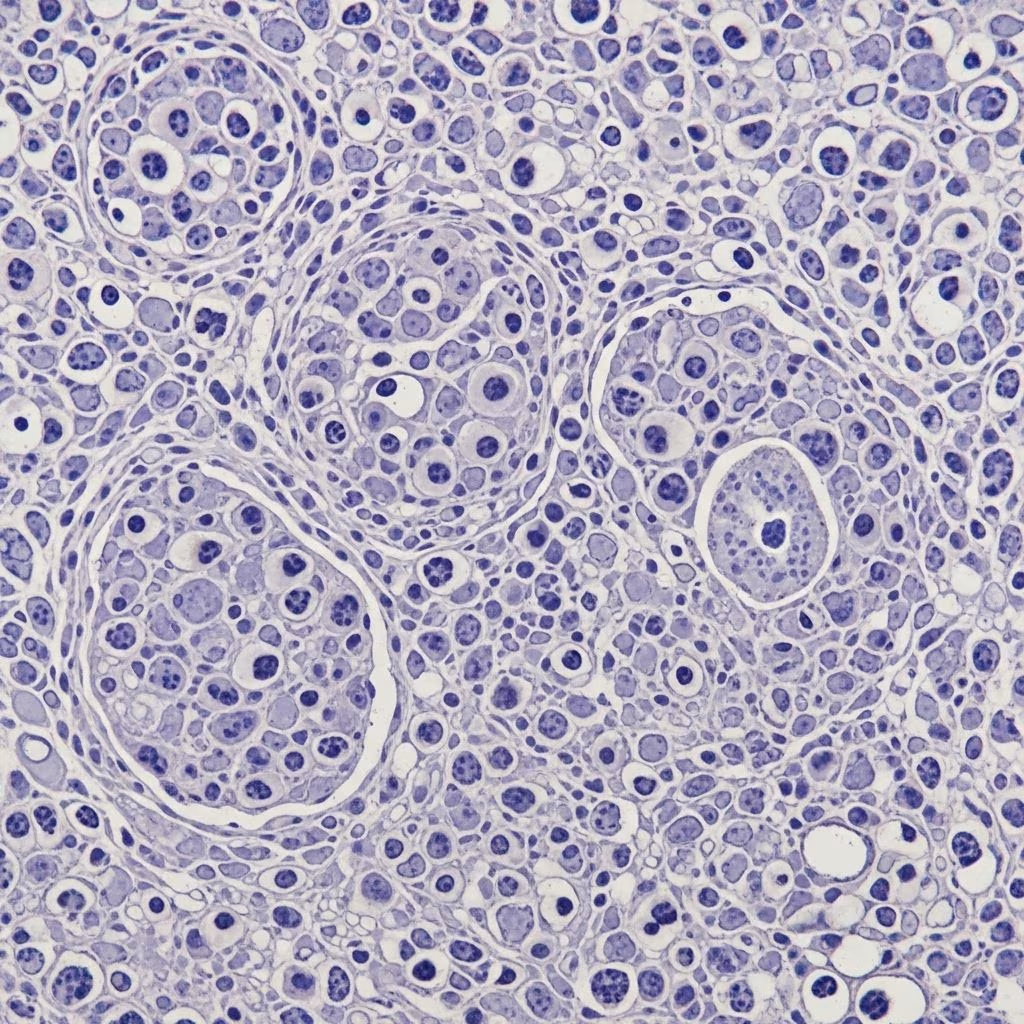
Skin tumors involving lymphocytic and histiocytic cells represent a significant category of cutaneous neoplasms in veterinary practice, particularly in dogs. These growths arise from immune system components within the skin, often presenting as nodules, plaques, or ulcers that require prompt evaluation to distinguish benign from malignant forms.
Understanding the Cellular Origins
Lymphocytic and histiocytic tumors originate from specific white blood cells. Lymphocytes, key players in adaptive immunity, can form tumors like lymphosarcomas, while histiocytes—macrophages responsible for phagocytosis and antigen presentation—give rise to histiocytomas and histiocytosis. These neoplasms vary widely in behavior, from self-resolving benign masses to aggressive malignancies that infiltrate tissues and metastasize.
In dogs, skin exposure to environmental carcinogens, genetic predispositions, and viral factors contribute to their development. Breeds like Boxers, Retrievers, and Bernese Mountain Dogs show higher incidences due to hereditary factors.
Common Benign Presentations: Histiocytomas
Canine histiocytomas are among the most frequently encountered benign skin tumors, especially in young dogs under three years old. These solitary, raised, hairless, and sometimes ulcerated lumps are freely movable and typically measure less than 2 cm in diameter.
- Appearance: Dome-shaped, erythematous nodules often on the head, ears, or limbs.
- Natural course: Most regress spontaneously within 2-3 months without intervention.
- Diagnosis: Confirmed via fine-needle aspiration cytology showing characteristic round cells with abundant cytoplasm.
Surgical excision is reserved for persistent cases causing discomfort or secondary infections. Breeds like Bulldogs, Dachshunds, and Boston Terriers are predisposed.
Malignant Histiocytic Disorders
Unlike benign histiocytomas, malignant histiocytosis and related conditions pose serious threats. In Bernese Mountain Dogs, systemic histiocytosis manifests as recurrent skin lesions on the scrotum, nasal planum, eyelids, and mucous membranes. Lesions wax and wane, progressively worsening with each episode.
| Tumor Type | Affected Breeds | Key Features |
|---|---|---|
| Histiocytoma | Young Boxers, Bulldogs | Benign, self-resolving |
| Systemic Histiocytosis | Bernese Mountain Dogs | Recurrent plaques, poor prognosis |
| Malignant Histiocytosis | Bernese, Flat-Coated Retrievers | Visceral spread, fatal |
Malignant histiocytosis disseminates to lungs, liver, and spleen, leading to rapid decline. Diagnosis involves histopathology and immunohistochemistry to identify CD18-positive cells. Treatment combines surgery, chemotherapy (e.g., lomustine), and radiation, though outcomes remain guarded.
Lymphocytic Neoplasms: Cutaneous Lymphosarcoma
Cutaneous lymphosarcoma is a rare primary skin cancer in dogs, appearing in two forms: epitheliotropic and nonepitheliotropic. Epitheliotropic variants infiltrate the epidermis, causing exfoliative dermatitis, plaques, and ulcers primarily on the trunk and legs.
- Epitheliotropic: Pagetoid spread into epidermis, resembling mycosis fungoides.
- Nonepitheliotropic: Dermal nodules without epidermal involvement.
Older dogs are affected, with no strong breed predilection. It may represent extracutaneous lymphoma or arise de novo. Biopsy with immunophenotyping (CD3 for T-cells, CD79a for B-cells) is essential. Prognosis is poor, with median survival under 6 months despite multi-modal therapy including CHOP protocols.
Related Cutaneous Tumors with Immune Involvement
Plasma cell tumors, though less common, arise from B-lymphocytes and present as solitary dome-shaped masses on the limbs or trunk. Most are benign but can ulcerate. Mast cell tumors, while not purely lymphocytic, often coexist in differential diagnoses and exhibit degranulation causing wheals and edema.
Hemangiosarcomas and angiosarcomas, vascular tumors with histiocytic-like features, appear as red, rapidly growing lumps. They metastasize aggressively to lungs and liver, necessitating wide excision and adjuvant chemotherapy.
Diagnostic Approaches for Accurate Identification
Early detection hinges on a multi-step process:
- Cytology: Fine-needle aspirates provide initial clues, revealing uniform round cells for histiocytomas.
- Biopsy: Punch or excisional biopsies with margins for histopathology.
- Immunohistochemistry: Markers like CD1c, CD11d for histiocytes; T-cell receptor gene rearrangement for lymphomas.
- Imaging: Ultrasonography and CT for staging metastasis.
Tumor mapping assesses margins post-excision, predicting recurrence risk.
Treatment Modalities and Management Strategies
Treatment varies by tumor type and grade:
- Surgery: Primary for localized benign tumors; wide margins (2-3 cm) for malignancies.
- Cryotherapy/Laser: Effective for small histiocytomas or solar-induced lesions.
- Chemotherapy: CCNU for histiocytosis; doxorubicin-based for lymphosarcoma.
- Radiation: For incompletely excised masses or palliation.
Monitoring involves serial exams for 2+ years, as recurrences can occur late. Sun protection prevents recurrence in predisposed breeds.
Species-Specific Considerations
While dogs dominate reports, cats experience basal cell tumors (benign) and rare lymphosarcomas. Horses develop squamous cell carcinomas in unpigmented skin from UV exposure. Cattle and sheep show actinic keratosis progressing to carcinoma. Multispecies clinics must tailor diagnostics accordingly.
Prognostic Factors and Owner Education
Key predictors include tumor grade, mitotic index, lymph node involvement, and completeness of excision. Benign histiocytomas boast excellent prognoses; high-grade histiocytosis fares poorly. Pet owners should monitor for new lumps, avoid sun overexposure in light-skinned breeds, and seek veterinary care for non-healing sores.
Frequently Asked Questions (FAQs)
Are histiocytomas cancerous in dogs?
No, canine histiocytomas are benign and typically resolve without treatment within months.
How do I differentiate a histiocytoma from lymphoma?
Cytology and biopsy are crucial; histiocytomas show Langerhans-like cells, while lymphomas display atypical lymphocytes.
Can skin tumors be prevented?
Limited prevention exists, but minimizing UV exposure, using sunscreen on thin-skinned areas, and regular check-ups help.
What is the survival rate for cutaneous lymphosarcoma?
Generally poor, with survival averaging 3-8 months, improved slightly by chemotherapy.
Should I remove a histiocytoma surgically?
Only if it persists beyond 3 months, ulcerates, or causes issues; observation is often sufficient.
Emerging Research and Future Directions
Ongoing studies explore targeted therapies like PD-1 inhibitors for T-cell lymphomas and tyrosine kinase inhibitors for mast cell overlaps. Genomic profiling identifies mutations aiding personalized medicine. Veterinary oncologists emphasize multidisciplinary approaches for optimal outcomes.
References
- Tumors of the Skin in Dogs – Dog Owners – MSD Veterinary Manual — MSD Veterinary Manual. 2023. https://www.msdvetmanual.com/dog-owners/skin-disorders-of-dogs/tumors-of-the-skin-in-dogs
- EPITHELIAL AND MELANOCYTIC TUMORS OF THE SKIN – NCBI — National Center for Biotechnology Information. 2004. https://www.ncbi.nlm.nih.gov/books/NBK9558/
- Overview of Tumors of the Skin and Soft Tissues in Animals — Merck Veterinary Manual. 2023. https://www.merckvetmanual.com/integumentary-system/tumors-of-the-skin-and-soft-tissues/overview-of-tumors-of-the-skin-and-soft-tissues-in-animals
- Dog Dermatology/Cancer – Learning More About Skin Cancer in Dogs — Blue Oasis Pet Hospital. 2023. https://www.blueoasispethospital.com/services/dogs/dog-dermatology-cancer
- Common Skin Masses in Canine & Feline Patients: Gallery — Clinician’s Brief. 2023. https://www.cliniciansbrief.com/article/image-gallery-common-skin-masses



