

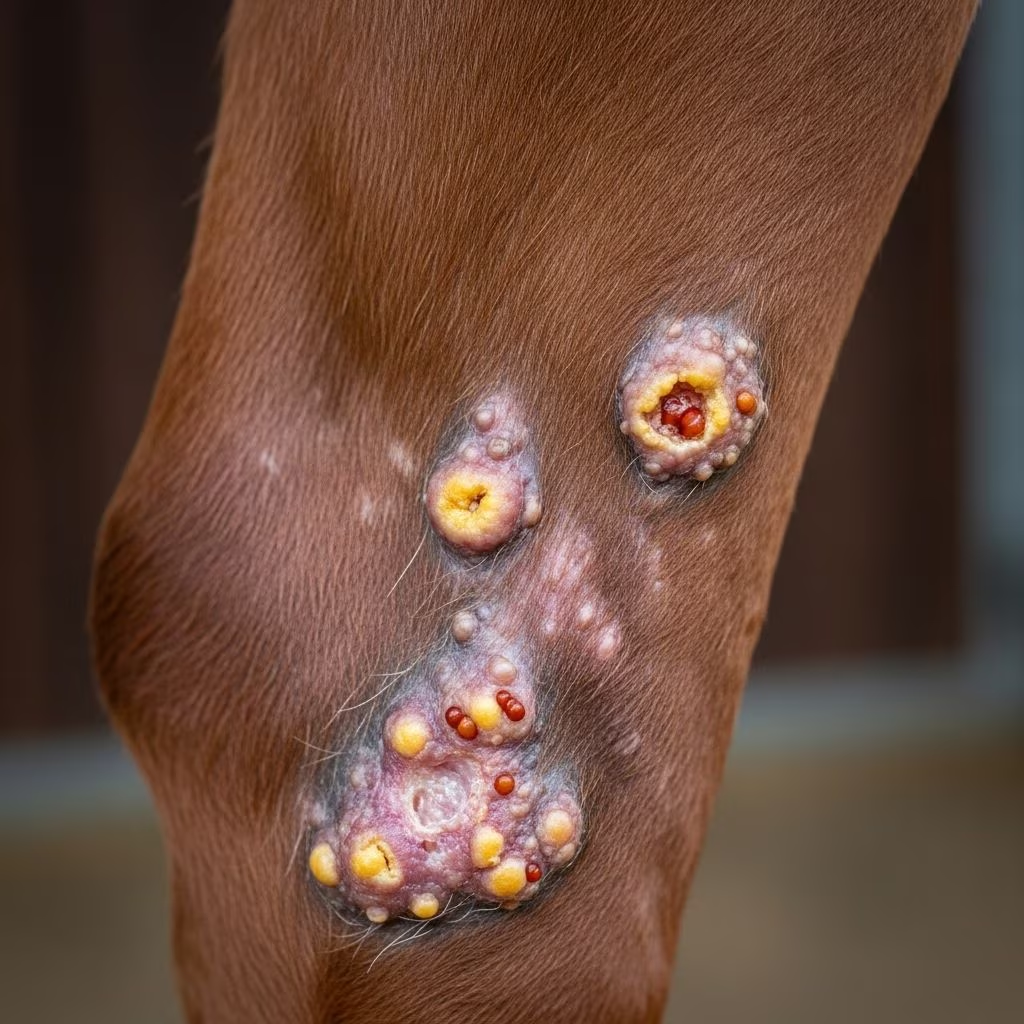
Skin habronemiasis represents a significant dermatological challenge for horses, donkeys, mules, and zebras, triggered by larval stages of stomach nematodes from the genera Habronema and Draschia. Transmitted via flies, these parasites provoke severe inflammatory responses when larvae invade skin wounds or mucous membranes, leading to persistent granulomatous lesions often termed “summer sores.” This condition disrupts animal welfare, aesthetics, and functionality, particularly in working or performance equids.
Biological Foundations of the Parasites
The primary culprits include Habronema microstoma, Habronema muscae, and Draschia megastoma. Adult worms reside in the equine stomach, where females release larvae into feces. These larvae are ingested by fly intermediates such as houseflies (Musca domestica) or stable flies (Stomoxys calcitrans), maturing within the flies over 8-14 days.
Normally, flies deposit larvae near the horse’s mouth during feeding, allowing ingestion and completion of the gastric lifecycle. However, when flies target open wounds, abraded skin, or moist areas like the eyes or genitals, larvae penetrate tissues instead. Unable to mature, they elicit a hypersensitivity reaction dominated by eosinophils, macrophages, and granuloma formation.
Recognizing Clinical Manifestations
Lesions typically emerge in warm, humid seasons when fly populations peak, aligning with the term “summer sores.” Common sites encompass the medial canthus of the eye, oral commissures, ventral abdomen, legs, prepuce, and urethral process. Affected areas develop into proliferative, ulcerated nodules filled with yellow, rice-grain-sized calcified material (sulfur granules).
- Conjunctival form: Prevalent around eyes, causing blepharitis, conjunctivitis, photophobia, lacrimation, and squinting. Up to 68.8% of cases in some studies involve ocular regions.
- Cutaneous form: Features pruritic, necrotic ulcers with serocellular crusts, rapid progression, and tissue hyperplasia.
- Genital involvement: Painful swellings on penis or sheath, interfering with urination or breeding.
Inflammation stems from larval antigens triggering type IV hypersensitivity, with biopsies revealing eosinophilic infiltrates, flame figures, and nematode cross-sections with spiny tail knobs. Older horses over 15 years (68.8% in one cohort) and autumn presentations (62.5%) are noted risk patterns.
Diagnostic Approaches
Diagnosis hinges on history, lesion morphology, and response to parasiticide therapy. Key indicators include non-healing granulomas in fly-prone areas during summer.
| Method | Description | Advantages | Limitations |
|---|---|---|---|
| Clinical Exam | Ulcerated, granulomatous lesions with sulfur granules | Non-invasive, immediate | Requires experience to differentiate from pythiosis or habronemiasis mimics |
| Skin Scrapings/Biopsy | Deep scrapings or histopathology showing larvae, eosinophils | Confirms parasite presence | Invasive; larvae may be scarce |
| PCR Assay | Semi-nested PCR on lesion tissue for Habronema DNA | High specificity | Potential false negatives; lab-dependent |
Lesion regression post-ivermectin supports presumptive diagnosis, as dying larvae may temporarily worsen inflammation.
Therapeutic Interventions
Treatment targets larval elimination, inflammation control, and secondary infection prevention. Macrocyclic lactones dominate protocols.
- Ivermectin: 200 mcg/kg PO, repeated every 30 days (2-4 doses) until resolution. Effective against larvae; expect transient exacerbation.
- Moxidectin: 400 mcg/kg PO single dose, active on gastric stages too.
- Local Care: Daily cleaning with 10% povidone-iodine, debridement of excessive granulation, topical organophosphates (historically), or corticosteroids for severe inflammation.
- Surgical Options: Excision or cauterization for refractory cases.
In a Brazilian study, all 16 cases resolved with ivermectin and wound care, though ocular lesions predominated. Antibiotics address bacterial overgrowth, but parasiticide is cornerstone.
Prevention and Control Measures
Disrupting the fly-larva-host cycle is paramount.
- Fly Management: Remove manure daily, use traps, insecticides, and biological controls like dung beetles.
- Anthelmintics: Regular deworming with larvicides reduces gastric worm burden.
- Protective Gear: Fly masks, sheets, and repellents (permethrin-based) shield wounds and eyes.
- Wound Care: Prompt cleaning and fly-proof bandaging of injuries.
- Environmental Hygiene: Stable ventilation, reduced moisture around eyes/genitals.
Integrated approaches significantly lower incidence, especially in endemic warm climates.
Epidemiological Insights
Global in distribution, skin habronemiasis thrives in temperate to tropical zones with high fly activity. Brazilian plateau reports highlight underdiagnosis in cooler regions, urging vigilance. Older equids face higher risks, possibly from cumulative exposure or weakened immunity. Economic impacts include lost performance days and cosmetic devaluation.
Frequently Asked Questions (FAQs)
What causes summer sores in horses?
Summer sores result from Habronema and Draschia larvae deposited by flies into skin wounds, provoking granulomatous dermatitis.
Can habronemiasis affect other animals?
Primarily equids; rare reports in camels, but dogs/cattle unaffected.
How long do lesions take to heal?
With treatment, weeks to months; untreated cases persist chronically.
Is vaccination available?
No; prevention relies on fly control and deworming.
Does ivermectin resistance occur?
Not widely reported, but rotation with moxidectin advised.
Research Frontiers
Ongoing studies refine PCR diagnostics and explore fly vector genomics for targeted controls. Climate change may expand fly ranges, heightening risks in new areas.
References
- Cutaneous and conjunctival habronemosis in horses treated at the Veterinary Hospital of Santa Catarina State University — PMC/NCBI. 2024. https://pmc.ncbi.nlm.nih.gov/articles/PMC11452067/
- Cutaneous Habronemiasis in a Horse — Kansas State Veterinary Diagnostic Laboratory. 2015-11. https://www.ksvdl.org/resources/news/diagnostic_insights/november2015/Cutaneous-Habronemiasis-Horse.html
- Cutaneous Habronemiasis in Animals — Merck Veterinary Manual. 2023. https://www.merckvetmanual.com/integumentary-system/helminths-of-the-skin/cutaneous-habronemiasis-in-animals
- Understanding Cutaneous Habronema: The Battle Against “Summer Sores” — Allegheny Equine Associates. 2023. https://alleghenyequine.com/understanding-cutaneous-habronema-the-battle-against-summer-sores/
- Summer Sores — UC Davis Center for Equine Health. 2022. https://ceh.vetmed.ucdavis.edu/health-topics/summer-sores



