

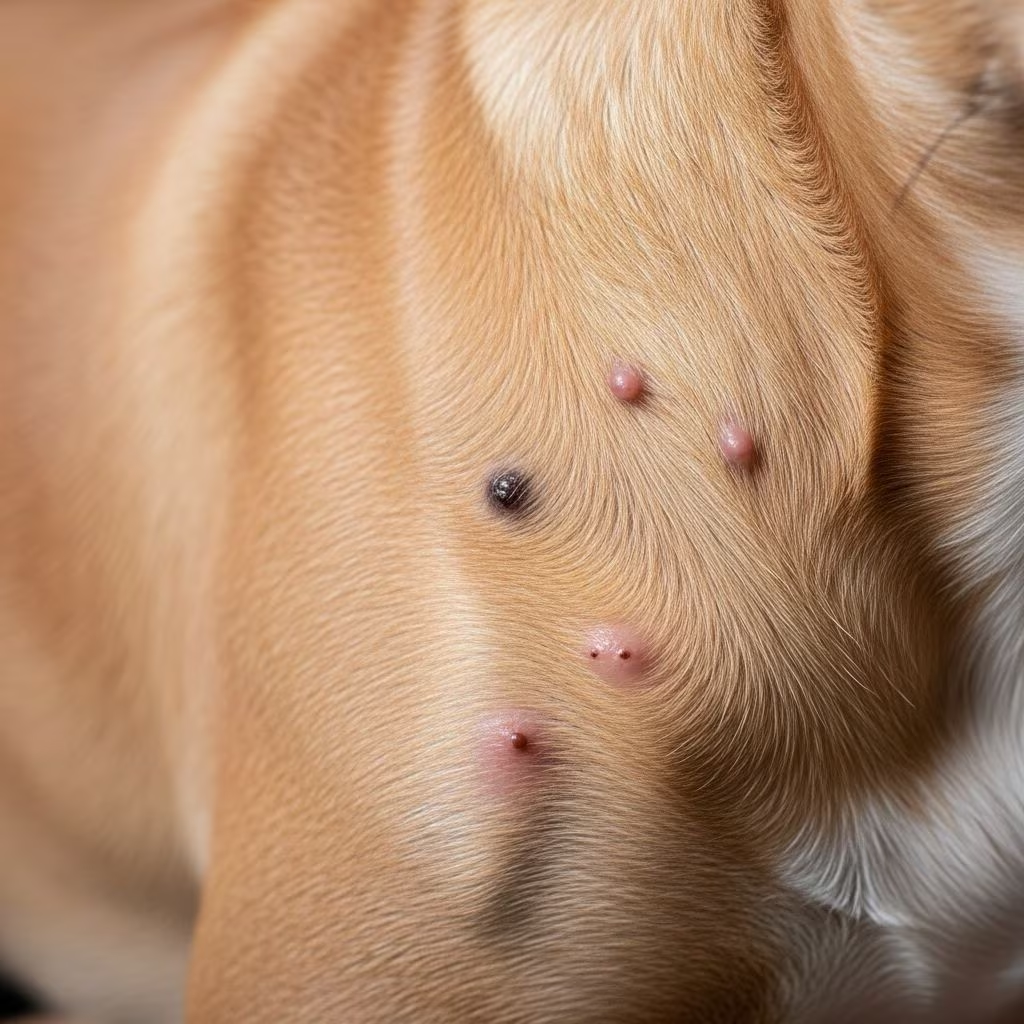
Dogs commonly develop pigmented spots or raised bumps on their skin, often mistaken for harmless moles. While many are benign, some signal serious conditions like cancer, requiring prompt veterinary evaluation to ensure your pet’s well-being.
Understanding Normal Pigmented Spots in Dogs
Benign skin growths, sometimes called moles or nevi, appear as small, dark, raised areas on a dog’s body. These are typically harmless clusters of pigment cells and do not pose health risks. They often emerge in middle-aged or older dogs and remain stable over time.
Common sites include the trunk, legs, and head. Unlike in humans, canine moles rarely change unless irritated by grooming or scratching. Owners should note their size, shape, and color at discovery for future comparisons.
Key Differences Between Benign Moles and Problematic Lumps
Not all dark spots are moles. Distinguishing benign from malignant requires observing characteristics:
- Benign moles: Small (under 1 cm), smooth edges, uniform color, no growth over months.
- Suspicious growths: Rapid enlargement, irregular borders, color variation, ulceration, or bleeding.
Any new lump warrants a vet visit, as early detection improves outcomes for potential cancers.
Common Benign Skin Conditions Mimicking Moles
Several non-cancerous issues can resemble moles:
| Condition | Description | Typical Location | Treatment |
|---|---|---|---|
| Epidermal Hamartomas | Dark, pointy bumps, often linear; rare in puppies | Any skin area | Surgical removal or meds for multiples |
| Apocrine Gland Cysts | Benign cysts in skin layers | Head, neck | Surgical excision |
| Basal Cell Tumors | Firm, raised, dark; mostly benign | Head, neck, legs | Surgery if ulcerated |
| Warts (Papillomas) | Viral, cauliflower-like | Mouth, skin | Self-resolve or removal |
These conditions rarely spread and respond well to intervention if needed.
Mast Cell Tumors: The Most Prevalent Skin Cancer
Mast cell tumors (MCTs) account for 20% of canine skin cancers, arising from allergy-related immune cells. They predominantly affect dogs aged 8-10 and appear on limbs, chest, or abdomen.
Symptoms include raised nodules, hives, enlarged lymph nodes, stomach ulcers from histamine release, and occasionally collapse. Diagnosis involves fine needle aspiration or biopsy.
Treatment centers on surgical excision with margins, often curative if caught early. Advanced cases may require chemotherapy or radiation. Breeds like Boxers and Retrievers face higher risk.
Melanoma: Aggressive Pigmented Threat
Melanomas stem from pigment cells and vary by location. Oral forms, most common, are highly metastatic. Skin and toe versions present as dark lumps or swollen digits, causing limping or nail loss.
Detection uses cytology or biopsy. Surgery removes affected areas—full toe amputation for digital cases, eye removal for ocular. Adjunct therapies include vaccines, chemo (e.g., toceranib), and radiation. Prognosis worsens with metastasis.
Other Malignant Skin Tumors to Watch
- Basal Cell Carcinomas: Rare spreaders on older dogs like Scottish Terriers; surgical cure.
- Histiocytosis: Waxy-waning bumps in Bernese Mountain Dogs; variable response to therapy.
Systemic forms impact organs, demanding aggressive management.
How Veterinarians Diagnose Skin Abnormalities
Initial exams include visual inspection and palpation. Tools like fine needle aspirate provide cytology results quickly. Full biopsies confirm histology for ambiguous cases.
Staging for cancers involves lymph node checks, bloodwork, and imaging to assess spread.
Treatment Options for Various Growths
Benign moles need no action beyond monitoring. Cosmetic removals use cryotherapy or local surgery.
Cancers prioritize wide excision. Supportive care manages symptoms like ulcers. Emerging options like immunotherapy show promise for melanomas.
Prevention and Routine Monitoring Strategies
Minimize sun exposure to reduce melanoma risk, especially for light-skinned breeds. Regular grooming reveals changes early.
Monthly home checks: Scan for new/asymmetric spots using ABCDE—Asymmetry, Border irregularity, Color variance, Diameter >1cm, Evolving. Photograph lumps for tracking.
Annual vet dermatology screens for seniors enhance detection.
When to Rush to the Vet
Seek immediate care for:
- Sudden growth or color shift.
- Bleeding, oozing, or odor.
- Limping from toe swelling.
- Lethargy, vomiting, or appetite loss.
Early intervention often means simple fixes versus complex cancer care.
FAQs on Canine Skin Growths
Are moles normal on dogs?
Yes, benign pigmented spots are common and safe if unchanged.
Can dog moles turn cancerous?
True moles do not, but similar-looking tumors like MCTs or melanomas can.
How much does mole removal cost?
Simple procedures range widely; consult your vet for estimates.
Do certain breeds get more skin tumors?
Yes, e.g., Boxers for MCTs, Bernese for histiocytosis.
Is skin cancer curable in dogs?
Often yes, with early surgical removal.
This guide empowers owners to safeguard canine companions through vigilance and knowledge. Regular vet partnerships are key to distinguishing routine spots from threats.
References
- Can a Dog Have a Mole? — Whole Dog Journal. 2023. https://www.whole-dog-journal.com/health/finding-a-mole-on-your-dog/
- Decoding Canine Skin: Understanding Bumps and Lumps — Imprimedicine. 2023-12-01. https://www.imprimedicine.com/blog/canine-skin-bumps
- Tumors of the Skin in Dogs — Merck Veterinary Manual. 2025. https://www.merckvetmanual.com/dog-owners/skin-disorders-of-dogs/tumors-of-the-skin-in-dogs
- Skin Cancer in Dogs: Signs, Symptoms, and Types — GoodRx. 2024. https://www.goodrx.com/pet-health/dog/dog-skin-cancer
- Moles on Dogs: A Complete Vet-Reviewed Guide — Dogster. 2024. https://www.dogster.com/dog-health-care/moles-on-dogs
- Types of Melanoma in Dogs — Pacific Santa Cruz Vet. 2023-04-15. https://www.pacificsantacruzvet.com/site/blog/2023/04/15/melanoma-dog
- Melanoma in Dogs: Common Symptoms, Causes, and Treatment — PetMD. 2024. https://www.petmd.com/dog/conditions/cancer/melanoma-dogs-common-symptoms-causes-and-treatment



