

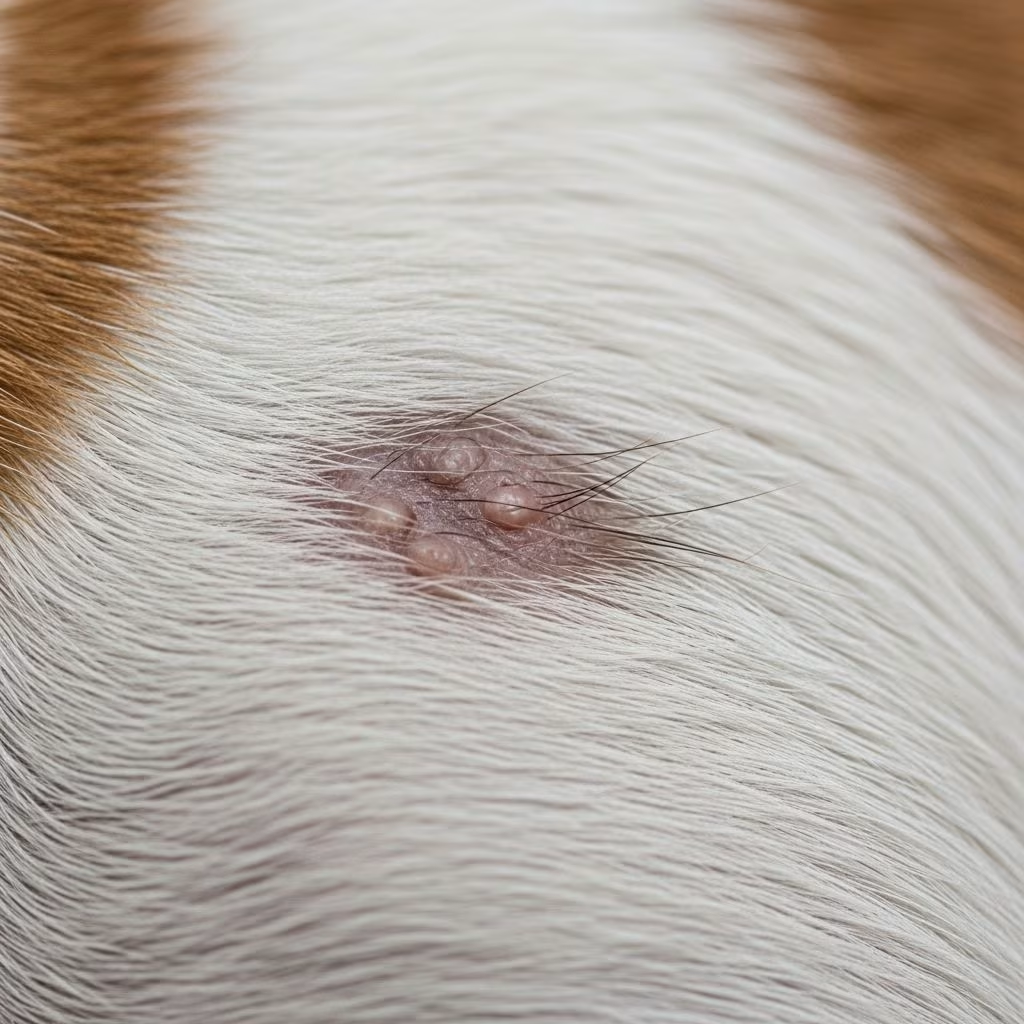
Skin tumors originating from epidermal layers and hair follicles represent a significant portion of dermatological issues in veterinary medicine, particularly in dogs and cats. These growths vary from harmless lumps to aggressive cancers requiring prompt intervention. Understanding their characteristics enables early detection and improves outcomes for affected animals.
Understanding Epidermal Growths
Epidermal tumors arise from the outermost skin layer, often presenting as nodules, plaques, or ulcers. They are prevalent in older pets due to cumulative cellular changes over time. Benign forms typically remain localized, while malignant variants may invade nearby tissues.
Common epidermal inclusions like hamartomas appear as dark, pointed elevations, sometimes linearly arranged. These congenital anomalies occur mainly in young dogs, with potential hereditary links in certain breeds. Despite their benign nature, they invite secondary infections, prompting removal.
Hair Follicle-Derived Neoplasms
Tumors stemming from hair follicles encompass a spectrum of benign and malignant entities. Infundibular keratinizing acanthomas manifest as solitary, horn-like projections, frequently on the back or limbs of middle-aged dogs. They pose minimal health risks unless traumatized.
Trichoepitheliomas, benign follicle tumors, develop anywhere but favor the trunk and extremities. Breeds such as Norwegian Elkhounds and Lhasa Apsos face higher susceptibility, with some experiencing multiple lesions. These dome-shaped masses rarely metastasize but may ulcerate if irritated.
Key Features of Follicle Tumors
- Appearance: Smooth, cystic, or solid nodules varying in size from millimeters to centimeters.
- Locations: Predominantly dorsal regions, tail, and legs.
- Behavior: Slow-growing; surgical excision curative for isolated cases.
Squamous Cell Carcinomas: A Sun-Related Threat
Squamous cell carcinomas (SCCs) emerge from epidermal keratinocytes, often triggered by ultraviolet exposure in lightly pigmented areas. In dogs, they afflict breeds like Dalmatians and Whippets on sun-exposed ventral surfaces. Horses develop them around eyes, necessitating vigilant monitoring in light-skinned individuals.
These invasive tumors form thickened plaques progressing to ulcers. Early cryotherapy or laser ablation controls small lesions, but advanced cases demand wide excision. Sun avoidance remains crucial for prevention.
Basal Cell Abnormalities
Basal cell tumors and carcinomas originate from the skin’s basal layer. Benign basal cell tumors present as hairless, alopecic patches or raised masses, common in aged dogs of breeds like Saint Bernards. Carcinomas exhibit local invasiveness without distant spread, treatable via complete surgical margins.
| Feature | Benign Tumor | Carcinoma |
|---|---|---|
| Behavior | Localized, non-invasive | Locally aggressive |
| Breeds at Risk | Scottish Terriers, Norwegian Elkhounds | Similar breeds, widespread sites |
| Treatment | Excision if symptomatic | Wide surgical margins |
Malignant Follicle Tumors
Malignant trichoepitheliomas, rarer counterparts to benign versions, infiltrate surrounding dermis, causing inflammation and necrosis. They seldom metastasize but recur if incompletely removed. Surgical debulking with margins is standard, supplemented by histopathology.
Species-Specific Patterns
Dogs
Dogs account for the majority of reported cases, with 60-80% benign. Mast cell tumors, though not purely epidermal, often mimic follicle growths and comprise 16-21% of cutaneous neoplasms. High-risk breeds include Boxers and Labrador Retrievers.
Cats
Feline basal cell tumors favor cystic morphologies, appearing on head and limbs. SCCs arise in solar dermatitis-prone whites. Epitheliotropic lymphoma presents as exfoliative dermatitis, responding to chemotherapy.
Horses and Others
Horses exhibit SCCs in ocular and periorbital regions, especially drafts. Cattle and sheep develop actinic SCCs on unpigmented skin. Goats rarely affected.
Diagnostic Approaches
Veterinarians rely on fine-needle aspiration for initial cytological clues, followed by incisional or excisional biopsies for definitive histopathology. Imaging assesses metastasis in suspicious cases. Differential diagnoses include cysts, infections, and immune-mediated diseases.
Diagnostic Steps
- Clinical examination and history.
- Cytology via FNA.
- Biopsy with histopathology.
- Staging via radiographs or ultrasound if malignant.
Treatment Modalities
Surgery dominates, with cryotherapy, laser, or electrocautery for superficial lesions. Malignant tumors may require radiation or chemotherapy adjuncts. Retinoids manage multifocal benign tumors in dogs.
For epitheliotropic lymphoma, multi-agent chemotherapy yields fair prognoses. Early intervention correlates with survival; benign excisions often curative.
Prevention and Monitoring
Minimize UV exposure using pet-safe sunscreens and shaded environments for light-coated animals. Routine skin checks during grooming detect changes early. Spaying/neutering may reduce certain hormone-influenced growths.
Prognosis Overview
| Tumor Type | Benign/Malignant | Prognosis |
|---|---|---|
| Trichoepithelioma | Benign | Excellent post-excision |
| SCC | Malignant | Good if localized; guarded if invasive |
| Basal Cell Carcinoma | Malignant | Favorable with complete removal |
| Epitheliotropic Lymphoma | Malignant | Moderate with chemotherapy |
Frequently Asked Questions (FAQs)
What causes skin tumors in pets?
Genetic predispositions, UV radiation, chronic inflammation, and age contribute. Breeds like Norwegian Elkhounds show hereditary tendencies.
Are all skin lumps cancerous?
No, 60-80% are benign in dogs. Biopsy confirms nature.
How is a tumor diagnosed?
Through physical exam, cytology, and biopsy. Histopathology is gold standard.
Can skin tumors be prevented?
Limit sun exposure, perform regular checks, and maintain health via diet and vaccines.
What is the success rate of surgery?
High for benign tumors; 90%+ cure rate if margins clean.
Emerging Research and Future Directions
Ongoing studies explore targeted therapies, like tyrosine kinase inhibitors for mast cell overlaps, and genetic markers for predisposition. Veterinary oncology advances promise less invasive options.
References
- Tumors of the Skin in Dogs – Dog Owners — MSD Veterinary Manual. 2023. https://www.msdvetmanual.com/dog-owners/skin-disorders-of-dogs/tumors-of-the-skin-in-dogs
- EPITHELIAL AND MELANOCYTIC TUMORS OF THE SKIN — NCBI Bookshelf (Peer-reviewed). 2000. https://www.ncbi.nlm.nih.gov/books/NBK9558/
- Medical Oncology: 5 Types of Skin Cancer in Dogs — NC State Veterinary Hospital (.edu). 2023. https://hospital.cvm.ncsu.edu/services/small-animals/cancer-oncology/oncology/5-types-of-skin-cancer-in-dogs/
- Mast Cell Tumors in Dogs — Morris Animal Foundation. 2023. https://www.morrisanimalfoundation.org/article/mast-cell-tumors-in-dogs
- Common Skin Cancers in Dogs — Tufts University Cummings School of Veterinary Medicine (.edu). 2023. https://vet.tufts.edu/news-events/news/common-skin-cancers-dogs-what-pet-owners-should-know



