

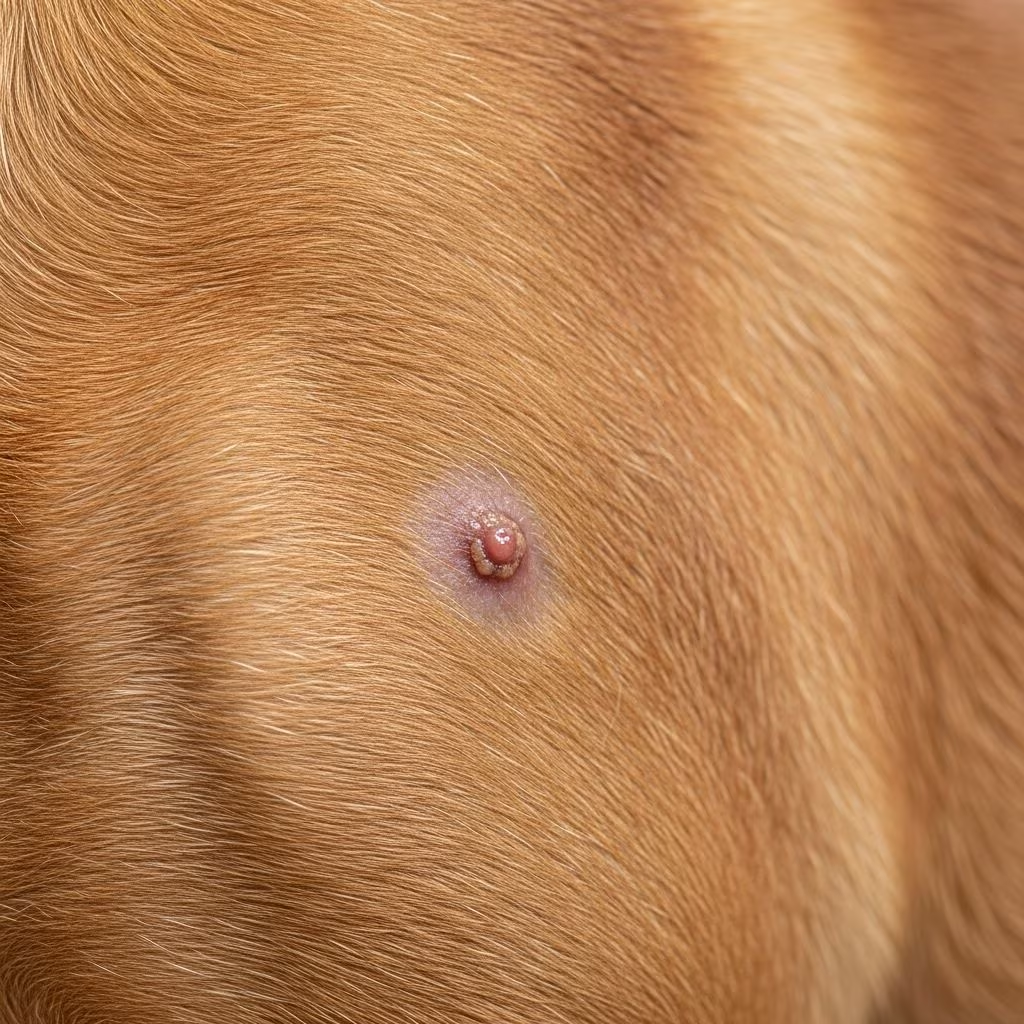
Understanding Skin Basal Cell Tumors in Pets
Basal cell tumors are among the most frequently diagnosed skin tumors in both dogs and cats. These growths originate from the basal cells located in the deepest layer of the epidermis, the outermost layer of skin. Understanding these tumors is essential for pet owners to recognize potential health concerns and seek appropriate veterinary care. While most basal cell tumors are benign and pose minimal risk, a small percentage can be malignant, requiring prompt attention and treatment. This comprehensive guide explores the causes, symptoms, diagnostic procedures, and treatment options for basal cell tumors in pets.
What Are Basal Cell Tumors?
Basal cell tumors are cutaneous epithelial neoplasms that develop from the basal cells of the skin. These tumors are extremely common in the veterinary field, particularly in cats and dogs. The majority of basal cell tumors in pets are benign, meaning they do not spread to other parts of the body and pose limited threat to overall health. However, approximately 10% of diagnosed basal cell tumors are cancerous, classified as basal cell carcinomas, which have the potential to spread to lymph nodes and other tissues.
The distinction between benign basal cell tumors and malignant basal cell carcinomas is crucial for determining appropriate treatment and prognosis. Benign tumors typically remain localized and grow slowly, while malignant forms may spread and require more aggressive intervention. Despite this difference, both types are generally manageable with proper veterinary care, and early detection significantly improves outcomes.
Prevalence in Different Species
Basal cell tumors affect multiple species within the animal kingdom, including cats, dogs, horses, and sheep. However, the incidence and presentation vary significantly between species. In cats, basal cell tumors are among the most commonly diagnosed skin tumors, with a particular prevalence of the cystic type. This feline-type cystic basal cell tumor is uniquely common in cats and rare in other species, including dogs. In dogs, while basal cell tumors are also common, they present differently and have been subject to recent reclassification in veterinary pathology.
Risk Factors and Causes
Age as a Risk Factor
One of the most significant risk factors for developing basal cell tumors is age. These tumors are predominantly observed in senior cats and middle-aged to older dogs. The increased incidence in aging pets suggests that cumulative exposure to various environmental and genetic factors over time plays a role in tumor development. As pets age, their skin becomes more susceptible to cellular changes that may lead to tumor formation.
Breed Predisposition
Certain breeds demonstrate higher susceptibility to basal cell tumors compared to others. In cats, Persians, Himalayans, domestic long-haired cats, and Siamese breeds show increased tendency to develop these tumors. In dogs, breeds predisposed to basal cell tumors include Kerry Blue Terriers, Wirehaired Pointing Griffons, Wheaten Terriers, Poodles, Siberian Huskies, Cocker Spaniels, and Shelties. For malignant basal cell carcinomas in dogs, Saint Bernards, Scottish Terriers, and Norwegian Elkhounds are particularly at risk. These breed predispositions suggest a genetic or hereditary component to tumor development.
Environmental and Genetic Factors
While the exact cause of basal cell tumors remains unknown, researchers have identified various contributing factors. Environmental exposure represents a significant risk factor, particularly sun exposure, which may damage skin cells over time. Exposure to certain chemicals, toxins, or viruses may also increase the likelihood of tumor development. Genetic predisposition appears to play an important role, as some pets are inherently more susceptible to developing these tumors regardless of environmental exposure. The combination of genetic vulnerability and environmental triggers may create ideal conditions for tumor formation.
Clinical Presentation and Symptoms
Characteristics of Benign Basal Cell Tumors
Benign basal cell tumors typically present with specific visual and tactile characteristics that help differentiate them from other skin conditions. These growths usually appear as firm, well-defined masses that are hairless and raised above the surrounding skin. The tumors are often dark in color, ranging from brown to black, and can vary significantly in size. Some basal cell tumors may be less than one centimeter in diameter, while others can exceed four inches across. Cysts may form within these tumors, sometimes becoming filled with pigmented fluid.
These tumors can develop almost anywhere on the body, though certain locations are more common. In dogs, basal cell tumors most frequently appear on the head, especially the ears, neck, and forelimbs. In cats, the location is more variable, as tumors may develop anywhere on the skin surface. The tumors grow slowly and typically do not cause discomfort or itching unless they become infected or ulcerated.
Characteristics of Malignant Basal Cell Carcinomas
Malignant basal cell carcinomas present differently from their benign counterparts. These tumors frequently develop as ulcers rather than raised masses, particularly on the head, neck, and legs. Unlike benign tumors, basal cell carcinomas are often not raised from the skin surface and may appear flattened or erosive. These malignant forms tend to spread, forming new ulcers on neighboring skin areas. While they rarely spread to internal organs, they can metastasize to lymph nodes and lungs, posing a more serious threat to the pet’s health.
Diagnostic Procedures
Physical Examination
The diagnostic process for basal cell tumors begins with a comprehensive physical examination conducted by a veterinarian. During this examination, the veterinarian assesses the pet’s overall health and closely inspects any suspicious skin masses. They will evaluate the size, shape, color, texture, and location of the growth. The veterinarian will also assess whether the mass is movable, fixed, or ulcerated. This initial assessment helps determine whether further diagnostic testing is necessary.
Fine-Needle Aspiration
Once a veterinarian suspects a basal cell tumor, they typically perform a fine-needle aspiration (FNA) to obtain a cell sample from the mass. This minimally invasive procedure involves using a thin needle to extract cells from the tumor, which are then examined under a microscope. The cytological examination helps differentiate between benign and malignant tumors and provides preliminary information about the tumor’s characteristics. However, FNA may not always provide a definitive diagnosis.
Histopathological Examination
For a definitive diagnosis, a biopsy and histopathological examination are often necessary. This involves removing a tissue sample from the tumor and examining it microscopically. Histopathology allows veterinarians to assess the tumor’s cellular structure, identify malignant features, and determine the specific type of basal cell tumor. This examination is particularly important for distinguishing between benign basal cell tumors and malignant carcinomas, as treatment and prognosis differ significantly.
Imaging Studies
If malignancy is suspected, veterinarians may recommend additional imaging studies such as X-rays or ultrasound to assess whether the tumor has spread to internal organs. These imaging modalities help stage the cancer and determine the appropriate treatment approach. In some cases, lymph node biopsies may be performed to check for metastasis.
Treatment Options
Surgical Removal
Surgical excision is the primary and most effective treatment for basal cell tumors in both dogs and cats. This approach involves removing the entire tumor along with a margin of normal skin surrounding it. For benign tumors, surgery is often curative, with most pets experiencing complete recovery after the procedure. The surgical margin ensures that all tumor cells are removed, reducing the risk of recurrence. While recurrence is possible, it occurs infrequently, particularly when adequate margins are maintained during surgery.
For malignant basal cell carcinomas, surgical removal remains the treatment of choice. Veterinarians ensure that sufficient normal skin is removed around the tumor to guarantee complete excision. This more aggressive surgical approach reduces the risk of local recurrence and improves overall prognosis.
Additional Treatment Modalities for Malignant Tumors
For malignant basal cell carcinomas, particularly in cases where the tumor is extensive or has spread, veterinarians may recommend additional treatments beyond surgery. These may include radiation therapy, which delivers targeted radiation to destroy remaining cancer cells, and chemotherapy, which uses systemic medications to combat cancer. Cryosurgery, a technique that freezes tumor tissue to destroy it, may also be employed. Often, a combination of these treatments is recommended to provide the best chance of eliminating the cancer and preventing metastasis.
Management of Complications
If a basal cell tumor becomes cystic or ulcerated, surgical intervention is particularly important to prevent secondary infections. These complications can cause significant discomfort and lead to serious infections that complicate the pet’s condition. Prompt surgical removal reduces the risk of these complications and promotes faster healing.
Prognosis and Recovery
Benign Basal Cell Tumors
The prognosis for benign basal cell tumors is generally excellent, especially when the tumors are detected early and appropriate treatment is initiated. Most pets with benign tumors experience complete resolution following surgical removal with minimal risk of recurrence. These tumors pose limited threat to the pet’s overall health and quality of life when managed properly. Pets typically recover well from surgery and return to normal activities within a few weeks.
Malignant Basal Cell Carcinomas
While malignant basal cell carcinomas are more serious than benign tumors, the prognosis can still be very good when these tumors are caught early and treated appropriately. The earlier a pet is diagnosed and treatment is begun, the better the chances of complete recovery. Even though malignant basal cell carcinomas can spread to lymph nodes and lungs, they rarely involve other internal organs, which generally results in a more favorable outcome compared to other types of cancer. With prompt surgical intervention and, when necessary, additional therapeutic modalities, many pets with malignant basal cell carcinomas achieve extended survival times and good quality of life.
When to Contact Your Veterinarian
Pet owners should contact their veterinarian if they notice any new skin growths or masses on their pet’s body. Any changes in existing skin lesions, such as growth, ulceration, or signs of infection, warrant prompt veterinary evaluation. Additionally, if a pet develops behavioral changes, such as excessive licking or scratching at a skin lesion, professional assessment is necessary. Early detection of basal cell tumors significantly improves treatment outcomes and prognosis.
Frequently Asked Questions About Basal Cell Tumors
Q: Are most basal cell tumors in pets cancerous?
A: No, approximately 90% of diagnosed basal cell tumors are benign and non-cancerous. Only about 10% are malignant, classified as basal cell carcinomas. Benign tumors generally pose minimal risk and have an excellent prognosis with appropriate treatment.
Q: Can basal cell tumors be prevented?
A: While complete prevention is not possible, limiting sun exposure, particularly in predisposed breeds, may help reduce the risk of development. Regular skin examinations and prompt veterinary attention to any suspicious growths can aid in early detection.
Q: Will my pet need chemotherapy for a basal cell tumor?
A: Chemotherapy is typically recommended only for malignant basal cell carcinomas that have spread significantly or cannot be completely removed surgically. For most benign tumors, surgery alone is sufficient.
Q: How long does recovery take after surgical removal?
A: Most pets recover well from surgical removal of basal cell tumors within two to four weeks. Activity should be restricted during the initial healing period, and the surgical site must be kept clean and dry.
Q: Can basal cell tumors recur after surgical removal?
A: While recurrence is possible, it is rare when the tumor is completely removed with appropriate margins. The likelihood of recurrence is low, particularly for benign tumors.
Q: Are certain cat breeds more susceptible to basal cell tumors?
A: Yes, Persian, Himalayan, domestic long-haired, and Siamese cats show higher incidence rates. However, any cat, particularly senior cats, can develop these tumors.
Q: What is the difference between a basal cell tumor and a basal cell carcinoma?
A: Basal cell tumors are generally benign growths, while basal cell carcinomas are the malignant form. Carcinomas have the potential to spread to lymph nodes and other tissues, whereas benign tumors typically remain localized.
References
- Basal Cell Tumors in Cats — PetVet Care Centers. 2023-12-15. https://www.petvetcarecenters.com/site/blog/2023/12/15/basal-cell-tumors-cat
- Basal Cell Tumors in Cats — PetCure Oncology. https://petcureoncology.com/basal-cell-tumors-in-cats/
- Basal Cell Tumor in Cats: Causes, Symptoms & Treatment — VRCC. 2024-03-15. https://www.vrcc.com/site/blog/2024/03/15/basal-cell-tumor-cats
- Tumors of the Skin in Dogs — Merck Veterinary Manual. https://www.merckvetmanual.com/dog-owners/skin-disorders-of-dogs/tumors-of-the-skin-in-dogs
- Basal Cell Tumors in Dogs — PetCure Oncology. https://petcureoncology.com/basal-cell-tumors-in-dogs/
- Basal Cell Tumors in Dogs — PetMD. https://www.petmd.com/dog/conditions/skin/basal-cell-tumors-dogs
- Common Neoplastic Skin Lesions in Dogs & Cats — Today’s Veterinary Practice. 2016-05. https://todaysveterinarypractice.com/wp-content/uploads/sites/4/2016/05/TVP_2016-0102_Neoplastic-Skin-Lesions.pdf



