

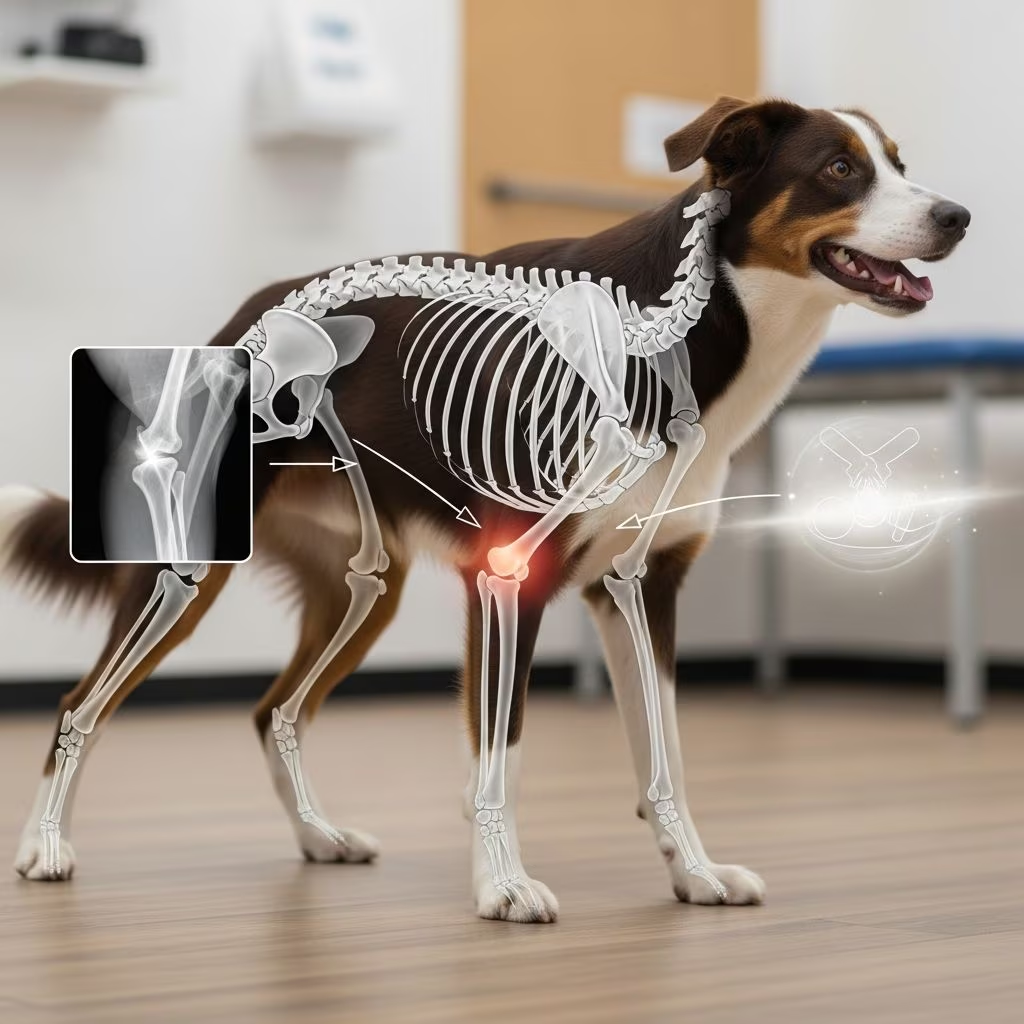
Angular limb deformities represent a significant orthopedic concern affecting dogs of various ages and breeds. These conditions occur when a dog’s limb develops in an abnormal angular or twisted pattern, affecting the dog’s gait, mobility, and long-term joint health. Understanding the underlying mechanisms, recognizing clinical signs, and exploring available treatment options can help dog owners make informed decisions about their pet’s care and future quality of life.
What Are Angular Limb Deformities?
Angular limb deformities (ALDs) are orthopedic conditions characterized by abnormal bone alignment in the limbs, typically manifesting as bowing, twisting, or lateral deviation of the affected leg. These deformities develop when the normal growth pattern of a dog’s long bones is disrupted, resulting in misalignment that becomes apparent as the dog matures. The condition primarily affects the forelimbs, particularly the radius and ulna bones in the foreleg, though it can also occur in the hindlimbs.
The severity of angular limb deformities varies considerably among affected dogs. Some dogs may develop mild deformities that cause minimal functional impairment, while others experience significant lameness and joint complications. The appearance of an affected limb can range from subtle bowing to pronounced twisting that is immediately noticeable.
Primary Causes of Bone Growth Disruption
Angular limb deformities arise from multiple etiological pathways, each affecting the developing skeleton in distinct ways. Understanding these causes is essential for prevention strategies and early intervention.
Genetic and Breed-Related Factors
Certain dog breeds carry inherent genetic predispositions that increase their vulnerability to angular limb deformities. Chondrodystrophic breeds—dogs with genetic characteristics that result in disproportionate limb development—represent the population most commonly affected by these conditions. This genetic makeup creates an imbalance in skeletal growth, predisposing these dogs to angular misalignment even without traumatic injury.
Breeds with naturally short limbs relative to their body size, such as Dachshunds, Basset Hounds, and Corgis, demonstrate higher prevalence rates of angular deformities. The genetic programming in these breeds affects how their bones grow and develop during the critical juvenile period, making them inherently susceptible to growth plate complications.
Growth Plate Injuries and Trauma
Growth plates—the soft cartilaginous regions at the ends of developing bones—are particularly vulnerable to injury in young dogs. These structures are significantly softer than mature bone and ligamentous tissue, making them prone to damage from various mechanisms. When a growth plate is damaged through traumatic injury, fracture, or excessive stress, the normal pattern of bone elongation becomes compromised, leading to asymmetric growth and angular deformity.
The ulna bone’s distal growth plate, which is cone-shaped, is especially susceptible to injury because of its anatomical structure. Damage to this growth plate frequently results in carpal deformities affecting the wrist joint. Fracture malunions—instances where a previously fractured bone heals in an incorrect position—also contribute substantially to the development of secondary angular deformities.
Accelerated or Premature Growth Plate Closure
Angular deformities frequently develop when one bone in a paired set experiences premature closure of its growth plate while the other bone continues normal growth. This scenario creates a mechanical imbalance where the longer bone exerts abnormal stresses on the shorter bone, resulting in bowing or twisting. Similarly, when growth plates close prematurely on both bones in a pair, shortening of the limb occurs alongside potential angular misalignment.
Clinical Presentation and Recognition
Dogs affected by angular limb deformities display a constellation of clinical signs that vary depending on severity and location of the deformity.
Observable Signs and Symptoms
- Lameness and limping: Affected dogs frequently display weight-bearing difficulty or complete lameness in the involved limb
- Visible limb twisting: The affected limb appears twisted or bowed when viewed from certain angles
- Paw deviation: The paw may turn outward (in carpal valgus) or inward (in carpal varus)
- Joint swelling: Elbow or wrist swelling may develop secondary to abnormal joint mechanics
- Pain response: Dogs may demonstrate pain or reluctance when pressure is applied to the affected joint
- Altered gait mechanics: Compensatory movement patterns become evident as the dog adapts to limb misalignment
Most angular limb deformities become apparent before a dog reaches one year of age, making early detection possible during routine veterinary examinations.
Diagnostic Imaging and Assessment Strategies
Accurate diagnosis of angular limb deformities requires a systematic approach combining physical examination with advanced imaging techniques.
Initial Physical Examination
Veterinarians typically can identify suspected angular limb deformities through careful physical inspection. Palpation of the affected limb reveals structural abnormalities, and assessment of joint stability determines whether subluxation or other joint complications have developed. The veterinarian evaluates weight-bearing ability and determines whether pain is present in affected joints.
Radiographic Evaluation
Traditional radiographic imaging (X-ray examination) remains the foundational diagnostic tool for angular limb deformity assessment. Radiographs reveal bone structure, growth plate status, and the degree of angular deviation. The traditional method of evaluating canine limb deformity involves making radiographs of the affected limb and comparing them with the contralateral (opposite) limb to quantify the degree of deviation.
This approach is simple, relatively inexpensive, and often effective for relatively straightforward deformities. X-rays also identify secondary complications such as premature growth plate closure or early osteoarthritis development.
Advanced Three-Dimensional Imaging
Complex angular deformities benefit from advanced computed tomography (CT) scanning, which provides superior detail compared to traditional radiography. The CT imaging process involves brief sedation of the dog while cross-sectional images of the affected limb are captured. This imaging data is then exported to specialized workstations where 3D modeling software creates a three-dimensional rendering of the limb structure.
The 3D reconstruction process may require minutes to hours depending on the complexity of the deformity and the skill of the veterinary surgeon performing the analysis. This detailed spatial information allows surgeons to plan precise surgical correction strategies tailored to each individual dog’s anatomy. In some cases, CT imaging data is submitted to specialized laboratories where custom surgical guides and 3D models are fabricated to further enhance surgical precision.
Secondary Consequences and Long-Term Complications
Beyond the immediate functional impairment caused by angular deformities, these conditions can precipitate serious long-term orthopedic complications.
Osteoarthritis Development
Abnormal bone angulation creates unequal stress distribution across joint cartilage surfaces, accelerating cartilage degeneration and osteoarthritis development. Research has documented osteoarthritis development within seven months of angular deformity creation in experimental studies involving young dogs. The abnormal biomechanical forces place excessive stress on cartilage that is not designed to withstand such forces, leading to progressive degenerative changes.
This consequence is particularly concerning in large and giant breed dogs, where substantial abnormal forces on articular cartilage can rapidly progress to severe osteoarthritis. Early surgical correction before extensive cartilage damage occurs may prevent or minimize this complication.
Joint Subluxation and Instability
When growth plate premature closure occurs in the distal ulna, the radius can shift upward and cause elbow subluxation—partial dislocation of the elbow joint. This mechanical dysfunction causes pain, swelling, and progressive cartilage damage. Dogs may compensate by hyperextending their carpus (wrist) joint, placing additional stress on already compromised wrist structures.
Surgical Correction: Principles and Techniques
All treatment of angular limb deformities requires performing a corrective osteotomy—a surgical procedure in which the veterinary surgeon deliberately cuts the bone to allow realignment and straightening.
Acute Versus Gradual Straightening
Surgical correction can be accomplished through two primary approaches: acute straightening or gradual distraction correction.
Acute straightening involves realigning the limb during surgery such that it achieves proper alignment immediately following the procedure. The straightened bone is then maintained in correct alignment as healing progresses, typically using bone plates and screws—the most common stabilization method for canine limb deformities.
Gradual distraction correction employs external skeletal fixators (specialized external frameworks) to slowly realign the limb over several days or weeks. This approach offers distinct advantages for complex deformities, particularly enabling bone growth and limb lengthening in dogs with shortened limbs rather than simply achieving straightening.
Internal Fixation Methods
Bone plates and screws represent the most frequently used stabilization technique following corrective osteotomy. This internal fixation method provides immediate rigid stabilization, allowing dogs to resume relatively normal activity quickly. The bone is held in correct alignment while biological healing occurs, with hardware remaining in place or sometimes removed after healing is complete.
External Skeletal Fixation
External skeletal fixators consist of sophisticated external frameworks that stabilize bone segments while allowing gradual adjustment. This technique proves particularly valuable for:
- Complex multiplanar deformities requiring precise staged correction
- Dogs with significant limb shortening and continued growth potential
- Cases where gradual distraction facilitates bone growth and lengthening rather than straightening alone
- Dogs that would benefit from daily adjustment capability during the healing process
Prevention of Recurrence
In very young dogs with significant remaining growth potential, segments of bone may require removal following straightening to prevent the “bowstring effect”—a complication where the longer bone pulls the shorter bone back into its original deformed position as continued growth occurs. This preventive measure ensures the corrective osteotomy achieves lasting results as the dog continues to mature.
Post-Operative Management and Recovery
The recovery period following corrective osteotomy requires careful monitoring and activity restriction to ensure proper bone healing.
Dogs typically wear a bandage or splint for several weeks after surgery. Those with external hardware such as external fixators maintain this equipment for several weeks during the healing phase. Exercise restriction lasting approximately six weeks is essential, as bone requires adequate time to heal sufficiently to withstand normal functional stresses.
Physical therapy, pain management, and regular reassessment through radiographic imaging help ensure optimal recovery. Dogs generally achieve good outcomes with proper post-operative management, though individual variation occurs based on the complexity of the original deformity and the effectiveness of surgical correction.
Frequently Asked Questions
At what age do angular limb deformities become apparent?
Most angular limb deformities become noticeable when dogs are less than one year of age. Early detection during veterinary examinations allows for timely intervention before secondary complications develop.
Can angular limb deformities resolve without surgery?
Mild deformities may not require surgical intervention if they cause minimal functional impairment or pain. However, deformities causing lameness, pain, or significant functional limitation generally require surgical correction to prevent long-term complications such as osteoarthritis.
What is the success rate for surgical correction?
Angular limb deformities in dogs can generally be surgically repaired with good outcomes. Success depends on factors including deformity complexity, surgical technique selection, post-operative management quality, and individual healing ability.
How long does the entire treatment process take?
The timeline varies based on deformity complexity and treatment approach. Acute surgical straightening followed by plate fixation may allow functional recovery within weeks, while gradual distraction techniques may require several weeks to months of external fixator use before bone healing is complete.
Conclusion
Angular limb deformities represent a treatable orthopedic condition affecting young dogs, with outcomes substantially improved through early recognition and appropriate surgical intervention. While genetic predisposition and traumatic injury contribute to development, modern diagnostic imaging and refined surgical techniques enable veterinary surgeons to restore limb function and prevent long-term complications. Dog owners suspecting angular limb deformities should pursue veterinary evaluation promptly to ensure their pets receive optimal care and maintain quality of life throughout their senior years.
References
- Angular Limb Deformity Surgery in Dogs — Kansas City Canine Orthopedics. Accessed February 2026. https://www.kck9ortho.com/services/angular-limb-deformity-corrective-osteotomy-shawnee-ks
- Pet Angular Limb Deformities — West Suburban Animal Hospital. Accessed February 2026. https://westsuburbananimalhospital.com/pet-angular-limb-deformities-toledo-oh/
- Canine Angular Limb Deformities — IVIS (International Veterinary Information Service). Accessed February 2026. https://www.ivis.org/library/mechanisms-of-disease-small-animal-surgery-3rd-ed/canine-angular-limb-deformities
- Angular Limb Deformity — Fitzpatrick Referrals. Accessed February 2026. https://www.fitzpatrickreferrals.co.uk/orthopaedics/angular-limb-deformity/
- Fracture – Angular Limb Deformity of the Forelimb — Animal Surgical Center. Accessed February 2026. https://www.animalsurgicalcenter.com/angular-limb-deformity-of-the-forelimb
- Angular Limb Deformity in Dogs: Types and How To Help Your Dog — PetMD. Accessed February 2026. https://www.petmd.com/dog/conditions/musculoskeletal/angular-limb-deformity-dogs-types-and-how-help-your-dog



