

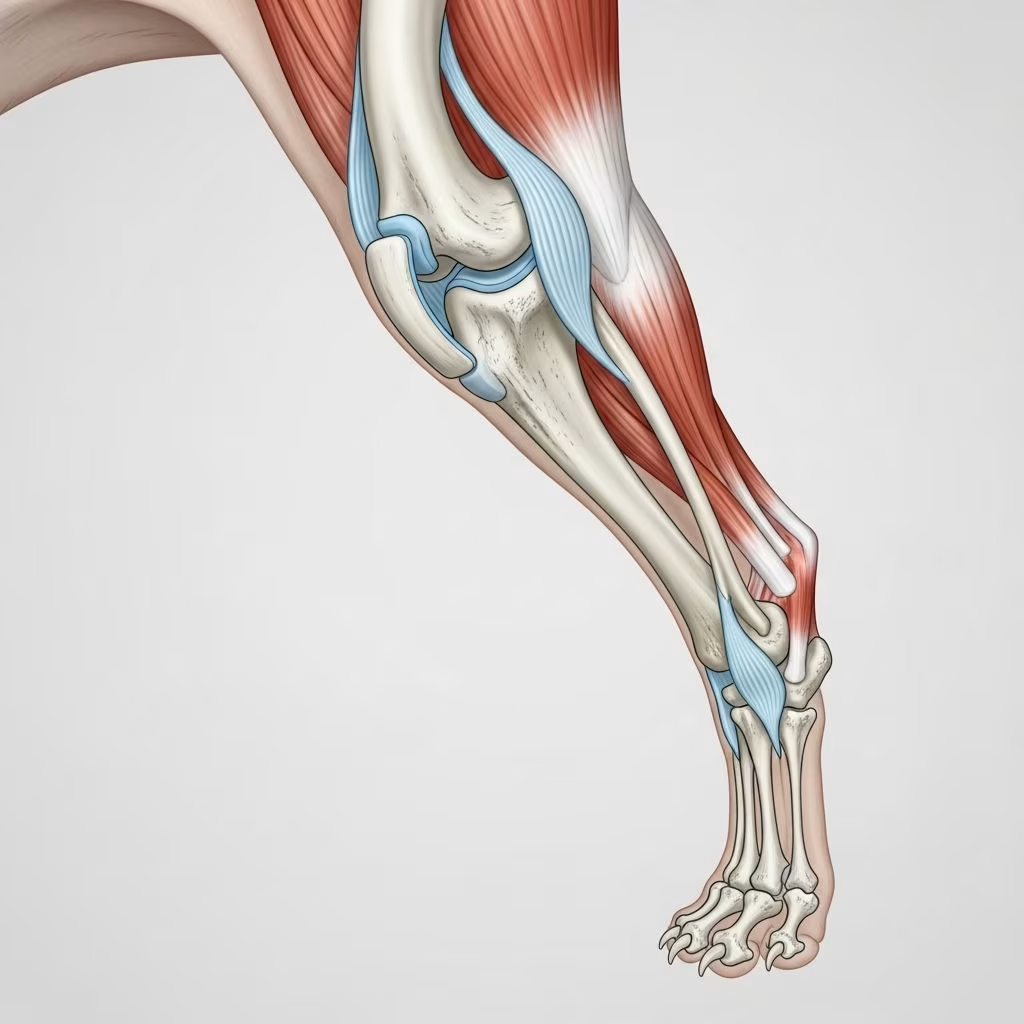
The rapid growth phase of a puppy’s life represents a critical window for skeletal development. During this period, the bones, cartilage, and joints are forming and strengthening, making young dogs particularly vulnerable to developmental disorders. Large and giant breed puppies face the highest risk, as their bodies must support substantially larger frames, placing enormous stress on immature skeletal structures. Understanding these conditions and implementing preventive measures early can significantly improve your puppy’s long-term health and mobility.
The Growth Challenge in Large Breed Puppies
Puppies destined to weigh more than 55 pounds when fully grown experience particularly intense developmental demands. Their skeletal system must elongate and mineralize rapidly to support an increasingly heavy body. This accelerated growth process creates vulnerability to various musculoskeletal problems that may not manifest until the dog reaches adulthood. The faster a puppy grows, the greater the mechanical stress placed on developing bone tissue and cartilage.
Several factors influence how a puppy’s skeletal system develops during this crucial period:
- Genetic predisposition: Inherited traits significantly influence susceptibility to specific orthopedic conditions
- Nutritional intake: The balance and quantity of calories, proteins, minerals, and vitamins directly affect bone formation
- Growth rate: Excessive growth speed can outpace the body’s ability to properly mineralize and strengthen bone tissue
- Environmental factors: Exercise levels, surface type, and living conditions impact skeletal stress
- Body weight management: Excess weight accelerates joint degeneration and increases load-bearing demands
Common Developmental Skeletal Conditions
Hip Joint Formation Problems
Hip dysplasia represents one of the most prevalent developmental orthopedic disorders in dogs, particularly affecting medium and large breeds such as Labradors, German Shepherds, Rottweilers, and Bulldogs. The condition develops when the hip joint forms improperly, creating excessive looseness or laxity in the joint capsule. As a puppy grows, this abnormal movement within the joint gradually wears away protective cartilage, eventually leading to osteoarthritis and chronic pain.
While hip dysplasia has a genetic component, environmental influences can significantly affect its severity. Overfeeding puppies predisposed to the condition can exacerbate dysplasia development, whereas controlled growth rates may reduce the expression of inherited susceptibility. This demonstrates that genetics alone does not determine outcomes; nutrition and growth management play crucial modifying roles.
Cartilage Separation Disorders
Osteochondrosis occurs when immature joint cartilage fails to properly attach to underlying bone tissue. This condition typically emerges during the peak growth phase of large and giant breed puppies, specifically between 4 and 8 months of age. The detached cartilage fragments can float freely within the joint, causing inflammation, pain, and further damage to surrounding structures.
The shoulder joint experiences the highest incidence of osteochondrosis, followed by the elbow, knee, and ankle joints. When pieces of cartilage become loose within the joint space, they prevent normal movement patterns and accelerate degenerative changes. Early recognition and intervention through joint-preserving procedures can prevent progression to severe, permanently damaging arthritis.
Long Bone Inflammation
Panosteitis affects the long bones of large and giant breed puppies, causing inflammation within the bone marrow and surrounding bone tissue. This self-limiting condition most commonly targets the ulna bone in the forearm, followed by the radius, humerus, femur, and tibia. The disease causes lameness, swelling, and pain that may shift between different limbs as the inflammation migrates through the skeletal system.
Metabolic Bone Disease in Young Dogs
Hypertrophic osteodystrophy develops as a response to nutritional imbalances during rapid growth phases. Also known by various historical names including skeletal scurvy, this condition involves necrosis of trabecular bone tissue, inflammatory infiltration, and internal hemorrhage. The disease frequently affects the radius, ulna, and tibia bones bilaterally, causing severe pain and lameness in affected puppies.
Warning Signs of Developmental Problems
Recognizing early indicators of skeletal development issues enables timely veterinary intervention. The following symptoms should prompt immediate professional evaluation:
| Physical Sign | Potential Significance | Timing of Appearance |
|---|---|---|
| Difficulty rising from resting position | Joint pain or instability | May appear from a few months old |
| Hopping gait with rear limbs | Hip dysplasia or knee problems | Typically visible during running |
| Limping or stiffness in back legs | Degenerative joint changes | Can appear early or much later |
| Reluctance to jump or climb stairs | Joint pain or muscle weakness | Progressive as growth continues |
| Visible muscle loss in hind limbs | Compensatory weakness from pain | Develops over weeks to months |
| Swaying hip movement when walking | Hip joint instability | May indicate dysplasia |
| Weight shifting to front legs | Posterior limb pain | Develops with joint changes |
| Abnormal body posture or bowed legs | Bone growth irregularities | Early stages of development |
Some puppies with developmental disorders may show minimal signs initially, while others display obvious symptoms within the first few months of life. The variation depends on the specific condition’s severity and the degree of secondary arthritis development.
The Critical Role of Nutrition During Growth
Proper nutrition represents one of the most controllable factors influencing skeletal development outcomes. Overfeeding during the growth phase directly correlates with increased risk of developmental musculoskeletal disorders. Excess caloric intake accelerates growth rate beyond what the skeleton can safely support, creating a mismatch between bone mineralization speed and bone formation speed.
Specific nutritional considerations include:
- Caloric balance: Large breed puppies require carefully calculated portions to prevent excessive weight gain and accelerated growth
- Calcium and phosphorus: Over-supplementing with these minerals, particularly when added to complete puppy formulas, disrupts the delicate mineral balance required for proper bone formation
- Protein quality: Adequate protein supports muscle development, but should be appropriately balanced rather than excessive
- Large breed formulas: Properly formulated large breed puppy diets are specifically designed to support appropriate growth rates without acceleration
Veterinary nutritionists recommend avoiding additional supplementation of calcium and vitamin D in puppies eating complete commercial diets, as these additions can create imbalances that interfere with proper skeletal mineralization. Maintaining a lean body condition throughout the growing phase helps distribute weight appropriately across developing joints.
Early Detection and Screening Methods
Puppies from breeds or litters with known dysplasia risk should undergo screening before 20 weeks of age using specialized diagnostic techniques. PennHIP evaluation and other early assessment methods can identify joint laxity before arthritis develops. When laxity is detected early, joint-preserving surgical procedures can prevent progression to severe degenerative disease.
Radiographic examination remains the standard for confirming suspected developmental orthopedic conditions. Advanced imaging reveals bone structure, cartilage integrity, and evidence of inflammatory or degenerative changes. Histological examination of affected tissue provides definitive diagnosis for some conditions by revealing characteristic microscopic changes.
Prevention Strategies for Growing Dogs
Controlled Growth Management: The most effective prevention strategy involves managing growth rate through appropriate nutrition and portion control. Feeding high-quality large breed puppy formulas in measured amounts based on current weight and expected adult size optimizes development. Growth should be steady and moderate rather than rapid.
Exercise Modification: While puppies require activity for proper development, excessive jumping, running on hard surfaces, or repetitive impact stress accelerates joint problems. Moderate, age-appropriate exercise on varied terrain supports balanced muscle development without excessive skeletal strain.
Weight Maintenance: Maintaining ideal body condition throughout the growth phase reduces mechanical stress on developing joints. Overweight puppies experience compressive forces on joints that can trigger or accelerate developmental problems. The excess weight creates additional demands on bones and cartilage that may not be fully capable of supporting it.
Environmental Optimization: Providing appropriate resting surfaces, avoiding repetitive jumping or climbing in young animals, and minimizing activities on very hard flooring supports skeletal development. Soft, supportive bedding reduces impact trauma to developing bones.
Long-Term Management and Prognosis
The progression and severity of developmental orthopedic conditions varies considerably. Some dogs require minimal ongoing treatment and enjoy relatively normal activity levels throughout life, while others need long-term medical management or surgical intervention to maintain quality of life. Early diagnosis and appropriate interventions typically result in superior outcomes compared to management of advanced degenerative disease.
Dogs diagnosed with inherited developmental disorders should never be used for breeding, as this perpetuates genetic predisposition within the population. Responsible breeding practices involve screening breeding candidates and selecting against genetic factors that increase disease risk.
Management approaches may include:
- Anti-inflammatory medications to reduce pain and swelling
- Joint protective supplements such as glucosamine and chondroitin
- Weight management to reduce joint load
- Physical rehabilitation and controlled exercise
- Surgical intervention when conservative management is insufficient
Frequently Asked Questions
Can developmental growth disorders be completely prevented?
While genetic predisposition cannot be eliminated, environmental factors including nutrition, growth rate, and exercise can significantly reduce the severity of expression. Responsible breeding selection and careful puppy rearing management substantially decrease disease incidence and severity.
At what age do developmental problems typically appear?
The timing varies by condition. Some signs emerge as early as a few months of age, while others may not become apparent until the puppy is older or even in adulthood, depending on severity and secondary arthritis development.
Are large breed puppies the only ones affected?
Large and giant breed puppies face the highest risk due to rapid growth demands. However, some conditions like Legg-Calvé-Perthes disease primarily affect small breed dogs. The underlying principle of growth-related stress applies across size categories.
Is surgery always necessary for developmental disorders?
Not necessarily. The need for surgical intervention depends on the specific condition, severity, and response to conservative management. Some dogs do well with medical management alone, while others require surgical procedures to prevent progression or restore function.
Conclusion
Developmental skeletal conditions represent significant health challenges during a puppy’s critical growth phase. However, understanding the risk factors and implementing evidence-based prevention strategies can substantially improve outcomes. By providing appropriate nutrition, managing growth rate, selecting breeding stock carefully, and monitoring for early signs of problems, dog owners can support optimal skeletal development and help their puppies transition to healthy adulthood. Working closely with veterinary professionals from puppyhood through skeletal maturity ensures that any emerging problems receive prompt attention, maximizing the potential for successful long-term outcomes.
References
- Canine Hip Dysplasia (CHD) — Cornell University College of Veterinary Medicine, Riney Canine Health Center. 2025-11-20. https://www.vet.cornell.edu/departments-centers-and-institutes/riney-canine-health-center/canine-health-topics/canine-hip-dysplasia-chd
- Juvenile Orthopedic Disease in Dogs & Cats, Part 1: Musculoskeletal Development and Pediatric Bone Diseases — Today’s Veterinary Practice. https://todaysveterinarypractice.com/orthopedics/juvenile-orthopedic-disease-in-dogs-cats-part-1-musculoskeletal-development-pediatric-bone-diseases/
- Congenital and Inherited Disorders of Bones, Joints, and Muscles in Dogs — Merck Veterinary Manual. https://www.merckvetmanual.com/dog-owners/bone-joint-and-muscle-disorders-of-dogs/congenital-and-inherited-disorders-of-bones-joints-and-muscles-in-dogs
- Dog Diseases – Developmental Growth Disorders — Hill’s Pet Nutrition. https://www.hillspet.com/dog-care/healthcare/canine-developmental-growth-disorders
- Comparison of Growth Patterns in Healthy Dogs — National Center for Biotechnology Information (NCBI). https://pmc.ncbi.nlm.nih.gov/articles/PMC7510995/
- Developmental Orthopedic Disease In Dogs — Purina Institute. https://www.purinainstitute.com/centresquare/therapeutic-nutrition/developmental-orthopedic-conditions
- The Importance of Understanding Orthopedic Developmental Diseases in Dogs — Veterinary Education and Training Center. https://vet-etc.com/connect/the-importance-of-understanding-orthopedic-developmental-diseases-in-dogs/



