

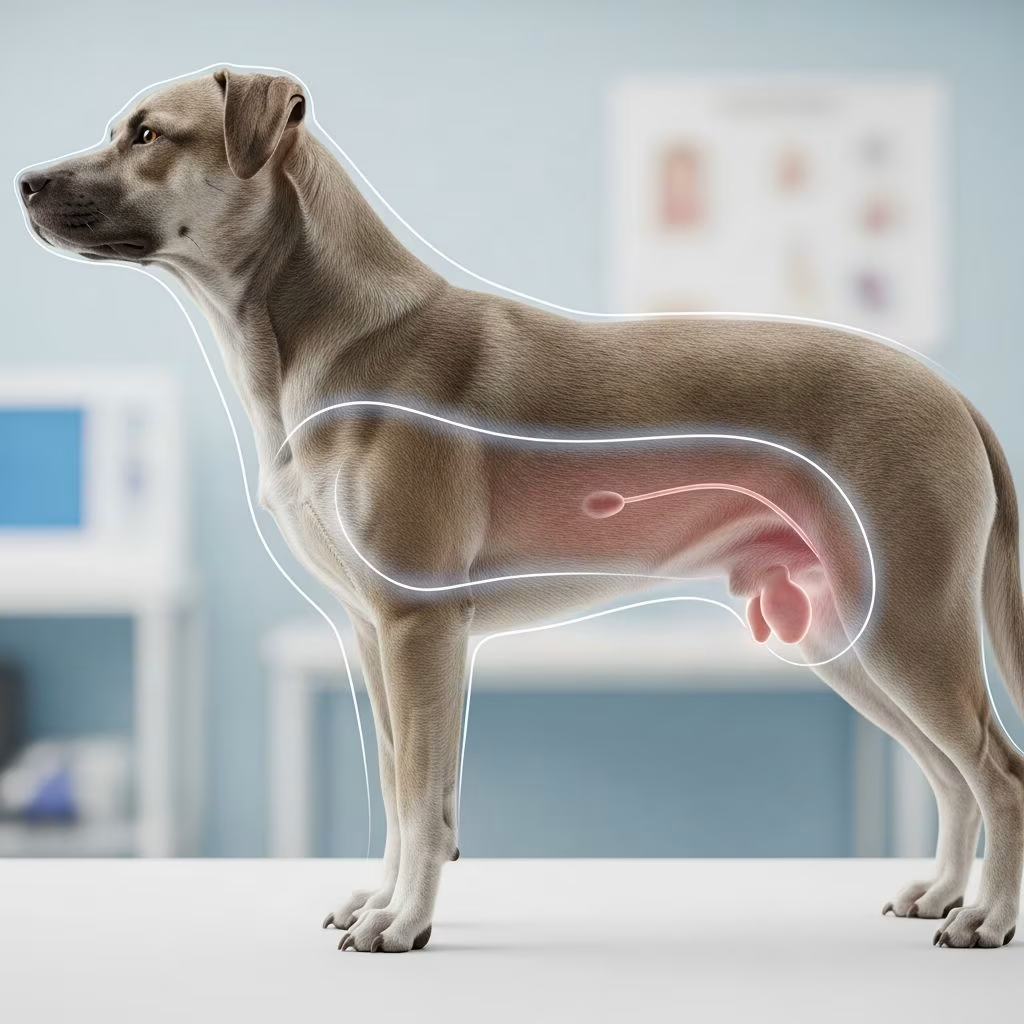
When a dog owner discovers that their male companion has only one visible testicle, concern naturally follows. This condition affects canine health and reproductive capacity, yet the underlying causes and appropriate responses vary significantly depending on the specific diagnosis. Understanding the distinction between true monorchidism and cryptorchidism enables owners to make informed decisions about their pet’s medical care and long-term wellbeing.
Distinguishing Between Two Different Conditions
The presence of a single testicle in a male dog can result from two distinct medical situations, each with different implications for treatment and prognosis. While these conditions may appear similar to untrained observers, veterinary professionals recognize crucial differences in their underlying causes and potential complications.
Monorchidism represents a developmental abnormality wherein a dog is born with only one functional testicle. This condition stems from a genetic abnormality that affects testicular development during embryonic growth. The affected testicle develops normally and descends properly into the scrotum, but the second testicle simply never develops. This condition is exceptionally rare in canines.
Cryptorchidism, conversely, occurs when a dog develops two testicles normally, yet one or both fail to descend into the scrotal sac as the puppy matures. This condition results from improper development of the gubernaculum, a specialized structure that guides testicles from their embryonic position near the kidneys down through the inguinal ring into the scrotum. The retained testicle remains trapped either within the abdominal cavity or lodged in the inguinal canal near the groin.
Cryptorchidism occurs far more frequently than true monorchidism, making it the more likely diagnosis when owners observe only one descendent testicle. Approximately 75% of cryptorchidism cases involve only one retained testicle, a presentation called unilateral cryptorchidism. This condition is inherited, meaning affected dogs should never be used for breeding purposes due to the likelihood of passing the trait to offspring.
Which Breeds Face Elevated Risk
While cryptorchidism can develop in dogs of any breed, certain genetic lines show significantly higher susceptibility. Toy and miniature breeds experience disproportionately high incidence rates, reflecting breeding patterns that may inadvertently perpetuate the condition within these populations.
Breeds with well-documented elevated risk include:
- Toy Poodles and Miniature Poodles
- Pomeranians
- Chihuahuas
- Yorkshire Terriers
- Maltese dogs
- Miniature Schnauzers
- English Bulldogs
- Dachshunds
- Boxer dogs
- Pekingese
- Shetland Sheepdogs
Owners of dogs from these breeds should be particularly attentive during puppy development, as early identification enables prompt veterinary intervention.
Diagnostic Procedures and Testing Methods
Establishing an accurate diagnosis requires a systematic veterinary approach combining physical examination with specialized diagnostic tools. A veterinarian begins by thoroughly palpating the scrotum, inguinal region, and abdomen to locate any testicular tissue that may not be immediately obvious.
Several additional diagnostic methods may be employed to confirm the specific condition:
| Diagnostic Method | Purpose and Application |
|---|---|
| Abdominal Ultrasound | Provides detailed imaging to locate retained testicles within the abdominal cavity or inguinal canal that physical examination cannot detect |
| Inguinal Ultrasound | Focuses specifically on the groin region to visualize testicles positioned in the inguinal canal |
| Blood Testosterone Analysis | Measures plasma testosterone levels, which are significantly lower in dogs lacking one or both testicles, helping differentiate monorchidism from cryptorchidism |
| Physical Examination | Comprehensive palpation of scrotal, inguinal, and abdominal regions to assess tissue presence and characteristics |
In the early stages of cryptorchidism, the retained testicle typically appears noticeably smaller than its normally descended counterpart. This size discrepancy provides an important diagnostic clue during initial examination.
Implications for Reproductive Capability
A dog possessing one functional, normally descended testicle retains full reproductive capacity, as this single organ can produce adequate sperm for successful breeding. However, veterinary professionals strongly advise against breeding cryptorchid dogs despite their technical fertility. Since the condition is inherited, breeding affected animals perpetuates the genetic abnormality throughout future generations.
The situation differs markedly when both testicles remain undescended. Bilateral cryptorchidism typically renders dogs completely sterile, as the elevated internal body temperature of the abdominal cavity prevents sperm production. Interestingly, even with bilateral cryptorchidism, the retained testicles continue producing testosterone, meaning affected dogs may still display hormonally driven behaviors including urine marking and territorial roaming.
If a dog with unilateral cryptorchidism undergoes neutering that removes only the descended testicle while leaving the retained one untouched, the dog will become sterile despite retaining testosterone production and associated behavioral patterns. This outcome represents a significant complication that underscores the importance of complete surgical removal of all testicular tissue during neutering procedures.
Health Risks Associated with Retained Testicles
While many dogs with cryptorchidism show no obvious signs of illness during early stages, retained testicles carry substantial long-term health risks that warrant serious consideration. The most significant concern involves dramatically elevated cancer risk.
Dogs with retained testicles face substantially heightened susceptibility to testicular cancer development. This malignancy may originate in the retained testicle itself, creating a localized tumor, or may spread to surrounding tissues and organs. Various tumor types can develop, each with distinct clinical presentations and progression patterns.
One particularly concerning tumor type is the Sertoli cell tumor, which produces excess female hormones causing a condition called hyperestrogenism or feminization syndrome. Affected dogs may experience symmetrical hair loss, development of female physical characteristics despite genetic maleness, and other hormone-related complications. These hormone-producing tumors can lead to bone marrow dysfunction, severe skin problems, and systemic health deterioration.
Another serious complication involves testicular torsion, wherein the retained testicle twists upon itself, severing its blood supply. This excruciatingly painful emergency condition requires immediate veterinary surgery to prevent tissue death and systemic complications. Dogs experiencing testicular torsion exhibit sudden, severe abdominal pain and require urgent intervention.
Retained testicles may also contribute to prostate enlargement and associated urinary complications, though this risk increases when hormone-producing tumors develop.
Recommended Veterinary Treatment Approach
The standard treatment recommendation for dogs with either monorchidism or cryptorchidism involves complete castration—surgical removal of all testicular tissue present in the body. This definitive approach eliminates the risk of future cancer development, prevents testicular torsion complications, and prevents the dog from potentially transmitting the genetic condition to offspring.
Castration surgery typically involves abdominal exploration when a retained testicle cannot be located in the inguinal region, ensuring complete removal of all reproductive tissue. This surgical approach protects the dog’s long-term health despite the slightly greater complexity compared to routine neutering of dogs with normally descended testicles.
Post-operative care following castration requires standard wound monitoring, restricted activity during the healing period, and adherence to veterinary instructions regarding suture removal and activity limitation. Most dogs recover uneventfully and proceed to live completely normal, healthy lives following the procedure.
Managing Dogs with Single Testicles
Dogs diagnosed with either monorchidism or cryptorchidism can lead entirely normal lives once appropriate veterinary treatment has been completed. Beyond surgical intervention, these dogs require no special medical management or ongoing treatment related to their testicular condition.
Critical management principles include:
- Never breeding affected dogs, regardless of their technical fertility, to prevent perpetuating the genetic abnormality
- Completing full castration surgery to eliminate cancer risk and prevent complications
- Monitoring the dog following surgery during the standard recovery period
- Maintaining routine veterinary care and wellness examinations
- Providing normal nutrition, exercise, and social interaction appropriate for the individual dog
Dogs successfully treated for single testicle conditions show no ongoing health complications and require no lifestyle modifications beyond what standard neutered dogs experience.
Frequently Asked Questions About Single Testicles in Dogs
Is it dangerous for a dog to have only one testicle?
A dog with one properly descended testicle faces no immediate danger, as that single testicle can function normally. However, if the condition involves a retained testicle (cryptorchidism), the retained testicle carries significantly elevated risk of cancer development and potential testicular torsion. Surgical removal of all testicular tissue is recommended to eliminate these risks.
Can a dog with one testicle father puppies?
Yes, a dog with one normal, descended testicle possesses full reproductive capacity and can successfully father puppies. However, veterinarians strongly recommend against breeding such dogs since the condition is hereditary and will likely pass to offspring.
How is monorchidism different from cryptorchidism?
Monorchidism means the dog was born with only one testicle that developed normally. Cryptorchidism means two testicles developed normally, but one failed to descend into the scrotum. Cryptorchidism is far more common, while true monorchidism is extremely rare.
What symptoms should concern me about my dog’s single testicle?
Most dogs with single testicles show no symptoms. However, if a dog develops sudden severe abdominal pain, visible abdominal swelling, changes in hair coat, behavioral changes, or other unusual signs, immediate veterinary evaluation is essential as these may indicate cancer development or testicular torsion.
Should I have my dog with one testicle neutered?
Yes, castration surgery is strongly recommended for dogs with retained testicles to eliminate future cancer risk and prevent serious complications like testicular torsion. Even dogs with true monorchidism benefit from castration to prevent potential cancer development.
Will my dog behave differently after castration surgery?
Following complete castration, dogs may show reduced intensity of hormonally driven behaviors such as urine marking and roaming, but personality and temperament typically remain unchanged. The dog should recover fully within two to three weeks.
Conclusion and Moving Forward
Discovering that a male dog has only one testicle prompts understandable concern, yet this condition responds well to appropriate veterinary management. Whether the diagnosis involves rare true monorchidism or the more common cryptorchidism, surgical castration provides an effective solution that protects the dog’s long-term health while preventing transmission of genetic abnormalities.
Early veterinary consultation ensures accurate diagnosis and appropriate treatment planning. Dogs that have undergone castration for single testicle conditions proceed to live completely normal, healthy lives with their families, requiring no special ongoing medical management or activity restrictions beyond standard neutering considerations. Owner awareness of the condition and commitment to timely veterinary intervention ensures the best possible outcomes for affected canine companions.
References
- Monorchidism (One Testicle) in Dogs — PetPlace.com. Retrieved from https://www.petplace.com/article/dogs/pet-health/monorchidism-one-testicle-in-dogs
- Cryptorchidism in Dogs — PetMD. Retrieved from https://www.petmd.com/dog/conditions/reproductive/c_multi_cryptorchidism
- A Guide to Canine Cryptorchidism — Lynbrook Vet. Retrieved from https://lynbrookvet.com.au/a-guide-to-canine-cryptorchidism/
- Cryptorchidism/undescended testicles in dogs — PDSA. Retrieved from https://www.pdsa.org.uk/pet-help-and-advice/pet-health-hub/conditions/cryptorchidism-undescended-testicles-in-dogs
- Undescended Testicles (Cryptorchidism) in Dogs — Vetster. Retrieved from https://vetster.com/en/symptoms/dog/undescended-testicles-cryptorchidism-in-dogs
- Reproductive Disorders of Male Dogs — Merck Veterinary Manual. Retrieved from https://www.merckvetmanual.com/dog-owners/reproductive-disorders-of-dogs/reproductive-disorders-of-male-dogs
- Cryptorchidism in dogs (retained testicle) — Cornell University College of Veterinary Medicine. Retrieved from https://www.vet.cornell.edu/departments-centers-and-institutes/riney-canine-health-center/canine-health-information/cryptorchidism-dogs-retained-testicle



