

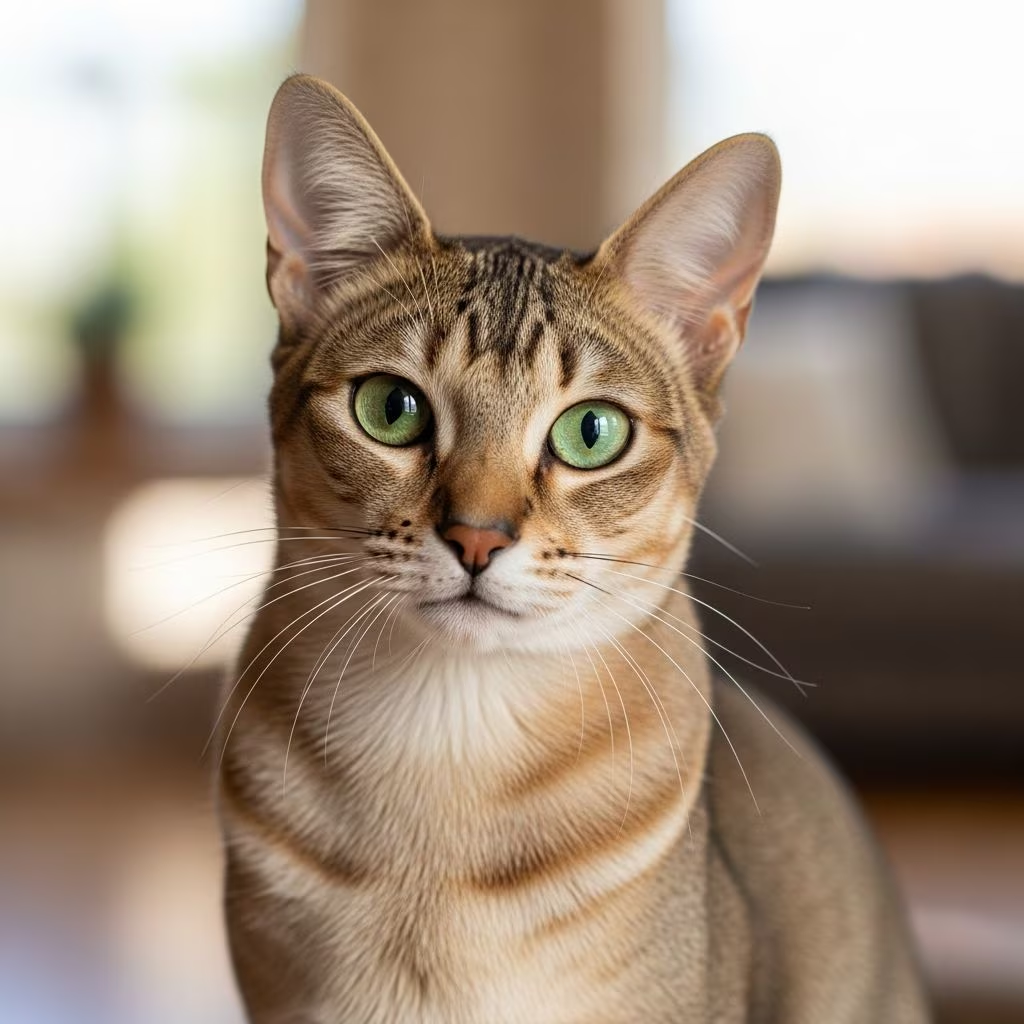
The Singapura cat stands out as one of the world’s smallest domestic breeds, celebrated for its compact frame, striking sepia-toned ticked coat, oversized ears, and almond-shaped eyes that convey endless curiosity. Originating from Singapore, where it’s affectionately called Kucinta or “love cat,” this breed combines a pint-sized body with a giant personality, making it an ideal companion for those seeking an energetic, people-oriented feline.
Origins and Development of the Singapura
The story of the Singapura begins in the humid alleys and drainage systems of 1970s Singapore, where small, brown-ticked cats roamed as common street dwellers. American expatriates Tommy and Hal Meadows, avid cat enthusiasts, encountered these felines during their time abroad. In 1975, they transported three young cats—a related pair of kittens and another female—back to Texas, laying the groundwork for the breed’s establishment in the West.
These foundation cats, named Pusse, Tes, and Ticle, formed the narrow genetic base from which all modern Singapuras descend. The breed earned its name from the Malay word for Singapore and quickly gained traction in cat fancy circles. The International Cat Association (TICA) recognized it for championship competition in 1979, followed by the Cat Fanciers’ Association (CFA) in 1982, with full championship status by 1988.
However, the Singapura’s ascent was not without turbulence. Early on, litters occasionally produced solid-colored kittens due to a recessive gene carried by two of the foundation cats. Breeders implemented rigorous test-mating protocols to identify and exclude carriers, reducing the breeding pool to just seven cats by 1988. This selective process intensified the breed’s already limited genetic diversity.
Controversies Surrounding the Breed’s Authenticity
By the late 1980s, whispers of doubt emerged about the Singapura’s purportedly natural origins. Investigations revealed that the foundation cats had been registered as Abyssinians on import documents to Singapore, and the Meadows had prior experience breeding Abyssinians, Burmese, and Siamese cats. Critics speculated the Singapura might be a deliberate crossbreed mimicking Singapore’s street cats rather than a pure natural type.
The controversy peaked in the early 1990s when Singapore’s Tourist Promotion Board researched the breed for a national mascot campaign. They uncovered photos showing the foundation cats in the U.S. before their “import” to Singapore, suggesting a round-trip fabrication. Breeder Jerry Mayes bolstered these claims after spotting similar cats in a Singapore shelter. Despite this, CFA investigations cleared the Meadows of intentional fraud, attributing discrepancies to registration errors, and affirmed the breed’s legitimacy with the addition of a fourth foundation cat from Singapore.
Detractors pointed to physical resemblances: the Singapura’s ticked tabby pattern echoes the Abyssinian, while its sepia tone and body type align with the Burmese. European and American judges even noted that certain ticked Burmese could pass as Singapuras. Yet, official bodies upheld its status, and Singapore embraced it as a “living national monument,” renaming it Kucinta in 1990 after a public naming contest.
Physical Characteristics and Appearance
Singapuras epitomize miniaturization in felines, with adults typically weighing 4 to 8 pounds and measuring 6 to 8 inches at the shoulder. Their muscular yet delicate build gives a sturdy impression despite the diminutive scale. The head is rounded with large, lynx-tipped ears set high, framing luminous hazel or yellow eyes outlined in black for a dramatic gaze.
The signature coat is short, dense, and ticked—each hair banded with multiple shades of brown over an ivory base, creating a warm sepia glow that deepens along the spine, tail, and legs. Four to six stripes adorn the face, legs bear even bands, and the blunt, medium-length tail ends in two-tone rings. Whisker pads and paw pads are cinnamon to rose.
| Feature | Description |
|---|---|
| Weight | 4-8 lbs (males larger) |
| Height | 6-8 inches |
| Coat | Short, ticked sepia tabby |
| Eyes | Large, almond-shaped, hazel/yellow |
| Ears | Large, wide-set, lynx-tipped |
| Tail | Blunt, medium, ringed |
This uniform coloration ensures the breed “breeds true,” a hard-won trait from early culling efforts.
Temperament and Behavioral Traits
Belying their size, Singapuras burst with vitality and intellect. Nicknamed “Pura,” they are extroverted explorers, constantly investigating their world with acrobatic leaps and fearless climbs. Their intelligence shines in puzzle-solving and learning tricks, often rivaling dogs in trainability.
Affectionate to the core, they form deep bonds, perching on shoulders or nestling in laps while chirping and trilling to communicate. Singapuras crave human interaction, greeting guests warmly and disliking solitude—they thrive in active households but may vocalize if ignored. Playful into adulthood, they entertain with pouncing and batting, yet adapt well to apartments if provided vertical spaces.
- Energetic: Needs daily play to channel boundless energy.
- Social: Bonds strongly with family, friendly with strangers.
- Vocal: Uses chirps, trills over meows.
- Intelligent: Quick learner, enjoys interactive toys.
- Gentle: Good with respectful children and calm dogs.
Care Requirements for Singapura Owners
Grooming is minimal thanks to the short, plush coat—weekly brushing distributes oils and catches rare sheds. Dental care is crucial due to potential overcrowding; provide enzyme toothpaste and toys. Bathe only as needed, and trim nails biweekly.
Nutrition suits their active metabolism: high-protein, grain-free formulas support muscle tone. Feed measured meals to prevent obesity in spayed/neutered adults. Fresh water and scratching posts preserve paw health.
Exercise involves climbing trees, window perches, and toys mimicking prey. Mental stimulation via food puzzles prevents boredom-induced mischief.
Health Profile and Genetic Concerns
Singapuras enjoy a lifespan of 9-15 years but face risks from their inbred origins. Pyruvate Kinase Deficiency (PKDef), a recessive anemia, affects some lines—screen breeders via DNA tests. Uterine inertia, inherited from Pusse, necessitates C-sections in certain females. Small litters (2-3 kittens) signal fertility challenges.
Monitor for hip dysplasia, patellar luxation, and dental issues. Annual vet checks, vaccinations, and parasite control are essential. Reputable breeders provide health guarantees and pedigrees.
Acquiring and Living with a Singapura
Seek CFA/TICA-registered catteries emphasizing genetic testing. Kittens cost $1,200-$2,000, reflecting rarity. Prepare for a velcro kitty demanding attention—ideal for apartments or families sans toddlers.
In Singapore, Kucinta symbolizes resilience, featured in tourism. Globally, fanciers value its authenticity debate as adding mystique.
Frequently Asked Questions
Are Singapuras hypoallergenic?
No, but their short coat sheds minimally compared to longhaired breeds.
How big do Singapura cats get?
Adults top out at 8 pounds, the smallest recognized breed.
Is the Singapura cat good with kids?
Yes, patient and playful with gentle children.
What’s the Singapura’s exercise needs?
High—daily interactive play prevents hyperactivity.
Do Singapuras have separation anxiety?
They prefer company but adapt with enrichment toys.
References
- Singapura cat – Wikipedia — Wikipedia. 2023-10-15. https://en.wikipedia.org/wiki/Singapura_cat
- Singapura – TICA — The International Cat Association. 2024-01-12. https://tica.org/breed/singapura/
- THE SHADY STORY OF THE SINGAPURA – THE MESSYBEAST — Messybeast. 2022-05-20. http://messybeast.com/singapura-debate.htm
- Singapura cat – Singapore – NLB — National Library Board Singapore. 2023-08-10. https://www.nlb.gov.sg/main/article-detail?cmsuuid=5caad88a-d2d4-4290-a709-5357a32ea130
- Singapura Cats: How Their Tiny Size Conceals a Big Personality — Purebred Kitties. 2024-02-05. https://purebredkitties.com/blogs/singapura-cat/singapura-cats-how-their-tiny-size-conceals-a-big-personality
- Singapura – The Governing Council of the Cat Fancy — GCCF. 2023-11-18. https://www.gccfcats.org/getting-a-cat/choosing/cat-breeds/singapura/



