

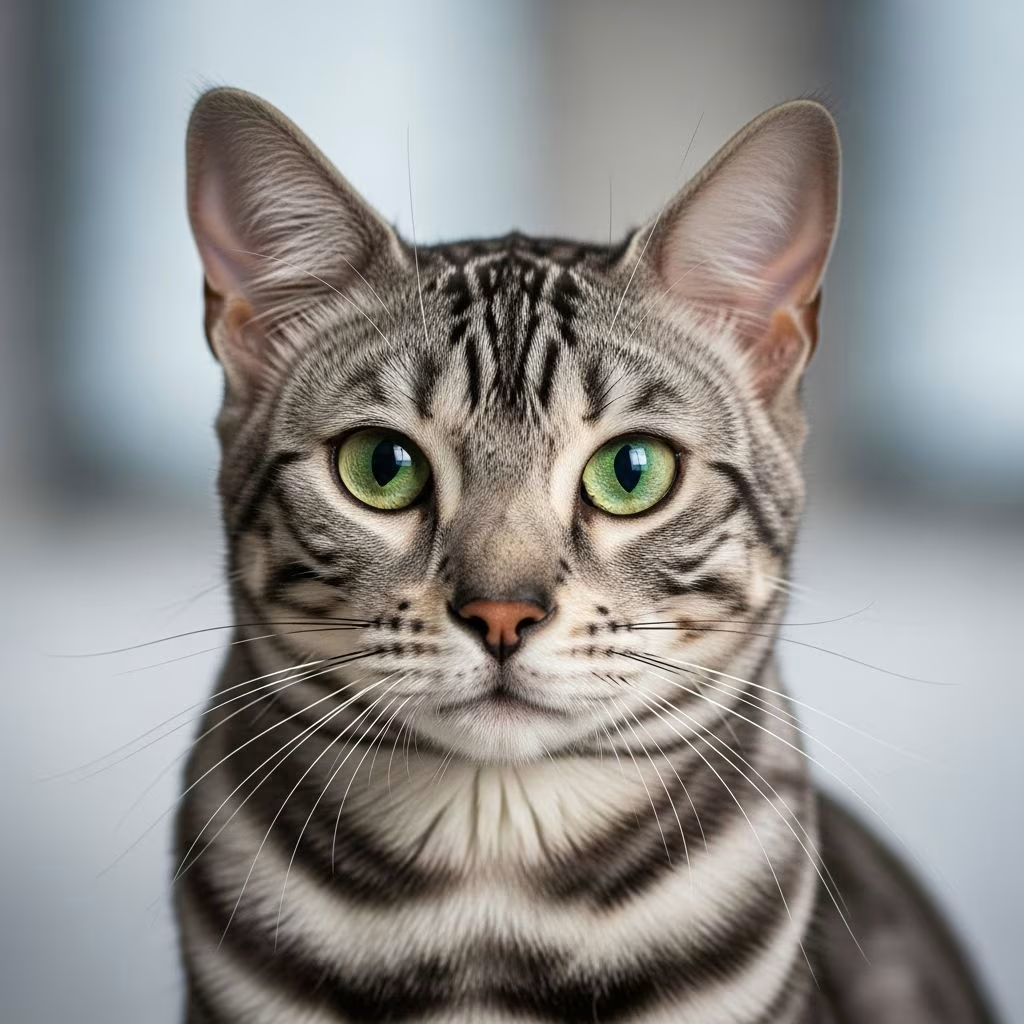
The silver Bengal cat captivates with its shimmering coat that mimics the allure of untamed felines, blending domestic charm with exotic aesthetics. This breed variant arises from selective genetics, producing a striking contrast of pale undercoats against dark markings, making it a standout choice for cat lovers seeking uniqueness without wild ancestry risks.
Genetic Foundations of the Silver Coat
At the heart of the silver Bengal’s appearance lies the inhibitor gene, a dominant trait (denoted as I) that suppresses warm pigmentation in the fur. This results in a coat where typical brown tones are blocked, yielding a silvery base that ranges from bright white to steely gray. A cat needs just one copy of this gene from a silver parent to express the silver phenotype, simplifying initial inheritance but complicating premium quality production.
Homozygous silvers (I/I), bred from two silver parents, often display purer silver with minimal ‘tarnish’—those unwanted yellow or brown hues that can emerge with age. Heterozygous silvers (I/i), from silver-to-non-silver matings, risk more variability, where kittens might start silver but develop warmer tones as adults. Breeders face hurdles in balancing this gene’s strength: too potent, and it washes out pattern contrast; too weak, and tarnish dominates, dulling the effect.
- Inhibitor Gene Impact: Blocks pheomelanin (warm reds/browns), preserving eumelanin (blacks/grays) for vivid rosettes.
- Homozygous vs. Heterozygous: Pure silvers (I/I) offer consistency; mixed (I/i) introduce risks like fading contrast.
- Ancestral Ties: Derived from Asian leopard cat hybrids, refined over generations for domestic traits.
Additional modifiers like ticking or wide-band agouti influence hair shaft clarity, potentially softening rosettes if not carefully selected. Non-agouti silvers (aa) manifest as smokes, with white roots under dark tips, adding depth. Achieving high-contrast silvers demands pairing strong inhibitors with bold-patterned browns or charcoals, which mask underlying flaws.
Distinctive Physical Traits and Variations
Silver Bengals embody athletic grace: long, muscular bodies (medium to large size), broad heads with prominent whisker pads, and large, rounded paws suited for agile leaps. Their short, plush coats feel luxurious, often glittering under light due to subtle sheen. Eyes gleam in green, gold, or hazel, enhancing the wild visage.
Coat patterns prioritize large, two-toned rosettes—randomly placed spots evoking leopards—over uniform tabs. Background shades span cool whites to dark silvers, with markings in jet black or deep gray. A black-tipped tail, brick-red nose, and white belly complete the ideal.
| Variation | Base Color | Markings | Eye Color |
|---|---|---|---|
| Classic Silver | White to steel gray | Black/gray rosettes | Green/gold |
| Silver Charcoal | Smoky overlay | Darker, veiled patterns | Gold/hazel |
| Silver Snow | Cream/ivory | Seal/gray points | Blue-green |
Unlike standard brown Bengals (orange ground, black spots), silvers avoid warm tones entirely. Blue silvers or other dilutions exist but remain rare, requiring recessive carriers. Kittens often darken or ‘tarnish’ post-weaning, underscoring maturation’s role in final assessment.
Temperament and Behavioral Profile
Silver Bengals inherit the breed’s vivacious spirit: intelligent, playful, and boldly affectionate. These cats demand engagement, thriving on interactive toys, climbing structures, and puzzle feeders to channel their curiosity and energy. Far from aloof, they form strong bonds, often following owners room-to-room with chirps and trills.
Athletic prowess shines in feats like high jumps and water fascination—many enjoy baths or faucets. Confident yet gentle, they suit families, including those with respectful children or dogs, provided early socialization. Lifespan averages 12-16 years with proper care, blending wild energy with domesticated loyalty.
- Activity Level: High—needs daily play to prevent mischief.
- Social Needs: Bonds deeply; loneliness sparks destructiveness.
- Vocalizations: Chattering, purring; mimics wild cat calls.
Health Considerations and Wellness
Bengals, including silvers, boast robust health but carry risks like hypertrophic cardiomyopathy (HCM), progressive retinal atrophy (PRA), and hip dysplasia. Genetic testing for parents mitigates hereditary issues, emphasizing diverse breeding to preserve vigor. The silver gene itself poses no unique ailments but demands coat vigilance against tarnish-linked stressors.
Regular vet checkups, balanced raw or high-protein diets, and dental care sustain vitality. Monitor for obesity, as their muscular frames hide weight gain. Average weight: 8-15 pounds, with males larger.
Daily Care and Living Environment
Thriving silver Bengals require spacious, enriched homes: vertical spaces like cat trees, scratching posts, and window perches fuel exploration. Litter training succeeds with large, uncovered boxes; they favor cleanliness.
Grooming is minimal—weekly brushing distributes oils, reducing shedding. Nutrition prioritizes taurine-rich foods mimicking wild diets; hydration via fountains appeals to their water love. Training via clicker works wonders for tricks and boundaries, leveraging their smarts.
Breeding Insights and Ethical Practices
Producing elite silvers challenges breeders: silver-to-silver pairings boost purity but risk inbreeding; crosses with charcoals enhance overlay contrast. Prioritize health screenings, temperament, and standards from bodies like TICA, where silver gained championship status in 2004. Ethical programs focus on diversity, avoiding overemphasis on color at vitality’s expense.
Bringing Home a Silver Bengal
Adopt from reputable catteries post-health assurances. Prepare for an active lifestyle; budget $1,500-$4,000 for kittens. They excel as singular pets or in pairs, rewarding dedicated owners with lifelong companionship.
Frequently Asked Questions
Are silver Bengals hypoallergenic?
No, but their short coats shed less than longhaired breeds, easing allergies for some.
How do silver Bengals differ from regular Bengals?
Silvers lack warm tones due to the inhibitor gene, sporting silvery bases versus browns’ golden grounds.
Do silver Bengals make good apartment pets?
Yes, with ample enrichment; their energy fits active urban dwellers.
Can silver Bengals be bred with other colors?
Yes, but only silver parents yield silvers; quality varies widely.
What is tarnish in silver Bengals?
Unwanted yellow/brown hues creeping into the coat, minimized via selective genetics.
References
- The Silver Bengal Cat: Genetics, Breeding Practices — Moonshine Bengals. 2023. https://www.moonshinebengals.com/post/the-silver-bengal-cat
- Bengal Breed Profile — Governing Council of the Cat Fancy. 2024. https://www.gccfcats.org/getting-a-cat/choosing/cat-breeds/bengal/
- Bengals Colors and Patterns — Royal Bengal Cattery. 2023. https://royalbengalcattery.com/about-bengals/bengals-colors-and-patterns.html
- Silver Bengal Cat Genetic — Lynx Land. 2022. https://www.lynx-land.com/post/silver-bengal-cat-genetic



