

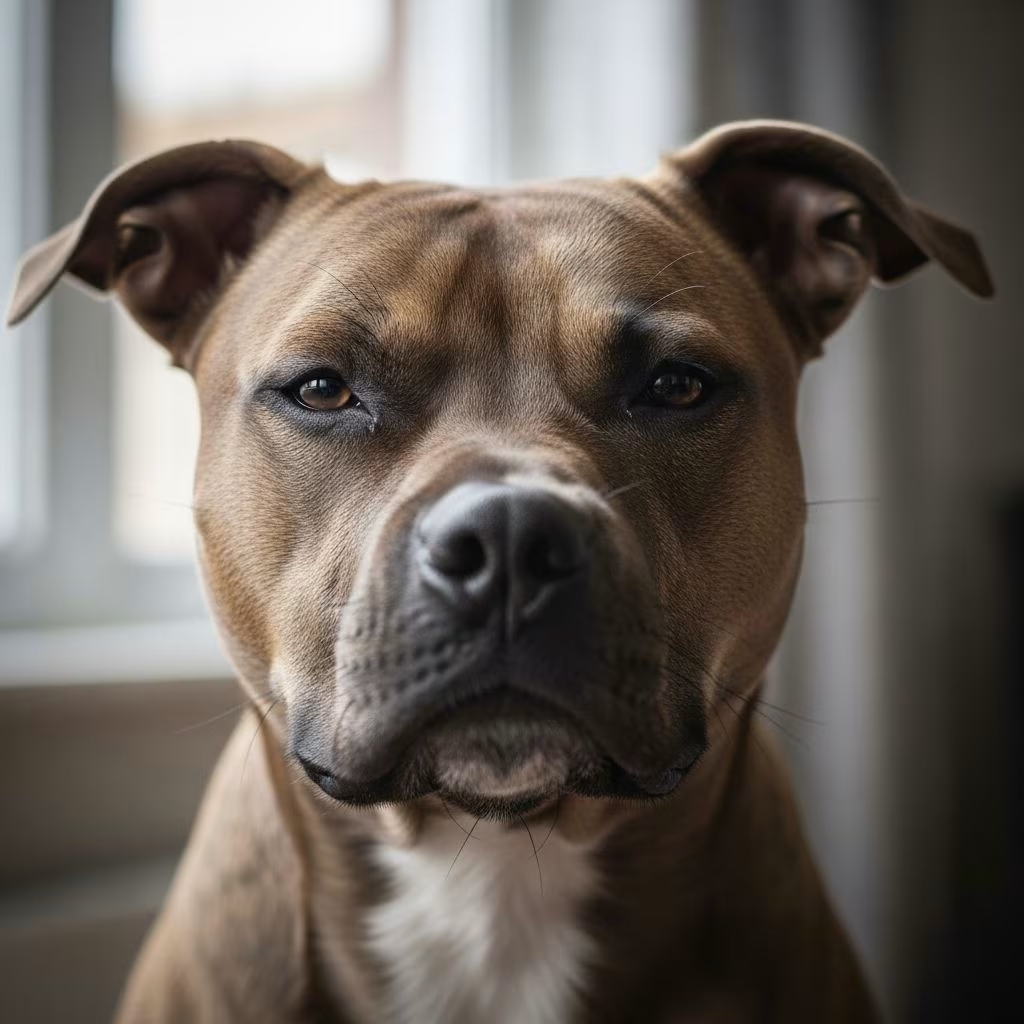
Beware the Silent, Stealthy Aggressors: Subtle Signs of Dog Aggression
Many dogs do not start with a dramatic growl or a full-on lunge before they bite. Instead, they quietly communicate their discomfort and fear through subtle shifts in body language, posture, and expression. When people miss or misunderstand these early signals, a dog may feel forced to escalate to a snap or bite.
This article explains how to recognize these silent, stealthy signs of aggression, what they mean, and how to respond in ways that keep both people and dogs safe. Understanding your dog’s body language is one of the most effective ways to prevent conflict and bites at home and in public.
Why Some Dogs Warn Quietly
Aggression in dogs is not a personality trait; it is a behavioral response to something the dog finds threatening, painful, or overwhelming. Many so-called “sudden” bites are not actually sudden at all—people simply did not notice or understand the early warnings.
There are several reasons a dog might use quiet or subtle signals instead of obvious ones:
- The dog has learned that growling or barking gets punished, so it suppresses those signals and jumps straight to a bite when pushed.
- The dog is fearful or anxious and attempts to avoid conflict by freezing, looking away, or trying to leave.
- The dog’s personality or breed tendencies lean toward being reserved or “shut down,” so its communication is more low-key.
- Chronic stress or pain makes the dog less tolerant, shortening the distance between mild discomfort and active aggression.
When dogs feel their subtle messages are ignored, they may feel they have no choice but to protect themselves more forcefully.
How Aggression Develops: From Subtle to Serious
A dog rarely goes from relaxed to bite in a single step. There is often a progression of signals as the dog’s emotional state moves from mild concern to defensive or offensive aggression.
| Stage | Dog’s Emotional State | Common Signs |
|---|---|---|
| Early discomfort | Uncertain, mildly uneasy | Averting gaze, lip licking, yawning, turning away, slight stiffening |
| Escalating stress | Worried, trying to cope or escape | Freezing, lowered body, tail tucked or very high, ears back, panting, pacing |
| Defensive aggression | Feels cornered, threatened | Rigid posture, intense stare, growling, baring teeth, lunging without contact |
| Active bite | Protecting self, resource, or territory | Snapping, muzzle punches, biting, repeated bites |
Intervening during the early discomfort and escalating stress stages is the safest and most effective way to prevent bites.
Subtle Warning Signs You Might Be Missing
The following behaviors often appear mild or harmless on their own, but together they can signal that a dog is uncomfortable and approaching its limit.
1. Body Stiffening and Freezing
One of the most important warning signs is when a dog’s body suddenly becomes very still and rigid.
- Muscles tighten; the dog appears “statue-like.”
- The dog may pause mid-movement and freeze for a second or longer.
- Often appears just before lunging, growling, or biting.
Freezing is not a calm behavior; it often means the dog is intensely focused and deciding what to do next.
2. Changes in Eyes and Gaze
The eyes can reveal a great deal about a dog’s emotional state.
- Whale eye (crescent moon eye): the dog looks out of the corner of its eye, showing the white of the eye.
- Rapidly shifting gaze or avoiding eye contact while staying tense.
- Hard, unblinking stare that looks “cold” or “lifeless.”
- Dilated pupils in a non-exciting environment (indicating arousal or stress).
If a dog is staring intensely and has a stiff body, this can be a clear precursor to a bite.
3. Ear and Tail Position Shifts
Ears and tail positions change as the dog moves from relaxed to stressed.
- Ears suddenly pinned back or pulled to the side when approached.
- Tail held very high and rigid, or tucked low and tight between the legs.
- Tail wagging that is stiff, fast, and narrow in range can indicate arousal, not friendliness.
Never assume that a wagging tail always means a friendly dog; context and the rest of the body matter.
4. Mouth, Lips, and Subtle Facial Changes
Dogs show tension and discomfort around the mouth before a full snarl appears.
- A relaxed, open mouth suddenly snaps shut and becomes tight.
- Lip corners pulled back slightly, without a full show of teeth.
- Repeated tongue flicks or nose licks when no food is present.
- Teeth chattering or trembling around the muzzle in stressful situations.
These signs often appear when a dog is touched, hugged, or leaned over and does not feel safe.
5. Avoidance and Quiet Attempts to Escape
Many dogs try to avoid conflict before they ever growl or snap.
- Moving away from a person, child, or other dog.
- Hiding behind furniture, under tables, or behind their owner.
- Turning the head away while the body stays tense.
- Refusing to take treats, or taking them very hard and fast.
Forced interaction with a dog that is trying to escape can push it into defensive aggression.
6. Stress and Anxiety Signals Often Confused with “Bad Behavior”
Stress-related behaviors are sometimes mislabeled as stubbornness or disobedience, but they may be signs that a dog is approaching its limit.
- Excessive panting when it is not hot.
- Pacing, restlessness, or sudden hyperactivity.
- Scratching, shaking off “as if wet,” or stretching repeatedly.
- Whining, high-pitched barking, or being unusually quiet and withdrawn.
When these behaviors appear around specific triggers—like strangers, handling, or resource guarding—they can precede growling or biting.
Common Triggers for Silent Aggression
Dogs are more likely to use subtle warning signals in situations where they feel threatened but are unsure whether they can safely escape.
1. Handling, Restraint, and Physical Contact
- Reaching over the dog’s head or face.
- Hugging, kissing, or leaning into the dog.
- Grabbing the collar or physically moving the dog while it is resting.
- Vet visits, grooming, nail trimming, or invasive handling.
Dogs often freeze, stiffen, look away, or lick their lips in these scenarios long before they growl.
2. Resource Guarding
Guarding of food, toys, beds, or stolen objects is a common cause of aggression in dogs.
- Dog stands over or straddles a valued item.
- Body becomes rigid, tail may rise, ears shift back.
- Dog may give side-eye, showing the whites of the eyes while staying still.
- If ignored, this can escalate to growling, snarling, snapping, or biting.
3. Fear and Anxiety Around People, Dogs, or Environments
- Strangers approaching too quickly or leaning in.
- Unfamiliar dogs entering the dog’s space.
- Loud, chaotic environments or sudden noises.
- Past traumatic experiences associated with certain places or types of people.
Dogs with fear-based aggression may initially charge or bark to create distance, but the roots lie in anxiety rather than a desire to dominate.
Is It Aggression or Anxiety?
What looks like aggression is often a dog’s attempt to cope with stress, fear, or pain.
Key distinctions:
- Anxiety-driven behaviors often include pacing, whining, destructiveness when alone, or stress when confronted with certain triggers.
- Aggressive behaviors include stiff posture, hard stare, growling, lunging, snapping, or biting.
- In many cases, anxiety and aggression overlap; the aggressive response is how the anxious dog tries to protect itself.
A professional assessment is often needed to separate fear, frustration, medical issues, and learned aggressive responses.
How to Respond Safely to Subtle Warning Signs
When you notice early warning signals, your goal is to reduce the dog’s stress and avoid forcing it to escalate.
Immediate Safety Steps
- Stop what you are doing if the dog stiffens, freezes, or shows whale eye.
- Give space: back away slowly and avoid looming or leaning over the dog.
- Do not punish growling or warning signs; punishment may teach the dog to skip warnings and go straight to a bite.
- Manage the environment: separate the dog from children, visitors, or other dogs until you can get professional help.
Long-Term Management and Prevention
- Schedule a veterinary exam to rule out pain, illness, or neurological issues that can contribute to aggression.
- Work with a qualified behavior professional (such as a veterinary behaviorist or certified behavior consultant) who uses humane, evidence-based methods.
- Use counterconditioning and desensitization to change how your dog feels about triggers—pairing them with safe distance, calm exposure, and high-value rewards.
- Provide predictable routines, safe spaces (crates, resting areas), and opportunities for mental and physical enrichment.
- Teach family members—especially children—how to interact respectfully with the dog and when to leave the dog alone.
Helping Children and Visitors Stay Safe
Many bite incidents involve children who may not yet recognize or respect a dog’s boundaries.
- Never allow children to climb on, hug, or corner a dog, even a familiar one.
- Teach kids to invite the dog over instead of approaching directly.
- Supervise all interactions between children and dogs; if you cannot supervise, separate.
- Instruct visitors not to reach over the dog’s head, grab the collar, or disturb the dog when it is resting or eating.
Frequently Asked Questions (FAQs)
Q: My dog never growls—does that mean they are not aggressive?
A: Not necessarily. Some dogs give very quiet warnings—such as freezing, stiffening, or showing whale eye—instead of growling. In some cases, dogs that have been punished for growling stop using that warning and may bite without obvious vocal signals. Learning to read body language is crucial.
Q: Is a wagging tail always a sign that a dog is friendly?
A: No. Tail wagging only shows arousal, not intent. A stiff, high, rapidly wagging tail can be seen in dogs that are anxious or about to become aggressive, while a loose, sweeping wag with a relaxed body is more likely to indicate friendliness.
Q: When should I call a professional about my dog’s behavior?
A: You should seek professional help if your dog growls, snaps, or bites, or if you frequently see stiffening, freezing, hard stares, or intense avoidance in everyday situations. A veterinarian and a qualified behavior professional can assess medical and behavioral causes and create a safety and treatment plan.
Q: Can aggressive behavior in dogs be cured?
A: Aggression is often managed rather than fully cured. With veterinary oversight, behavior modification, and careful management, many dogs can improve significantly and live safely with people and other animals. However, some dogs will always require ongoing precautions, such as controlled environments, equipment like leashes or muzzles, and informed handling.
Q: Are some breeds naturally more aggressive than others?
A: Research indicates that aggression is influenced by a combination of genetics, early socialization, environment, training, and individual history rather than breed alone. Any dog, regardless of breed or size, can bite if it feels threatened or if its warning signals are ignored.
References
- 10 Signs Your Dog Is Stressed — PetSafe. 2019-08-06. https://www.petsafe.com/blog/10-signs-your-dog-is-stressed/
- Aggression in Dogs — ASPCA. 2021-06-01. https://www.aspca.org/pet-care/dog-care/common-dog-behavior-issues/aggression
- The Five Subtle Warning Signals Dogs Display Before They Bite — NutriSource Pet Foods. 2018-04-10. https://nutrisourcepetfoods.com/uncategorized/the-five-subtle-warning-signals-dogs-display-before-they-bite/
- Anxiety in Disguise: How Fear Can Look Like Aggression — PetPace. 2022-03-15. https://petpace.com/is-my-dog-aggressive-or-anxious/
- Canine Aggression — AKC Canine Health Foundation. 2019-11-01. https://www.akcchf.org/disease-history/canine-aggression/
- Dog Aggression: Signs, Causes, and How to Manage — Best Friends Animal Society. 2023-05-10. https://bestfriends.org/pet-care-resources/dog-aggression-signs-causes-and-how-manage



