

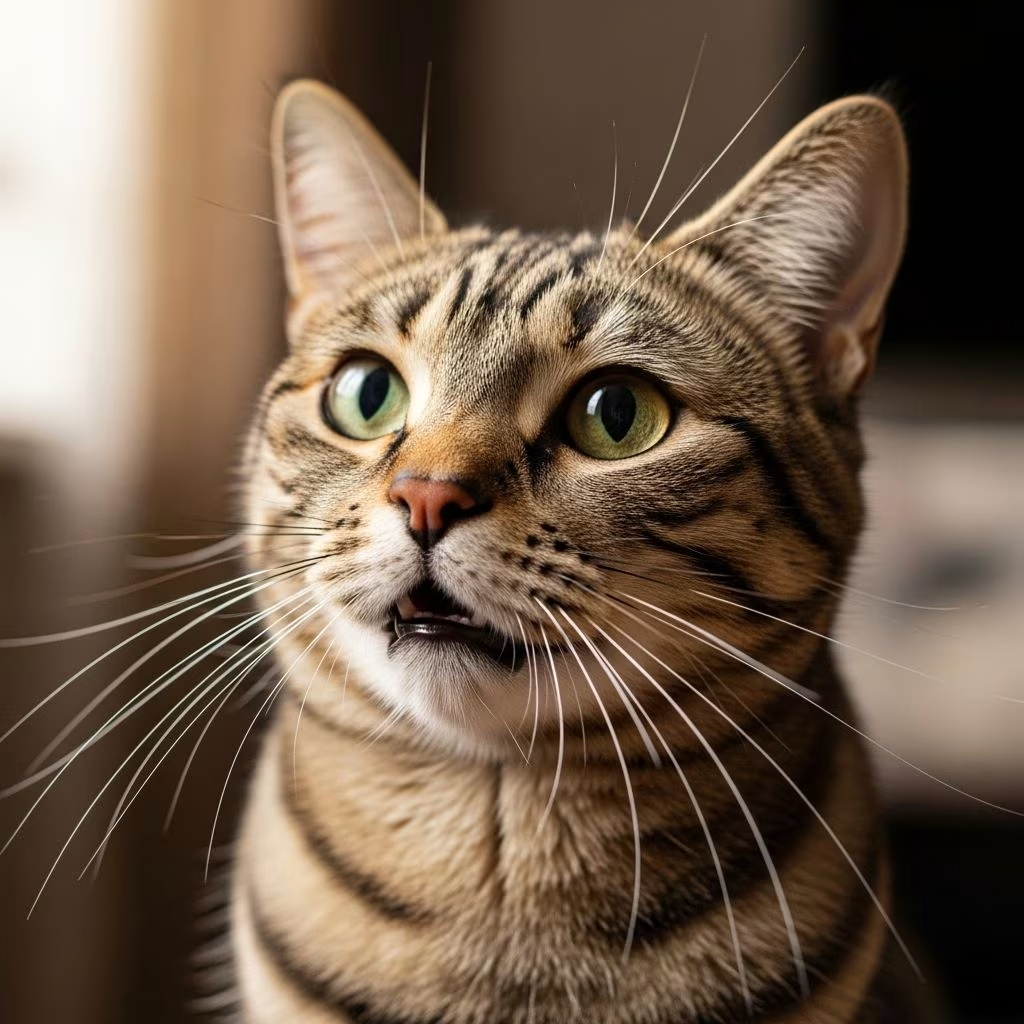
Cats have developed one of the most sophisticated systems of communication with their human companions. Among their diverse vocal repertoire, the silent meow stands out as one of the most intriguing and often misunderstood signals. When your feline friend opens her mouth as if to vocalize but produces little to no audible sound, she’s engaging in a form of communication that many cat owners find both endearing and puzzling. Understanding this peculiar behavior requires insight into feline psychology, anatomy, and the unique relationship between cats and humans.
The Science Behind Feline Communication
Cats have evolved their vocalization patterns specifically to interact with humans rather than with other felines. Adult cats do not typically meow at one another; this behavior is reserved almost exclusively for human interaction. Kittens meow to communicate with their mothers, signaling hunger or discomfort, but as they mature, they redirect these vocalizations toward their human caregivers. This evolutionary adaptation demonstrates how thoroughly domestic cats have integrated into human households and how they’ve learned that sound production is an effective tool for getting human attention.
Research into cat vocalization has revealed fascinating insights about how felines perceive and produce sound. According to studies on cat communication, cats may not fully understand the meaning of their own meows in a linguistic sense, but humans can assign specific meanings to different vocalizations based on consistent patterns and behavioral contexts. Through prolonged cohabitation with cats, people learn to interpret the subtle distinctions in their pet’s vocalizations—whether a meow signals hunger, a greeting, a request for attention, or an alarm.
Why Cats Produce Silent Meows
The silent meow represents a deliberate communication strategy employed by cats for several distinct reasons. Rather than a malfunction or a sign that something is wrong, this behavior often indicates that your cat has learned a specific lesson about getting your attention. When a cat opens her mouth in the meowing motion but produces little or no sound, she may be employing this technique because it has proven effective in the past.
Attention and Affection Seeking
One of the most common reasons cats produce silent meows is to solicit attention from their humans. This may include requests for petting, grooming, playtime, or simply social interaction. Some cats use the silent meow as a greeting when their owners return home or when they encounter them in different areas of the house. The quiet nature of this vocalization doesn’t indicate weakness or inability; rather, it often reflects a learned behavior pattern. If a cat has discovered that a soft, nearly inaudible meow prompts an immediate response from her human, she may preferentially use this technique. It’s a form of emotional communication that demonstrates the cat’s understanding of human responsiveness and her attempt to fine-tune her approach for maximum effectiveness.
Announcing Needs and Desires
Cats employ silent meows to announce their hunger, request food, or indicate that they require something specific from their environment. Whether your cat needs her water bowl filled, wants access to a particular room, or is ready for mealtime, the silent meow serves as a polite or subtle way to make this request known. Some cats may use this quieter vocalization first as a tentative request before escalating to louder, more demanding meows if their initial attempt goes unnoticed.
Multi-Cat Household Dynamics
In homes with multiple cats, silent meowing may become more prevalent as cats develop their own communication protocols. Cats may use quieter vocalizations when directing communication toward their feline companions rather than their human caregivers, or they might employ silent meows to avoid triggering competitive or territorial responses from other cats in the household. This represents sophisticated social behavior where cats modulate their communication based on the intended audience.
Expressing Frustration
Another compelling reason for silent meowing is frustration or resignation. Cats may resort to a whispered or silent meow when other communication attempts have failed. If a cat has repeatedly meowed loudly without receiving the desired response, she may switch to a silent meow as a final attempt, perhaps accompanied by body language that conveys disappointment or exasperation. This behavior pattern suggests that cats are capable of evaluating the effectiveness of their communication strategies and adjusting their approach accordingly.
The Hearing Advantage: What Humans Miss
An important consideration in understanding silent meows involves recognizing the dramatic differences between feline and human hearing capabilities. Cats possess extraordinary auditory abilities that far exceed human capacity. A cat can pinpoint the location of a sound within just a few inches from as far as three feet away, accomplishing this feat in a fraction of a second. Furthermore, cats can hear sounds from four to five times greater distances than humans can perceive.
Given these superior hearing abilities, a cat may be meowing at frequencies or volumes that are simply beyond human detection. What appears to be a silent meow might actually be a vocalization that the cat can hear clearly but that falls outside the range of human perception. This means your cat could be meowing quite audibly from her perspective, even though you cannot detect the sound. The cat has no way of knowing that her hearing range extends far beyond yours, so from her neurological standpoint, she’s producing a normal, audible meow.
Additionally, cats may deliberately employ higher-pitched vocalizations that most humans cannot hear but that other cats can perceive readily. Since a cat’s brain has evolved to recognize and respond to these high-frequency sounds, producing them makes perfect sense from her perspective. The cat is essentially communicating at a frequency that she knows works in her auditory world, unaware that this same frequency is inaudible to her human companion.
Health Considerations and Vocal Changes
While most silent meowing represents normal communication behavior, sudden changes in your cat’s vocalization patterns can indicate underlying health concerns that warrant veterinary attention. It’s important to distinguish between the intentional silent meow and a cat that has lost her voice or is struggling to vocalize due to medical issues.
Laryngitis and Throat Problems
If your cat suddenly stops being able to vocalize normally and seems to be struggling to produce sound, this may indicate laryngitis or a strained voice box. Conditions affecting the larynx can result in a weakened or completely absent voice. This represents a genuine medical concern rather than intentional silent meowing.
Respiratory and Allergy Issues
Allergies, respiratory infections, or throat irritations can cause a cat’s voice to become weak or muffled, producing what sounds like a whisper meow. These conditions may be accompanied by sneezing, coughing, or eye and nasal discharge. Exposure to various environmental irritants—including cat litter, laundry detergent, perfumes, air fresheners, or food sensitivities—can trigger these vocal changes.
Thyroid Dysfunction
Hyperthyroidism, a condition involving the overactive thyroid gland, can affect a cat’s ability to produce robust vocalizations. This medical condition impacts the swelling of the thyroid gland and can result in an inability to meow in a normal, healthy fashion. Hyperthyroidism also causes increased metabolism, heightened appetite, and behavioral changes that may accompany vocal alterations.
Throat Obstructions
Foreign objects lodged in a cat’s throat, hairballs, or polyps can impair normal vocalization. These represent genuine medical emergencies that require immediate veterinary evaluation and intervention.
Behavioral and Emotional Factors
Beyond attention-seeking and health concerns, various behavioral and emotional states can influence a cat’s vocalization patterns. Stress and anxiety can produce noticeably different vocal characteristics, including a muffled, shaky, or quivering voice that resembles a whisper. Environmental stressors such as household changes, new pets, unfamiliar houseguests, or construction noise can push cats beyond their comfort zone, affecting how they communicate.
Indoor cats in particular may develop excessive vocalization or silent meowing patterns if their environment lacks adequate enrichment. Vertical spaces, hiding spots, interactive play opportunities, and environmental variety all contribute to reducing stress-related vocalization issues. Boredom in an unchanging indoor environment can lead to increased vocalizations, including silent meows that serve as expressions of frustration or discontent.
Breed Differences in Vocalization
Certain cat breeds are naturally more vocal than others. Siamese and Bengal cats, for example, are known for their talkative nature. These breeds may be more prone to all types of vocalizations, including silent meows, as part of their genetic predisposition toward communication. Understanding your specific breed’s tendencies can help you determine whether your cat’s vocal behavior falls within normal parameters for her type.
Interpreting Your Cat’s Silent Meow
| Silent Meow Context | Likely Meaning | Recommended Response |
|---|---|---|
| Greeting upon your arrival home | Welcome acknowledgment or hello | Respond with gentle interaction |
| Near food or water bowl | Request for feeding or water refill | Check and refill as needed |
| After repeated loud meows ignored | Frustration or resignation | Address the underlying need |
| Accompanied by body tension or stress signals | Stress, anxiety, or discomfort | Evaluate environment; consult vet if persistent |
| Sudden change from normal vocalization | Potential health issue | Schedule veterinary evaluation |
When to Seek Veterinary Care
Not every change in vocalization requires professional attention, but certain situations warrant a veterinary evaluation. If your cat has suddenly lost her voice or experienced a dramatic change in vocalization ability, professional assessment is important. Similarly, if muffled or silent meowing is accompanied by other behavioral changes, loss of appetite, lethargy, or signs of physical discomfort, these warrant prompt veterinary attention.
A veterinarian can evaluate your cat’s thyroid function, listen for signs of respiratory infection or throat obstruction, and rule out neurological issues or pain that might be manifesting as vocal changes. Early intervention prevents many conditions from progressing to more serious complications.
Strengthening Communication With Your Cat
Understanding the silent meow as a form of intentional communication strengthens the bond between you and your feline companion. Rather than dismissing this behavior as insignificant, recognize it as evidence of your cat’s sophisticated ability to learn your behavioral patterns and adapt her communication accordingly. By responding consistently and appropriately to your cat’s various vocalizations, including silent meows, you reinforce effective communication patterns and demonstrate to your cat that you understand her needs.
Pay attention to the circumstances surrounding your cat’s silent meows. Keep mental notes or a simple log of when she tends to produce this vocalization, what she typically wants, and what environmental factors might influence her behavior. Over time, you’ll develop a richer understanding of your individual cat’s communication system and be better equipped to respond to her needs promptly and appropriately.
Conclusion: The Silent Language of Cats
The silent meow represents far more than a quirky feline behavior; it demonstrates the remarkable adaptability of domestic cats and their ability to fine-tune their communication strategies based on their interactions with humans. Whether your cat is greeting you, requesting food, expressing frustration, or meowing at frequencies beyond human hearing, this quiet vocalization reflects her deep integration into human society and her understanding that vocalizations are effective tools for getting your attention. By learning to interpret these subtle signals and addressing the genuine needs they represent, you deepen your relationship with your feline friend and ensure her physical and emotional well-being.
Frequently Asked Questions
- Is it normal for cats to meow silently?
- Yes, silent meowing is a normal behavior in cats, typically representing intentional communication. However, if your cat has suddenly lost her voice or shows signs of struggling to vocalize, medical evaluation is recommended.
- What does a silent meow mean?
- Silent meows can indicate attention-seeking, requests for food or interaction, multi-cat household communication, frustration, or vocalizations at frequencies beyond human hearing.
- Should I be concerned if my cat produces only silent meows?
- Not necessarily. If your cat is healthy, eating normally, and showing no other signs of distress, silent meowing alone is not concerning. However, if accompanied by behavior changes or health symptoms, consult a veterinarian.
- Can I train my cat to meow differently?
- Cats naturally adjust their vocalizations based on what gets them results. By responding consistently to specific meows and ignoring others, you can influence which vocalizations your cat uses most frequently.
- How do I know if a silent meow is a health problem versus normal behavior?
- A sudden change in vocalization patterns, especially accompanied by other symptoms like lethargy, appetite loss, or obvious discomfort, suggests a health issue requiring veterinary evaluation.
References
- Why Won’t My Cat Stop Meowing? What You Need to Know — Southern Arizona Veterinary Medical Association. Accessed 2026. https://southernazvets.com/why-wont-my-cat-stop-meowing-what-you-need-to-know/
- Why Does My Cat Meow Silently? (Whisper Meows) — YouTube Educational Content. Accessed 2026. https://www.youtube.com/watch?v=QTrUE5IFqHA
- Cat Meow Types: Meowing Without Sound? — Hill’s Pet Nutrition. Accessed 2026. https://www.hillspet.com/cat-care/behavior-appearance/why-do-cats-silently-meow
- Meowing and Yowling — ASPCA Pet Care Resources. Accessed 2026. https://www.aspca.org/pet-care/cat-care/common-cat-behavior-issues/meowing-and-yowling
- The Silent Meow – What Your Cat’s Quietest Sound Means — The Cat Site. Accessed 2026. https://thecatsite.com/c/the-silent-meow/



