

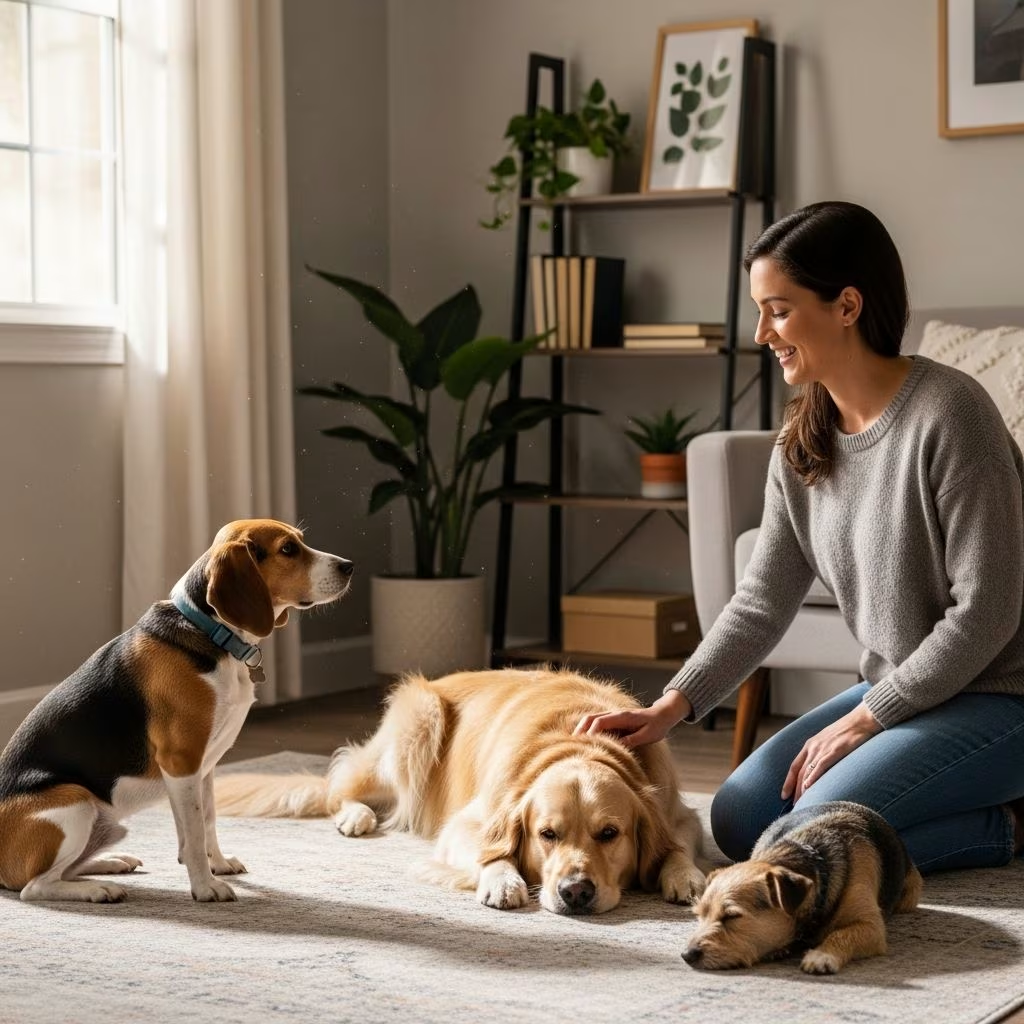
Living with multiple dogs brings joy but also amplifies challenges like synchronized barking episodes that disrupt daily life. This guide explores comprehensive approaches to curb excessive vocalization, drawing on management strategies and targeted training to restore tranquility.
Understanding Why Dogs Bark in Groups
Barking serves as communication among dogs, signaling alerts, excitement, or stress. In multi-dog settings, one dog’s bark often triggers others, creating a chain reaction due to social facilitation where behaviors intensify in company.Group dynamics exacerbate this, as dogs mirror each other’s arousal levels during triggers like doorbells or passersby.
Common triggers include territorial instincts, boredom, attention-seeking, or redirected frustration from unmet needs. High-energy breeds or those with herding backgrounds may bark more readily in packs, mistaking household noises for threats. Recognizing these patterns allows proactive intervention before choruses erupt.
Building a Foundation: Essential Management Rules
Effective multi-dog homes rely on consistent leadership and structure to prevent barking escalation. Key principles include selecting compatible dogs initially and enforcing uniform rules across the pack.
- Exercise daily individually: Separate walks prevent over-arousal buildup, tiring each dog mentally and physically to reduce idle barking.
- Separate during absences: Crate or gate dogs apart when leaving to avoid unsupervised trigger responses.
- Control access to excitement zones: Use baby gates for doorways where greetings spark noise.
These rules minimize opportunities for barking chains, fostering a calmer baseline environment.
Individual Attention: The Key to Quiet Bonds
Each dog craves personal interaction, and neglecting this leads to attention-barking amplified across the group. Schedule one-on-one sessions daily, rotating dogs for walks, play, or grooming to strengthen individual trust.
During these times, teach quiet behaviors reinforced with rewards. A dog feeling secure with its human barks less to compete for notice. This practice also builds tolerance for separation, reducing FOMO-driven vocalizations when alone.
Training Tools for Interrupting Barking Chains
Teach a universal interrupt cue like “enough” or “quiet,” conditioned by pairing with high-value treats during calm moments. In multi-dog scenarios, use it to pause group arousal before it spreads.
Implement nose-to-hand targeting: Dogs learn to touch your hand on cue, redirecting focus from bark triggers to handler-directed tasks. This skill aids navigation and de-escalation without physical force. Progress to group drills where dogs target individually amid mild distractions.
| Training Skill | Purpose in Multi-Dog Homes | Steps to Teach |
|---|---|---|
| Interrupt Cue | Halts barking chains | 1. Say cue in calm state, treat. 2. Add mild trigger. 3. Fade treats. |
| Nose Target | Redirects attention | 1. Present hand, reward nose touch. 2. Move hand variably. 3. Use in motion. |
| Place Command | Provides retreat spots | 1. Lure to mat/bed. 2. Reward stays. 3. Add distance/distractions. |
Resource Management to Prevent Conflicts
Competition over toys, food, or space fuels barking. Provide ample resources: multiple water stations, separate feeding areas, and rotated toys to eliminate guarding. Observe body language for tension signs like stiff postures, intervening early with separation.
During meals, practice “wait” at doors or bowls, reinforcing calm to associate food with quiet. Environmental tweaks like multiple resting spots reduce territorial disputes.
Handling High-Arousal Situations
Events like visitors or squirrels ignite group barking. Preempt by separating dogs or using gates during peaks. Train threshold manners: Dogs wait at doors on cue, preventing dash-and-bark rushes.
For outdoor reactivity, leash walks focus on one dog, desensitizing to triggers individually before group exposure. Consistent leadership ensures dogs defer to humans for alerts, quieting unnecessary noise.
Daily Routines for Lasting Peace
Structure prevents chaos. Sample schedule:
- Morning: Individual potty walks, breakfast with waits.
- Midday: Rotate crate rest or solo enrichment.
- Afternoon: Group settle training on mats.
- Evening: One-on-one play, calm wind-down.
Enlist household members for consistency, training all dogs uniformly. Monitor dynamics, as changes like new pets shift behaviors, requiring routine adjustments.
Advanced Techniques for Stubborn Cases
If basics fail, layer in desensitization: Play trigger recordings at low volume, rewarding silence, gradually increasing intensity. Consider professional positive-reinforcement trainers for tailored plans, especially with reactivity.
Use puzzle toys during alone time to combat boredom barking, ensuring mental fatigue matches physical. Track progress in a journal to identify patterns and successes.
Common Pitfalls and How to Avoid Them
- Group-only training: Leads to uneven skills; alternate individuals.
- Ignoring subtle cues: Early whale-eye or lip licks precede barks; separate promptly.
- Inconsistent rules: Undermines leadership; enforce across all.
FAQs
Why do my dogs bark only when together?
Social facilitation amplifies instincts; one starts, others join due to pack energy.
How long until barking reduces?
Weeks to months with consistency; track improvements weekly.
Can I use bark collars in multi-dog homes?
Avoid; they punish without addressing causes and may increase group stress.
What if one dog incites others?
Train the instigator individually first, using management to prevent rehearsals.
Is separation always needed?
Initially yes, fading as skills build for supervised harmony.
Long-Term Success in Multi-Dog Harmony
Sustained quiet requires vigilance, but rewards a peaceful pack. Prioritize prevention, reward calm, and adapt to each dog’s needs for enduring results.
References
- Multi-Dog Homes — BADRAP. Accessed 2026. https://badrap.org/training-resources/multi-dog-homes/
- Thriving with Multiple Dogs: Best Practices for a Harmonious Home — Oakland Dog Trainer. Accessed 2026. https://www.oaklanddogtrainer.com/post/thriving-with-multiple-dogs-best-practices-for-a-harmonious-home
- Managing a Multi Dog Household — Taysia Blue Rescue. Accessed 2026. https://taysiablue.com/resources/managing-a-multi-dog-household
- Managing Relationships in a Multiple Dog Household — StarMark Academy. 2013-04. https://www.starmarkacademy.com/wp-content/uploads/2013/04/ManagingMultipleDogHousehold.pdf
- Tips for Managing a Multi-Dog Household — East Bay SPCA. 2024-05. https://eastbayspca.org/wp-content/uploads/2024/05/Multi-Dog-Household-Tips.pdf
- 5 (+1) Skills That Help Me Manage My Multi-Dog Household — Pet Harmony Training. Accessed 2026. https://petharmonytraining.com/5-1-skills-that-help-me-manage-my-multi-dog-household/
- A Practical Guide to Multi-Dog Living — Red Pointy Dog. Accessed 2026. https://www.redpointydog.com/post/a-practical-guide-to-multi-dog-living-why-avoiding-the-hard-things-is-just-fine



