

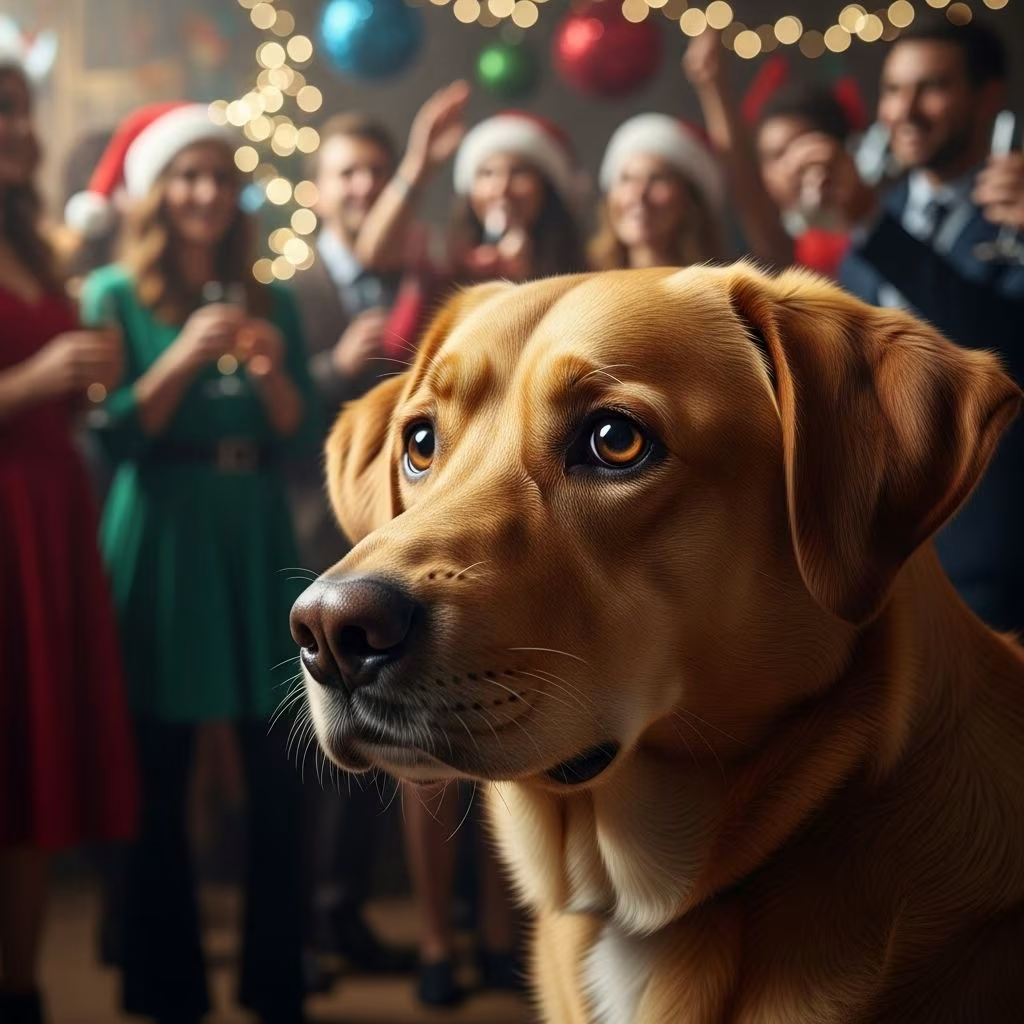
Holiday parties bring joy, laughter, and festive cheer, but for many dogs, the influx of guests, noise, and chaos can turn their home into a stressful environment. While some pups thrive on the attention, others feel overwhelmed, anxious, or even terrified. Recognizing the subtle (and not-so-subtle) signs that your dog isn’t enjoying the festivities is crucial for their well-being. This guide, informed by certified dog trainers and veterinarians, outlines five key indicators that your dog may need a break from the party—perhaps at a pet sitter’s or in a quiet room away from the action. By understanding these behaviors, you can make thoughtful decisions to keep your furry friend happy and safe during the holiday season.
Hosting gatherings is a beloved tradition, but dogs don’t share our love for crowded soirees. Factors like unfamiliar faces, loud music, clinking glasses, and unpredictable movements can spike their stress levels. Experts emphasize that ignoring these cues risks not only your dog’s comfort but also potential bites, escapes, or health issues from toxic ingestions. Let’s dive into the signs to watch for, drawn from professionals like Rhea Northcut, a certified professional dog trainer and separation anxiety specialist at Wiggle Butt Academy, and other behaviorists.
Stiff body
A stiff body is one of the most telling signs your dog is uncomfortable at a holiday party. Instead of their usual loose, playful posture, you’ll notice muscles tensed, tail held rigid or tucked, ears pinned back, and a frozen stance. This rigidity signals fear, discomfort, or readiness to flee, as the dog perceives the environment as threatening. Northcut explains that a stiff body often accompanies pacing or avoidance, indicating the dog is on high alert rather than relaxed.
Picture your dog weaving through guests with a rigid frame, avoiding eye contact, or pressing against walls—these are classic avoidance behaviors. In a party setting, where space is limited and stimuli abound, this stiffness can escalate quickly. Trainers recommend intervening early: gently guide your dog to a quiet area with familiar bedding and toys to help them decompress. Ignoring it might lead to growling or snapping as a last resort to create distance.
Growling, barking, showing teeth
Growling, excessive barking, or lip-lifting to show teeth are overt warnings that your dog is stressed to the breaking point. These vocalizations and displays are the dog’s way of saying “back off” when subtler signals are ignored. At holiday parties, overstimulation from strangers petting them without consent or invading their space can trigger this defensive response. According to behavior experts, these are threshold behaviors—signs the dog has reached their limit and may bite if pressure continues.
Don’t mistake enthusiastic barking for play; context matters. If accompanied by a stiff body, averted gaze, or retreat attempts, it’s distress, not joy. Smith, another expert cited in pet behavior resources, notes that mouthiness or overreactivity alongside barking points to overwhelm. Proactive steps include leashing your dog, creating barriers, or removing them entirely. Remember, a growl is a communication gift—heed it to prevent escalation.
Your dog can’t settle and is pacing constantly
If your dog can’t settle and paces constantly, it’s a clear indicator of overwhelm. Normally relaxed at home, they’ll now trot in circles, unable to lie down amid the party’s din. Northcut highlights that pacing with a stiff body means the dog is flooded with stimuli, unable to process or rest. This restless energy burns through their stress threshold, potentially leading to exhaustion or reactive outbursts.
Pacing often intensifies near doorways or high-traffic areas, where guests come and go. Offer a “doggie zone”—a blocked-off room with comforts like a crate, chews, and soft music to drown out noise. Regular check-ins reassure them without adding pressure. Surveys show 16% of pets get disruptive from such unrest, underscoring the need for management.
Your dog becomes hypervigilant or startles easily
Hypervigilance manifests as wide eyes darting everywhere, jumping at sudden noises like laughter or dropped utensils, or obsessively tracking guests’ movements. Northcut describes this as an elevated alert state where the dog monitors threats instead of relaxing. At parties, constant vigilance drains energy, preventing fun or rest.
Startling easily—flinching at balloons popping or doors slamming—amplifies this. It’s not play; it’s survival mode. Create calm by dimming lights in their space, using white noise, and limiting interactions. This sign is especially common in noise-sensitive dogs, making parties particularly taxing.
Your dog gets mouthy, barky, or overreactive
Mouthiness (nipping), excessive barking, jumping, or yawning excessively signal displacement behaviors from stress. Smith notes these deviate from normal play, indicating anxiety. Yawning, often misread as tiredness, is a calming signal to self-soothe amid chaos.
Overreactivity spikes with unpredictable guest pets or games. Management via gates or sitters prevents incidents. Kinship surveys reveal 15% of dogs jump on people, 16% get disruptive—key stats for party hosts.
How can you tell excitement from true anxiety?
Differentiating excitement from anxiety prevents misreading cues. An excited dog shows loose, wiggly body language, relaxed face, play bows, and intermittent settling. They solicit interaction on their terms. Northcut stresses: wiggly whole-body wag, not just tail; voluntary approaches.
Anxious dogs have tense postures, intense energy mistaken for play (displacement), avoidance, or hypervigilance. Balanced, joyous energy is fun; intense, unbalanced is stress. Observe baseline behavior: deviations signal issues. Play is loose; anxiety rigid.
Which dogs are not party animals?
Not all dogs suit parties. High-risk groups include:
- New or unknown rescues: Avoid added stress; Northcut advises sitters.
- Dogs with bite history: Keep elsewhere to prevent incidents.
- Anxious or noise-sensitive dogs: Parties invade safe spaces.
- Puppies, seniors, or ill dogs: Dr. Ameis notes vulnerability to illness, mobility issues.
- Dogs hating crowds: No FOMO—health first.
Holiday risks: toxic foods (chocolate, grapes), pancreatitis from fats, alcohol, door-dashing, bites. Kinship data: 23% love attention, but 17% beg, 16% disruptive.
Holiday Emergencies to Watch For
Parties amplify dangers:
- Toxic ingestions: chocolate, grapes, xylitol.
- Fatty foods causing pancreatitis.
- Foreign objects, alcohol poisoning.
- Door-dashing, bite injuries from overstimulation.
Supervise closely or exclude dogs.
Questions to Ask Yourself Before the Party
Smith’s checklist:
- How long is the party?
- How far away?
- Familiar environment?
- Dog knows attendees?
- Follows commands in chaos?
Dr. Ameis adds: chronic illness, recent GI issues, anxiety history? Opt out.
Loving your dog sometimes means spending time apart
Skip guilt—explain your dog’s sitter plan. Friends understand. Prioritize welfare: crates, ex-pens, quiet zones work wonders. Management over training mid-party. Build connection via calm times.
Tips from experts:
- Use baby gates/crates for safe spaces.
- Monitor emotional states.
- Pre-party exercise.
- Enlist sitters/chaperones.
Frequently Asked Questions (FAQs)
What if my dog loves people usually?
Even social dogs overwhelm; quantity matters.
Can I train for parties?
Gradual exposure helps, but management first.
What about medications?
Consult vet for anxiety aids.
Is a sitter expensive?
Peace of mind worth it; check local options.
Do dogs get FOMO?
No—quiet beats stress.
References
- 5 Signs Your Dog Doesn’t Want to Be at Your Holiday Party — Kinship. 2023. https://www.kinship.com/pet-behavior/signs-your-dog-doesnt-like-holiday-parties
- Kinship Survey Reveals What People Are Doing With Their Pets During Holiday Hosting — Kinship. 2023. https://www.kinship.com/news/holiday-hosting-pets-survey
- Simple Solutions to Dog Behavior Problems During the Holidays — Seattle Dog Spot. 2017-12-12. https://www.seattledogspot.com/solution-dog-behavior-problems-holidays/
- 5 Ways to Keep Your Dog Happy (and Safe) During the Holidays — Kinship. 2023. https://www.kinship.com/dog-lifestyle/keeping-dog-safe-during-the-holidays



