

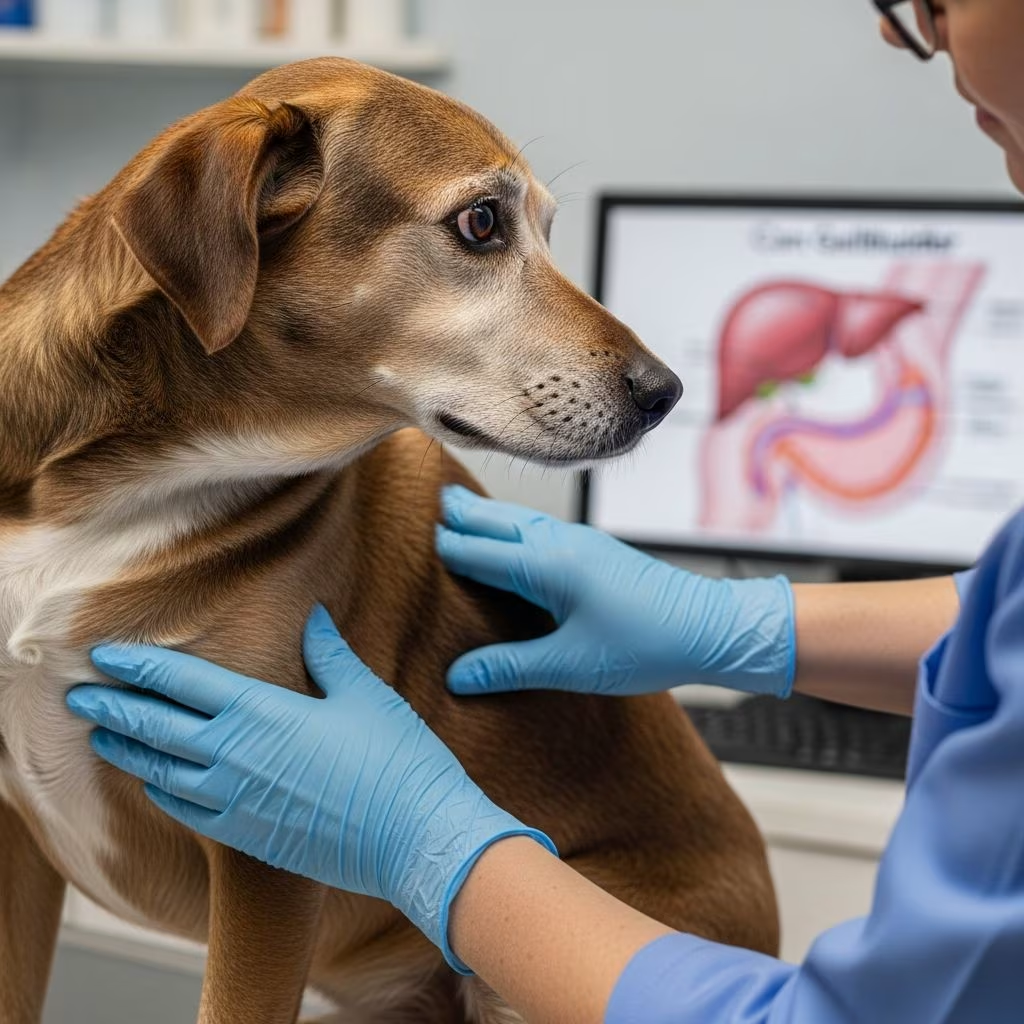
The liver and gallbladder play critical roles in digestion, detoxification, and metabolism in small animals such as dogs and cats. When these organs face disease, pets often display a range of symptoms that can be subtle at first but progress to severe conditions if untreated. This article delves into the manifestations of hepatobiliary disorders, drawing from veterinary diagnostics to help owners and professionals identify issues early.
Understanding Hepatobiliary Function in Companion Animals
The hepatobiliary system encompasses the liver, bile ducts, and gallbladder. The liver processes nutrients, filters toxins, produces proteins, and aids in clotting. Bile from the gallbladder emulsifies fats. Disruptions, like inflammation or shunts, impair these functions, leading to clinical signs.
In dogs and cats, conditions such as cholangiohepatitis, portosystemic shunts (PSVA), and fibrosis are prevalent. Cats are prone to lipidosis, while certain dog breeds face breed-specific risks like copper-associated hepatitis.
Common Nonspecific Symptoms Owners Should Watch For
Many hepatobiliary problems start with vague signs mimicking other illnesses. Pet owners frequently notice:
- Appetite changes: Intermittent anorexia or complete refusal to eat, especially in overweight cats leading to hepatic lipidosis.
- Weight loss: Progressive despite normal intake, due to maldigestion or toxin buildup.
- Gastrointestinal upset: Vomiting, diarrhea, or bloating from poor bile flow.
- Lethargy and weakness: General depression or reduced activity levels.
These symptoms often wax and wane, delaying diagnosis. For instance, polyuria and polydipsia (increased thirst and urination) signal impaired concentration abilities.
Specific Indicators of Liver and Biliary Distress
More targeted signs point directly to hepatobiliary involvement:
- Jaundice (icterus): Yellowing of gums, eyes, ears, and skin from bilirubin buildup, seen in about 33-50% of chronic cases.
- Hepatic encephalopathy (HE): Neurological effects like head pressing, seizures, circling, blindness, or drooling in cats, caused by ammonia accumulation.
- Ascites: Fluid accumulation in the abdomen from low albumin and portal hypertension.
- Bleeding tendencies: Easy bruising or prolonged clotting due to reduced clotting factors.
- Skin changes: Superficial necrolytic dermatitis, a rare but telling rash.
Physical exams may reveal enlarged liver (hepatomegaly), pain on palpation, or fluid waves. Fundic eye exams can show inflammation from infections.
Breed and Age Predispositions
Certain breeds heighten suspicion:
| Breed/Group | Common Condition | Key Signs |
|---|---|---|
| Labrador Retriever, Bedlington Terrier | Copper hepatitis | Jaundice, ascites |
| Yorkshire Terrier, Cairn Terrier | PSVA | Stunted growth, seizures, uroliths |
| Domestic cats (obese) | Hepatic lipidosis | Sudden anorexia, weight loss |
| West Highland White Terrier | Cholangiopathies | Chronic enzyme elevation |
Young pets with failure to thrive or post-meal odd behaviors suggest shunts, while older ones show progressive enzyme rises.
Diagnostic Pathways for Hepatobiliary Disease
Diagnosis starts with history: toxin exposure, drugs, travel, vaccines. Bloodwork is pivotal:
- Enzymes: Elevated ALT/AST indicate hepatocyte damage; ALP/GGT suggest biliary issues. Persistent ALT >2 months screens for chronic hepatitis.
- Function tests: Bile acids, ammonia, albumin, bilirubin assess synthetic capacity. Hyperbilirubinemia worsens prognosis.
- Coagulation: Prolonged times signal failure.
Imaging follows: Ultrasound detects masses, shunts, or dilation; radiographs assess size. Biopsy confirms via histopathology, essential for cholangiohepatitis.
Blood Test Interpretation Guide
| Test | Normal Range (approx.) | Elevation Meaning |
|---|---|---|
| ALT | 10-100 U/L | Hepatocyte injury |
| ALP | 20-150 U/L | Biliary or growth |
| GGT | 0-10 U/L | Bile duct disease |
| Bile Acids | <10 μmol/L | Shunting/insufficiency |
Combine with clinical signs for accuracy.
Treatment Strategies and Prognosis
Management varies by cause:
- Supportive care: Fluids, nutrition (tube feeding for lipidosis), anti-nausea meds.
- Targeted therapy: Ursodiol for cholestasis, antibiotics for infections, chelators for copper.
- Surgery: Shunt ligation or cholecystectomy.
Prognosis improves with early detection; chronic cases with cirrhosis fare worse. Monitor via repeat tests.
Preventive Measures for Pet Owners
Avoid hepatotoxins (NSAIDs, xylitol), maintain ideal weight, vaccinate against leptospirosis. Routine bloodwork in at-risk breeds aids early spotting.
Frequently Asked Questions (FAQs)
What causes yellow gums in my dog?
Jaundice from liver disease or bile obstruction; seek vet immediately.
Can liver disease cause seizures in cats?
Yes, via hepatic encephalopathy from toxin buildup.
Is elevated liver enzymes always serious?
Persistent rises warrant investigation; transient ones may not.
How is portosystemic shunt diagnosed?
Bile acid tests, ultrasound, CT.
What’s the treatment for cholangiohepatitis in cats?
Medical therapy, sometimes surgery; biopsy guides.
Early recognition of these signs can transform outcomes. Consult a veterinarian for tailored advice.
References
- Diagnostic Approach to Hepatobiliary Disease — Veterian Key. 2009. https://veteriankey.com/diagnostic-approach-to-hepatobiliary-disease/
- Internal Medicine: Medical Conditions — Cornell University College of Veterinary Medicine. Accessed 2026. https://www.vet.cornell.edu/hospitals/services/imaging-service/internal-medicine-medical-conditions
- ACVIM consensus statement on the diagnosis and treatment of chronic hepatitis in dogs — PMC (NCBI). 2019-05-21. https://pmc.ncbi.nlm.nih.gov/articles/PMC6524396/
- Liver Enzyme Interpretation and Function Tests — Today’s Veterinary Practice. Accessed 2026. https://todaysveterinarypractice.com/hepatology/liver-enzyme-interpretation-and-function-tests/
- Liver Disease in Dogs — PetMD. Accessed 2026. https://www.petmd.com/dog/conditions/digestive/liver-disease-dogs
- Diagnostics for Hepatobiliary Disease (Proceedings) — dvm360. Accessed 2026. https://www.dvm360.com/view/diagnostics-hepatobiliary-disease-proceedings



