

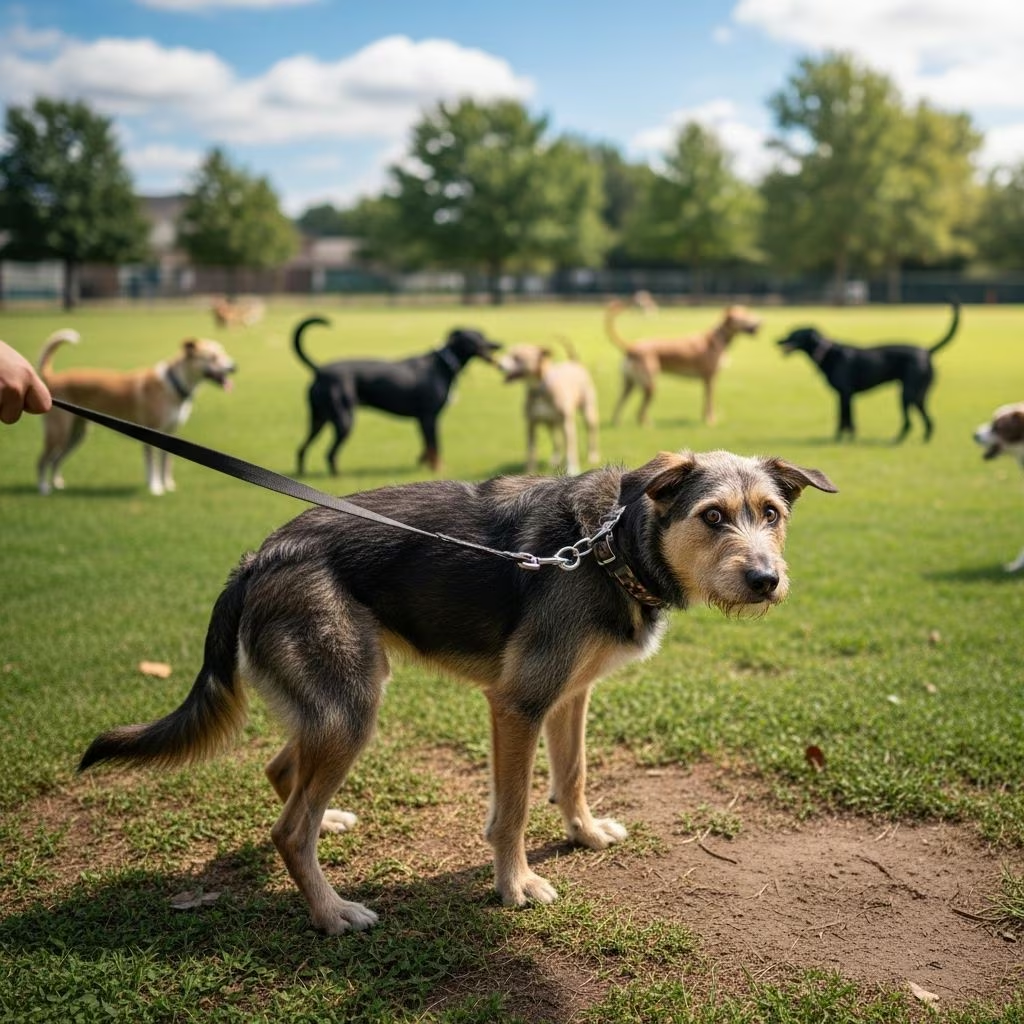
Dog parks offer off-leash fun and socialization opportunities, but they’re not suitable for every dog. Many pups thrive in these environments, building confidence and friendships. However, certain behavioral cues signal that a dog park visit could lead to stress, injury, or worsening problems. Recognizing these signs your dog should not go to the dog park helps protect your pet and others.
Public dog parks can amplify issues like anxiety or poor social skills due to the chaotic mix of dogs, people, and stimuli. Overstimulation often turns fearful dogs reactive, while mismatched play styles spark conflicts. Owners must observe body language closely: stiff postures, avoidance, or lunging indicate incompatibility. Studies show greetings in dog parks rarely lead to aggression among well-socialized dogs, but self-selection biases parks toward friendlier pups, masking risks for others.
Why Dog Parks Aren’t for Every Dog
Not all dogs are wired for group play. Puppies need controlled socialization before parks, as unexposed dogs may act dominantly, anxiously, or aggressively. Public parks birth behavioral issues, especially for temperamentally prone pups facing chaos from strangers. Fear escalates anxiety; negative encounters breed wariness toward all dogs. Even ‘positive’ visits foster leash reactivity or mimic bad habits like fence fighting.
Compatibility trumps size myths—arousal levels and play styles matter more. Forcing incompatible dogs together mimics clashing family dynamics, breeding arguments. Behavioral clinicians note reactivity rewards from owner interventions worsen problems. Skip parks if your dog shows these red flags.
Sign 1: Your Dog Is Fearful or Anxious
- Tail tucked, ears back, whale eye: These fear signals scream discomfort. Anxious dogs freeze, cower, or flee from approaches.
- Overstimulation shutdown: Panting, yawning, lip-licking, or pacing show overwhelm in crowded parks.
- Avoidance behaviors: Hiding behind you or avoiding greetings means they’re not ready for group settings.
Fearful dogs risk escalating to defensive snaps. Dog parks amplify anxiety, turning mild issues chronic. Opt for quiet walks or one-on-one playdates instead.
Sign 2: Poor Greeting Skills
Healthy greetings involve brief olfactory checks (average 6 seconds), neutral postures, and play bows. Problematic dogs:
- Intense staring: Fixed gaze without bowing signals tension.
- Rigid approaches: Stiff-legged stalking, not relaxed sniffing.
- Overly persistent: Non-reciprocal sniffing ignores ‘enough’ signals like turning away.
Reciprocated greetings reduce arousal via posture shifts to neutral. Unmatched sizes heighten risks during vulnerable genital inspections. Poor greeters spark chain reactions in parks.
Sign 3: Leash Reactivity
Dogs lunging or barking on-leash often explode off-leash. Parks reinforce reactivity: excited greetings pull owners to intervene, rewarding outbursts. Post-park, they greet every passerby, worsening pulls. If your dog fixates or vocalizes at distant dogs, parks intensify triggers.
Sign 4: Incompatible Play Style
Play requires reciprocity—switching roles, happy faces, relaxed bodies. Mismatches include:
- High-arousal vs. chill: Frenetic chasers overwhelm mellow wrestlers.
- Bully tendencies: Body-slamming without bows or role switches.
- Predatory chase: Fixated stalking without play signals.
Size isn’t destiny; gentle giants play safely with tiny buddies by moderating. But incompatible styles force unwanted games, like tag vs. checkers.
Sign 5: History of Aggression or Fights
Past bites, growls, or snaps disqualify dogs. Dominance or prey drives escalate fast. Watch for warnings: stiffening, growling before snaps. Parks banish aggressors via peer pressure, but lingering risks remain. Redirect to trainers, not groups.
Sign 6: Puppy Under 6 Months or Unvaccinated
Immune puppies risk parvo; socially, they need controlled exposures. Unsocialized pups wreak havoc—dominant, insecure, aggressive. Parks overwhelm before skills develop.
Sign 7: Intact Male or Female in Heat
Hormones fuel mounting, fights. Intact males posture dominantly; females attract swarms. Neutering/spaying reduces but doesn’t eliminate risks.
Sign 8: Resource Guarding
Food, toys, or owner guarding triggers bites. Parks abound with high-value items; test at home first.
Other Red Flags
- Chasing compulsively: Without bows, it mimics predation.
- Humping: Often rude, arousal-driven.
- Excessive barking: Mimics park bad habits.
- Poor recall: Ignoring ‘come’ endangers all.
Alternatives to Dog Parks
- One-on-one playdates with known dogs.
- Group training classes for controlled socialization.
- Hiking trails or open fields for exercise.
- Enrichment toys at home for mental stimulation.
These build confidence safely. Monitor progress before retrying parks.
Dog Park Etiquette Essentials
If venturing in:
- Supervise constantly; intervene early.
- Leave at first tension sign.
- Clean up waste; respect rules.
- Avoid peak hours for crowds.
| Green Light Behaviors | Red Flag Behaviors |
|---|---|
| Play bows, role switches, relaxed tails | Stiff posture, growling, pinning |
| Brief greetings, mutual sniffing | Staring, lunging, avoidance |
| Happy pants, bouncy gait | Tail tuck, lip licks, freezing |
Frequently Asked Questions (FAQs)
Q: Can fearful dogs ever enjoy dog parks?
A: Yes, with gradual desensitization, training, and starting small. But force it too soon, and fears worsen.
Q: What if my dog plays fine with some but not others?
A: Selective compatibility is common. Stick to vetted buddies; avoid unpredictable park mixes.
Q: Is size matching required for play?
A: No, styles and arousal matter more. Watch big-small pairs closely.
Q: How young is too young for parks?
A: Under 6 months, or unvaccinated/un-socialized. Build foundations first.
Q: My dog loves parks but pulls on leash after—why?
A: Excitement generalizes; they seek every dog post-visit. Train calm greetings outside.
Armed with these insights, decide wisely. Prioritize your dog’s comfort over social pressure. Safe socialization beats chaotic parks every time.
References
- Greeting behavior between dogs in a dog park — Journal of Animal Behavior and Welfare, University of Córdoba. 2023. https://journals.uco.es/index.php/pet/article/download/12314/11671?inline=1
- 13 Common Dog Behavior Myths Overheard at Dog Parks — Kinship. 2023. https://www.kinship.com/dog-behavior/common-dog-behavior-myths
- Safety Concerns at Dog Parks — Kinship. 2023. https://www.kinship.com/dog-behavior/safety-concerns-at-dog-parks
- Dog Park Etiquette: Rules for Going to the Dog Park — Kinship. 2023. https://www.kinship.com/dog-lifestyle/dog-park-rules
- An Inconvenient Truth about Dog Parks — Emily Scott, Dog Training Fresno. 2023. https://www.dogtrainingfresno.com/an-inconvenient-truth-about-dog-parks/



