

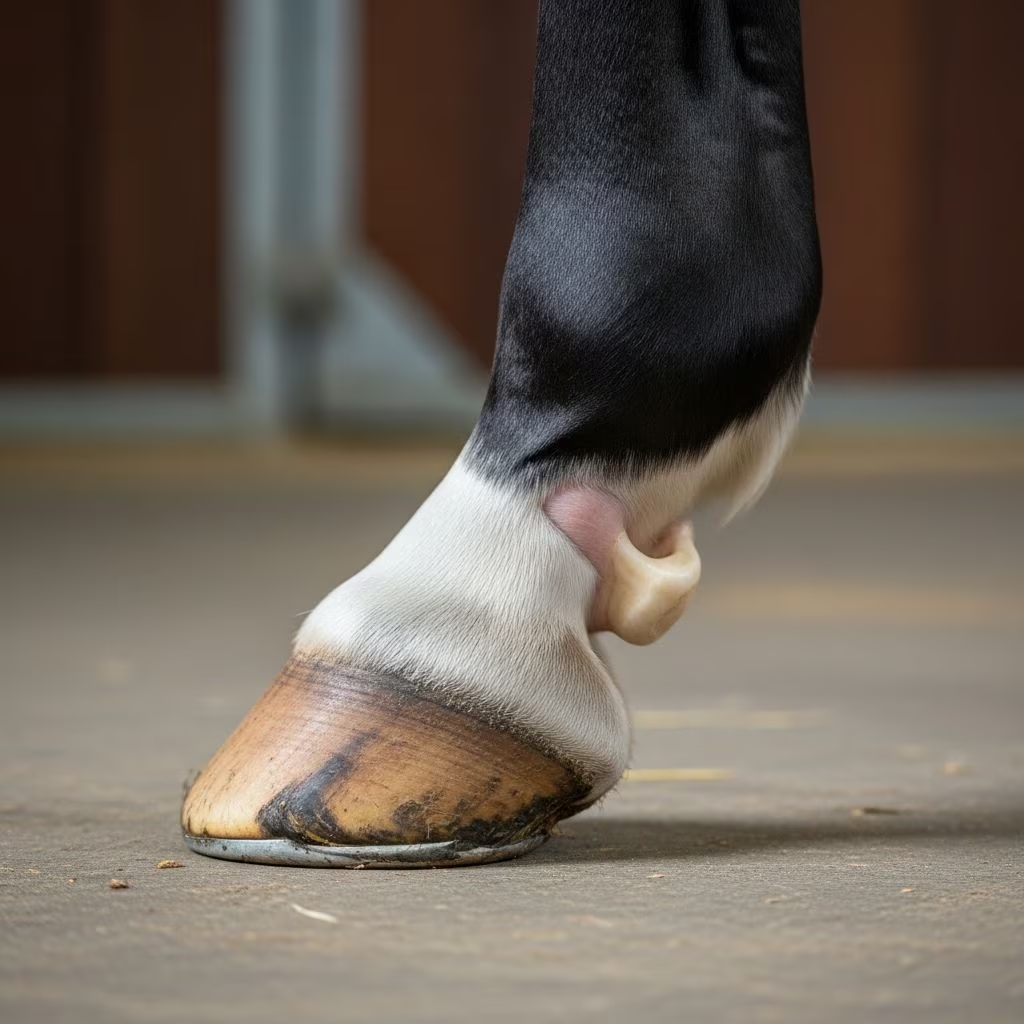
Sidebone represents a prevalent change in equine hoof anatomy where the flexible collateral cartilages harden into bony structures, primarily affecting the front feet. This process, known as ossification, occurs in up to 80% of horses, yet most remain unaffected in daily activities or competitions.
Hoof Anatomy and the Role of Collateral Cartilages
The horse’s hoof relies on a complex interplay of bones, ligaments, and cartilages for support and shock absorption. At the heart of this are the collateral cartilages, L-shaped plates positioned on either side of the coffin bone (distal phalanx). These structures extend from the heel region up toward the coronary band, forming a supportive bowl that stabilizes the hoof wall and cushions impacts during movement.
Normally pliable, these cartilages allow the hoof to flex and adapt to ground forces. When ossification sets in, they lose elasticity, potentially altering hoof dynamics. This change is most noticeable in the forelimbs, where weight-bearing stresses are highest.
Factors Leading to Cartilage Ossification
Although the precise trigger for sidebone remains elusive, veterinary consensus points to repeated mechanical stress as a primary contributor. Concussive forces from working on unforgiving surfaces, such as roads or arenas, transmit up through the hoof, traumatizing the cartilages over time.
Certain horse profiles face elevated risks:
- Heavy breeds: Draft horses endure greater loads, accelerating wear.
- Age: Older equines show higher incidence due to cumulative damage and slower tissue repair.
- Conformation issues: Poor limb alignment, like toe-in or base-narrow stances, unevenly distributes forces.
- Foot management: Improper trimming or shoeing exacerbates imbalances.
Genetic predispositions may also play a role, prompting some breed registries to screen stallions. Unlike ringbone, which involves joint inflammation higher in the pastern, sidebone stays confined to the hoof’s lower cartilages.
Recognizing Signs of Sidebone Development
Many cases progress silently, detected only during routine checks. When symptoms emerge, they often include subtle lameness, particularly after exertion, alongside heat or firmness near the coronary band at the quarters.
Visible cues might feature:
- Bony enlargements protruding just above the hoof wall.
- Reduced heel flexibility upon palpation.
- Occasional sensitivity when pressure is applied to the sides.
Severe instances can indirectly strain nearby tissues, like the deep digital flexor tendon or navicular bone, fostering secondary complications. Fractures of ossified sections, though rare, cause acute pain.
Accurate Diagnosis Through Veterinary Assessment
Confirming sidebone demands professional evaluation. Veterinarians start with a hands-on exam, probing for rigid areas proximal to the coronet. Radiography provides definitive proof, revealing mineralization patterns.
Standard grading scales assess severity, such as the Ruohoniemi system:
| Grade | Description |
|---|---|
| 0-1 | Minimal or no ossification |
| 2 | Moderate changes at the coffin bone wing |
| 3 | Extends to navicular level |
| 4 | Reaches halfway up the short pastern |
| 5 | Extensive, beyond mid-pastern |
About 70% of horses fall into lower grades (0-2), correlating poorly with lameness unless comorbidities exist.
For symptomatic cases, diagnostic nerve blocks isolate pain sources, while advanced imaging like MRI differentiates active issues from incidental findings.
Management Strategies for Affected Horses
Asymptomatic sidebone requires no intervention; monitoring suffices. Focus shifts to preventive hoof care: regular farrier visits ensure balance, with rolled toes or wide-web shoes distributing loads evenly.
For lameness-linked cases:
- Rest and anti-inflammatories: NSAIDs reduce discomfort, paired with stall confinement.
- Hoof adjustments: Correct imbalances to minimize stress.
- Therapeutic shoeing: Eggbar or heartbar shoes support heels.
Refractory pain may warrant neurectomy or surgical cartilage removal, though outcomes vary. Most horses resume work post-conservative care.
Preventive Measures to Safeguard Hoof Health
Proactive steps curb progression:
- Balanced diets rich in biotin and omega-3s bolster hoof integrity.
- Varied footing during exercise avoids repetitive concussion.
- Conformation corrections via corrective shoeing in young horses.
- Annual radiographs for at-risk breeds.
Early detection via routine lameness exams prevents escalation.
Prognosis and Long-Term Outlook
The vast majority thrive despite sidebone, with performance rarely hindered. Guarded forecasts apply to surgical candidates or those with fractures. Regular monitoring ensures timely adjustments.
Frequently Asked Questions (FAQs)
What exactly causes sidebone in horses?
Repeated trauma from hard surfaces, poor conformation, and possibly genetics drive cartilage ossification, especially in front feet.
Does sidebone always cause lameness?
No, it’s often incidental; lameness arises mainly from severe cases or secondary injuries.
How is sidebone diagnosed?
X-rays confirm ossification; grading assesses extent. Nerve blocks pinpoint pain.
Can sidebone be cured?
It’s irreversible but manageable; focus on symptom control and prevention.
Which horses are most prone?
Heavy breeds, seniors, and those with conformational flaws.
Key Takeaways on Sidebone Management
- Ossification of hoof cartilages affects ~80% of horses, mostly asymptomatically.
- Stress, breed, and age heighten risks.
- Diagnosis via radiographs; treatment conservative unless painful.
- Prevention emphasizes balanced care and footing variety.
References
- Sidebone in Horses: Causes, Symptoms and Treatment — Mad Barn. 2023. https://madbarn.com/sidebone-in-horses/
- Sidebone in Horses: Causes, Symptoms, and Treatment Options — Benefab Products. 2023. https://benefabproducts.com/blogs/blog/sidebone-in-horses-causes-symptoms-and-treatment-options
- Sidebone — Barwon Equine Hospital. 2023. https://www.beh.com.au/sidebone/
- What Are Sidebone and Ringbone in Horses? — The Horse. 2020-10-01. https://thehorse.com/1114508/what-are-sidebone-and-ringbone-in-horses/
- Sidebone Factsheet — Belmont Farm and Equine Vets. 2019-01. https://belmontfarmandequinevets.co.uk/resources/2019/01/XLVets-Equine-Rebranded-026-Sidebone-Factsheet.pdf
- Sidebone in Horses — Merck Veterinary Manual. 2023. https://www.merckvetmanual.com/musculoskeletal-system/disorders-of-the-foot-in-horses/sidebone-in-horses



