

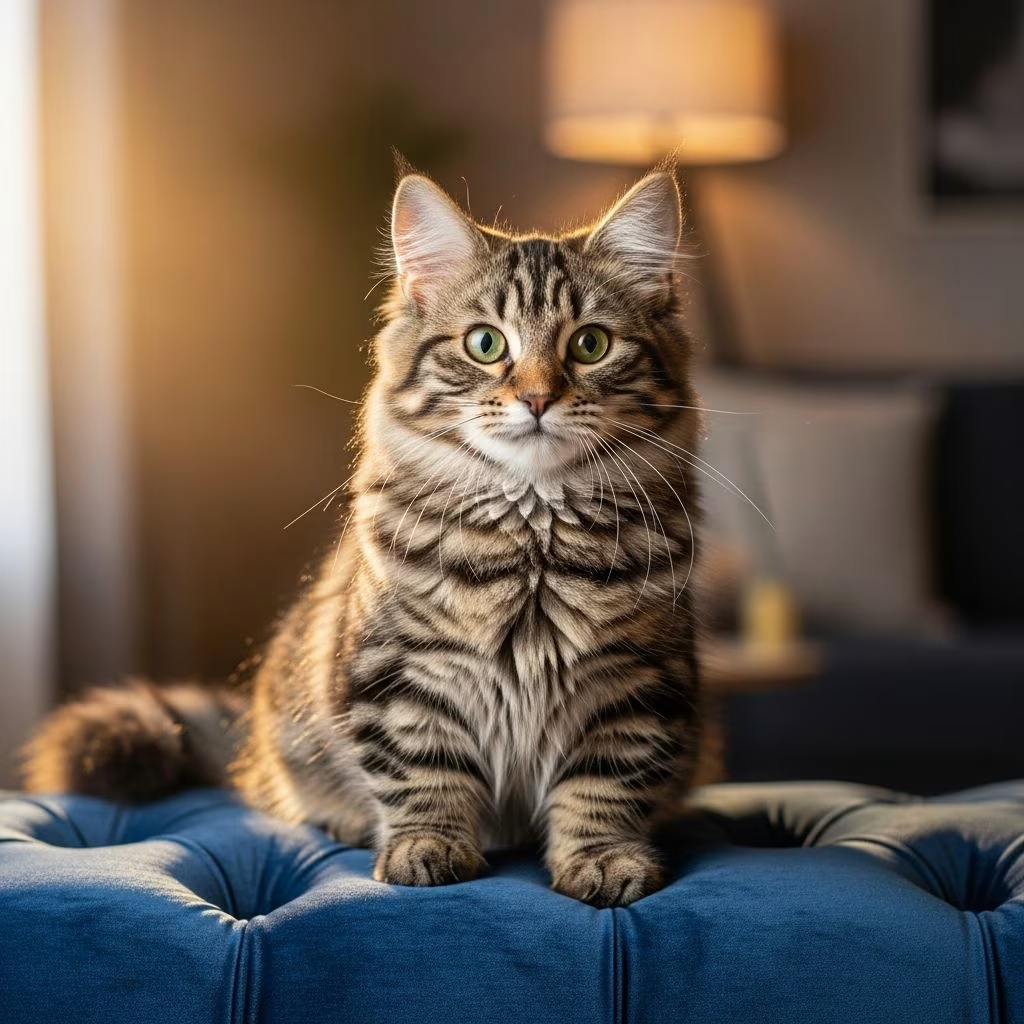
The Siberian Munchkin mix represents one of the more intriguing hybrid combinations in the feline world. Combining the majestic Russian heritage of Siberian cats with the distinctive short-legged characteristics of Munchkins creates a breed whose appearance and personality can vary dramatically from one individual to another. For prospective cat owners considering this unique mix, understanding what to expect requires knowledge of both parent breeds and the genetic lottery that determines which traits will manifest in any given kitten.
Origins and Genetic Background of This Hybrid
The Siberian cat brings thousands of years of evolutionary history from the harsh Russian wilderness, where these felines developed their distinctive triple-layered coats and robust builds as survival adaptations. Munchkins, by contrast, represent a relatively modern development in cat breeding, emerging from a spontaneous genetic mutation that produces characteristically shortened limbs. When these two genetic lines combine, the resulting offspring inherit an unpredictable mix of traits from each parent breed.
The genetic basis for short legs in Munchkins involves a dominant gene, meaning a cat needs to inherit only one copy from either parent to display this trait. However, cats that inherit two copies of this gene are not viable and do not develop. This critical biological fact means that in a Siberian Munchkin mix litter, approximately only 25% of kittens will display the characteristic short legs, while the remaining 75% will possess normal-length legs. This genetic reality explains why many Siberian Munchkin mixes do not resemble the popular online images that often showcase the most visually distinctive specimens.
Physical Characteristics: A Wide Range of Possibilities
One of the most defining aspects of Siberian Munchkin mixes is the remarkable variability in their physical appearance. Unlike purebred cats with more predictable characteristics, these hybrids can inherit vastly different combinations of traits from their parents.
Size and Build Variations
These cats typically reach heights up to 11 inches and can weigh up to 26 pounds, though individual specimens may vary considerably depending on which parental traits dominate. Those inheriting more Siberian characteristics tend toward the larger end of the spectrum, while those with more Munchkin genetic influence may be more compact. The musculature and body proportions similarly depend on the genetic inheritance of each individual animal.
Coat Characteristics
Popular marketing materials often depict Siberian Munchkin mixes with the luxurious, fluffy coats characteristic of Siberians. However, many of these hybrids inherit shorter fur from their Munchkin parent or develop an intermediate coat length. The stunning triple-layered coat of purebred Siberians, evolved to withstand extreme cold, does not consistently appear in mixed offspring. Coat colors can be virtually any shade found in domestic cats, offering another variable in appearance.
Leg Length and Mobility
The most obvious distinguishing feature when it appears—shortened legs—only manifests in approximately 25% of these animals. Short legs do not significantly hamper the mobility of cats possessing them, despite initial assumptions about limited jumping or climbing ability. Cats are engineered differently than dogs, and their leg length affects their movement patterns less drastically. Those individuals with short legs typically move with the same agility as their longer-legged counterparts.
Behavioral Traits and Temperament
Both parent breeds contribute distinctive personality traits that manifest in varying degrees throughout the Siberian Munchkin mix population.
Energy Levels and Playfulness
Siberian cats are renowned for their playful energy and enthusiasm for activity, traits they often pass to their hybrid offspring. These cats display strong climbing instincts and enjoy interactive play, making them engaging companions for active households. The combination of Siberian vivacity with Munchkin curiosity and intelligence creates felines that remain entertained by climbing structures, toy interactions, and environmental exploration well into adulthood.
Social and Affectionate Nature
Both parent breeds demonstrate strong social inclinations, and Siberian Munchkin mixes typically inherit these qualities. They tend to be affectionate with their human families and often seek physical proximity without becoming overly dependent or clingy. These cats frequently greet household members and guests with enthusiasm, displaying confident and friendly personalities. Their social nature extends to compatibility with other household pets, including dogs, provided appropriate introductions and socialization occur during their formative months.
Independence and Alone Time
Despite their social tendencies, Siberian Munchkin mixes retain sufficient independence to adapt well to households where owners work full-time. They can comfortably remain alone for extended periods without developing separation anxiety, distinguishing them from more intensely bonded breeds that struggle with solitude. This balance between affection and autonomy makes them suitable for various living situations and family configurations.
Vocalization Patterns
Siberians possess a gentle, melodic voice and use vocalization to communicate needs without excessive chattiness. Munchkins also demonstrate vocal tendencies but remain measured in their expression. Siberian Munchkin mixes typically inherit this balanced approach to communication, producing soft meows and chirps to interact with their environment and human companions without becoming overwhelming or disruptive to household peace.
Suitability for Different Households
Family Compatibility
These hybrids work best in families with older children who can handle cats respectfully and understand that these are not toys or playthings. Families considering animals with short legs should honestly evaluate their children’s ability to avoid rough handling or unintended injuries. Households with younger children and normal-legged Siberian Munchkin mixes face fewer concerns about potential accidents or developmental issues.
Living Environments
Siberian Munchkin mixes adapt to both apartment and house living, though access to climbing structures and vertical space supports their natural instincts and enriches their daily experience. Their moderate to high energy levels benefit from environmental complexity and engaging toys. They are generally suitable for families with average budgets, though individuals with the most distinctive characteristics (short legs combined with long, fluffy coats) may command higher adoption or purchase prices.
Interactions with Other Animals
These cats generally coexist peacefully with other felines and canine household members, particularly if socialized during kittenhood. However, a critical consideration involves their hunting instincts—strong drives inherited from their wild ancestry. Small animals such as rodents, rabbits, or birds cannot be safely kept unsupervised with these cats, as predatory instincts can override socialization training. Even animals that appear disinterested in prey may suddenly activate hunting behaviors when opportunities arise.
Health Considerations and Genetic Wellness
Hybrid Vigor and General Health
As mixed-breed animals, Siberian Munchkin mixes typically benefit from hybrid vigor, experiencing fewer inherited health problems compared to either parent breed in isolation. The genetic diversity of crossbreeding generally promotes better overall health outcomes and reduced incidence of breed-specific genetic disorders.
Leg-Related Health Issues
Individuals inheriting short legs face specific health considerations. Unlike dogs with shortened legs—which commonly develop spinal problems—cats with shortened legs do not experience comparable spinal complications. However, the gene affecting leg length also impacts joint durability, making these animals more susceptible to osteoarthritis as they age. Veterinary monitoring and maintaining appropriate weight through nutrition and exercise can help manage and minimize joint-related conditions.
Pectoral Cavity Concerns
Some short-legged Siberian Munchkin mixes are born with hollowed chest cavities, a serious condition sometimes requiring surgical intervention. This condition can prove fatal if untreated but responds well to veterinary care when identified early. Prospective owners should work with reputable breeders who screen for this condition and ensure affected individuals receive appropriate medical management.
Longevity and Lifespan Expectations
Siberian Munchkin mixes typically live 12 to 15 years, providing over a decade of companionship and shared experiences. With appropriate veterinary care, quality nutrition, and enriching environments, many individuals exceed these baseline expectations and enjoy extended active lifespans into their late teens.
Physical Characteristics at a Glance
| Characteristic | Range/Description |
|---|---|
| Height | Up to 11 inches |
| Weight | Up to 26 pounds |
| Lifespan | 12 to 15 years |
| Coat Colors | All colors possible |
| Coat Length | Variable (short to long) |
| Short Legs Likelihood | ~25% of offspring |
| Temperament | Playful, energetic, affectionate |
Gender Differences
Male and female Siberian Munchkin mixes demonstrate minimal meaningful differences in temperament or health predispositions. While males may occasionally be slightly larger than females, this pattern is not consistent across the population, and individual variation often overrides gender-based generalizations. Both males and females make equally suitable companions, and gender should not significantly influence adoption or companionship decisions.
Finding and Selecting a Siberian Munchkin Mix
Prospective owners seeking Siberian Munchkin mixes with specific traits—particularly those wanting both short legs and long, fluffy coats—should prepare for an extended search requiring patience and potentially higher financial investment. Responsible breeders prioritize genetic health screening, particularly for the pectoral cavity condition affecting short-legged individuals. Potential owners should request health clearances and ask detailed questions about both parent breeds’ health histories.
Adoption from rescue organizations also offers opportunities to provide homes for these distinctive hybrids. Rescue animals may be adults or adolescents, allowing prospective owners to observe established personality traits rather than predicting temperament from breed characteristics alone.
Frequently Asked Questions
Do all Siberian Munchkin mixes have short legs?
No. Approximately only 25% of these hybrids inherit the short-leg gene, while 75% possess normal-length legs.
Are these cats hypoallergenic?
No cat breed is truly hypoallergenic, though regular grooming may reduce allergen levels.
Can Siberian Munchkin mixes be kept as indoor-only cats?
Yes, they adapt well to indoor living with appropriate environmental enrichment.
Do short legs limit these cats’ ability to jump or climb?
Short-legged cats can jump and climb effectively and are not significantly hindered by their leg length.
How often should these cats be groomed?
Regular grooming, ideally several times weekly, helps manage their coats and reduces matting.
Conclusion
Siberian Munchkin mixes represent fascinating hybrid companions combining the social warmth of Siberian heritage with the distinctive characteristics of modern Munchkin breeding. Their unpredictable appearance—often surprising owners who expected specific traits—reflects the genetic complexity of mixed-breed animals. These cats offer playful energy, genuine affection, and adaptable personalities suitable for various household configurations. Understanding the realistic range of possibilities in appearance, temperament, and health considerations allows prospective owners to approach adoption or purchase with appropriate expectations. Whether displaying the full suite of short legs and luxurious fur or inheriting more conventional feline proportions, Siberian Munchkin mixes provide engaging and rewarding companionship for households prepared for their distinctive needs and personalities.
References
- Siberian Munchkin Cat Mix: Care Guide, Pictures, Info & More — Hepper. 2025. https://articles.hepper.com/siberian-munchkin-cat-mix/
- Siberian Cats: Uncover Their Unique Personality — Purebred Kitties. 2025. https://purebredkitties.com/blogs/siberian-cat/understanding-the-siberian-cat-temperament-what-to-expect-from-this-enchanting-breed
- Munchkin — The International Cat Association (TICA). 2025. https://tica.org/breed/munchkin/



