

The Ancient Roots of a Remarkable Breed
The Siberian Husky carries within its lineage thousands of years of history, with origins tracing back approximately 4,000 years or more to the nomadic Chukchi people of northeastern Siberia. These ancient tribes developed the breed out of necessity, requiring sturdy, resilient companions capable of withstanding the brutally harsh Arctic environment. Unlike many dog breeds that were selectively bred for hunting, herding, or guarding purposes, the Siberian Husky emerged as an all-purpose working animal and cherished family member. The bond between the Chukchi and their huskies was extraordinarily close—so intimate that these dogs were permitted to sleep inside family dwellings at night, a privilege that reflected their integral role within the tribal community.
The dogs served multiple functions for the Chukchi people, most notably as sled dogs essential for transportation across frozen landscapes. Teams of huskies enabled the semi-nomadic tribes to undertake long-distance journeys for hunting, fishing, and trapping expeditions, covering vast territories over treacherous terrain with remarkable speed and endurance. This specialized purpose shaped every aspect of the breed’s physiology and temperament, creating animals optimized for survival and performance in extreme conditions rather than for aesthetic appeal.
The Journey to Western Recognition
The transition of Siberian Huskies from Siberian working dogs to internationally recognized competitors occurred during Alaska’s transformative early twentieth century. Russian settlement in Alaskan territory created opportunities for cross-cultural exchange, and by the early 1900s, traders and adventurers began importing these remarkable dogs northward. The pivotal moment arrived in 1908 when a trader named Goosak brought sled dogs to Nome, Alaska, creating a sensation that would forever alter the breed’s trajectory.
The 1909 All-Alaska Sweepstakes race became the breeding ground for widespread husky popularity. Fox Maule Ramsay, a Scottish competitor, recognized the exceptional potential of these imported animals and traveled to Siberia in 1909, where he acquired approximately 60 specimens representing the finest examples he could locate. Ramsay’s teams subsequently dominated sled racing competitions, establishing the Siberian Husky as a formidable racing prospect. The breed’s triumphant performances in multiple races throughout the 1910s cemented their reputation and sparked a wave of importation efforts that would expand their presence across North America.
Perhaps the most transformative event in husky history occurred during the 1925 Serum Run to Nome. When a diphtheria outbreak threatened the isolated community, mushers including the legendary Gunnar Kaasen and his lead dog Balto orchestrated a relay across hundreds of miles of dangerous terrain to deliver life-saving antitoxin. This heroic mission captured global imagination and elevated Siberian Huskies to celebrity status. Following their success, huskies toured extensively across the United States, further solidifying their place in the American imagination.
Formal breed recognition followed these achievements. The American Kennel Club officially recognized the Siberian Husky in 1930, with the first breed standard published in the AKC Gazette during April 1932. The Siberian Husky Club of America was established in 1938 and received AKC recognition in 1946, providing organizational structure for breed development and preservation.
Physical Appearance and Distinctive Features
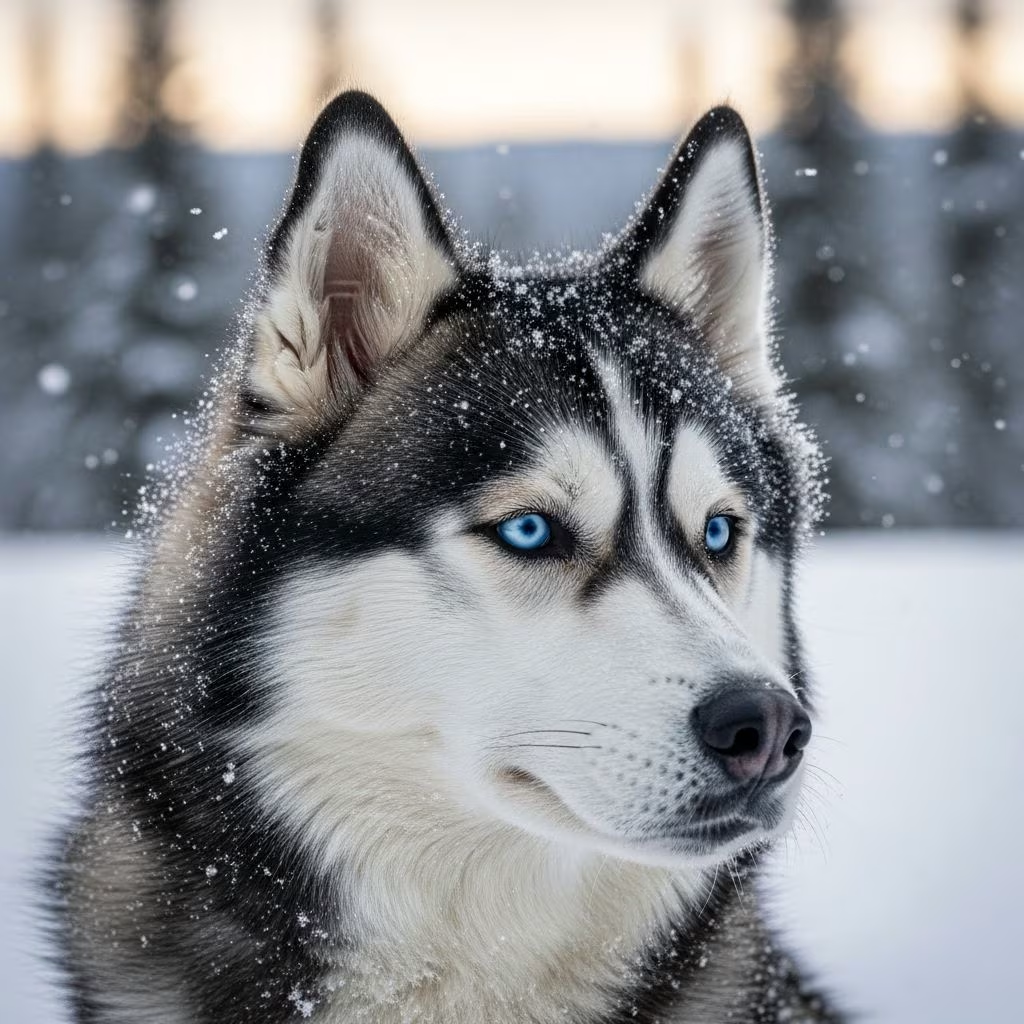
Siberian Huskies possess a striking appearance that frequently leads observers to confuse them with wolves, a resemblance rooted in shared evolutionary pressures and environmental adaptation. These medium-sized dogs present a well-balanced silhouette reflecting their heritage as endurance athletes rather than power dogs. Their body structure emphasizes efficiency and stamina, distinguishing them notably from larger Arctic breeds like the Alaskan Malamute, which were developed for hauling heavy loads rather than covering distance at speed.
The breed’s most recognizable feature is its distinctive facial markings and coloration. Typically displaying darker coloring concentrated on the back and head, huskies usually feature white or light-colored patches around the muzzle, chest, and legs. The density and pattern of these markings vary considerably among individuals, creating unique identifying characteristics. Remarkably, the pure white husky represents an uncommon sight within the breed, requiring a special recessive gene to eliminate all darker coloration—a genetic rarity that makes uniformly white specimens particularly prized.
The thick double coat serves as a critical adaptation for Arctic survival. This dense undercoat traps warm air against the skin while the longer outer guard hairs shed precipitation and maintain insulation in extreme cold. The coat’s thickness and protective qualities make Siberian Huskies remarkably cold-tolerant but also subject to significant seasonal shedding. Pointed ears positioned alertly atop the head contribute to their wolf-like appearance while providing functional advantages for detecting distant sounds.
One particularly charming characteristic is the husky’s distinctive tail, which typically curls gracefully over the back. This plumed appendage serves both aesthetic and functional purposes, contributing to the breed’s appealing appearance while providing additional insulation during rest periods in cold environments.
Temperament, Intelligence, and Behavioral Characteristics
Siberian Huskies exhibit a complex personality profile shaped by thousands of years of selective breeding for independent decision-making and survival instincts. These dogs are characterized as mischievous, engaging, and highly intelligent, with cognitive abilities rooted in their ancestry as primitive breeds adapted to harsh, unforgiving environments. This intelligence manifests differently than obedience-focused cognition; huskies excel at problem-solving, resource location, and creative escape artistry, often frustrating owners with their ingenious methods for breaching enclosures, opening doors, or accessing forbidden areas.
The breed’s independence presents both advantages and challenges. This self-reliant streak reflects their history as sled dogs required to make autonomous decisions while navigating treacherous terrain, sometimes beyond direct human control. However, this same independence can manifest as stubbornness, particularly during training sessions with first-time owners unfamiliar with the breed’s particular learning style. Consistent training, clear boundaries, and abundant mental stimulation prove essential for channeling these inherent traits productively.
Vocalization represents another defining characteristic of Siberian Huskies. This breed is notably vocal compared to many other dogs, expressing emotions through barking, howling, and distinctive moaning or “singing” vocalizations. These sounds represent natural communication within the breed rather than behavioral problems and should be anticipated by prospective owners. In appropriate contexts, such as performance events or recreational activities, this vocalization can be channeled positively.
Alert, energetic, and adaptable, Siberian Huskies bring infectious enthusiasm to family environments. They display affection on their own terms rather than as constant lap dogs, maintaining independence while forming strong bonds with their human families. Their alertness makes them aware companions, though their prey drive and pack mentality require careful supervision in multi-pet households.
Activity Requirements and Exercise Needs
Siberian Huskies represent one of the most energetically demanding dog breeds, reflecting their origins as tireless endurance athletes. These dogs require substantial daily exercise—typically 1-2 hours of vigorous activity minimum—to maintain physical health and psychological well-being. Without adequate outlets for their extraordinary energy reserves, huskies may develop destructive behaviors including excessive digging, escape attempts, and property damage.
The breed thrives in active households where families appreciate outdoor recreation and can provide regular running, hiking, or sports participation. Many huskies excel in formalized activities including dog sports, sledding competitions, skijoring, and agility training. These structured activities provide both physical exertion and mental stimulation, satisfying the breed’s need for purposeful work.
Environmental suitability strongly influences husky well-being. These Arctic-adapted dogs tolerate cold climates exceptionally well but struggle in hot, humid environments. The breed’s thick insulating coat provides insufficient thermoregulation in warm climates, making regions with mild to cold winters more appropriate for their physiological needs.
Health Considerations and Genetic Screening
Siberian Huskies generally enjoy robust health with a lifespan typically ranging from 12-15 years when properly maintained. However, prospective owners should be aware of breed-specific health concerns that responsible breeders screen for through genetic testing. Hip and elbow dysplasia, inherited eye conditions, and other heritable issues warrant discussion with breeders who maintain transparent health documentation for parent animals.
Regular veterinary care, appropriate nutrition, and preventive health measures contribute significantly to longevity and quality of life. Maintaining healthy body weight, providing consistent exercise, and addressing health concerns promptly support optimal outcomes throughout the husky’s lifespan.
Grooming, Nutrition, and Daily Care Requirements
| Care Aspect | Requirements | Frequency |
|---|---|---|
| Coat Maintenance | Brushing to manage shedding and maintain coat health | 2-3 times weekly; daily during shedding seasons |
| Bathing | Gentle bathing with dog-specific shampoo | Every 4-6 weeks as needed |
| Nail Care | Trimming to prevent overgrowth and discomfort | Every 3-4 weeks |
| Ear Cleaning | Inspection and gentle cleaning as needed | Weekly inspection |
| Dental Care | Brushing and professional cleaning when recommended | Daily brushing recommended |
Nutritional requirements for Siberian Huskies should emphasize high-quality, protein-rich diets supporting their active lifestyle and metabolic demands. Portion sizes should be calibrated to activity levels and body condition, adjusted by life stage from puppyhood through senior years. Consultation with veterinary professionals ensures nutritional protocols align with individual health needs.
The breed’s thick double coat demands commitment to regular grooming, particularly during seasonal shedding cycles when loose undercoat appears in abundance. Consistent brushing prevents matting, maintains coat health, and manages the substantial volume of shed hair characteristic of the breed.
Suitability for Different Household Types
Siberian Huskies thrive best in active households where occupants appreciate the breed’s particular characteristics and can accommodate their substantial exercise and mental stimulation requirements. Families with experience in dog training, access to outdoor space, and commitment to regular activity represent ideal matches.
These dogs adapt well to families with older children who understand canine communication and can respect the dog’s boundaries. The breed’s social nature makes them generally excellent in family environments, though their high energy and prey drive require supervision in households with small pets or very young children.
Apartment living presents challenges for huskies unless residents can provide extraordinary exercise opportunities and accept the reality of substantial vocalization. Their need for space, combined with their vocal expression and escaping tendencies, makes urban environments suboptimal for most representatives of the breed.
Training and Behavioral Development
Successful husky ownership demands patient, consistent training approaches that acknowledge the breed’s independent nature. Positive reinforcement methods, clear boundary establishment, and early socialization produce the most favorable outcomes. Traditional obedience training proves possible with motivated huskies when training remains engaging and purposeful rather than monotonous or overly repetitive.
Early socialization exposing puppies to diverse environments, people, and animals supports healthy development and reduces anxiety-related behaviors. Establishing leadership through consistency rather than dominance-based methods aligns with modern canine behavioral science and builds trust within the human-dog relationship.
Frequently Asked Questions
Are Siberian Huskies suitable for first-time dog owners?
While huskies are intelligent and affectionate, their independent streak, high exercise requirements, and vocalization make them challenging for inexperienced owners. First-time dog owners might consider breeds with more straightforward training requirements and lower exercise demands before committing to a husky.
Do Siberian Huskies get along well with other pets?
Huskies possess pack mentality and often enjoy canine companions, but their prey drive can make them unsuitable for households with small animals like rabbits, cats, or small dogs. Individual temperament varies, requiring careful introductions and ongoing supervision.
How much grooming do Siberian Huskies require?
Regular brushing 2-3 times weekly maintains coat health, with daily sessions recommended during seasonal shedding cycles when the undercoat sheds prolifically. This breed is not low-maintenance regarding grooming commitments.
What is the typical lifespan of a Siberian Husky?
Siberian Huskies generally live 12-15 years when properly maintained with appropriate veterinary care, nutrition, and exercise throughout their lives.
Can Siberian Huskies live in warm climates?
While huskies can technically survive in warmer regions, their thick Arctic-adapted coat provides poor thermoregulation in heat. Climates with cool to cold seasons represent more appropriate environments for the breed’s physiological well-being.
Conclusion: Understanding the Siberian Husky’s Legacy
Siberian Huskies represent far more than attractive dogs—they embody thousands of years of purposeful breeding and cultural significance, carrying within their genetics the resilience and independence that enabled the Chukchi people to thrive in Earth’s most unforgiving environments. Understanding this heritage provides crucial context for appreciating the breed’s distinctive characteristics and requirements. Prospective husky owners must approach the decision with realistic expectations about exercise needs, vocalization, grooming demands, and training approaches required to successfully integrate these remarkable animals into family life. For those prepared to meet their considerable needs, Siberian Huskies offer unparalleled loyalty, intelligence, and spirited companionship rooted in ancient Arctic traditions.
References
- Characteristics of Siberian Huskies & Other Husky Dog Breeds — Sundays for Dogs. 2024. https://sundaysfordogs.com/blog/characteristics-of-siberian-huskies-other-husky-dog-breeds
- Siberian Husky History: From Arctic Protector to Active Companion — American Kennel Club. 2024. https://www.akc.org/expert-advice/dog-breeds/siberian-husky-history/
- Siberian Husky History — Siberian Husky Club of America, Inc. 2024. https://www.shca.org/siberian-husky-history
- Siberian Husky Breed Guide: History, Traits, Personality & Lifespan — Independence Veterinary Clinic. 2024. https://independenceveterinaryclinic.com/siberian-husky-breed-overview/
- History of the Siberian Husky — Siberian Husky Rescue. 2024. https://www.siberianhuskyrescue.org/history/



