

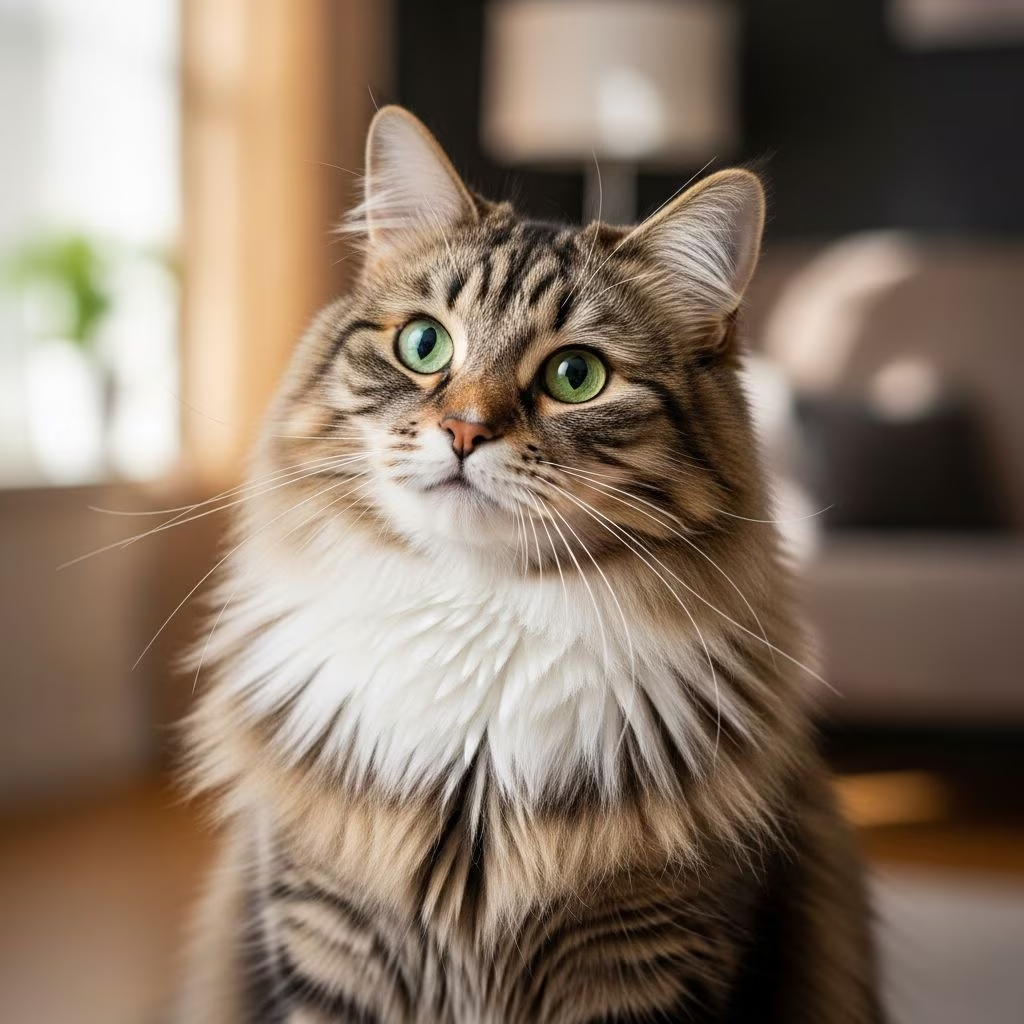
Siberian cats produce significantly less of the primary cat allergen Fel d 1, making them one of the most suitable breeds for people with mild cat allergies, though no cat is completely hypoallergenic.
Understanding Cat Allergies and Fel d 1 Protein
Cat allergies stem mainly from Fel d 1, a protein in saliva, skin, and urine that spreads via dander. Siberians naturally generate lower Fel d 1 levels, reducing symptoms like sneezing or itchy eyes for many owners.
This trait arises from genetic variations in the breed, observed consistently across studies of Siberian populations. While not eliminating allergens entirely, their reduced output offers practical relief compared to high-allergen breeds.
Origins of the Siberian Breed
Originating from Russia’s dense forests, Siberians evolved as a landrace breed, adapting over centuries to extreme cold with robust builds and waterproof coats. They remained relatively unknown outside Russia until the 1990s, when breeders worldwide recognized their unique qualities.
These cats embody resilience, with historical ties to Siberian folklore as mythical forest guardians, blending natural selection with human preservation efforts.
Physical Build and Distinctive Features
Siberians boast a muscular, barrel-chested frame, with males weighing 15-20 pounds and females slightly lighter at 12-15 pounds. Their hind legs, longer than the front, enable exceptional jumping, while large, rounded paws with tufts provide traction in snow-like conditions.
The head features a broad skull tapering to a rounded muzzle, framed by medium ears set wide apart. Eyes, often vivid green or gold, convey perpetual curiosity. Their bushy tails, nearly as long as the body, complete a silhouette evoking wild forest dwellers.
| Feature | Description |
|---|---|
| Size | Medium-large; slow to mature up to 5 years |
| Coat | Triple-layered: guard, awn, undercoat |
| Build | Stocky, powerful, agile jumper |
| Eyes/Ears | Round, expressive eyes; tufted ears |
The Remarkable Triple Coat Explained
Siberians’ fur comprises three layers: coarse guard hairs that repel water, wavy awn hairs for insulation, and a dense wooly undercoat for warmth. This semi-long coat varies seasonally, thickening in winter and shedding in summer.
Colors range widely, from tabby patterns to solids, points, and bi-colors, with silvers and bimetallics adding unique shimmer. Despite density, regular brushing prevents mats, and their coat sheds less allergenic dander due to lower Fel d 1.
Temperament: Loyal Companions with Dog-Like Traits
Siberians blend playfulness with calm loyalty, often greeting owners at doors and following them room-to-room. Intelligent and trainable, they master fetch, enjoy water play, and thrive on interactive toys simulating hunts.
Suited for families, they coexist peacefully with children and dogs, displaying patience without aggression. Their sociable nature demands involvement, making them poor candidates for long solo days.
- Playful into adulthood, carrying toys like dogs
- Curious explorers of cabinets and bags
- Affectionate without clinginess
- Water-loving, unbothered by baths
- Quick learners who respect boundaries
Care Essentials for Healthy Siberians
Grooming requires daily brushing during shedding seasons to manage fur volume and distribute skin oils. High-quality protein-rich diets support their muscular frames, with portion control preventing obesity.
Enrichment includes climbing towers, puzzle feeders, and play sessions mimicking forest pursuits. Annual vet checks monitor heart health, a noted concern, alongside dental care and flea prevention.
Living with Allergies: Tips for Success
For allergy sufferers, Siberians shine but demand precautions: frequent vacuuming, HEPA filters, washing bedding weekly, and bathing cats monthly reduces dander. Start exposure gradually to test tolerance.
Not everyone reacts identically; genetics influence sensitivity. Consult allergists before adoption, and consider hypoallergenic breeding lines selected for minimal Fel d 1.
Health Profile and Lifespan
Siberians live 12-18 years, with slow maturation allowing full size by age five. Common issues include hypertrophic cardiomyopathy (HCM), manageable via screening. Robust genetics yield few hereditary woes.
Exercise keeps them fit; indoor-outdoor access with enclosures suits their adventurous spirit, though supervision prevents escapes.
Comparing Siberians to Other Breeds
| Breed | Allergen Level | Size | Temperament |
|---|---|---|---|
| Siberian | Low Fel d 1 | Large | Playful, loyal |
| Maine Coon | Moderate | Large | Gentle giant |
| Balinese | Low-moderate | Medium | Affectionate |
| Sphynx | Very low (hairless) | Medium | Social |
Siberians edge out peers in allergen reduction while matching in size and sociability, ideal for active allergy-conscious homes.
Adoption and Breeding Considerations
Seek reputable breeders emphasizing health testing and low-allergen lines. Rescues occasionally feature Siberians or mixes. Prepare for commitment: their longevity demands lifelong investment.
Costs range higher due to rarity, but their companionship repays tenfold for compatible owners.
Common Myths About Hypoallergenic Cats
- Myth: Hairless cats are allergen-free. Reality: Allergens come from saliva/skin.
- Myth: Short-haired breeds safer. Reality: Protein levels vary by genetics.
- Myth: All Siberians identical. Reality: Lines differ in Fel d 1 output.
Frequently Asked Questions
Are Siberian cats truly hypoallergenic?
They produce less Fel d 1 than average, benefiting many with allergies, but individual reactions vary.
How often to groom a Siberian?
Brush 2-3 times weekly year-round, daily during heavy sheds.
Do Siberians get along with dogs?
Yes, their dog-like traits foster easy bonds with canines.
What’s the average lifespan?
12-18 years with proper care.
Can Siberians live indoors only?
Yes, with ample enrichment; enclosures enable safe outdoor time.
Why Choose a Siberian?
For allergy sufferers craving feline friendship, Siberians deliver stunning beauty, engaging personality, and reduced allergens—a forest legend adapted for modern homes.
References
- Facts About Siberian Cats — ASPCA Pet Health Insurance. 2023-05-15. https://www.aspcapetinsurance.com/resources/siberian-cat-facts/
- Siberian Breed Standard — Cat Fanciers’ Association. 2024-01-10. https://cfa.org/breed/siberian/
- Siberian Cat — Wikipedia (background; primary sources referenced). 2025-11-20. https://en.wikipedia.org/wiki/Siberian_cat
- Siberian Forest Cat Breed Information — Purina UK. 2024-08-05. https://www.purina.co.uk/find-a-pet/cat-breeds/siberian-forest
- Personality of a Siberian — Krypto Siberians. 2023-12-01. https://www.kryptosiberians.com/info/personality-of-a-siberian



