

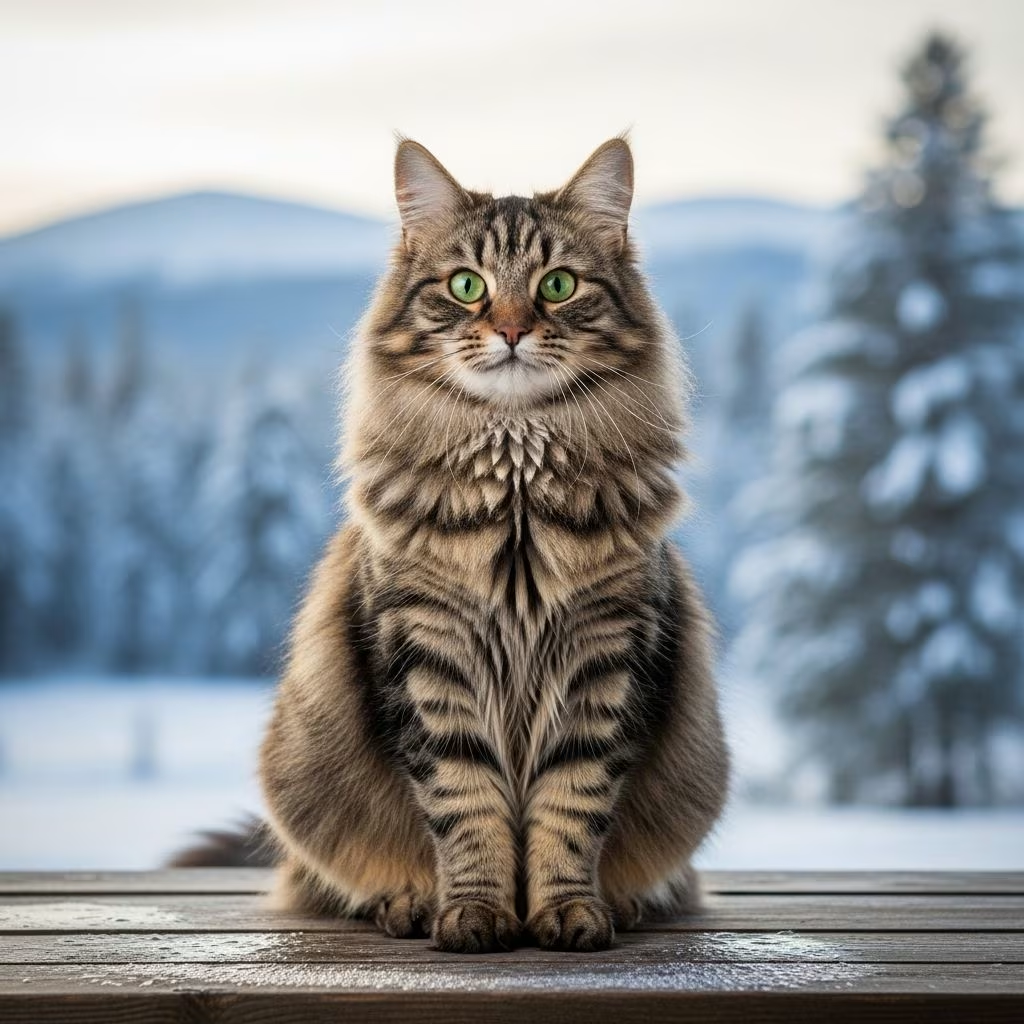
The Siberian cat stands out as a remarkable breed, blending rugged strength with an endearing personality that captivates cat enthusiasts worldwide. Originating from Russia’s harsh forests, these felines have evolved into robust, adaptable companions perfect for active households.
Origins and Historical Background
Siberian cats trace their roots to the dense, snowy woodlands of Russia, where they developed naturally as a landrace breed. Unlike selectively bred varieties, Siberians emerged through adaptation to extreme climates, with their thick coats providing vital protection against freezing temperatures and predators. Historical records suggest these cats roamed Siberia for centuries, surviving alongside farmers and hunters who valued their mousing prowess.
By the late 19th century, Siberians began appearing in cat shows, gaining formal recognition in the 1980s by organizations like The Cat Fanciers’ Association (CFA). Their journey to international fame involved careful exportation, preserving their genetic purity while introducing them to new environments. Today, they symbolize resilience, embodying the wild spirit of their ancestral homeland.
Physical Characteristics and Build
Siberians boast a powerful, muscular frame that conveys both agility and endurance. Males typically weigh 15 to 20 pounds, with females slightly lighter, often reaching medium to large sizes. Their bodies feature a barrel-shaped torso, sturdy neck, and hind legs longer than the front ones, enabling exceptional jumping ability.
The head is a modified wedge with rounded contours, broad forehead, and full muzzle, accented by large, expressive eyes in shades of green, gold, or blue in pointed varieties. Ears are medium-sized, set wide apart, often with lynx tipping. Their paws are large and rounded, equipped with tufts for snow navigation, while the tail remains bushy and medium-length.
| Feature | Description |
|---|---|
| Body Type | Stocky, muscular with arched back |
| Legs | Hind legs longer; substantial boning |
| Eyes | Round, large; green/gold typical |
| Ears | Broad base, rounded tips, tufted |
| Feet | Big, rounded with toe tufts |
The Signature Triple Coat
What truly distinguishes the Siberian is its luxurious three-layered coat: coarse guard hairs for water repellency, wavy awn hairs, and a dense woolly undercoat. This semi-long fur varies seasonally, thickening in winter for insulation and shedding in summer. Colors range from solids and tabbies to points and bi-colors, with patterns like mackerel or classic tabby common.
Despite the plush appearance, the coat resists matting better than many longhairs, though regular grooming prevents tangles. Kittens develop their full coat slowly, often taking up to five years to mature completely.
Temperament and Behavioral Traits
Siberians are renowned for their balanced temperament: playful yet calm, curious without being destructive. They form deep bonds with owners, often following them room-to-room and enjoying lap time. Their dog-like qualities shine in tricks like fetch, and they greet family with chirps or trills.
- Highly sociable and affectionate
- Intelligent and trainable
- Playful into adulthood
- Tolerant of children and pets
- Water-loving; often play in sinks or baths
These cats thrive on interaction but adapt to alone time, making them suitable for various lifestyles. Their adventurous spirit suits homes with climbing structures or outdoor enclosures.
Grooming and Daily Maintenance
Maintaining a Siberian’s coat requires consistency. Brush 2-3 times weekly, daily during shedding seasons, using a slicker brush to remove loose undercoat. Bathing is occasional, as their fur repels dirt.
Nail trims every 10-14 days, ear cleaning monthly, and dental care promote health. Their robust build demands a high-protein diet supporting muscle maintenance.
Health Considerations and Lifespan
Siberians enjoy a lifespan of 12-18 years, with fewer genetic issues than many breeds due to their natural origins. Common concerns include hypertrophic cardiomyopathy (HCM), monitored via screening.
Regular vet checkups, balanced nutrition, and exercise mitigate risks. Some lines produce hypoallergenic individuals with lower Fel d 1 protein levels, beneficial for allergy sufferers.
Ideal Living Environments
These active cats flourish in spacious homes with vertical spaces like cat trees. Access to secure outdoor areas enhances their well-being, mimicking forest exploration. They adapt to apartments if provided enrichment toys and play sessions.
Families appreciate their gentle nature around kids; introductions to other pets should be gradual.
Bringing a Siberian Home: Adoption and Kitten Care
Select breeders adhering to CFA standards or rescues specializing in Siberians. Kittens mature slowly, so expect playful energy for years. Early socialization fosters confident adults.
Provide scratching posts, interactive toys, and a diet rich in meat proteins. Monitor growth, as they gain size gradually.
Training Tips for Siberians
Leverage their smarts with positive reinforcement. Teach commands like ‘sit’ or ‘come’ using treats. Harness training enables safe outdoor adventures.
- Use clicker training for tricks
- Rotate toys to combat boredom
- Encourage puzzle feeders for mental stimulation
Nutrition Essentials
Feed premium wet and dry foods high in animal proteins, avoiding fillers. Portion control prevents obesity in their sturdy frames. Fresh water is crucial, given their water affinity.
Siberian Cats in Popular Culture
Featured in folklore as forest guardians, Siberians appear in media symbolizing strength and mystery. Their photogenic coats make them social media stars.
Frequently Asked Questions
Are Siberian cats hypoallergenic?
Many produce less allergen, but no breed is fully hypoallergenic. Test exposure individually.
How much exercise do they need?
Daily play sessions of 20-30 minutes suffice, plus free roam.
Do they shed a lot?
Seasonal heavy shedding requires brushing, but less than some longhairs.
Are they good with dogs?
Yes, their sociable nature aids integration with proper intros.
What’s the cost of owning one?
Kittens range $800-$2000; annual costs $500+ for food/vet care.
Comparing Siberian to Similar Breeds
| Breed | Size | Coat | Temperament |
|---|---|---|---|
| Siberian | Large | Triple long | Playful, loyal |
| Maine Coon | Large | Long shaggy | Gentle giant |
| Norwegian Forest | Large | Long dense | Independent |
References
- Facts About Siberian Cats — ASPCA Pet Health Insurance. 2023. https://www.aspcapetinsurance.com/resources/siberian-cat-facts/
- Siberian Breed Standard — The Cat Fanciers’ Association. 2024-10-01. https://cfa.org/breed/siberian/
- Siberian cat — Wikipedia (citing primary sources). 2025. https://en.wikipedia.org/wiki/Siberian_cat
- Siberian Forest Cat Breed Information — Purina UK. 2024. https://www.purina.co.uk/find-a-pet/cat-breeds/siberian-forest
- Personality of a Siberian — Krypto Siberians. 2023. https://www.kryptosiberians.com/info/personality-of-a-siberian



