

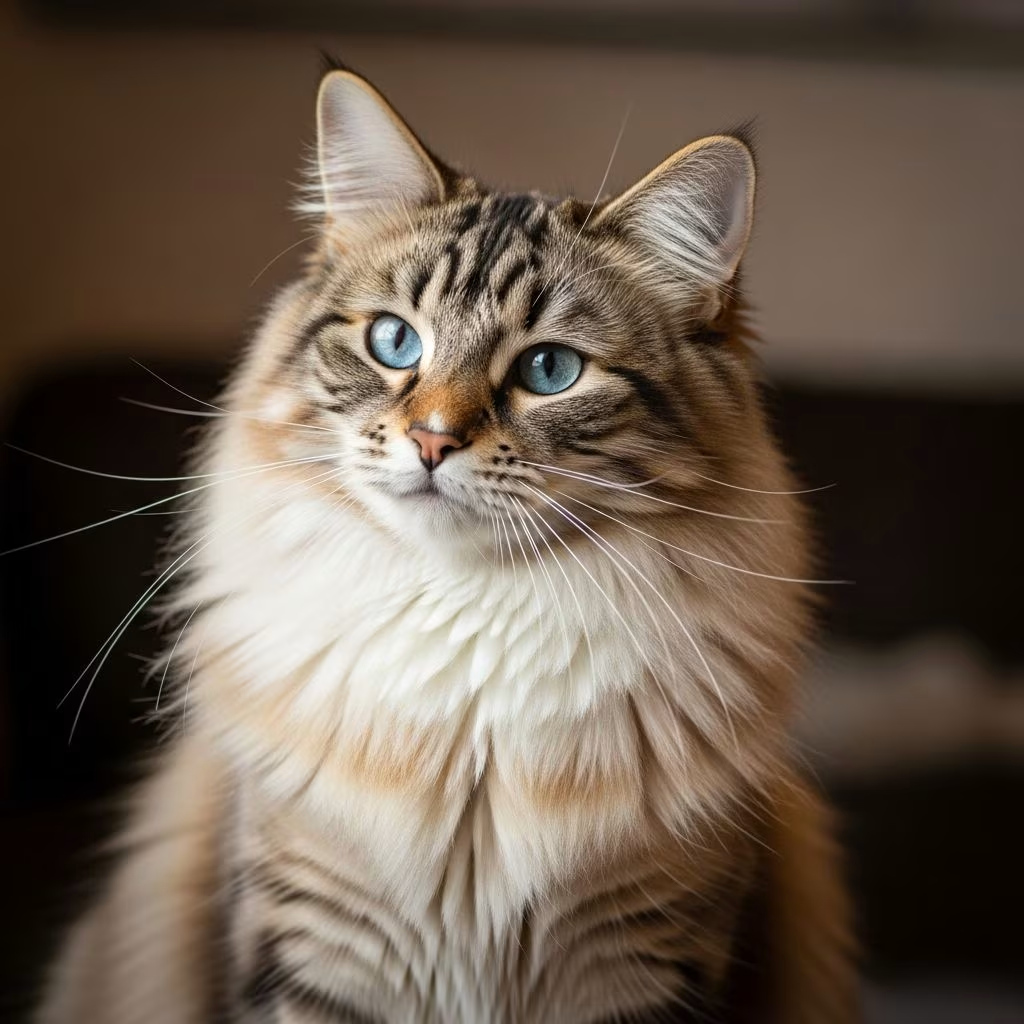
The Siberian cat, one of the oldest natural breeds originating from Russia, is renowned for its luxurious triple coat that comes in a mesmerizing variety of colors and patterns. These majestic felines, often called the “Forest Cats,” showcase coats that range from solid hues to intricate tabby designs, making each one a unique work of art. Understanding the diverse palette of Siberian cat colors not only helps prospective owners appreciate their beauty but also aids in recognizing breed standards set by organizations like The Cat Fanciers’ Association (CFA).
Siberian cats’ coats are semi-long, water-repellent, and dense, with a plush undercoat, awn hairs, and guard hairs that protect them from harsh weather. Colors develop fully as they mature, often taking up to three years. Common base colors include black, blue, red, cream, and white, which form the foundation for patterns like tabby, pointed, bicolor, smoke, and wideband. This guide covers all major variations, drawing from breed standards and expert observations.
What Colors Do Siberian Cats Come In?
Siberian cats exhibit an extensive spectrum of colors, far beyond the traditional brown tabby that was once most popular. Today, they appear in virtually every imaginable shade, including solids, dilutions, and specialty colors like bimetallic. The CFA recognizes colors such as black, blue, red, cream, white, and combinations thereof.
Base colors are determined by genetics: black (or brown classic) is deep and rich; blue is a diluted slate-gray; red ranges from vibrant copper to ginger; cream is a soft peach dilution; and white is pure snowy. Rare hues like golden sunshine from specific lineages add shimmering warmth. These colors can be solid, patterned, or enhanced with silver, gold, or smoke effects.
- Black/Brown: Deep, dramatic tone, often tabby-marked for a wild look.
- Blue: Elegant gray, cool-toned, pairs with green or gold eyes.
- Red/Orange: Fiery chestnut with tabby swirls, copper eyes.
- Cream: Warm, diluted red, gentle glow.
- White: Pure, with possible blue or green eyes.
- Golden: Rare, shimmering apricot to straw.
Siberian Cat Patterns
Patterns overlay base colors, creating endless combinations. Key patterns include tabby (classic, mackerel, spotted, ticked), tortoiseshell, colorpoint, smoke, shaded, bicolor, and tricolor. Tabby is prevalent, with markings like swirls, stripes, or spots. Tortoiseshell mixes black and red patches, often with white.
Tabby Siberian Cats
Tabby patterns are among the most striking on Siberians, enhancing their forest-cat heritage. The classic tabby features bold, swirling patterns; mackerel shows narrow stripes; spotted has round marks; ticked is banded hairs.
- Black/Brown Tabby: Classic wild look, shades of black/brown, blends with nature.
- Golden Tabby: Shimmering gold, apricot to straw, rare and luminous.
- Silver Tabby: White undercoat with black/brown tips, shiny in sun. CFA specifies pale silver ground with dense black markings.
- Blue Tabby: Dilute gene creates blue-gray stripes.
- Tortoiseshell Tabby (Torbie): Silver/blue/brown with red patches.
- Cream Tabby: Pale cream ground, buff markings.
Bicolor Siberian Cats
Bicolors combine white with another color, like brown, silver, or blue. They feature an inverted white “V” on the face, white chests, paws, and darker backs. These are popular for their high-contrast appeal.
Smoke Siberian Cats
Smoke coats are solid-colored with silver-grey patches. The undercoat is light smoky (blue, cream, red, black, tortoiseshell), giving a thinning illusion at ends despite thick fur. Chinchilla silver has pure white undercoat tipped black for sparkle.
Wideband Siberian Cats
Wideband features a wide pale band on hairs, altering appearance. Black/blue tabbies get russet undercoats for gold effect; red tabbies look silvery-red; solids mimic smoke; silver tabbies near-white. This agouti gene variation is prized for uniqueness.
Pointed Siberian Cats (Neva Masquerade)
Pointed patterns, akin to Siamese, have lighter bodies (creamy white/beige) with darker points (ears, face, paws, tail). Known as Neva Masquerade, they show basic colors on points with blue eyes. CFA notes clear body contrast, bluish-white to silver-gray tones. Variants include seal, blue, chocolate, lilac points.
Bimetallic Siberian Cats
A newer CFA-recognized color, bimetallic blends silver and gold via agouti gene, with darker tipping in shaded, tabby, bicolor, or pointed patterns. This creates a metallic sheen.
Solid Color Siberian Cats
Solid colors lack patterns, appearing uniform. Black is deep; blue slate; red vibrant; cream soft; white pure. Silver solids have white roots/dark ends for gleam. These are less common than patterned but elegant.
How Many Colors and Patterns Are There?
Siberians have dozens of combinations. CFA lists extensive categories: solids, tabbies (silver/golden/blue-cream in classic/mackerel/spotted/ticked), smokes, shaded, bicolors, points, bimetallics. Breeders track genes for silvers, golds, reds, torties. Endless mixes from base + pattern + modifiers like wideband.
| Pattern | Common Colors | Distinct Features |
|---|---|---|
| Tabby | Black, Silver, Golden, Blue | Stripes, swirls, spots |
| Bicolor | White + Brown/Silver/Blue | Inverted V on face |
| Smoke | Black, Blue, Red undercoat | Smoky patches |
| Pointed | Seal, Blue points | Dark points, blue eyes |
| Wideband | Alters tabby/solid | Gold/russet undercoats |
Siberian Cat Genetics and Color Development
Colors stem from melanin: eumelanin (black) dilutes to blue; phaeomelanin (red) to cream. Tabby gene (agouti) creates patterns; pointing from colorpoint gene (cs/cs). Silver inhibits pigment in undercoat; wideband expands agouti band. Kittens are born lighter, colors intensify by 3 years. Eye colors: green/gold typical, blue in points.
Popular Siberian Cat Colors
Brown tabby remains iconic for wild vibe. Silvers and golds are trendy for shimmer. Neva Masquerade points are beloved for contrast. Bicolors appeal to families.
Frequently Asked Questions
Are all Siberian cats tabby?
No, they come in solids, tabbies, points, bicolors, smokes, and more.
What is a Neva Masquerade cat?
A pointed Siberian with darker points on lighter body, blue eyes.
Do Siberian cats have blue eyes?
Rare; typical is green/gold, blue in colorpoints.
Can Siberians be solid white?
Yes, pure white exists, often with odd eyes.
What is the rarest Siberian color?
Golden sunshine or bimetallic.
References
- All The Coat Colors & Patterns Of Siberian Cats — Litter-Robot. 2023. https://www.litter-robot.com/blog/siberian-cat-colors/
- Colors and Patterns | Winterfell Siberian Cats — Winterfell Siberian Kittens. 2024. https://www.winterfellsiberiankittens.com/siberiancolorsandpatterns
- The Stunning Spectrum of Siberian Cat Colors — WoPet. 2023. https://wopet.com/cats/siberian-cat-colors/
- Siberian Breed Standard — The Cat Fanciers’ Association. 2024-10-01. https://cfa.org/breed/siberian/
- Siberian Cat Colours — Snowgum Siberian Cats. 2023. http://www.siberiankittens.com.au/SiberianCatColours.html
- Siberian Cats: All You Need to Know — Untamed. 2024. https://untamed.com/blogs/cat-breeds/siberian-cats



