

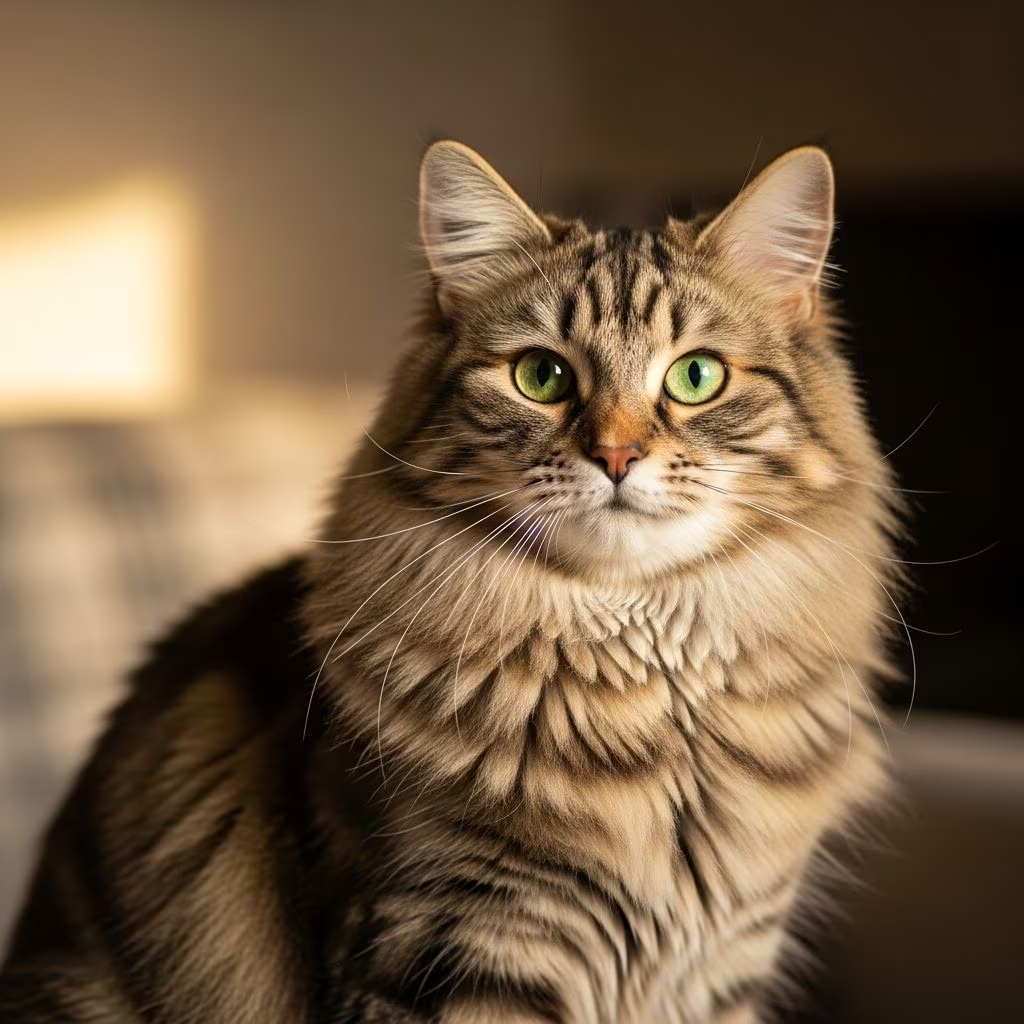
The Siberian cat stands out as one of the most captivating felines, originating from the rugged forests of Russia. Known for their impressive size, dense waterproof coats, and endearing personalities, these cats blend strength with gentleness, making them suitable for various households.
Origins and Historical Background
Siberian cats emerged naturally in the cold climates of Siberia, evolving as a landrace breed without human intervention. Their development occurred over centuries, adapting to harsh winters through thick fur and robust builds. Records trace their presence in Russian folklore and monasteries as early as the 1700s, where they served as skilled hunters protecting grain stores from rodents.
By the late 20th century, enthusiasts began formal breeding programs. The breed gained recognition from major cat fancier organizations, with the first Siberians exported to the United States in the 1990s. Today, they remain prized for their natural resilience and charm, embodying the wild spirit of their ancestral homeland.
Physical Characteristics and Appearance
Siberians possess a powerful, muscular frame that conveys both agility and endurance. Males typically weigh 15 to 20 pounds, while females range from 10 to 15 pounds, though some individuals exceed these averages. Their bodies feature a barrel-shaped torso, substantial boning, and hind legs slightly longer than the front ones, enabling exceptional jumping ability.
The head is broad and rounded, with high cheekbones, a gently curved profile, and large, expressive eyes in shades of green, gold, or copper—though blue eyes appear in pointed varieties. Ears are medium-sized, set wide apart, often with lynx tipping. The tail is bushy and medium-length, shorter than the body.
Arguably their most striking feature is the luxurious triple-layered coat: coarse guard hairs for water resistance, awn hairs for insulation, and a dense undercoat for warmth. This semi-long fur forms a ruff around the neck, fluffy breeches on the hind legs, and toe tufts on large, rounded paws. Coat colors vary widely, including solids, tabbies, torties, and points, with silvers and bicolors adding unique appeal. Full coat maturity takes up to five years.
| Physical Trait | Description |
|---|---|
| Size | Medium to large; males 15-20 lbs, females 10-15 lbs |
| Body Type | Stocky, muscular, barrel-chested |
| Coat | Triple-layered, water-repellent, slow-maturing |
| Eyes | Large, round; green/gold typical |
| Maturity | Up to 5 years |
Temperament and Behavioral Traits
Siberians are renowned for their balanced temperament: playful yet calm, loyal like dogs, and deeply affectionate without being demanding. They thrive on human interaction, often greeting owners at the door and following them room to room. Their intelligence shines in problem-solving, trick-learning, and even playing fetch—a rarity among cats.
Curious explorers, they investigate every nook but respect boundaries, quickly grasping the word “no.” Social butterflies, Siberians bond well with children, dogs, and other cats, making them ideal for bustling homes. Their adventurous side emerges in climbing, leaping, and water fascination; many enjoy baths or playing in sinks due to their water-repellent fur.
- Playful: Retains kitten-like energy into adulthood, loving interactive toys.
- Loyal: Forms strong attachments, akin to canine companionship.
- Sociable: Gets along with family members and pets.
- Intelligent: Learns commands and games easily.
- Water-Loving: Often dips paws in water sources.
Care and Grooming Essentials
Despite their thick coats, Siberians are relatively low-maintenance. Brush weekly—daily during shedding seasons—to remove loose undercoat and prevent mats. Their fur resists tangling thanks to the guard layer. Bathing is infrequent, as they self-groom efficiently, but use cat-safe shampoo if needed.
Provide a high-protein diet supporting their muscular builds and activity levels. Fresh water is crucial, given their affinity for it. Environmentally, offer vertical spaces like cat trees, scratching posts, and puzzle feeders to channel their hunter instincts. They adapt to indoor life but appreciate secure outdoor enclosures for exploration.
Health Considerations and Lifespan
Siberians generally enjoy robust health, with lifespans of 12 to 18 years. As a natural breed, they suffer fewer genetic issues than heavily bred lines. Common concerns include hypertrophic cardiomyopathy (HCM), a heart condition screened via DNA tests or ultrasounds. Obesity can arise from overfeeding, so monitor portions.
Regular veterinary check-ups, vaccinations, and dental care promote longevity. Some Siberians test low in Fel d 1 allergen protein, making them tolerable for allergy sufferers, though not fully hypoallergenic. Early spaying/neutering aids health and behavior.
Training and Enrichment Activities
Harness their smarts with positive reinforcement training. Teach fetch, leash walking, or high-fives using treats and praise. Interactive toys like feather wands or laser pointers simulate hunting, preventing boredom. Rotate toys to maintain interest.
For mental stimulation, hide treats around the home or use treat-dispensing balls. Siberians excel in clicker training, responding well to consistent cues. Their adaptability suits agility courses or simple obstacle setups indoors.
Siberian Cats in Families and Homes
Excellent family pets, Siberians patiently tolerate children’s rough play and integrate with dogs. They suit apartments if provided enrichment but flourish in homes with space for zooming. Not overly vocal, they chirp or trill softly. Independent enough for alone time yet crave evening cuddles.
Adoption, Breeding, and Costs
Acquire from reputable breeders conducting HCM screenings, or rescue through breed-specific groups. Kittens cost $1,000-$2,500; adults less. Factor in initial vetting ($500+), food, litter, and insurance ($20-50/month). Prioritize ethical sources to support breed health.
Frequently Asked Questions (FAQs)
Are Siberian cats hypoallergenic?
Many produce less Fel d 1 allergen, benefiting sensitive owners, but individual testing is advised.
How often should I groom a Siberian cat?
Weekly brushing suffices; increase during molts.
Do Siberians get along with dogs?
Yes, their sociable nature fosters easy coexistence.
What is the average lifespan of a Siberian?
12-18 years with proper care.
Can Siberians live indoors only?
Absolutely, with ample play opportunities.
References
- Facts About Siberian Cats | ASPCA Pet Health Insurance — ASPCA Pet Health Insurance. 2023. https://www.aspcapetinsurance.com/resources/siberian-cat-facts/
- Siberian – The Cat Fanciers’ Association — Cat Fanciers’ Association. 2024-01-15. https://cfa.org/breed/siberian/
- Siberian cat – Wikipedia — Wikipedia. 2025-12-20. https://en.wikipedia.org/wiki/Siberian_cat
- Siberian Forest Cat Breed Information | Purina UK — Purina UK. 2024. https://www.purina.co.uk/find-a-pet/cat-breeds/siberian-forest
- Personality of a Siberian — Krypto Siberians. 2023. https://www.kryptosiberians.com/info/personality-of-a-siberian



