

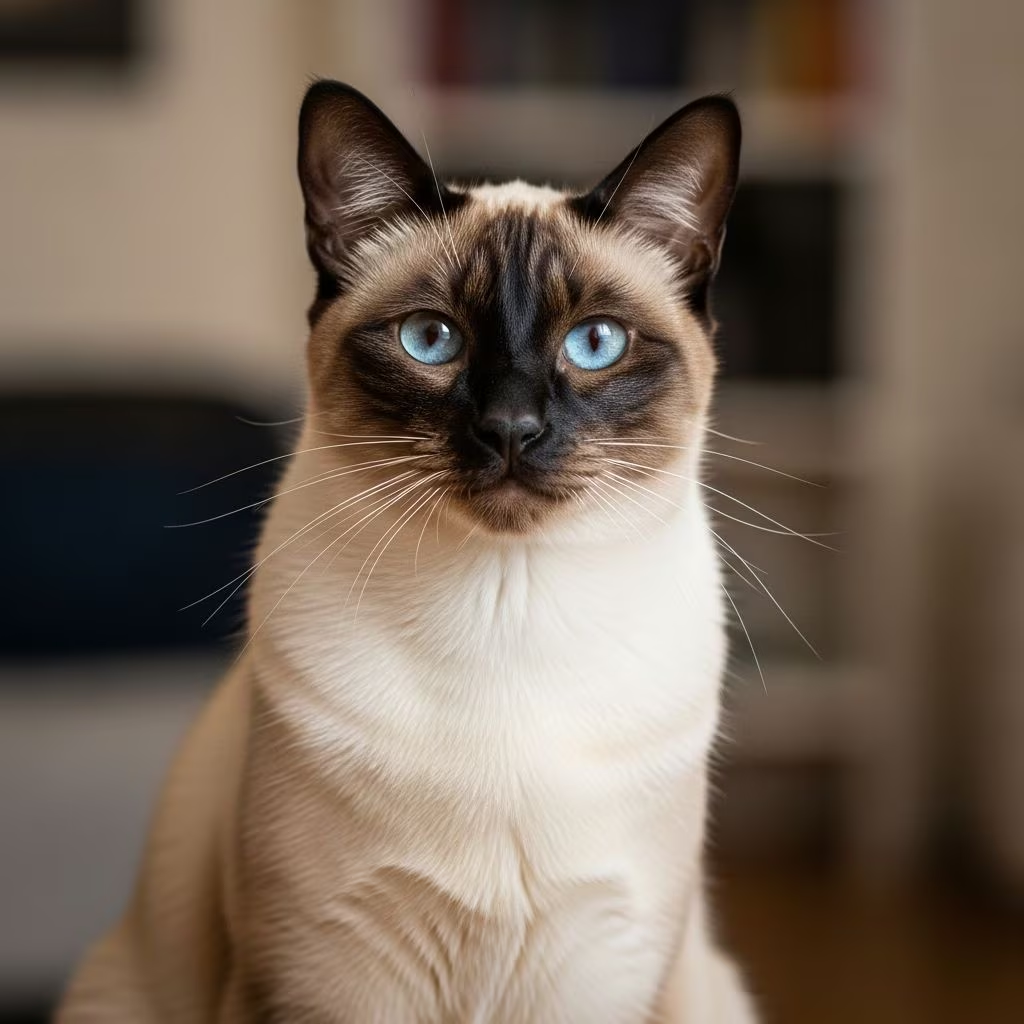
The **Siamese cat** stands out as one of the most recognizable and beloved cat breeds worldwide, known for its striking appearance, vocal nature, and deep bond with humans. Originating from ancient Thailand, these elegant felines feature a sleek body, vivid blue eyes, and a colorpoint coat that darkens on cooler body parts like the ears, face, paws, and tail. Renowned for their intelligence, playfulness, and affectionate demeanor, Siamese cats thrive in interactive environments and make loyal companions. This guide covers their history, characteristics, temperament, care requirements, health concerns, and more to help you decide if a Siamese is right for your home.
Siamese Cat Pictures
Siamese cats captivate with their almond-shaped blue eyes, wedge-shaped heads, and lithe, muscular bodies. Their short, fine coat comes in patterns like seal point (dark brown points on cream body), chocolate point (milk chocolate points), blue point (gray points), and lilac point (pale gray points). Kittens are born nearly white, developing points as they grow. Imagine a slender cat with large ears perched alertly, tail whipping playfully—these images showcase their exotic allure from Thai temples to modern homes.
Siamese Cat Facts
- **Origin**: Thailand (formerly Siam), revered by royalty and temple guardians.
- **Lifespan**: 15–20 years, often longer with proper care.
- **Weight**: Males 4–7 kg (9–15 lbs), females 2.5–4.5 kg (5.5–10 lbs).
- **Coat**: Short, colorpoint due to temperature-sensitive pigmentation.
- **Eyes**: Striking blue, almond-shaped.
- **Vocal**: Famous for loud, distinctive meows and chatter.
- **Activity Level**: High-energy, loves play and interaction.
- **Family-Friendly**: Affectionate with children and other pets when socialized.
History of the Siamese Cat
The Siamese cat’s story begins in ancient Thailand, where they were known as wichienmaat, meaning “moon diamond.” Manuscripts from Ayutthaya (1350–1767) first mention them, depicting these cats as sacred guardians of Buddhist temples and royal palaces. Exclusive to Siamese nobility, owning one was a high honor; theft was punishable by death. Legends claim their crossed eyes and kinked tails resulted from guarding a golden goblet—staring so intently their eyes crossed and tails kinked. In reality, these traits were selectively bred out in modern lines.
Siamese cats reached the West in the late 19th century. In 1871, King Chulalongkorn gifted pairs to Europe’s Queen Victoria and others. British consul Owen Gould brought Pho and Mia to his sister in 1884; their kittens debuted at London’s Crystal Palace Cat Show in 1885, sparking fascination despite early deaths. By the early 1900s, imports formed the British breeding stock—most modern Siamese descend from just 11 originals. Popularity exploded in the mid-20th century, peaking as America’s top breed in the 1950s. Breeders refined the type: traditional “applehead” Siamese had rounder faces and sturdier builds, while 1950s–60s trends favored the slender “wedge” or “modern” Siamese with elongated bodies and angular heads.
Size of Siamese Cats
Siamese cats are medium-sized with a slender, tubular build emphasizing grace over bulk. Males typically weigh 4–7 kg (9–15 lbs) and stand 25–30 cm at the shoulder, while females are lighter at 2.5–4.5 kg (5.5–10 lbs). Their long legs, neck, and whip-like tail create an athletic silhouette. Despite their elegance, they are muscular and agile climbers. Growth completes by 1–2 years, slower than many breeds due to their frame.
Temperament & Intelligence of the Siamese Cat
**Siamese cats** are extroverts: highly social, affectionate, and demanding of attention. They follow owners room-to-room, perch on laps, and “talk” incessantly with raspy meows, trills, and yowls to express needs or boredom. Intelligent as dogs, they learn tricks, fetch toys, walk on leashes, and open doors. Playful lifelong, they adore interactive toys, puzzle feeders, and laser pointers. Loyal and protective, they bond deeply with one person but warm to families. Not ideal for aloof owners—they suffer separation anxiety alone. Excellent with gentle children and dogs if socialized early; wary of strangers initially.
Are Siamese Cats Good with Kids & Other Pets?
Yes, Siamese cats excel with families. Their playful energy matches active children, engaging in gentle games without aggression. Supervise young kids due to the cat’s slender build. With proper introductions, they befriend dogs and coexist with other cats, often forming “packs.” Their social nature prevents isolation in multi-pet homes. Early socialization from kittenhood ensures confidence.
Colors of the Siamese Cat Breed
The hallmark is the **colorpoint pattern**: pale body with darker “points” on cooler extremities (face, ears, paws, tail). Caused by a temperature-sensitive enzyme, points darken in cooler areas. Common colors:
| Point Color | Body Color | Description |
|---|---|---|
| Seal | Cream to fawn | Deep brown-black points, most classic. |
| Chocolate | Ivory | Milk chocolate points. |
| Blue | Glacial white | Gray-blue points, dilute of seal. |
| Lilac | White | Frosty pink-gray points, dilute chocolate. |
| Red/Flame | White | Orange-red points. |
| Cream | White | Pale orange points. |
| Lynx (Tabby) | Varies | Striped points. |
| Tortie | Varies | Mixed black/orange points. |
Kittens’ points emerge at 4–6 weeks, fully developing by 1–2 years.
Grooming a Siamese Cat
Low-maintenance: short coat requires weekly brushing to reduce shedding and distribute oils. Bathing is rare—they self-groom meticulously. Trim nails biweekly, clean ears monthly, and brush teeth 2–3 times weekly with pet toothpaste. Their active nature keeps them fit; no special baths needed unless dirty.
Feeding & Diet for a Siamese Cat
Feed high-quality wet or dry food rich in animal protein, tailored to life stage. Adults need 200–250 kcal/day, split into 2–3 meals. Obligate carnivores crave meat; avoid fillers. Fresh water always; fountains appeal to them. Monitor weight—their slender build risks obesity if overfed. Kittens: growth formula until 12 months; seniors: senior formulas for joint/kidney health.
Health & Wellness of the Siamese Cat Breed
Generally robust, living 15–20 years. Genetic risks include:
- **Amyloidosis**: Liver protein deposits; regular vet checks.
- **Dental issues**: Weekly brushing prevents gingivitis.
- **Hypertrophic cardiomyopathy (HCM)**: Heart thickening; annual echoes.
- **Progressive retinal atrophy (PRA)**: Night blindness; genetic testing.
- **Asthma**: Respiratory allergies.
Annual vet visits, vaccines, and parasite control essential. Spay/neuter prevents cancers.
Exercise & Play for Siamese Cats
High-energy demands 30–60 minutes daily play. Provide cat trees, scratching posts, window perches. Toys: wand teasers, balls, tunnels. Train for agility; leash walks outdoors. Mental stimulation via food puzzles prevents boredom-induced mischief.
Training Your Siamese Cat
Highly trainable: use clicker training for sit, come, high-five. Positive reinforcement with treats/praise. Litter train naturally; harness train early. Their smarts make them responsive students.
Siamese Cat Cost & Maintenance
Kitten from breeder: $800–$2,500 USD (pedigree, health-tested). Annual costs: $400–$1,000 (food, litter, vet). Low grooming offsets higher play needs.
Rescue & Adoption of Siamese Cats
Many purebred rescues via Siamese-specific groups. Adoption fees $50–$200; often fixed/vaccinated. Check shelters—mixes share traits.
Related Breeds to the Siamese
- **Balinese**: Longhaired Siamese.
- **Oriental Shorthair/Longhair**: Similar body, varied colors.
- **Himalayan/Colorpoint Persian**: Pointed longhairs from Siamese-Persian crosses.
- **Birman, Burmese**: Influenced by Siamese genetics.
Frequently Asked Questions
Do Siamese Cats Get Lonely?
Yes, they crave companionship and can vocalize excessively or act out if left alone long. Ideal for working-from-home or multi-pet homes.
Why Are Siamese Cats So Vocal?
Bred for communication, they “talk” to express hunger, play, or affection with unique voices.
Are Siamese Cats Hypoallergenic?
No, but low-shedding short coat produces less dander than longhairs.
Do Siamese Cats Like Water?
Many enjoy splashing in sinks or baths, unlike most cats.
What’s the Difference Between Traditional and Modern Siamese?
Traditional (applehead): rounder, sturdier. Modern (wedge): slender, angular—both recognized.
References
- Siamese cat breed: History, personality and care of the Siam cats — Cozy Cat Furniture. 2023. https://www.cozycatfurniture.com/blog/siamese-cat
- The History and Origin of the Siamese Cat Breed — Ministry of Cat. 2023. https://www.ministryofcat.com/blog/the-history-and-origin-of-the-siamese-cat-breed
- Siamese cat — Wikipedia (citing primary historical sources). 2024-01-10. https://en.wikipedia.org/wiki/Siamese_cat
- Siamese Cat 101 – History, Personality and Traits — Outdoor Bengal. 2023. https://www.outdoorbengal.com/blogs/cat-breeds/siamese-cat-101
- Siamese — Cat Fanciers’ Association (CFA). 2024. https://cfa.org/breed/siamese/
- History & Breed Information on Siamese Cats & Kittens — Tresor Siamese Cats. 2023. http://tresorsiamesecats.com/siamesecathistory.html



