

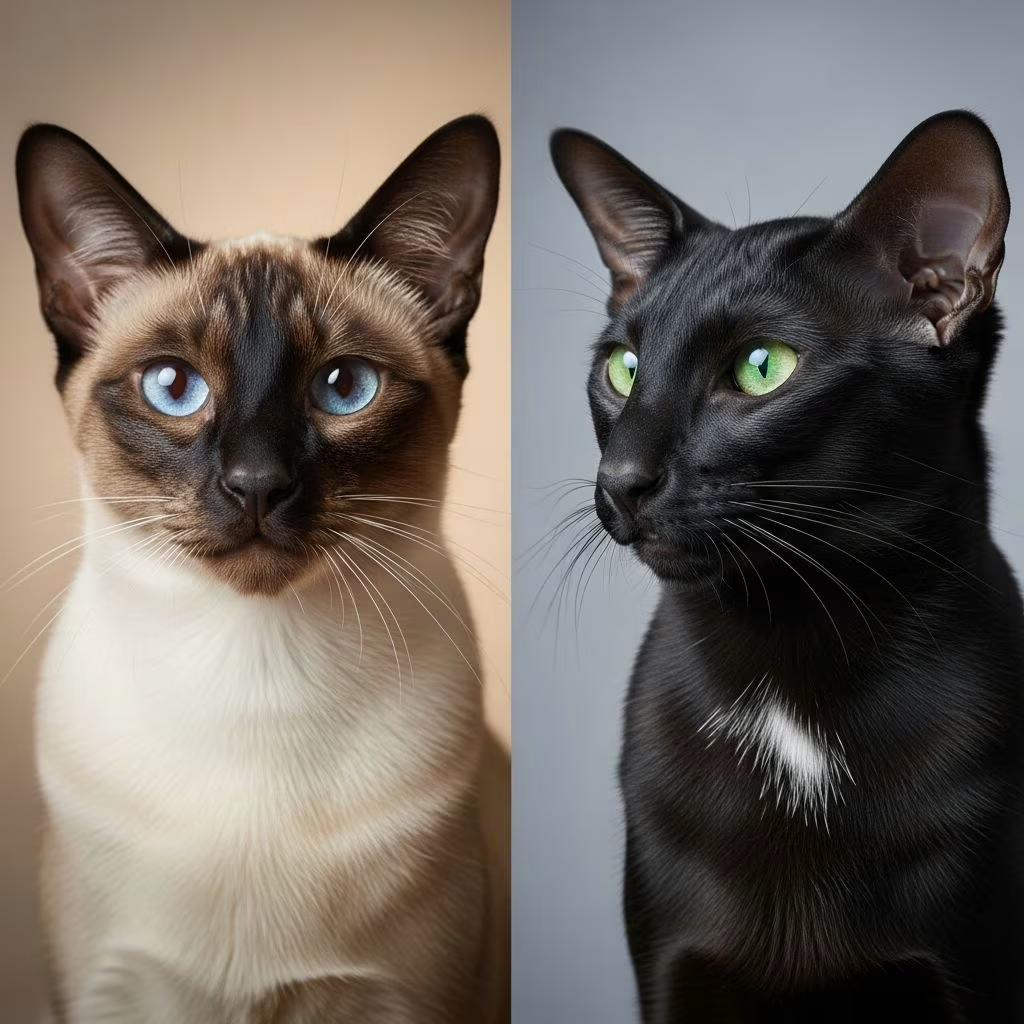
When exploring feline companionship, two breeds frequently emerge as top contenders for those seeking intelligent, affectionate, and vocal companions: the Siamese and the Oriental Shorthair. While these breeds share a common ancestry and numerous characteristics, understanding their unique qualities can help prospective cat owners make an informed decision. This comprehensive guide examines the critical differences and similarities between these two elegant breeds.
The Shared Heritage and Origins of These Elegant Felines
The relationship between Siamese and Oriental Shorthair cats is deeply rooted in breeding history. The Oriental Shorthair was deliberately developed from the Siamese breed, making it a direct descendant rather than a separate evolutionary path. During the 1950s, American breeders engaged in deliberate cross-breeding experiments, combining Russian Blues, British Shorthairs, Abyssinians, and domestic cats with Siamese specimens. These experimental litters were subsequently bred back with purebred Siamese cats, producing both pointed and non-pointed offspring. Within just a few generations, the non-pointed cats became virtually indistinguishable from their Siamese counterparts except for their coloration patterns. The Oriental Shorthair received its official recognition in 1977 in the United States, solidifying its status as a distinct breed.
Physical Characteristics: Body Structure and Build
Both breeds demonstrate strikingly similar body architectures that reflect their shared genetic foundation. These cats possess elongated, muscular frames with distinctive angular heads that taper into wedge shapes. Their legs are notably long and slender, contributing to their overall elegance and athletic appearance. The tail extends proportionally with their bodies, remaining thin and tapering toward the tip. Their ears command attention as oversized, pointed structures that sit prominently on their heads, creating an alert and expressive appearance.
In terms of body weight, both breeds maintain relatively similar measurements. Typical weight ranges fall between 6 to 12 pounds, making them medium-sized cats with minimal excess body composition. Both breeds benefit from naturally slim physiques with very low instances of obesity compared to other domestic cat populations. Their necks remain slender and elongated, and their paws appear delicate and proportionate to their overall frame.
Coat Colors and Genetic Expression
One of the most significant distinguishing factors between these two breeds emerges in their coat color genetics and presentation. Siamese cats exclusively display the pointed color pattern, characterized by lighter bodies with darker coloration concentrated on the face, ears, legs, and tail. This distinctive coloration results from a temperature-sensitive enzyme that produces pigment only in the cooler extremities of the cat’s body. All Siamese kittens are born completely white because of the warmth within the mother’s womb, gradually developing their characteristic points as they mature and their body temperature normalizes.
The color-point pattern in Siamese cats is intrinsically connected to a specific genetic marker sometimes referred to as the Himalayan gene, which not only dictates coloration but also fixes their eye color to blue. Oriental Shorthairs, by contrast, lack this mandatory genetic requirement. While Orientals can display pointed coloration patterns identical to Siamese cats, they are not restricted to this appearance. Instead, they can exhibit over 300 recognized color and pattern combinations, including solid colors, tabby markings, tortoiseshell patterns, bicolor arrangements, and numerous other variations. This genetic flexibility provides Oriental Shorthair enthusiasts with dramatically more aesthetic options.
Eye Color and Visual Expression
The eyes represent another critical distinction between these breeds. Siamese cats almost exclusively feature vivid blue, almond-shaped eyes that slant slightly toward the nose, creating one of the breed’s most immediately recognizable features. The intensity and clarity of their blue eyes contribute significantly to their captivating expression and aristocratic appearance.
Oriental Shorthairs demonstrate considerably more diversity in eye coloration. Their eyes typically appear in shades of blue, green, or even a striking combination of both colors within the same cat. Black and solid-colored Oriental Shorthairs frequently display distinctive green eyes, which create a striking contrast against darker coat colors.
Personality Traits and Social Behavior
Both breeds exhibit remarkably similar temperament profiles that make them equally appealing to cat lovers seeking interactive, engaged companions. Siamese cats earn a reputation for exceptional friendliness and outgoing personalities that extend to virtually everyone they encounter. They demonstrate a strong people-oriented nature and frequently shadow their human family members throughout the house, seeking constant companionship and attention.
Oriental Shorthairs mirror these behavioral characteristics almost identically. They form strong connections with people and maintain playful, curious dispositions throughout their lives. Like their Siamese cousins, Orientals commonly greet owners at doors, follow them from room to room, and actively seek interaction. This dog-like devotion and attachment to their humans distinguishes both breeds from more aloof cat species.
Vocalization and Communication Patterns
Both breeds are notably vocal, employing meowing and vocalizations as primary communication tools with their owners. Siamese cats produce distinctive high-pitched vocalizations often described as crying sounds, earning them recognition as particularly noisy companions compared to most other cat breeds. Their calls can be surprisingly intense and persistent, particularly when demanding attention or attempting to communicate their needs.
Oriental Shorthairs demonstrate equally pronounced vocalization tendencies. These cats engage in frequent meowing and are often described as conversationalists due to their apparent desire to maintain ongoing dialogue with their human companions. Owners of Oriental Shorthairs frequently report that their cats appear to respond to human speech and actively participate in household conversations, making them exceptionally engaging and interactive pets.
Health Considerations and Genetic Susceptibilities
Due to their close genetic relationship, Siamese and Oriental Shorthair cats share overlapping health profiles and potential genetic predispositions. Oriental Shorthairs maintain generally good health throughout their lives, typically achieving lifespans of 10 to 15 years, similar to their Siamese ancestors.
Both breeds show heightened susceptibility to certain conditions warranting awareness among potential owners:
- Asthma and respiratory difficulties
- Gastrointestinal disorders and digestive sensitivities
- Ocular problems and vision-related issues
- Congenital heart conditions
- Crossed eyes (strabismus), which was historically more prevalent in Siamese cats
Prospective owners can significantly mitigate these health risks by acquiring their cats from reputable, responsible breeders who conduct thorough health screening and genetic testing. The naturally lean physiques of both breeds contribute to lower obesity rates compared to many other domestic cat populations, which supports overall health and longevity.
Grooming Requirements and Coat Maintenance
Both breeds feature short, glossy coats that lie close to their bodies and require minimal grooming intervention. Unlike long-haired breeds that demand daily brushing, Siamese and Oriental Shorthairs benefit from occasional grooming sessions that maintain coat luster and distribute natural oils. The absence of undercoats in both breeds simplifies coat care and reduces shedding concerns. Regular nail trimming remains important to prevent overgrowth and associated discomfort, which can be accomplished at home or during professional grooming appointments.
Comparative Feature Analysis
| Feature | Siamese | Oriental Shorthair |
|---|---|---|
| Coat Color Pattern | Exclusively pointed coloration | Over 300 color and pattern variations |
| Eye Color | Vivid blue | Blue, green, or heterochromatic |
| Body Structure | Long, muscular, wedge-shaped head | Identical body structure |
| Temperament | Highly affectionate and people-oriented | Nearly identical personality |
| Vocalization | Very vocal with high-pitched calls | Equally vocal and conversational |
| Lifespan | 10-15 years | 10-15 years |
| Health Predispositions | Asthma, heart issues, eye problems | Same conditions as Siamese |
Genetic Differences Explained
While physical and behavioral similarities dominate the breed comparison, fundamental genetic differences underlie some key distinctions. The presence or absence of the Himalayan gene represents the most significant genetic divergence. Siamese cats carry this gene as a breed requirement, which produces the pointed color pattern and mandates blue eye coloration. Oriental Shorthairs do not universally carry this gene, providing the genetic flexibility that allows for their diverse color palette and variable eye colors. An Oriental Shorthair may carry the Himalayan gene and express pointed coloration and blue eyes, functionally appearing identical to a Siamese cat. However, Orientals lacking this gene can display entirely different appearances while maintaining the characteristic body structure and personality.
Making the Right Choice for Your Household
Deciding between a Siamese and an Oriental Shorthair ultimately depends on personal preferences and practical considerations rather than fundamental behavioral or health differences. If a specific coat color aesthetic appeals to you, this becomes the primary selection criterion. Those drawn to the classic pointed pattern might prefer a Siamese, while individuals seeking diverse color options should explore Oriental Shorthairs. Both breeds require owners prepared for highly interactive, vocal, and attention-demanding companions. Their dog-like devotion means they thrive in households where family members can engage with them regularly and tolerate enthusiastic vocalizations.
Availability in your geographic region may also influence your choice, as one breed might be more readily accessible through local breeders or rescue organizations. Regardless of which breed you ultimately select, you’ll be welcoming an intelligent, affectionate, and captivating feline companion into your home.
Frequently Asked Questions
Can Oriental Shorthairs have pointed coloration like Siamese cats?
Yes, Oriental Shorthairs can display pointed coloring patterns identical to Siamese cats if they carry the relevant genetic markers. However, unlike Siamese cats, they are not required to express this pattern.
Are these breeds suitable for first-time cat owners?
Both breeds can be wonderful for experienced cat owners but may be challenging for first-time owners due to their high maintenance social and vocal needs. They require significant daily interaction and attention.
Do Siamese and Oriental Shorthair cats get along with other pets?
Both breeds’ people-oriented nature and social temperament can make them adaptable to multi-pet households, provided proper introductions and socialization occur. Their playfulness often extends to other animals.
What is the average cost of purchasing one of these breeds?
Pricing varies significantly based on breeder reputation, geographic location, and specific characteristics. Quality breeders typically charge between $600 to $1,200 or more for either breed.
How can I ensure I’m purchasing from a responsible breeder?
Responsible breeders conduct health screening, provide health guarantees, allow breeder visits, and maintain detailed pedigree records. They prioritize breed health over profit margins.
References
- Siamese and Oriental Shorthair Facts — Wisdom Panel™ Cat Breeds. 2024. https://www.wisdompanel.com/en-us/cat-breeds/siamese-and-oriental-shorthair
- Siamese Cat vs. Oriental Shorthair Cat: Which One To Choose — Catster. 2024. https://www.catster.com/cat-breeds/siamese-cat-vs-oriental-shorthair/
- Black and Beautiful, Oriental Cat or Siamese — Cat Evolution. 2024. https://catevolution.com.au/blogs/cat_tips_tricks/black-and-beautiful-oriental-cat-or-siamese
- The Elegance of Origins: Exploring the Oriental Shorthair Cat Breed — Cat Aristocrat. 2024. https://cataristocrat.com/the-oriental/



