

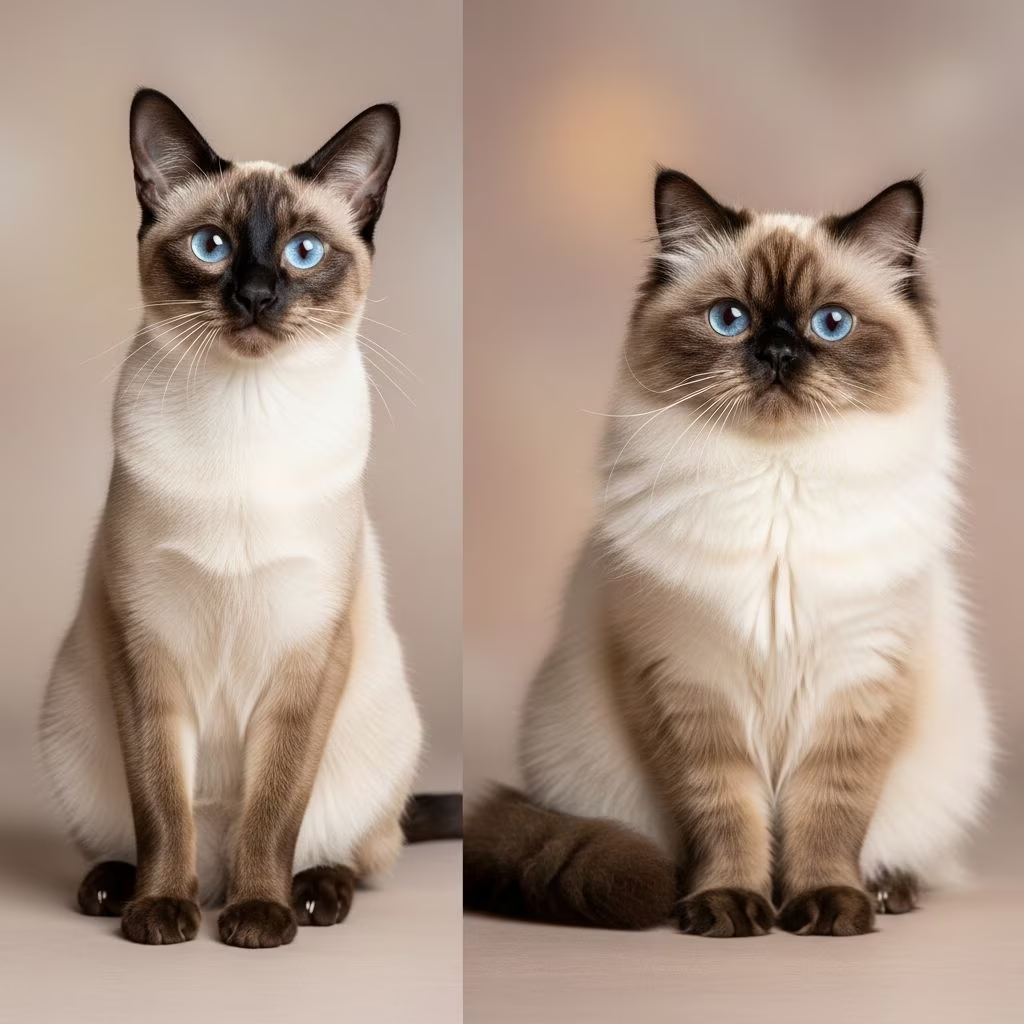
Siamese and Himalayan cats both captivate with their striking blue eyes and pointed color patterns, but they offer distinct experiences as pets. While Siamese cats bring energy and vocal charm, Himalayans provide serene companionship and luxurious fluffiness. This guide breaks down their differences to help you decide which breed aligns with your lifestyle.
Origins and Development of These Iconic Breeds
The Siamese cat traces its roots to Thailand, where it was revered in temples and palaces for centuries. Introduced to the West in the late 19th century, this breed quickly gained fame for its elegant form and chatty nature. Breeders selectively enhanced its slender build and vocal traits, making it a staple in cat shows worldwide.
In contrast, the Himalayan emerged in the United States during the 1930s through deliberate crosses between Siamese and Persian cats. The goal was to combine the Siamese’s color-point pattern—darker fur on extremities like ears, face, paws, and tail—with the Persian’s plush coat and rounded features. Officially recognized as a separate breed by major cat registries in the 1950s and 1960s, Himalayans blend the best of both parent breeds while developing their own identity.
These origins influence everything from their physical structure to health predispositions, setting the stage for clear distinctions in daily care and companionship.
Physical Characteristics: Sleek Elegance Meets Plush Comfort
Siamese cats embody athletic grace with a long, lithe body, slender legs, and a wedge-shaped head that tapers to a fine muzzle. Their large, pointed ears and almond-shaped blue eyes contribute to an alert, oriental expression. Standing about 25.4–30.5 cm tall at the shoulder and weighing 3.2–5.4 kg, they move with fluid precision on small oval paws, complemented by a long, tapering tail.
Himalayans present a starkly different silhouette: a stocky, cobby body type with a broad chest, short thick legs, and a round face featuring flattened features inherited from Persians. They measure around 20.3–25.4 cm in height and weigh 3.6–5.4 kg, often appearing more compact and sturdy. Their large, round paws support a plush frame, and their tail remains short and bushy.
| Feature | Siamese | Himalayan |
|---|---|---|
| Body Type | Long, slender, athletic | Stocky, cobby, rounded |
| Legs & Paws | Slender legs, small oval paws | Short thick legs, large round paws |
| Head Shape | Wedge-shaped, fine muzzle | Round, flattened face |
| Tail | Long, thin, tapering | Short, bushy |
Coat is the most visible divide: Siamese sport a short, fine, close-lying fur that’s pale-bodied with dark points, requiring minimal upkeep. Himalayans boast a long, thick, glossy coat prone to matting, demanding dedicated brushing.
Coat Colors and Patterns: Shared Points, Unique Textures
Both breeds share the Himalayan or colorpoint pattern, where cooler body areas remain light (cream, white, or fawn) while points darken in shades like seal, chocolate, blue, lilac, red, or cream. This temperature-sensitive pigmentation darkens extremities first.
- Siamese Variations: Traditional seal point dominates, but lynx points add stripes, and tabby points introduce bold patterns on a short coat.
- Himalayan Variations: Long fur amplifies the plush effect, with points matching Siamese hues but appearing more dramatic against the voluminous body fur.
These patterns unite the breeds visually, yet the coat length profoundly impacts grooming routines and overall maintenance.
Temperament and Behavior: Vocal Dynamos vs. Gentle Lap Warmers
Siamese cats are renowned for their extroverted, talkative personalities. They communicate with a loud, raspy meow, often following owners room-to-room in pursuit of interaction. Highly playful and intelligent, they excel at fetch, puzzle toys, and even leash training, thriving in active households.
Himalayans inherit Persian calm, preferring quiet observation from a cozy perch. Affectionate yet undemanding, they offer soft purrs and gentle head bumps, content with laps and minimal stimulation. Less vocal, their “musical” mews convey needs subtly.
- Siamese: Energetic, social, attention-seeking; ideal for families with kids or dogs.
- Himalayan: Relaxed, reserved with strangers, lap-oriented; suits serene homes.
Both form deep bonds, but Siamese demand engagement while Himalayans reward patience with devoted cuddles.
Grooming and Daily Care Requirements
Siamese maintenance is straightforward: weekly brushing suffices for their sleek coat, which resists matting. Bathe rarely, as they self-groom efficiently. Nail trims biweekly and dental care prevent issues from crowded teeth.
Himalayans require daily combing to manage their dense undercoat and prevent tangles, especially around the ruff and britches. They enjoy grooming sessions, strengthening owner bonds. Eye cleaning combats tear staining from flat faces, and professional clipping may help in summer.
| Care Aspect | Siamese | Himalayan |
|---|---|---|
| Grooming Frequency | Weekly | Daily |
| Bathing Needs | Rare | Occasional |
| Eye Care | Minimal | Daily wiping |
| Shedding | Low | High seasonal |
Exercise aligns with temperaments: Siamese need interactive play, while Himalayans stay fit via light chasing.
Health Considerations and Lifespan Expectations
Siamese average 15-20 years but face genetic risks like hypertrophic cardiomyopathy (heart muscle thickening), progressive retinal atrophy (vision loss), and dental misalignment from narrow jaws. Their slim build protects against obesity if diet-controlled.
Himalayans live 12-15 years, prone to Persian-derived issues: brachycephalic syndrome (breathing difficulties), polycystic kidney disease, and eye problems like corneal ulcers from tear overflow. Long coats invite skin infections; obesity looms due to inactivity.
- Common Siamese Issues: Respiratory from head shape, picky eating leading to nutritional gaps.
- Common Himalayan Issues: Upper airway infections, tear staining, weight gain.
Regular vet checks, genetic screening for breeders, and portioned high-quality food mitigate risks for both.
Ideal Living Environments and Family Suitability
Siamese flourish in bustling homes with playmates—children, dogs, or fellow cats. They dislike solitude, vocalizing distress if ignored. Apartments work if enriched with toys and vertical spaces.
Himalayans prefer quiet, stable settings without chaos. Excellent lap companions for seniors or low-key families, they tolerate other pets but shy from noise. Indoor-only life suits their sedentary style.
Neither excels outdoors due to theft risk and health vulnerabilities; both demand quality nutrition over treats.
Kitten Growth and Training Tips
Kittens of both breeds mature around 12 months, weaning at 6-8 weeks. Siamese grow lean and agile quickly, mastering tricks early due to smarts. Himalayans develop plush coats by 6 months, benefiting from gentle socialization.
Litter training succeeds effortlessly; harness training favors Siamese adventurousness.
Nutrition and Feeding Guidelines
Siamese picky palates require varied, nutrient-dense kibble or wet food to avoid slimness turning problematic. Measure portions to maintain muscle tone.
Himalayans need calorie-controlled diets to combat obesity, with omega-rich foods for coat health. Frequent small meals aid digestion.
Frequently Asked Questions
Are Himalayan cats a mix of Siamese and Persian?
Yes, selectively bred from Siamese for points and Persian for coat and build.
Which breed is better for apartments?
Himalayans for quiet; Siamese if you provide ample play.
Do Siamese cats get along with dogs?
Often yes, their social nature shines with cat-friendly dogs.
How do I prevent matting in Himalayan fur?
Daily brushing with a wide-tooth comb, focusing on belly and legs.
What’s the average cost of these breeds?
Kittens range $800-$2000 from reputable breeders, varying by lineage.
Choosing Your Perfect Feline Match
Opt for Siamese if craving a lively, interactive partner; choose Himalayan for peaceful, affectionate vibes. Both deliver joy through blue-eyed allure and devotion—research breeders for health-tested lines.
References
- Is there a Himalayan Siamese cat, or are they two breeds? — Untamed. 2023. https://untamed.com/blogs/cat-breeds/himalayan-siamese-cat
- Himalayan Cat vs. Siamese Cat: Key Differences (With Pictures) — Hepper. 2023. https://articles.hepper.com/himalayan-cat-vs-siamese-cat/
- Siamese Cat VS. Himalayan Cat — YouTube (Pet Channel). 2022-10-15. https://www.youtube.com/watch?v=65gbdmlchUg
- Himalayan Cat: A Mix of Siamese and Persian — HowStuffWorks. 2024. https://animals.howstuffworks.com/pets/himalayan-cat.htm



