

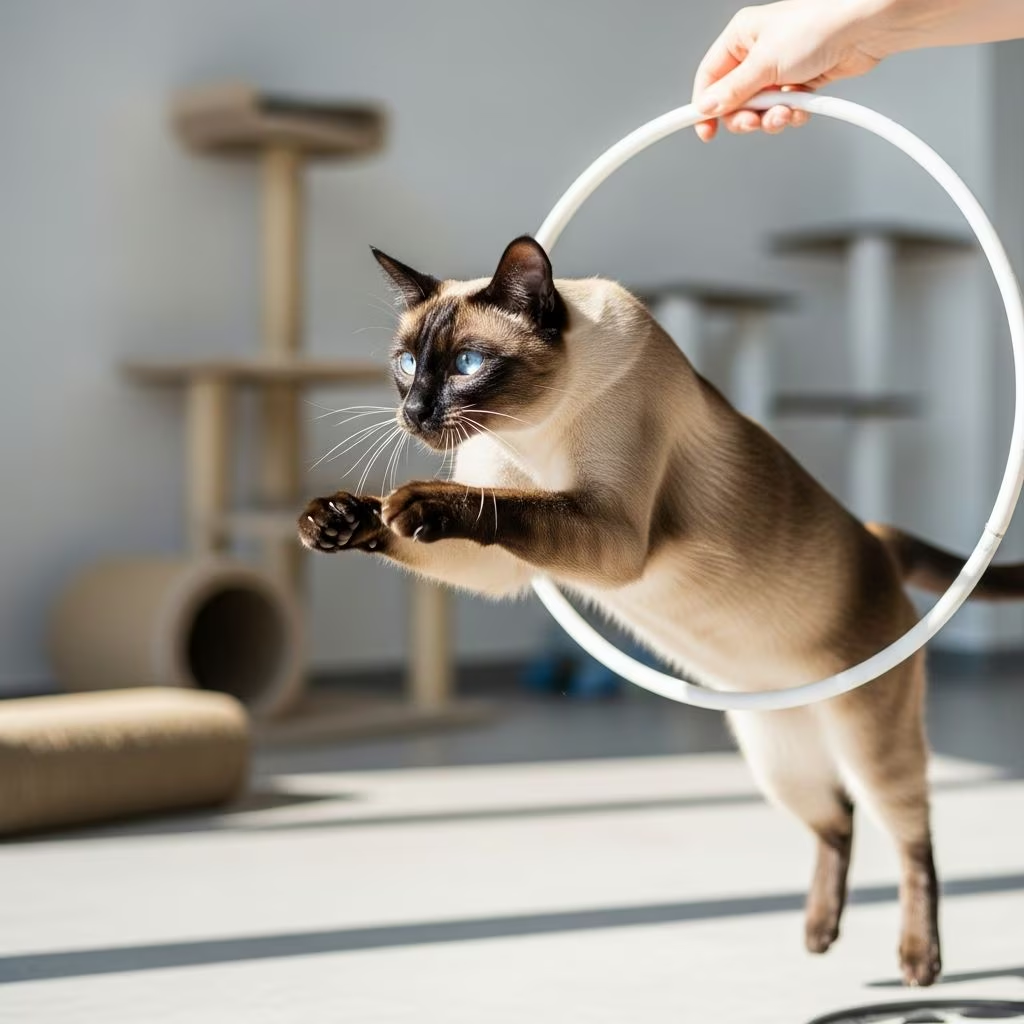
Siamese cats represent one of the most intellectually capable and responsive feline breeds available to pet owners today. Their natural intelligence, combined with an inherent desire to interact with humans, makes them uniquely suited to formal training programs that would challenge many other cat breeds. Understanding how to leverage these natural strengths while addressing breed-specific challenges is essential for anyone considering bringing a Siamese cat into their home.
Understanding the Siamese Cat’s Unique Learning Capacity
Siamese cats possess cognitive abilities that distinguish them significantly from typical domestic cats. Their intelligence manifests in various ways, including problem-solving skills, memory retention, and the ability to learn complex behavioral patterns. This intellectual capacity means that Siamese cats can master commands, tricks, and behavioral modifications that many owners mistakenly believe are impossible for felines to learn.
The trainability of Siamese cats stems from their strong desire for human interaction and their natural curiosity about their environment. These cats are innately driven to understand their surroundings and to communicate with their human companions. When properly channeled, this drive becomes an invaluable asset in training endeavors. Siamese cats will actively seek opportunities to engage with their owners, making training sessions something they often anticipate rather than resist.
However, this same intelligence can work against owners who are unprepared for the breed’s behavioral complexity. A bored or under-stimulated Siamese cat may direct their problem-solving abilities toward destructive behaviors or attention-seeking antics that challenge household harmony. The key to successful training lies in understanding that these cats require mental stimulation as much as physical exercise.
Establishing the Foundation for Training Success
Before introducing formal training commands, owners must first establish themselves as reliable and consistent figures in their Siamese cat’s life. This foundational relationship building creates the trust necessary for effective training. Siamese cats form strong bonds with their human companions, and this attachment can be leveraged to motivate learning and obedience.
Consistency represents the cornerstone of any successful cat training program. Siamese cats are observant and quick to detect patterns in human behavior. If a command is enforced inconsistently, or if rewards are not delivered reliably, the cat will recognize this and reduce their responsiveness accordingly. Every family member must employ identical commands, identical hand signals, and identical reward systems.
Creating a distraction-free training environment is equally important. Siamese cats are highly sensitive to environmental stimuli, and competing sounds or activities will capture their attention away from training sessions. Short, focused training periods of five to ten minutes work far better than lengthy sessions that risk overwhelming the cat or causing frustration on either side.
Implementing Positive Reinforcement Strategies
Positive reinforcement stands as the most effective training methodology for Siamese cats. These animals respond exceptionally well to rewards, particularly those involving food treats or direct human attention. The timing of rewards is critical—the reinforcement must come within seconds of the desired behavior to create the neural associations necessary for learning.
Different Siamese cats may have varying preferences for rewards. While some cats are motivated primarily by food, others may be more responsive to praise, petting, or interactive play sessions. Observing your individual cat’s preferences allows you to customize your training approach. Some owners find that their Siamese cats are motivated by access to favorite toys or even the simple pleasure of climbing or exploring a new area.
Negative reinforcement and punishment are notably ineffective with Siamese cats and can actually damage your relationship with your pet. Siamese cats subjected to harsh corrections may become withdrawn, anxious, or develop behavioral problems that are more severe than the original issue being addressed. The breed’s sensitivity to their owners’ emotional states means that anger or frustration during training can undermine the entire process.
Teaching Essential Commands and Behaviors
Despite popular misconceptions about cat behavior, Siamese cats can learn to respond to commands comparable to those taught to dogs. The process requires patience, but the results are genuinely achievable. Start with simple, single-syllable commands that are easy for the cat to distinguish and remember.
Sit command training often serves as an ideal starting point. Hold a treat slightly above your cat’s head and slowly move it backward. The natural response is for the cat to sit while following the treat with their eyes. The moment their rear touches the ground, say “sit” clearly and immediately reward them with the treat and verbal praise. Repetition builds the association between the word, the action, and the reward.
Come command training addresses one of the most practical needs for cat owners. Begin by establishing a unique sound or word that your cat associates exclusively with positive experiences. Shake a treat container or use a specific verbal call. When your cat responds by coming to you, reward immediately with treats and affection. Over time, your cat will reliably approach when summoned.
Leave it command development helps protect your cat from harmful substances or inappropriate objects. When your cat approaches something they shouldn’t have, say “leave it” and redirect them toward an acceptable toy or activity. Reward the redirection generously. This command can prove invaluable for preventing accidents or destructive behaviors.
Many Siamese cat owners report that their pets naturally learn to walk on harnesses and leashes, opening up outdoor exploration opportunities. Introduce harness training gradually, allowing your cat to become accustomed to the equipment indoors before venturing outside. Initial resistance often gives way to acceptance and even enthusiasm for the expanded territory the harness provides.
Addressing Common Behavioral Challenges Through Training
Siamese cats exhibit distinct behavioral patterns that, while often charming, can present challenges requiring specific training interventions. Understanding the underlying causes of these behaviors enables owners to address root issues rather than merely suppressing symptoms.
Managing Excessive Vocalization
Siamese cats are renowned for their chatty nature and distinctive loud vocalizations. While this communication style is a breed characteristic, excessive meowing can become disruptive. Rather than attempting to eliminate vocalizations entirely, effective training redirects them into appropriate contexts.
Never reward excessive meowing with attention, as this teaches the cat that volume produces results. Alternatively, selectively reward quiet moments with treats and affection. When your Siamese vocalizes excessively, redirect their attention toward a toy or activity, then reward the shift in focus. Over time, your cat learns that quiet behavior brings rewards while excessive noise does not.
Curbing Destructive Behaviors
Siamese cats with insufficient environmental enrichment often express their intelligence and energy through destructive activities such as scratching furniture or knocking objects off surfaces. These behaviors are not malicious but rather expressions of unmet needs.
Training interventions for destructive behavior begin with providing appropriate outlets. Install multiple scratching posts and vertical climbing structures throughout your home. When your cat uses these appropriate items, reward them generously. When they approach forbidden items, redirect them physically to appropriate scratchers while saying “use your scratcher.” Consistency in this approach produces measurable behavioral improvement within weeks.
Reducing Attention-Seeking Aggression
Some Siamese cats resort to playful aggression or biting when they feel ignored or under-stimulated. These cats are signaling their need for more engagement rather than displaying actual aggression. Training addresses this by establishing structured playtime and interaction schedules that meet the cat’s needs proactively.
Interactive play sessions using wand toys, laser pointers, or ball toys should occur multiple times daily. These sessions should last 10-15 minutes and should tire the cat sufficiently to reduce boredom-related misbehavior. Additionally, puzzle feeders and food-dispensing toys keep the cat’s mind engaged even when owners are occupied with other activities.
Specialized Training for Separation and Anxiety Management
Siamese cats’ strong attachment to their human companions makes them vulnerable to separation anxiety when left alone for extended periods. Training can mitigate this anxiety through gradual desensitization and behavioral modification.
Begin by practicing brief departures, leaving your cat alone for just a few minutes. Return before anxiety symptoms emerge. Gradually extend the duration of your absences over weeks. Reward calm behavior during your presence and absence by providing treats and attention. Create a designated safe space with familiar items where your cat feels secure during your absence.
Some owners find that leaving soft background music or the television on reduces anxiety by providing auditory stimulation. Others report success with pheromone diffusers specifically designed to calm anxious cats. Combining these environmental modifications with training creates a comprehensive approach to managing separation-related stress.
Training Considerations for Multi-Cat Households
When Siamese cats share homes with other pets, training becomes more complex but remains achievable. Siamese cats can be territorial, and successful cohabitation requires deliberate training interventions.
Separate training sessions for each cat prevent competition and ensure that individual needs receive attention. Reward peaceful interactions between cats rather than punishing conflicts. When introducing toys or resources, provide duplicates to minimize territorial disputes. Over time, cats can learn to coexist peacefully through consistent training and environmental management.
Creating a Training Schedule That Works
Successful training requires consistency that extends across days and weeks. Establishing a structured schedule ensures that training occurs regularly without becoming another source of household stress.
- Conduct morning training sessions when cats are alert and responsive, typically lasting 5-10 minutes
- Schedule afternoon play sessions that provide physical exercise and mental stimulation, lasting 15-20 minutes
- Use evening interaction time to reinforce learned behaviors and strengthen bonds with treats and affection
- Maintain consistent meal times and feeding locations to establish routine and predictability
- Dedicate weekends to extended play sessions and exploration activities that introduce novel stimulation
Troubleshooting Common Training Obstacles
Even well-intentioned owners sometimes encounter plateaus or setbacks in their training efforts. Understanding common obstacles allows for strategic problem-solving.
If your Siamese cat loses interest in training, the rewards may no longer feel sufficiently motivating. Rotate reward types, introducing new treats or play activities to maintain interest. Additionally, some cats respond better to specific times of day or particular locations. Experiment with scheduling and environment to find optimal training conditions.
When cats regress in previously learned behaviors, consistency typically has lapsed somewhere in the household. Revisit your baseline training steps and ensure all family members are implementing identical techniques. Often, brief refresher sessions quickly restore previously established behaviors.
If your cat shows fear or anxiety during training sessions, you may be progressing too quickly or using insufficiently motivating rewards. Return to earlier training stages and advance more gradually. Your cat’s comfort and willingness remain more important than rapid skill acquisition.
Advanced Training Possibilities for Intelligent Siamese Cats
Once your Siamese cat masters basic commands, their intelligence allows for more sophisticated training endeavors. Some owners teach their cats to respond to multiple sequential commands, creating complex behavioral chains. Others train their cats to retrieve specific items or to navigate obstacle courses designed for feline navigation.
These advanced activities provide the mental stimulation that Siamese cats crave while strengthening the bond between cat and owner. The process of learning becomes enrichment in itself, occupying the cat’s considerable intelligence constructively.
Maintaining Long-Term Training Success
Training is not a destination but rather an ongoing process. Even after your Siamese cat has mastered specific behaviors, periodic refresher sessions maintain learned skills. Additionally, as your cat ages, training can be adapted to address age-related changes while continuing to provide mental stimulation.
The investment in training your Siamese cat yields lifelong dividends. A well-trained Siamese cat becomes an even more compatible household companion, with behavioral challenges minimized and the unique personality traits of the breed fully expressed in positive ways.
References
- Siamese Cat Behavior Problems and How to Deal With Them Efficiently — Untamed. 2022-06-09. https://untamed.com/blogs/cat-breeds/siamese-cat-behavior-problems
- Siamese Cat Behavior: Fun-Loving, Trainable Cats — Life with Siamese Cats. https://www.life-with-siamese-cats.com/siamese-cat-behavior.html
- Siamese Cat Facts — ASPCA Pet Health Insurance. https://www.aspcapetinsurance.com/resources/siamese-cat-facts/
- Siamese: Traits, Appearance, General, Character — Vet Amerikan. https://www.vetamerikan.org/our-best-friends/cat-types/siamese
- Siamese Cat Breed Information — Purina UK. https://www.purina.co.uk/find-a-pet/cat-breeds/siamese



