

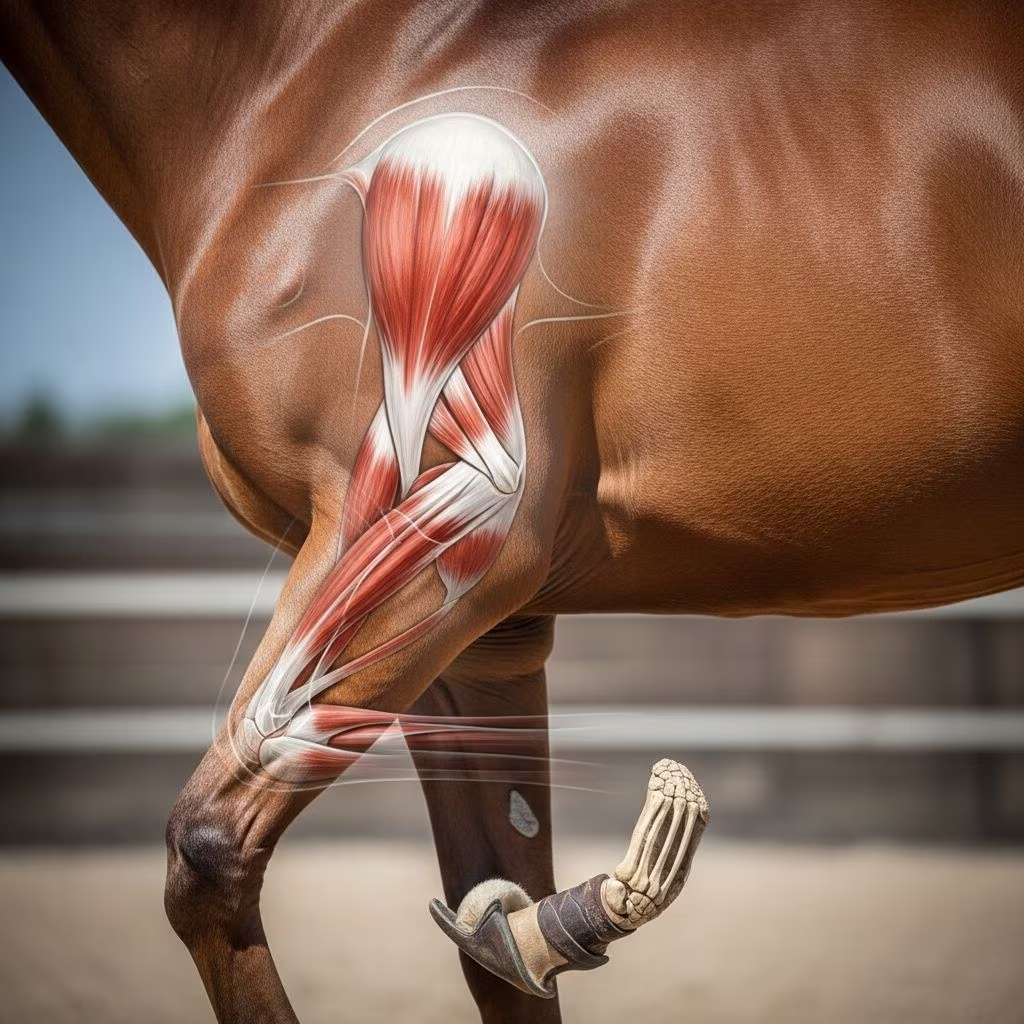
Horses rely on their forelimbs for stability and power, making shoulder and elbow health crucial for performance and daily function. Disorders in these areas, though less common than in lower limbs, can cause significant lameness and long-term issues if not addressed promptly. This article delves into the primary conditions affecting these joints, drawing from veterinary expertise to outline causes, identification methods, management strategies, and recovery expectations.
Understanding the Anatomy of Equine Forelimbs
The shoulder joint, or scapulohumeral joint, connects the scapula to the humerus, allowing wide range of motion essential for galloping and jumping. Key muscles like the supraspinatus and infraspinatus provide stability. The elbow joint links the humerus to the radius and ulna, supporting weight-bearing with collateral ligaments preventing side-to-side movement. Disruptions here from trauma, growth abnormalities, or degeneration lead to pain and instability.
Common Shoulder Conditions in Equine Athletes
Shoulder problems represent a small fraction of forelimb lameness cases but demand attention due to their impact. Direct impacts during falls or collisions are frequent culprits, alongside developmental flaws in young horses.
Developmental Orthopedic Challenges
Young horses, particularly weanlings and yearlings, may develop osteochondrosis dissecans (OCD) or subchondral cyst-like lesions (SCLs) in the glenoid cavity of the scapula or humeral head. These arise from irregular cartilage growth, leading to fragments or cysts that cause inflammation and lameness. Unlike other sites, shoulder OCD often produces noticeable, persistent pain, affecting large cartilage areas.
- Symptoms include sudden moderate-to-severe lameness, worsened by flexion tests.
- Diagnosis involves radiographs, scintigraphy for bone activity, and joint blocks to isolate the site.
Treatment starts conservatively with rest, anti-inflammatories, and controlled exercise. Arthroscopy removes fragments if needed, though access is challenging. Prognosis remains guarded, as full resolution is rare.
Suprascapular Neuropathy: The Leading Shoulder Issue
Known colloquially as “sweeney,” this condition tops shoulder abnormalities, stemming from suprascapular nerve damage, usually traumatic. Muscle atrophy in supraspinatus and infraspinatus creates a bony shoulder appearance and joint instability, risking luxation.
- Horses show sudden lameness, muscle wasting within weeks, and a dropped shoulder profile.
- Diagnosis uses nerve blocks, ultrasound for muscle loss, and ruling out fractures via imaging.
Management focuses on stall rest (several months), physical therapy to rebuild muscle, and supportive slings. Many recover for light work, but racing careers often end. Prevention emphasizes padding in trailers and arenas.
Fractures and Traumatic Injuries
High-speed activities in Thoroughbreds lead to stress fractures in the humerus or scapula, plus supraglenoid tubercle avulsions. These cause acute lameness and swelling.
| Type | Common In | Treatment | Prognosis |
|---|---|---|---|
| Supraglenoid Tubercle Fracture | Young Horses | Surgical Fixation | Good with Early Intervention |
| Humeral Stress Fracture | Racehorses | Rest, Scintigraphy Monitoring | Fair to Good |
Surgery with screws or plates is standard for displaced fractures; conservative care suits incomplete ones.
Elbow Joint Disorders: Often Overlooked
Elbow issues are rarer but trickier to pinpoint, mimicking lower limb pain. They span developmental cysts, fractures, infections, and degeneration.
Growth-Related Elbow Problems
Subchondral cysts frequently hit the distal humerus or proximal radius in juveniles. These erode bone, sparking lameness.
- Rest and joint injections form initial therapy; surgery is last resort due to poor access.
- Success rates improve without secondary arthritis, reaching fair to good.
Fractures Around the Elbow
Olecranon (ulna tip) fractures are common from kicks or falls, often comminuted. Salter-Harris types in foals displace easily.
- Strict stall rest (3-4 months) with cross-ties prevents worsening; radiographs track healing.
- Internal fixation yields good outcomes for most.
Stress fractures proximal to the elbow in racers show periosteal reactions on mediolateral views or scintigraphy.
Septic Arthritis and Infections
Penetrating wounds or post-injection bacteria cause joint sepsis, with rapid swelling and severe lameness. Aggressive lavage, antibiotics, and drainage are vital; prognosis hinges on early action.
Degenerative Conditions: Arthritis and Ligament Damage
Osteoarthritis (OA) erodes cartilage in both joints, secondary to trauma or OCD. Shoulder OA shows periarticular osteophytes; elbow OA resists management due to size.
- Therapies include NSAIDs, hyaluronic acid, and polysulfated glycosaminoglycans for symptom relief.
Collateral ligament desmitis, from hyperextension, causes instability. Ultrasound detects tears; medial/lateral ligaments differ in prognosis, with partial tears faring better.
Diagnostic Approaches for Accurate Identification
Pinpointing shoulder/elbow pain requires systematic steps:
- History and Exam: Note onset, trauma, breed/age.
- Flexion/Extension Tests: Reproduce lameness.
- Blocks: Intra-articular anesthesia confirms site.
 Imaging: Radiographs for bones/fractures; ultrasound for soft tissue/nerves; scintigraphy for stress.
Treatment Strategies and Rehabilitation
Plans tailor to cause:
- Conservative: Stall confinement, ice, NSAIDs, shockwave for bone healing.
- Surgical: Arthroscopy, fracture repair, debridement.
- Rehab: Gradual hand-walking, underwater treadmill, 6-12 months monitoring.
Miniature breeds face unique dysplasia risks, needing custom support.
Prevention Tips for Horse Owners
- Regular farrier work balances limbs.
- Nutritional balance avoids rapid growth excesses.
- Safety gear in transport/training minimizes trauma.
- Early vet checks for young stock detect OCD.
Prognosis Overview by Condition
| Condition | Prognosis | Return to Work |
|---|---|---|
| Shoulder OCD/SCL | Guarded | Light Duty Possible |
| Sweeney | Fair | Non-Athletic Use |
| Olecranon Fracture | Good | Full if Fixed Early |
| Elbow OA | Guarded | Symptom Management |
Frequently Asked Questions (FAQs)
What causes a horse’s shoulder to look sunken?
Typically sweeney from nerve trauma, leading to muscle atrophy.
Can elbow cysts resolve without surgery?
Yes, many respond to rest and meds if caught early.
How long does fracture recovery take?
3-6 months stall rest, plus rehab for full soundness.
Is shoulder dysplasia common?
Rare, mainly in miniatures/ponies.
What imaging is best for ligaments?
Ultrasound excels for collateral desmitis.
References
- Shoulder joint: disease – overview in Horses (Equis) — Vetlexicon. 2023. https://www.vetlexicon.com/equis/musculoskeletal/articles/shoulder-joint-disease-overview/
- Disorders of the Shoulder in Horses — Merck Veterinary Manual. 2023-10-17. https://www.merckvetmanual.com/musculoskeletal-system/disorders-of-the-shoulder-and-the-elbow-in-horses/disorders-of-the-shoulder-in-horses
- Elbow and Shoulder — Veterian Key. 2016. https://veteriankey.com/elbow-and-shoulder/
- Disorders of the Elbow in Horses — MSD Veterinary Manual. 2023-10-17. https://www.msdvetmanual.com/musculoskeletal-system/disorders-of-the-shoulder-and-the-elbow-in-horses/disorders-of-the-elbow-in-horses
- How Your Veterinarian Can Help with Sweeney Shoulder — HAH Pets. 2023. https://www.hahpets.com/articles/997605-september-newsletter-how-your-veterinarian-can-help-with-sweeney-shoulder



