

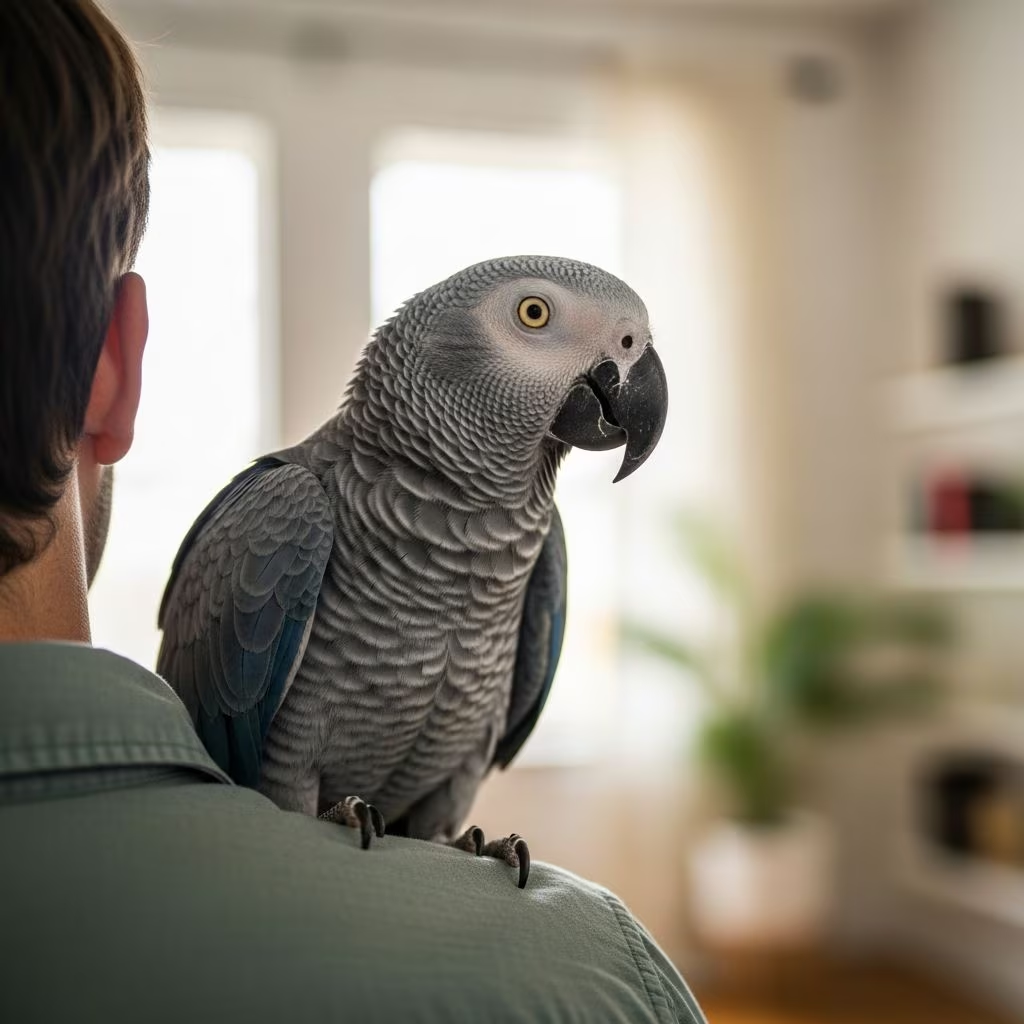
Should Your Parrot Be On Your Shoulder?
Many bird owners enjoy the experience of having their feathered companion perched on their shoulder. It seems like a natural and intimate way to bond with your pet parrot while going about your daily activities. However, veterinarians and avian behavior experts have raised important concerns about this common practice. Understanding the risks and benefits of shoulder perching is essential for making informed decisions about your parrot’s safety and your own wellbeing.
Why Parrots Love Being On Your Shoulder
From a parrot’s perspective, the shoulder is an incredibly attractive location. Parrots naturally seek high perches because they provide a sense of security and safety. When your parrot sits on your shoulder, they enjoy numerous benefits that make this position particularly rewarding. They get to stay close to you, hear your voice, observe everything you do, and participate in your daily activities. This constant companionship provides social reinforcement that parrots find deeply satisfying.
Additionally, being on your shoulder offers your bird the opportunity to snack whenever you eat, travel wherever you go in the house, and maintain constant visual contact with their favorite human. The combination of these social and environmental reinforcers makes shoulder perching one of the most preferred modes of transportation for parrots. Once a parrot discovers how rewarding shoulder time can be, it often becomes their go-to destination whenever they see you.
Inherent Risks With Parrots On Shoulders
While shoulder perching may seem harmless and enjoyable, avian veterinarians and behavior specialists have identified several significant risks associated with this practice.
Limited Visibility of Body Language
One of the most critical concerns is that you cannot see your parrot’s body language when they are perched on your shoulder. Parrots communicate through subtle physical cues—ear positioning, feather fluffing, eye pinning, and foot pressure—that signal their emotional state. When your bird is behind you on your shoulder, you miss these important warning signs. Greg Glendell, a companion parrot behaviorist, emphasizes that foot pressure is particularly telling; you can feel when your bird’s feet tighten, indicating wariness or fear. Without this feedback, you may not realize your parrot is becoming stressed, frightened, or aggressive until they bite.
Proximity to Vulnerable Areas
When your parrot is on your shoulder, their beak is dangerously close to your face, ears, neck, and eyes. Parrots possess powerful beaks capable of causing serious injury. Even smaller parrot species can inflict significant damage to sensitive facial areas. If your bird becomes startled, territorial, or aggressive, you have limited ability to react and protect yourself. Some veterinarians have reported cases of serious eye injuries resulting from shoulder-perched parrots, though such extreme incidents are rare.
Hair and Clothing Hazards
Margaret A. Wissman, DVM, has documented cases of parrots with strands of human hair wrapped tightly around their toes, causing constriction and cutting off blood flow to the affected toe. Human hair is surprisingly strong and can wrap progressively deeper into live tissue, potentially causing permanent damage or loss of the digit. Additionally, parrots may become entangled in loose hair, jewelry, or clothing, which can lead to panic and defensive biting.
Physical Instability and Falls
If your parrot has recently had a nail trim, their grip strength may be compromised, making it difficult for them to maintain balance on your shoulder. A fall from shoulder height can result in injury, particularly if your parrot cannot catch themselves on something else. Additionally, newly trimmed nails may lack the necessary purchase to hold on securely during sudden movements or shifts in your position.
Behavioral Problems Associated With Shoulder Perching
Beyond immediate physical risks, allowing your parrot regular shoulder access can create long-term behavioral problems that negatively impact your relationship with your bird and household dynamics.
Territorial Aggression
According to avian behavior experts, parrots that have been consistently allowed on the shoulder may develop territorial behaviors. Your bird may begin to view the shoulder as part of their personal domain, defending it aggressively against other family members or even against you in certain situations. This territoriality can escalate, making it increasingly difficult to remove your bird from this preferred perch without conflict.
Dominance and Control Issues
A parrot that regularly enjoys shoulder perching may begin to perceive this privilege as a status symbol, potentially leading to challenging behavior in other contexts. While parrots don’t have human concepts of hierarchy, they do have preferences and may resist your attempts to manage their behavior in other situations. If your bird learns that shoulder rushing leads to extended time in their preferred location, they may become more resistant to stepping up onto your hand or following other behavioral cues.
Hormonal and Sexual Behavior
Birds that spend excessive time on human shoulders may become overstimulated, triggering inappropriate hormonal behaviors. A shoulder perch can feel like an ideal breeding site to a bird, and some parrots may attempt courtship displays or other sexual behaviors in this location. Because removing your bird from the shoulder during these moments proves difficult, you may inadvertently encourage these behaviors by allowing them to continue uninterrupted.
Breaking The Shoulder Perching Habit
If your parrot has already established shoulder perching as their preferred activity, breaking this habit can prove exceptionally challenging. Once a bird has discovered how rewarding the shoulder location is, they become highly motivated to return there repeatedly.
Why It’s Difficult to Discourage
Parrots that are accustomed to shoulder perching develop efficient techniques for reaching this destination quickly. Many will run rapidly up your arm before you have time to react or prevent their ascent. One common mistake people make when trying to discourage shoulder climbing is dropping their hand or wrist once the bird begins walking up their arm. Unfortunately, this action accomplishes the opposite of the intended goal—it makes the shoulder even more attractive because birds are motivated to climb upward, not downward. By lowering your hand, you’ve essentially created an easier path to their desired destination.
Positive Reinforcement Approach
If you need to address shoulder perching, behavior specialists recommend using positive reinforcement training. Rewarding your bird for stepping onto your hand instead of running up your arm, and then immediately ending interaction by placing them on a lower perch, helps establish new patterns. The key is consistency and patience, as breaking an ingrained habit takes time. Never forcefully scrape your bird off your shoulder or create a stressful confrontation, as this can lead to increased aggression and fear.
Guidelines for Safe Shoulder Perching
If you choose to allow your parrot on your shoulder despite these concerns, certain guidelines can help minimize risks.
Prerequisites for Shoulder Access
Your bird should only be permitted on your shoulder if specific conditions are met:
- Your parrot has solid, reliable step-up training and responds consistently to your hand cues
- Your bird is not showing signs of aggression, territoriality, or excessive biting
- You can clearly read your bird’s body language and recognize warning signs
- Your bird is calm, comfortable, and not displaying hormonal behaviors
- You are confident you can safely remove your bird if necessary
- Your bird has not been identified as an unpredictable biter
Best Practices
If these prerequisites are met, follow these recommendations to maximize safety:
- Use shoulder time as a reward for good behavior rather than a constant privilege
- Keep shoulder sessions relatively brief and structured
- Avoid taking your bird outdoors on your shoulder, as unfamiliar stimuli may startle them and cause escape
- Do not allow shoulder perching during initial training phases
- Wear minimal jewelry or accessories that your bird might chew or become entangled in
- Be aware of your surroundings and potential hazards that might startle your bird
- Never allow a hormonal or territorially aggressive bird on your shoulder
Alternative Bonding Activities
If you decide against shoulder perching or want to reduce its frequency, numerous alternatives provide excellent opportunities for bonding with your parrot without the associated risks. Hand perching allows close interaction while maintaining visibility of your bird’s body language. Foraging activities, trick training, and interactive play sessions all strengthen your relationship while providing mental stimulation. Out-of-cage time on a dedicated play stand or perch offers companionship without the hazards of shoulder proximity to your face. These alternatives often prove more enriching for your bird than simple shoulder sitting, as they actively engage your parrot’s mind and body.
Considerations for Different Parrot Species
The safety of shoulder perching varies somewhat by species. Larger parrots, including macaws, cockatoos, and African greys, pose greater injury risk due to their powerful beaks and size. Small parrot species like parrotlets present different challenges—their small feet and stance make it difficult for them to maintain balance on human shoulders, and they frequently slide off unexpectedly. Medium-sized birds like amazons and Eclectus parrots require careful assessment on an individual basis. Regardless of species, the fundamental concerns about territorial behavior, limited body language visibility, and proximity to vulnerable facial areas remain relevant.
Assessing Your Individual Bird
Whether your parrot should be on your shoulder ultimately depends on your individual bird’s temperament, training level, and behavioral history. Some parrots can safely enjoy shoulder time when all prerequisites are met and proper precautions are observed. Others should never be allowed this privilege due to aggression, unpredictable biting, or excessive hormonal behavior. Take time to honestly evaluate your bird’s current behavior, your ability to read their signals, and your confidence in your ability to manage the situation safely. When in doubt, consult with an avian veterinarian or certified behavior specialist who can assess your specific situation.
Frequently Asked Questions
Q: Can small parrots safely sit on my shoulder?
A: Smaller parrots like parrotlets have difficulty maintaining balance on human shoulders due to their tiny feet and stance, and they often slide off unexpectedly. While they may cause less damage than larger species, the same visibility and behavioral concerns still apply.
Q: What should I do if my parrot rushes to my shoulder?
A: Discourage this behavior by not lowering your hand as the bird climbs, which actually makes the destination easier to reach. Instead, keep your hand level and guide your bird to a lower perch. Reward them for stepping onto your hand with treats and praise.
Q: Is it ever safe to take my parrot outside on my shoulder?
A: This is not recommended. Even well-trained parrots can be startled by unfamiliar sights and sounds, leading them to fly away. Always use a harness or secure carrier when taking your bird outdoors.
Q: How can I tell if my parrot is becoming territorial about their shoulder spot?
A: Signs include increased aggression when you try to remove them, protecting the shoulder area from other family members, or displaying aggressive body language when approached while on your shoulder. If you notice these signs, discontinue shoulder perching.
Q: What training does my parrot need before shoulder access?
A: Your bird should have solid step-up training, responding reliably to your hand cue and transferring readily to your hand. They should also be able to step down from your hand to a lower perch consistently and without resistance.
Q: Can hair wrapping around my bird’s toe cause permanent damage?
A: Yes. Human hair is strong and can wrap progressively tighter around a bird’s toe, cutting off blood circulation and causing tissue damage. In severe cases, this can result in permanent injury or loss of the digit.
References
- Should Your Parrot Be On Your Shoulder? — Chewy Education. 2025. https://www.chewy.com/education/bird/general/should-your-parrot-be-on-your-shoulder
- Problem with a Parrot on Your Shoulder? — Avian Behavior Lab. 2025. https://avian-behavior.org/problem-with-a-parrot-on-your-shoulder/
- Why Does My Bird Love Sitting On My Shoulder? — Parrot Society Singapore. 2025. https://parrotsocietysg.org/why-bird-on-shoulder/
- Is It Safe To Let Your Bird On Your Shoulder Or On A High Perch? — Bird Tricks Store. 2025. https://birdtricksstore.com/blogs/birdtricks-blog/is-it-safe-to-let-your-bird-on-your-shoulder-or-on-a-high-perch
- Should Pet Birds Be Allowed On Shoulders? — So Much PETential. 2025. https://somuchpetential.com/should-pet-birds-be-allowed-on-shoulders-2/
- Dangers of Allowing Your Parrots to Ride on Your Shoulders — Feathered Angels. 2025. https://featheredangels.wordpress.com/parrot-behavior-and-issues/behavior-issues/dangers-of-allowing-your-parrots-to-ride-on-your-shoulders/
- Allowing Birds On Your Shoulder — OK or Not? — Best in Flock. 2025. https://bestinflock.com/2008/09/22/allowing-bird-on-shoulder/



