

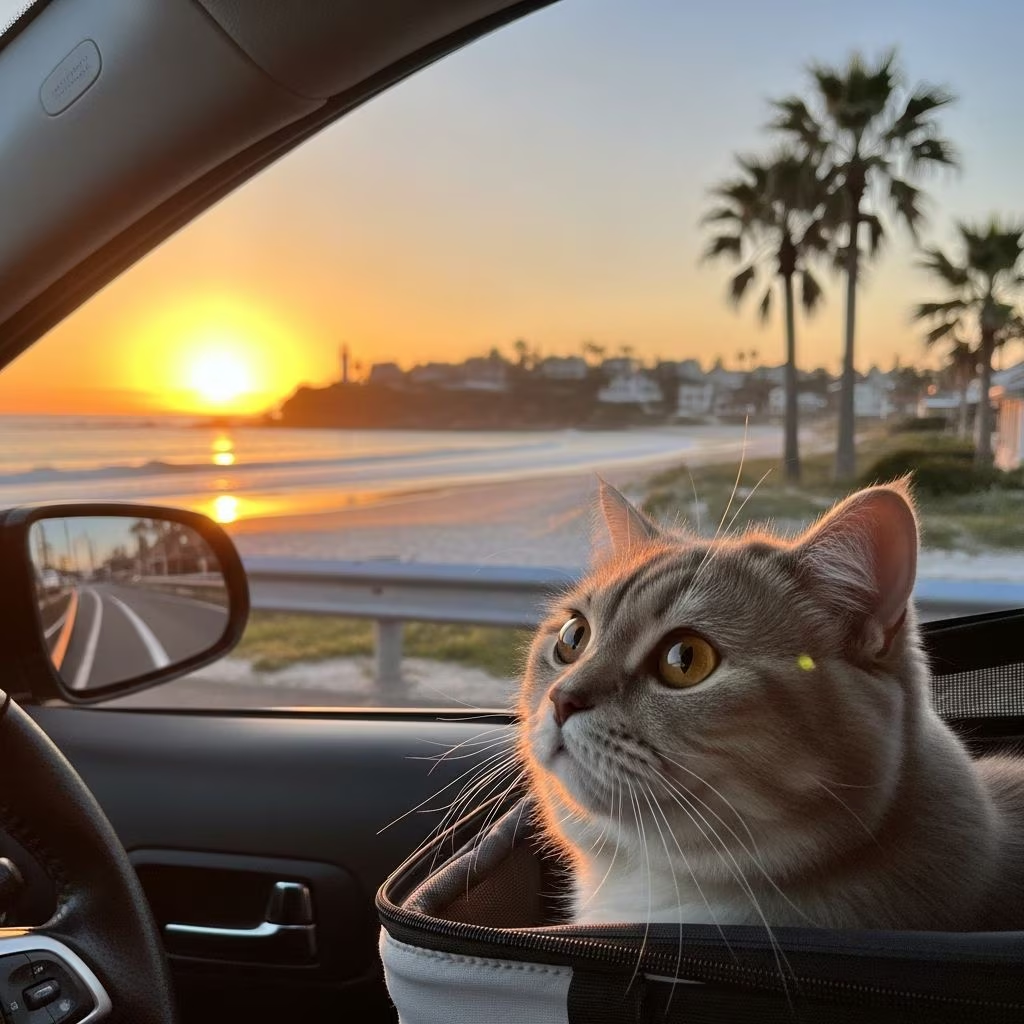
Planning a holiday with your beloved cat might conjure images of sun-soaked beaches and playful adventures, but is it truly in their best interest? Most veterinary experts strongly advise against it, emphasising that cats are inherently tied to their territory and routines. This comprehensive guide draws on insights from cat welfare charities and vets to explore the realities of cat travel, stress indicators, preparation strategies, and superior alternatives for keeping your feline happy and secure.
Territory and routine: understanding your cat’s true nature
Cats are not natural wanderers like dogs; they are territorial animals who derive profound security from familiar scents, sounds, and layouts in their home environment. Disrupting this can trigger significant stress, as their world revolves around predictability and control.
“Cats like routine, so taking them away from the safety of their home comforts and familiar smells can be too much, causing them to be unhappy and stressed,” explains vet Prior from Cats Protection. “Most cats would prefer to stay in their own environment. Cats love to explore but also love routine, so having this in their own home and outdoor space is best. This way they’re surrounded by familiar scented items and home comforts. If they do get scared, they can run right back to their safe space.”
Cats Protection vet Sarah Elliott reinforces this: “Most cats find travelling stressful. They feel safe in a familiar environment and are not used to the different smells, noises and sensations of travelling in a vehicle.”
Vet Verney describes cats as “creatures with territories, rhythms, priorities in opposition to holidaying humans who generally prefer to stick to their ‘eat, prey, love’ at home.” A content cat at home actively seeks affection and eats comfortably, whereas travel often leads to hiding or avoidance.
Stress manifests in clear behavioural cues. Common signs include:
- Anxious facial expressions, such as flattened ears, dilated pupils, or whiskers pulled back
- Excessive purring (stress purring, not contentment)
- Vocalisation like yowling or growling
- Pacing or restless movement
- Inappropriate elimination, such as urinating or defecating outside the litter box
- Hiding and refusing interaction
“If your cat isn’t clearly relaxed, it’s likely not a good fit for travel,” warns Verney.
Understanding these instincts is crucial. Cats view their home as a vast territory marked by their pheromones, providing psychological anchors. Uprooting them equates to stripping away these anchors, akin to humans being dropped into an unfamiliar city without maps or language skills. Research from animal behaviour studies supports this, noting felines’ low adaptability to novel environments compared to pack-oriented species like dogs.
The cautious approach: introducing travel gradually
For the minority of cats who might tolerate or even enjoy car rides—often those raised with frequent exposure from kittenhood—a gradual desensitisation programme is essential. However, experts caution that this is rarely advisable, especially for holidays.
“As a charity, we would advise against trying to introduce any cat to travelling in this way,” states Prior. “However, if people are going to try it, the best approach is with slow introductions to going outside, using positive rewards such as high value treats to get them used to it.”
Steps for gradual introduction include:
- Carrier familiarisation: Leave the carrier out daily with treats and toys inside for weeks, associating it positively.
- Short sessions: Carry the cat in the closed carrier around the house, then garden, rewarding calm behaviour.
- Engine exposure: Sit in a stationary car with the engine running, progressing to brief drives (5-10 minutes).
- Monitor closely: Halt immediately if stress signs appear; never force progression.
Common pitfalls abound. “Not recognising the cat’s stress and pressing on regardless, wrongly thinking that the cat being with its owners is better than anything else,” is a frequent error, per Verney.
The fallout can be lasting: “For cats who are travelling but don’t enjoy it, this could cause them severe fear, changing their character towards both their human and the home environment,” warns Prior. “It may also result in behavioural issues as cats never feel they have a safe space to relax and are constantly on alert.”
Vets advocate individual evaluation: “No blanket rule applies… As vets we would rather discuss the individual cat, human and environment and work out what might be suitable.” Every cat’s personality varies—confident, adventurous ones may cope, while timid or elderly cats almost certainly won’t. Professional consultation via a feline behaviourist is recommended before attempting.
Even prepared cats face holiday-specific challenges: unfamiliar accommodations lack scent-marking opportunities, strange noises disrupt sleep, and variable feeding schedules unsettle digestion. Air travel adds confinement in cargo holds, prohibited for many airlines due to welfare concerns.
Guilt-free alternatives: keeping cats happy at home
Leaving your cat home is not abandonment—it’s often the kindest choice. Kinship surveys reveal 75% of pet parents opt not to use sitters or boarders, prioritising home comforts. Here’s how to ensure thriving:
- Trusted caregivers: Enlist friends, family, or professional pet sitters who visit 1-2 times daily for feeding, play, and litter changes. Provide detailed routines, vet contacts, and emergency protocols.
- Reputable catteries: Choose licensed facilities with low cat-to-staff ratios, individual suites mimicking home territories, and strict health checks. Visit beforehand to assess cleanliness and cat-friendliness.
- Environmental enrichment: Scatter puzzle feeders, rotating toys, scratching posts, and window perches. Add pheromone diffusers (Feliway) to amplify security scents.
- Tech aids: Install pet cameras (e.g., Furbo) for live video/audio check-ins, automated feeders/timers for schedule adherence, and litter box sensors alerting to issues.
Preparation maximises success:
| Timeline | Action |
|---|---|
| 2-4 weeks prior | Introduce sitter/cattery via short trial visits; stock extra food/litter. |
| 1 week prior | Familiarise with new toys/feeders; update microchip/vet records. |
| Day before | Clean thoroughly; place worn clothing for scents; set up cameras. |
These measures prevent boredom-induced mischief like furniture scratching. Surveys show pets left home or with kin fare better emotionally, avoiding travel trauma.
Read your cat, not your social media feed
Social media brims with cats lounging poolside or RV-hopping, fuelling FOMO. Yet these are outliers—exceptional cats or staged shots masking stress. “The best holiday decision for your cat is ultimately the one that keeps them happy, safe and stress-free—even if it means leaving them behind whilst you explore the world,” experts conclude.
Projecting human wanderlust onto cats ignores their evolutionary wiring. Wild cats maintain core territories spanning hundreds of metres, venturing out only for necessity. Domestic cats echo this, with home ranges averaging 1-2 hectares for males. True affection means prioritising their needs over photo ops.
The bottom line: should you take your cat on holiday?
Rarely. Unless your cat demonstrably revels in car trips and novel settings—proven via extensive conditioning—home-based care trumps travel. Vets unanimously prioritise welfare: a chilled cat at home beats a terrified one in tow. Invest love in preparation, yielding a purring, unscathed returnee.
Frequently Asked Questions (FAQs)
What are the main signs my cat is stressed during travel?
Anxious expressions, stress purring, vocalising, pacing, inappropriate elimination, or hiding indicate distress. Stop immediately if observed.
Can I train my adult cat to enjoy holidays?
Possible but challenging; use gradual carrier/engine exposure with rewards. Abandon if stress persists—many adults never adapt.
Is a cattery better than a pet sitter?
Depends: catteries suit social cats; sitters preserve home territory for shy ones. Assess via visits; prioritise licensed pros.
How do I choose a reliable pet sitter?
Verify references, insurance, experience with cats. Use platforms like trusted directories; conduct trial sits.
What tech helps monitor my cat remotely?
Pet cams with 2-way audio, auto-feeders, litter monitors provide reassurance without intrusion.
References
- Should You Take Your Cat on Holiday? Expert Vet Advice — Kinship. 2023. https://www.kinship.com/uk/cat-lifestyle/should-you-take-your-cat-on-holiday
- Holiday Hosting Pets Survey — Kinship. 2023. https://www.kinship.com/news/holiday-hosting-pets-survey
- Pet Travel Survey — Kinship. 2023. https://www.kinship.com/news/pet-travel-survey
- Cats Protection Veterinary Advice on Feline Travel Stress — Cats Protection (via Kinship). 2023. https://www.kinship.com/uk/cat-lifestyle/should-you-take-your-cat-on-holiday
- Behavioural Indicators of Stress in Domestic Cats — International Cat Care Guidelines. 2022. https://icatcare.org/advice/stress-in-cats/



