

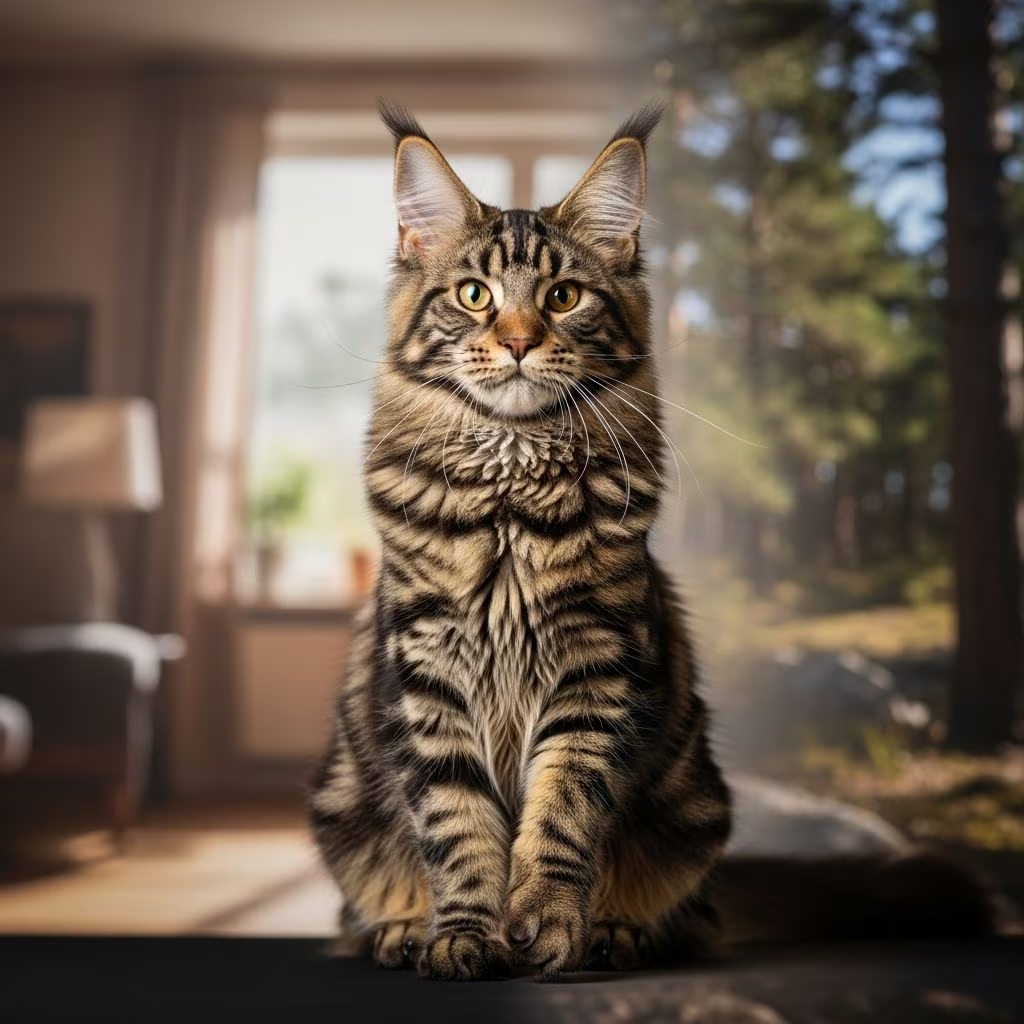
Maine Coons are celebrated for their imposing size, friendly demeanor, and signature long, flowing coats designed for harsh winters. Yet, a persistent question arises among enthusiasts: can these giants of the cat world sport short hair? The answer lies in genetics, breeding practices, and breed standards, revealing that while purebred Maine Coons are defined by longer fur, variations including shorter coats do occur due to recessive traits.
The Genetic Foundation of Coat Length in Cats
Coat length in felines is primarily governed by the fibroblast growth factor 5 (FGF5) gene. This gene acts as a regulator, with its wild-type dominant form promoting short hair and recessive mutations leading to longer fur. In Maine Coons, a specific mutation—identified as M3 or c.577G>A p.Ala193Thr—plays a pivotal role. Cats homozygous for this recessive allele (M3/M3) exhibit the classic long-haired phenotype, while those with at least one dominant allele (N/M3 or N/N) display shorter coats.
A 2021 study screened Maine Coon populations and found this novel mutation contributes to long hair in approximately 3% of the breed, highlighting its breed-specific nature. Heterozygous carriers (N/M3) appear short-haired but can pass the long-hair trait to offspring, introducing variability in litters.
| Genotype | Phenotype | Implications for Breeding |
|---|---|---|
| N/N | Short Hair | No long-hair allele; offspring likely short-haired unless paired with carrier. |
| N/M3 | Short Hair | Carrier; 50% chance of passing long-hair allele to kittens. |
| M3/M3 | Long Hair | Both alleles recessive; all offspring carry at least one long-hair gene. |
This table summarizes FGF5 outcomes specific to Maine Coons, based on genetic testing protocols.
Origins of the Maine Coon Breed and Coat Evolution
Tracing back to 19th-century New England, Maine Coons likely descended from long-haired cats brought by sailors or settlers, adapting to cold climates with water-resistant, thick coats. Folklore links them to raccoons or bobcats, but genetics confirm domestic shorthair influences. The breed standard, upheld by organizations like the Cat Fanciers’ Association (CFA), mandates a \”heavy and shaggy\” coat—shorter on shoulders, longer on underbelly and britches—with a silky texture.
Short-haired variants emerge not from the purebred lineage but through genetic recessives or outcrosses. Historical inbreeding may have amplified recessive traits, occasionally producing kittens with unexpectedly shorter fur despite long-haired parents. Modern breeding emphasizes genetic diversity to avoid health issues, with coefficient of inbreeding (COI) levels ideally below 10% correlating to 36-40% diversity.
Recognizing True Short-Haired Maine Coons
Not all short-coated large cats are Maine Coons. Authentic short-haired Maine Coons retain hallmark features: tufted ears, bushy tails, rectangular bodies, and sociable personalities. Their fur, though shorter, remains dense and protective, often in tabby, tortoiseshell, or solid patterns.
- Size: Males up to 25 pounds, females 10-15 pounds.
- Ears: Large, forward-tilted with lynx tips.
- Tail: Long and plume-like, even in shorter coats.
- Temperament: Dog-like loyalty, playful into adulthood.
Crossbreeds with domestic shorthairs may mimic these traits but lack pedigree verification. Genetic testing confirms FGF5 status, essential for breeders.
Health Considerations for Short-Coat Variations
Shorter coats reduce grooming burdens but don’t alter core health needs. Maine Coons prone to hypertrophic cardiomyopathy (HCM), hip dysplasia, and spinal muscular atrophy (SMA) require screening regardless of fur length. Lower shedding appeals to allergy sufferers, though no coat eliminates dander.
Genetic diversity mitigates risks; studies show breeds with COI under 10% exhibit robust vitality. Regular vet checks, balanced diets rich in taurine, and dental care are vital. Short-haired individuals may tolerate heat better but need winter protection.
Grooming and Daily Care Tips
While long-haired Maine Coons demand weekly brushing to prevent mats, short-haired ones thrive with bi-weekly sessions using a rubber curry brush. Focus on removing dead undercoat and stimulating skin oils for shine.
- Bath quarterly with cat-safe shampoo.
- Trim nails monthly.
- Check ears weekly for wax buildup.
- Provide scratching posts to maintain paw health.
Diet should emphasize high-protein kibble or wet food supporting lean muscle mass. Hydration prevents urinary issues common in large breeds.
Breeding Short-Haired Maine Coons: Pros and Cons
Intentional breeding for short hair prioritizes ease of care but risks diluting standards. CFA disqualifies short-haired cats from championships, viewing them as deviations. Ethical breeders test for FGF5, HCM, and polycystic kidney disease (PKD), outcrossing judiciously to boost diversity.
Pros include reduced mat-prone fur and broader appeal; cons encompass show ineligibility and potential loss of cold-weather adaptation. New foundation lines introduce unrelated genes, lowering COI and enhancing vigor.
Debunking Common Myths About Maine Coon Coats
Myth 1: All Maine Coons have exclusively long hair. Reality: Recessive genetics allow short-haired purebreds or carriers.
Myth 2: Short hair signals a mix-breed. Reality: Pure lines can produce them via FGF5 heterozygosity.
Myth 3: Short-haired versions are less healthy. Reality: Health ties to genetics beyond coat length; diversity matters more.
Are Short-Haired Maine Coons Right for You?
If you seek a low-maintenance companion with Maine Coon charisma, short-haired variants excel. Their playful nature suits families, and easier upkeep frees time for bonding. Adoption from reputable sources ensures temperament and health.
Frequently Asked Questions (FAQs)
Can purebred Maine Coons have short hair?
Yes, due to recessive FGF5 mutations; heterozygous cats appear short-haired but carry the long-hair gene.
How do I test for coat length genetics?
Labs like CombiBreed or Langford Vets offer FGF5 panels tailored to Maine Coons.
Do short-haired Maine Coons shed less?
Generally yes, with simpler grooming, but seasonal shedding persists.
Are they recognized in cat shows?
No, CFA standards require long, shaggy coats for competition.
What colors do short-haired Maine Coons come in?
Wide variety: tabby, solid, tortie, bi-color, retaining breed patterns.
References
- Discussing the gene which dictates hair length in Maine Coon cats — pictures-of-cats.org. 2022-12. https://maine-coon.pictures-of-cats.org/2022/12/discussing-gene-which-dictates-hair.html
- Short Hair Maine Coon: Traits, Care & Grooming Tips — augustmainecoons.com. N/A. https://augustmainecoons.com/short-hair-maine-coon/
- Hair Length (Maine Coon) — combibreed.fr. N/A. https://www.combibreed.fr/subject/hair-length-maine-coon/
- Short-Haired Maine Coons: Exploring the Possibility and Characteristics — shop.catsluvus.com. 2024-04-23. https://shop.catsluvus.com/2024/04/23/short-haired-maine-coons-exploring-the-possibility-and-characteristics/
- Coat Length Genetic Testing — langfordvets.co.uk. N/A. https://www.langfordvets.co.uk/diagnostic-laboratories/cat-genetic-testing/genetic-disease-and-trait-tests/coat-length/
- Genetic diversity of the Maine Coon — catterymacadamia.com. N/A. https://www.catterymacadamia.com/en/post/genetic-diversity-of-the-maine-coon-2



