

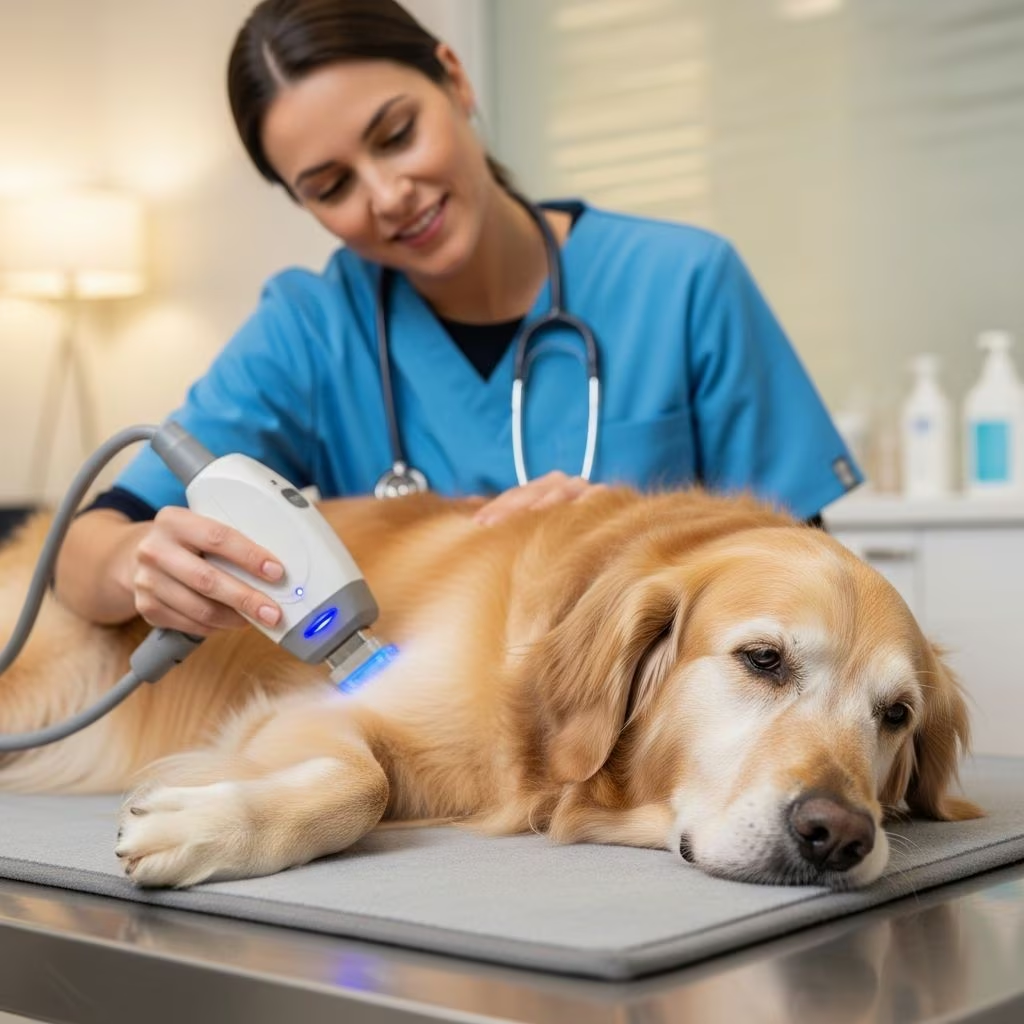
Extracorporeal shockwave therapy (ESWT) emerges as a promising, non-invasive option for managing osteoarthritis in dogs, delivering high-energy acoustic waves to stimulate natural healing processes in affected joints. This therapy targets the underlying issues of joint degeneration, offering pain relief and functional improvement without relying on pharmaceuticals that may harm the liver or kidneys.
Understanding Canine Osteoarthritis Challenges
Osteoarthritis affects millions of dogs, particularly seniors and breeds prone to hip dysplasia or elbow issues, leading to chronic pain, stiffness, and reduced quality of life. Traditional treatments like NSAIDs (e.g., carprofen or galliprant) provide symptomatic relief but fail to address cartilage breakdown or inflammation at its source, often causing gastrointestinal, renal, or hepatic side effects with prolonged use. Steroids offer temporary benefits but carry risks of immune suppression and organ damage. Dog owners frequently witness their pets struggling with daily activities—limping up stairs, hesitating to play, or showing reluctance to move—prompting a search for safer, regenerative alternatives.
Arthritis progression involves cartilage erosion, synovial inflammation, and subchondral bone changes, culminating in pain cycles that limit mobility. Unlike painkillers, ESWT aims to interrupt this cycle by fostering tissue repair and neovascularization, potentially slowing disease advancement.
How Shockwave Therapy Works in Dogs
ESWT employs a handheld device that generates focused acoustic waves penetrating deep into tissues—up to 6-12 cm—without incisions or anesthesia. These waves trigger a biological cascade: mechanical pressure stimulates cell membranes, releasing growth factors and cytokines that promote healing.
- Angiogenesis: New blood vessel formation enhances nutrient delivery to hypoxic joint areas, vital for cartilage and bone repair.
- Anti-inflammatory effects: Downregulates markers like COX-2 and substance P, reducing swelling and nociceptor sensitivity.
- Tissue regeneration: Boosts collagen synthesis, tenocyte proliferation, and stem cell recruitment for ligament and tendon strengthening.
- Pain modulation: Disrupts pain signals at nerve endings and stimulates endorphin release.
In sessions lasting 2-5 minutes per joint, low-energy focused shockwaves (e.g., via PiezoWave devices) ensure comfort, with many dogs relaxing or even sleeping through treatment. The therapy’s precision allows targeting specific sites like stifles, hips, or elbows.
Broad Applications Beyond Arthritis
While excels for osteoarthritis, ESWT treats diverse musculoskeletal conditions in dogs.
| Condition | Benefits of ESWT |
|---|---|
| Hip/Elbow Dysplasia | Reduces lameness, improves joint stability |
| Tendon/Ligament Injuries (e.g., CCL tears) | Accelerates healing, prevents surgery |
| Non-Union Fractures | Stimulates osteogenesis, bone remodeling |
| Back Pain (e.g., Cauda Equina Syndrome) | Alleviates nerve compression, enhances function |
| Post-Surgical Recovery | Speeds tissue integration after TPLO or hip ops |
This versatility positions ESWT as a cornerstone of integrative veterinary rehab, often combined with laser therapy, acupuncture, or hydrotherapy.
Clinical Evidence Supporting ESWT Efficacy
Peer-reviewed studies validate ESWT’s impact on canine OA. A randomized controlled trial with 14 dogs showed ESWT-treated stifles maintained kinetic function over 98 days, unlike sham controls that declined. Owner-reported outcomes were comparable, highlighting objective gait preservation.
Cohort studies report lameness improvements: one with 18 hip OA dogs noted significant gait enhancement at six months versus untreated peers. Another with 12 elbow OA cases observed better mobility four weeks post-three weekly sessions. A TPLO study found improved short-term limb use with ESWT.
Systematic reviews confirm low bias in key trials, though larger RCTs are needed for definitive efficacy metrics. VCA Hospitals endorse ESWT for OA pain and healing.
Practical Guide to ESWT Treatment Protocols
Typical protocols involve 1-3 sessions, spaced 1-3 weeks apart, based on severity. Each targets 500-2000 shocks per site at 0.08-0.55 mJ/mm² energy flux. Pre-treatment clips fur minimally; no sedation required.
- Assessment: Vet exam, radiographs confirm OA diagnosis.
- Session 1: Apply gel, deliver waves; monitor comfort.
- Follow-up: Reassess at 2 weeks; adjust if needed.
- Maintenance: Annual boosters for chronic cases.
Costs range $150-400 per session, often 2-3 total, making it economical versus lifelong meds or surgery. Availability grows at rehab centers like PulseVet providers.
Safety Profile and What to Expect
ESWT boasts excellent tolerability: rare mild soreness resolves in 24 hours; contraindications include pregnancy, cancer at site, or acute infections. No systemic effects reported.
Post-treatment, dogs often show immediate ease, with peak benefits in 2-4 weeks as angiogenesis peaks. Combine with weight management, joint supplements (glucosamine), and low-impact exercise for synergy. Owners report pets resuming play, climbing, and vitality.
Comparing ESWT to Conventional Therapies
| Therapy | Pros | Cons |
|---|---|---|
| NSAIDs/Steroids | Quick relief | Organ risks, no healing |
| Surgery (e.g., TPLO) | Addresses instability | Invasive, recovery-intensive |
| ESWT | Non-invasive, regenerative | Multiple sessions needed |
| Physical Therapy | Holistic | Time-consuming alone |
ESWT shines for drug-averse owners seeking root-cause intervention.
Frequently Asked Questions (FAQs)
Is shockwave therapy painful for dogs?
No—low-energy protocols ensure comfort without anesthesia; most dogs tolerate it well.
How many sessions for arthritis relief?
Usually 3, spaced 1-3 weeks; results build over 4-8 weeks.
Does insurance cover ESWT for pets?
Some pet plans do; check providers like Trupanion for rehab coverage.
Can it help senior dogs or specific breeds?
Yes—ideal for Labs, Goldens with dysplasia, or any OA-afflicted dog.
What if my dog has multiple joints affected?
Treat bilaterally or prioritize; vets tailor plans.
Steps for Pet Owners to Get Started
Consult a certified veterinary rehab specialist offering ESWT. Request lameness scoring and imaging. Discuss integration with lifestyle changes. Track progress via video gait analysis. This proactive step can extend your dog’s active years.
References
- Treating Arthritis Naturally: Shockwave Therapy — Healing Paws FL. 2023. https://healingpawsfl.com/treating-arthritis-in-pets-with-shockwave-therapy/
- Shockwave Therapy for Dog Injuries | ESWT — YouTube (Adam Fields DC). 2023. https://www.youtube.com/watch?v=RI1zGaznOiw
- Systematic Review of Complementary and Alternative Veterinary Medicine — PMC/NCBI. 2022-11-29. https://pmc.ncbi.nlm.nih.gov/articles/PMC9686741/
- The Ins and Outs of Shockwave Therapy for Dogs — Newport Veterinary Hospital. 2024. https://newportveterinaryhospital.com/the-ins-and-outs-of-shockwave-therapy-for-dogs/
- PulseVet | Shock Wave Therapy — Zomedica. 2025. https://pulsevet.zomedica.com
- Extracorporeal Shockwave Therapy — VCA Animal Hospitals. 2024. https://vcahospitals.com/know-your-pet/extracorporeal-shockwave-therapy
- Non-invasive Therapies Aid Healing — University of Illinois Vet Med. 2023. https://vetmed.illinois.edu/pet-health-columns/non-invasive-therapies-aid-healing-in-veterinary-rehabilitation/



