

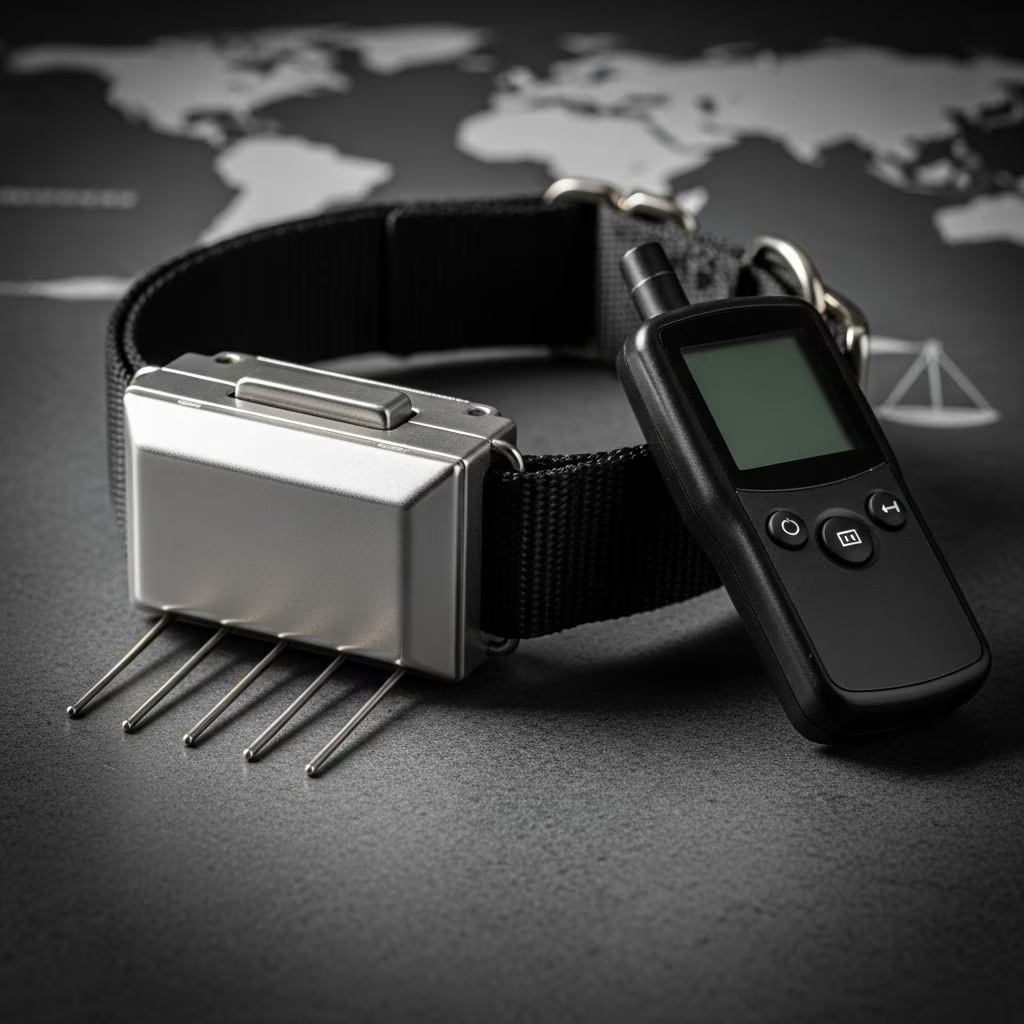
Shock collars, also known as e-collars or remote electronic collars, deliver electrical stimulation to train dogs, often for behaviors like barking or recall. Their legality varies significantly by country and region, with some nations imposing outright bans due to animal welfare concerns while others permit regulated use. This article examines global regulations, scientific evidence on effectiveness, potential risks, and superior training alternatives.
Global Overview of Shock Collar Regulations
Regulations on shock collars reflect evolving views on animal welfare and training science. In Europe, several countries lead with strict prohibitions. For instance, Denmark, Germany, Sweden, Norway, Austria, and Switzerland have banned their sale and use for companion dogs, citing risks of pain and stress. The European Parliament has pushed for continent-wide restrictions, emphasizing positive reinforcement methods.
In the United Kingdom, a proposed ban gained traction in recent years, with ongoing debates in Parliament highlighting documented fallout from aversive tools. Australia mirrors this trend, prohibiting shock collars in most states, including New South Wales and Victoria, under animal cruelty laws. North America presents a patchwork: Canada allows them federally but provinces like Ontario regulate intensely, while the United States has no federal ban, leaving decisions to states and localities.
- Europe: Widespread bans in Nordic and Germanic countries; sales restricted across the EU.
- UK: Legislative proposals active, with veterinary associations opposing use.
- Australia: Prohibited in key states; national push for uniformity.
- North America: Legal in US with minimal oversight; Canada varies by province.
- Other Regions: Brazil and parts of Asia permit with varying import controls.
| Region/Country | Status | Key Reason |
|---|---|---|
| Germany | Banned | Animal welfare laws |
| USA | Legal (varies by state) | No federal prohibition |
| UK | Under review/banned in parts | Parliamentary bills |
| Australia | Banned in most states | Cruelty prevention |
| Canada | Legal federally | Provincial regulations |
How Shock Collars Function and Their Intended Purpose
These devices consist of a collar with electrodes connected to a handheld remote. Owners activate stimulation levels ranging from mild tingles to intense shocks, often paired with tones or vibrations. Manufacturers claim they promote quick compliance for issues like off-leash recall, excessive barking, or boundary training. Modern models feature adjustable intensities and auto-correction for barking, with ranges up to three-quarters of a mile.
Proponents argue that finding a dog’s “working level”—the minimal stimulation eliciting a response—allows precise corrections without excessive discomfort. However, critics note that dogs cannot anticipate shocks, unlike human testers, leading to unpredictable stress.
Scientific Evidence on Effectiveness
Research challenges claims of superior efficacy. A controlled study involving 63 dogs with off-lead issues compared e-collar training to positive reinforcement over five days. Positive methods proved equally or more effective for recall and obedience, with fewer welfare risks. Dogs trained with e-collars showed no reduction in disobedience and exhibited higher stress indicators.
Additional findings reveal elevated cortisol levels—indicating chronic stress—in shocked dogs compared to those trained positively. Head-to-head trials by experienced trainers confirmed no obedience edge for e-collars; instead, they increased fear responses and aggression risks. One analysis found electronically fenced dogs twice as likely to escape as those with physical barriers, undermining containment claims.
Potential Welfare Risks and Side Effects
Shock collars can induce physiological and behavioral harm. Dogs release more stress hormones, mirroring panic attacks, and may associate pain with trainers or environments, fostering avoidance or aggression. Previously non-aggressive dogs have developed biting tendencies post-use.
Even “beep-only” modes trigger stress if previously paired with shocks, as dogs condition the sound to predict pain. Physical injuries, though rare, include burns or neck wounds from improper fit. Studies link aversives to worsened emotional states, especially in fearful or aggressive dogs, where they exacerbate issues.
Pros and Cons Table
| Pros (Claimed) | Cons (Evidence-Based) |
|---|---|
| Quick compliance for some behaviors | Increased stress and cortisol |
| Long-range control | Higher aggression risk |
| Reduces barking off-leash | No superior obedience vs. positive methods |
| Customizable levels | Fear pairing with people/places |
Common Myths Debunked
Myth: Shock collars are harmless at low settings. Reality: Dogs experience unpredictable pain, unlike prepared humans, leading to sustained anxiety.
Myth: They ensure property containment. Reality: Escapes are more frequent than with solid fences, and bites more severe.
Myth: Only for “stubborn” breeds. Reality: Modern research offers effective non-aversive options for all dogs, regardless of breed.
Myth: Beeps suffice post-training. Reality: Conditioned stress persists.
Humane Alternatives to Shock Collars
Positive reinforcement—rewarding desired behaviors with treats, toys, or praise—builds reliable obedience without harm. Techniques include clicker training for precise timing and desensitization for reactivity. For recall, high-value rewards in distraction-proof settings outperform punishments.
- Use long lines for safe off-leash practice.
- Teach “leave it” with counter-conditioning.
- Enroll in force-free classes certified by organizations like the Pet Professional Guild.
- Tools like harnesses or head collars guide without pain.
Studies affirm these methods enhance human-dog bonds and reduce relapse. Trainers abandoning aversives report stronger relationships and fewer behavioral regressions.
Personal Experiences and Trainer Perspectives
Some owners report success, like curbing barking during hikes with minimal ongoing use. One account described a dog responding to low-level shocks without fear, enabling off-leash reliability when combined with positives. However, even advocates note it’s not standalone, requiring foundational reward-based work.
Former aversive users often switch after witnessing fallout, such as heightened reactivity in clients’ dogs. Experts recommend e-collars only as last resorts under professionals, though evidence disputes necessity.
Future Trends and Ethical Considerations
As of 2026, bans expand amid welfare advocacy. Veterinary bodies urge legislation mirroring Europe’s model. Owners face ethical dilemmas: short-term gains versus long-term trauma. Choosing science-backed, compassion-driven training aligns with modern standards, fostering happier, well-adjusted dogs.
Frequently Asked Questions (FAQs)
Are shock collars illegal in the US?
No federal ban exists, but local ordinances may prohibit them. Check state and city laws.
Do shock collars cause pain?
Yes, they deliver electrical stimulation perceived as painful by dogs, per research.
Can positive training work for aggressive dogs?
Absolutely; certified behaviorists use protocols avoiding punishment, with high success rates.
What’s the best alternative for recall training?
Long-line practice with high-reward treats in graduated distractions.
Will a shock collar ruin my dog’s trust?
Studies show increased fear toward handlers and higher stress.
Opting against shock collars supports evidence-based practices, ensuring your dog’s well-being and a trusting partnership.
References
- Why you should not use shock as a training tool — Dr. Lisa Radosta. Accessed 2026. https://drlisaradosta.com/why-you-should-not-use-shock-as-a-training-tool/
- Yes, shock collars work — Puppylove Dog Training. 2020-approx. https://www.puppylovedogtraining.com/post/yes-shock-collars-work
- How a Shock Collar Changed My Relationship with My Dog — Outside Online. Accessed 2026. https://www.outsideonline.com/outdoor-gear/tools/dog-shock-collar-training-experience/
- Efficacy of Dog Training With and Without Remote Electronic Collars — PubMed (peer-reviewed). 2020-07-29. https://pubmed.ncbi.nlm.nih.gov/32793652/



