

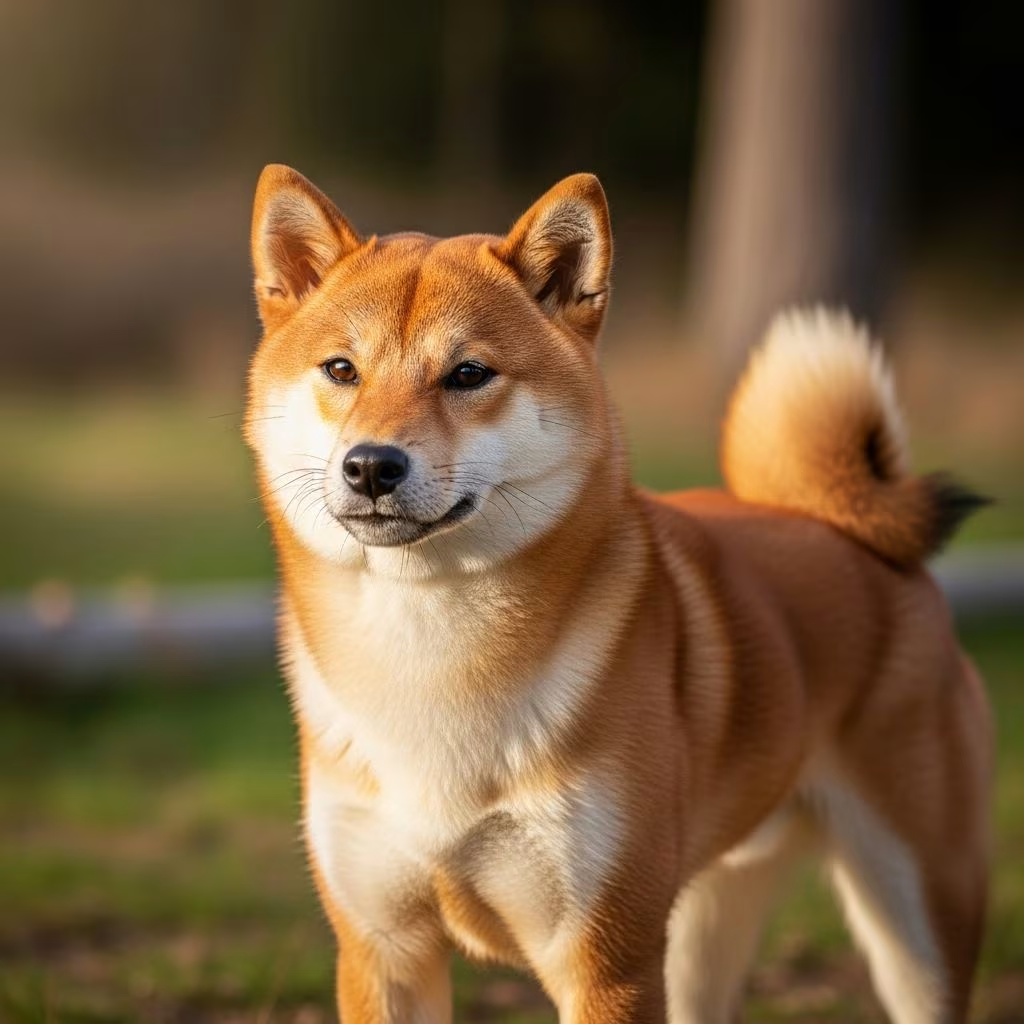
The Shiba Inu stands out as one of Japan’s most cherished native dog breeds, renowned for its fox-like charm, agile build, and independent spirit. Originating as a hunting dog in rugged terrains, this compact canine has evolved into a popular companion worldwide, blending ancient heritage with modern appeal.
Ancient Roots in Japanese Mountains
Tracing back thousands of years, the Shiba Inu emerged in Japan’s mountainous regions, likely descending from dogs brought by early settlers around 7000 B.C. Archaeological finds near ancient shell mounds reveal evidence of small dogs similar to today’s Shibas, standing 14.5 to 19.5 inches tall, coexisting with the Jomon people. These early canines were bred for endurance in dense brushwood areas, flushing out small game like birds, rabbits, and occasionally larger prey such as boar.
By the third century B.C., further migrations introduced new bloodlines, refining the breed’s traits. The seventh-century Japanese court recognized six indigenous breeds vital to culture, designating the Shiba Inu as the smallest among them, alongside larger kin like the Akita. Regional variations—Shinshu from Nagano, Mino from Gifu, and San’in from Tottori-Shimane—each contributed unique features: solid red coats, thick ears, or larger frames, later unified into the modern standard.
Near-Extinctions and Preservation Triumphs
The Shiba Inu faced existential threats multiple times. In the late 19th century, during the Meiji era, Western dogs flooded Japan, leading to crossbreeding that nearly erased pure lines by 1926. Hunters and scholars rallied, founding the Nihon Ken Hozonkai (Nippo) in 1928 to safeguard native breeds. By 1934, the first breed standard was set, and in 1936, the Shiba earned status as a Natural Monument under Japan’s Cultural Properties Act.
World War II brought devastation: food shortages, bombings, and postwar chaos decimated populations. A distemper outbreak in the 1950s, compounded by fires like the Great Tottori, left only three bloodlines—Shinshu, Mino, and San’in—to rebuild the breed. These resilient lineages, crossbred strategically, form today’s Shiba Inu, recognized by the American Kennel Club in 1993 after U.S. imports began in the 1950s.
Distinctive Physical Features
Shiba Inus embody a spitz-type build: muscular yet compact, with heights of 13.5 to 16.5 inches and weights around 17-23 pounds. Their hallmark is a curled or sickle tail, thick double coat in red, red sesame, or black-and-tan, plus cream undercoats mimicking autumn foliage for camouflage. Triangular ears, almond-shaped eyes, and a refined fox-like face convey perpetual alertness.
| Feature | Description |
|---|---|
| Height | 13.5-16.5 inches |
| Weight | 17-23 lbs |
| Coat Colors | Red, red sesame, black-and-tan |
| Tail | Curled or sickle-shaped |
| Build | Muscular, agile, spitz-type |
This weather-resistant coat sheds heavily twice yearly, requiring regular brushing.
Core Personality Traits
Shibas are bold, confident, and fiercely loyal, echoing their samurai-hunting past. Classified with high aggression, reactivity, and medium trainability, they demand experienced owners. Intelligent yet stubborn, they thrive on mental challenges but may “Shiba scream”—a dramatic yelp—when frustrated or anxious from insufficient stimulation.
- Alert and Independent: Often aloof with strangers, they bond deeply with family.
- Playful Hunters: Strong prey drive makes them chase small animals; secure fencing is essential.
- Affectionate at Home: “Good nature” shines in calm settings, but early socialization prevents reactivity.
- Exercise Lovers: Need 60-90 minutes daily to curb boredom-induced mischief.
Compared to other breeds:
| Trait | Shiba Inu | Akita | Beagle |
|---|---|---|---|
| Independence | High | High | Medium |
| Trainability | Medium | Medium | High |
| Prey Drive | High | High | Very High |
| Size | Small-Medium | Large | Medium |
Training and Socialization Essentials
Start training early with positive reinforcement; harsh methods backfire on willful Shibas. Puppy classes build social skills, curbing aloofness. Key commands: recall (vital for escape artists), “leave it” for prey, and leash manners. Mental games like puzzle toys prevent destructive chewing.
Crate training aids housebreaking, as Shibas naturally clean. Consistency counters independence—short, frequent sessions yield best results.
Daily Care and Lifestyle Fit
Shibas suit active apartments or houses with yards, tolerating solitude better than clingy breeds but hating isolation. Feed high-quality kibble (1.5-2 cups daily, split meals) suited to their size and activity. Weekly baths suffice; nail trims biweekly.
- Grooming: Brush 2-3 times weekly, more during sheds.
- Exercise: Hikes, fetch, agility—avoid off-leash until trained.
- Family Role: Great with respectful kids; supervise around toddlers due to low tolerance for rough play.
Health Considerations and Lifespan
Average lifespan: 13-16 years. Prone to hip dysplasia, patellar luxation, allergies, and eye issues like progressive retinal atrophy. Chipped teeth from chewing demand dental checks. Annual vet visits, vaccinations, and heartworm prevention are crucial.
Genetic testing via breeders ensures healthy lines from post-WWII bloodlines. Balanced diet prevents obesity; monitor for hypothyroidism.
Bringing Home Your Shiba Inu
Adopt from reputable breeders or rescues emphasizing health clearances. Prepare for a cat-like clean pet that’s escape-prone—high fences, microchips essential. Budget $1,200-$3,000 for puppies, plus ongoing costs.
Shibas reward patient owners with unwavering loyalty and comic antics, from dramatic screams to nimble escapes.
Frequently Asked Questions
Are Shiba Inus good for first-time owners?
No, their independence and training challenges suit experienced handlers.
Do Shiba Inus get along with other dogs?
With socialization, yes, but males may clash; same-sex pairs risk fights.
How much exercise does a Shiba need?
At least 60 minutes daily, plus mental stimulation.
Why do Shibas scream?
Excitement, frustration, or anxiety; more exercise helps.
Is the Shiba Inu hypoallergenic?
No, heavy shedding occurs, though double coat traps dander.
Choosing the Right Shiba for You
Whether drawn to their historical valor or fox-like allure, Shibas demand commitment. Research bloodlines, commit to training, and embrace their spirited essence for a rewarding bond.
References
- Shiba Inu History: Where this Japanese Breed Originated — American Kennel Club. 2023-05-15. https://www.akc.org/expert-advice/dog-breeds/shiba-inu-breed-history/
- Shiba Inu — Wikipedia. 2026-01-28. https://en.wikipedia.org/wiki/Shiba_Inu
- 7 Astonishing Facts About Shiba Inu Every Owner Should Know — Lehigh Valley Dog Trainers. 2024-08-10. https://www.lehighvalleydogtrainers.com/astonishing-facts-about-shiba-inu/
- History of the Shiba Inu — Nihon Ken Hozonkai. 2025-03-20. https://www.nihonken-hozonkai.or.jp/en/history/
- Shiba Inu Dogs 101 History, Appearance, and Personality — YouTube (Animal Planet). 2023-11-12. https://www.youtube.com/watch?v=ilRP_NujltU
- Breed History — National Shiba Club of America. 2024-02-05. https://www.shibas.org/breedHistory.html
- Shiba Inu Breed Guide: History, Characteristics & Care Tips — Pawlicy Advisor. 2025-07-18. https://www.pawlicy.com/blog/shiba-inu-dog-breed/



