

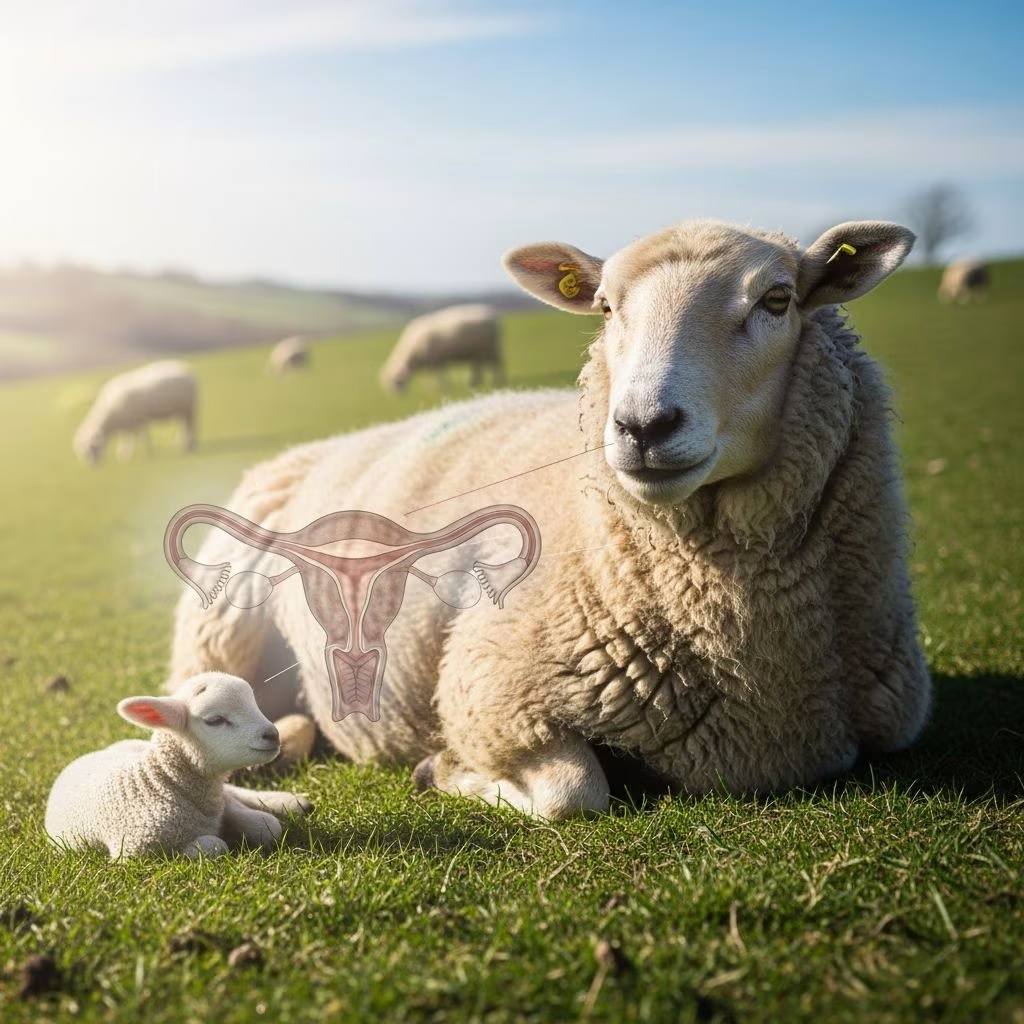
Sheep reproduction is governed by intricate hormonal interactions and environmental cues that dictate breeding efficiency and flock productivity. Mastering these processes allows producers to maximize lamb output and economic returns.
Hormonal Foundations of Sheep Fertility
The reproductive system in ewes relies on a precise balance of hormones originating from the brain, pituitary gland, and ovaries. The hypothalamus releases gonadotropin-releasing hormone (GnRH), which stimulates the pituitary to produce luteinizing hormone (LH) and follicle-stimulating hormone (FSH). These hormones drive ovarian follicle development.
Follicles mature and secrete estradiol, signaling the brain to trigger estrus. Peak estradiol levels prompt a surge in LH, leading to ovulation. Post-ovulation, the ruptured follicle transforms into a corpus luteum (CL), producing progesterone to inhibit further cycles and support potential pregnancy.
If conception fails, the uterus releases prostaglandin F2α (PGF2α), lysing the CL and dropping progesterone levels. This restarts GnRH production, initiating a new cycle.
Estrous Cycle Dynamics
Ewes exhibit a seasonally polyestrous pattern, cycling multiple times within breeding seasons. The average estrous cycle spans 17 days (range 14-19 days), divided into proestrus (follicle growth), estrus (24-36 hours of receptivity), metestrus (CL formation, ~3 days), and diestrus (CL functionality).
- Proestrus: Follicles develop under FSH influence.
- Estrus: Ewe stands for ram; ovulation mid-to-late phase.
- Metestrus: CL forms, progesterone rises.
- Diestrus: Progesterone maintains uterine preparation.
Estrus duration varies by breed, age, and season, typically 24-36 hours.
Ovulation and Fertilization Timeline
Ovulation occurs 24-27 hours after estrus onset, with ova fertilizable for 10-25 hours. Sperm viability post-breeding lasts ~30 hours, aligning perfectly for fertilization in the oviduct. Ewes often release multiple ova, increasing twinning chances.
| Reproductive Milestone | Timing/Details |
|---|---|
| Puberty (ewe) | 6-9 months |
| Estrus length | 24-36 hours |
| Cycle length | 17 days (14-19) |
| CL lifespan | 14 days |
| Ova fertilizable life | 10-25 hours |
This table summarizes key ewe reproductive traits, adapted from standard veterinary references.
Seasonal Breeding Patterns
Sheep are short-day breeders, with peak fertility in fall due to longer nights boosting melatonin, which enhances GnRH sensitivity. Breeding seasons align with photoperiod, typically August-December in the Northern Hemisphere.
Photoperiod influences puberty onset and anestrus periods. Tropical breeds may show less seasonality, but temperate flocks enter anestrus in spring/summer.
The Ram Effect: Natural Synchronization
Introducing novel rams triggers synchronized estrus in 70-90% of anestrus ewes via pheromones and visual/tactile stimuli. This “ram effect” induces ovulation ~17 days post-introduction, followed by a second wave ~25 days later from short-lived CLs.
Effective use requires vigorous, young rams (1 ram:30-50 ewes). Vasectomized teasers or testosterone wethers amplify the response. Benefits include condensed lambing and out-of-season breeding.
Out-of-Season Breeding Techniques
Hormonal protocols enable accelerated lambing. Progesterone implants/vaginal devices for 12-14 days, followed by equine chorionic gonadotropin (eCG, formerly PMSG), induce estrus and ovulation within 48 hours.
Combining progesterone with ram introduction enhances synchrony without excess hormones. Success rates exceed 80% in primed flocks.
Pregnancy Maintenance and Recognition
Progesterone from the CL sustains pregnancy initially. By day 12-14, the embryo signals via interferon-tau to block PGF2α, preserving the CL. Pregnancy lasts ~147 days (145-155), with twins shortening gestation slightly.
Nutritional demands peak in late gestation; underfeeding risks pregnancy toxemia.
Lambing Process Stages
Parturition unfolds in three stages:
- Cervical dilation (2-8 hours): Uterine contractions expel mucus plug and first water bag.
- Fetal expulsion (0.5-1 hour per lamb): Ruptured bag aids delivery; multiples prolong this.
- Placental expulsion (1-3 hours): Follows last lamb; retained placentas signal issues.
First-time mothers or those with multiples take longer. Normal signs: feet-first presentation.
Factors Influencing Reproductive Performance
- Breed: Prolific breeds (e.g., Finnsheep) ovulate more ova.
- Age: Peak fertility at 2-5 years; decline post-7.
- Nutrition: Body condition score 3-3.5 optimal pre-breeding.
- Health: Parasites, footrot reduce conception.
- Environment: Stress, extreme weather disrupt cycles.
Conception rates average 70-90% in well-managed flocks.
Management Strategies for Enhanced Fertility
Accelerated lambing systems (3 lambings/2 years) boost output using synchrony. Pre-breeding flushing (increased energy) raises ovulation rates 20-30%.
Ram management: Breeding soundness exams ensure 80% sperm motility. Quarantine novel rams 4 weeks pre-introduction.
Common Reproductive Disorders
- Cystic ovaries: Prolonged anestrus; treat with PGF2α.
- Endometritis: Post-lambing infections lower fertility.
- Nutritional flushing failure: Overfeeding risks obesity.
- Twin lamb disease: Hypoglycemia in late pregnancy.
Veterinary monitoring prevents losses.
FAQs
How long is a sheep’s estrous cycle?
Average 17 days, ranging 14-19 days.
What triggers the ram effect?
Pheromones and sensory stimuli from novel rams induce ovulation in anestrus ewes.
Can sheep breed year-round?
Seasonally polyestrous; hormones enable out-of-season cycles.
What is the gestation period for sheep?
145-155 days, averaging 147.
How to synchronize estrus naturally?
Vigorous ram introduction to naive ewes.
Advanced Reproductive Technologies
Embryo transfer amplifies prolific genetics: donors superovulated, embryos flushed and implanted. IVF and sexed semen emerging for elite flocks.
Genomic selection targets ovulation rate QTLs for higher litter sizes.
References
- Sheep reproduction basics and conception rates — Ontario Ministry of Agriculture, Food and Rural Affairs. 2023. http://www.ontario.ca/page/sheep-reproduction-basics-and-conception-rates
- Reproduction in the ewe — Sheep 101. 2023. http://www.sheep101.info/201/ewerepro.html
- Reproduction and Lambing — Ontario Sheep Farmers. 2014. https://www.ontariosheep.org/media/ck5hesi1/f6-reproduction-and-lambing-2014.pdf
- Reproductive Physiology of Sheep — Ohio State University Extension. 2020-08-18. https://u.osu.edu/sheep/2020/08/18/reproductive-physiology-of-sheep/
- Reproduction in Sheep and Goats — AIGR Handbook. Undated (accessed 2023). http://40.65.112.141/AIGR/handbook/Chapter%205_%20Reproduction%20in%20Sheep%20and%20Goats.pdf



