

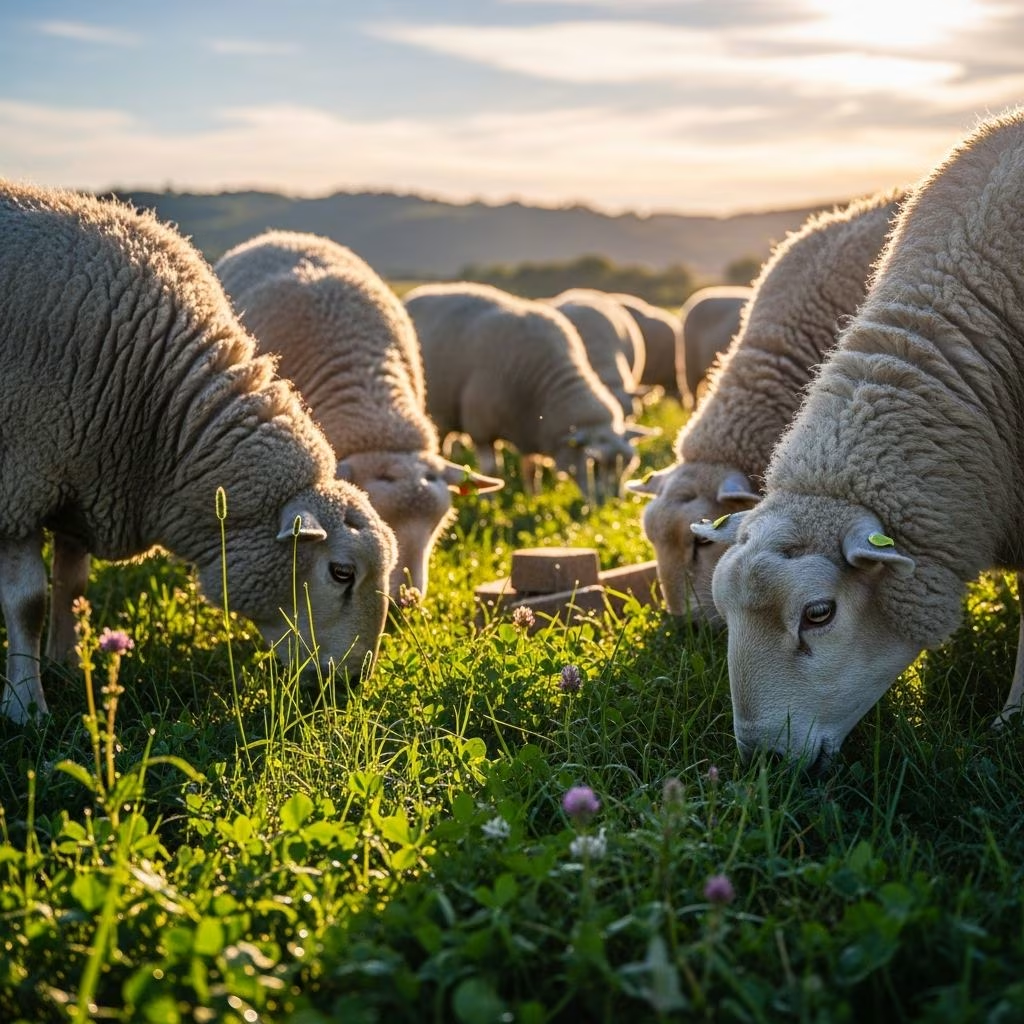
Proper nutrition forms the foundation of successful sheep production, influencing health, reproduction, wool quality, and overall profitability. Sheep are uniquely adapted as ruminants to convert forages into meat, milk, and fiber efficiently. Understanding their specific nutritional requirements and how to meet them through different feeding systems is essential for producers of all scales. This comprehensive guide explores the principles and practices of sheep nutrition, from basic maintenance requirements to specialized diets for production-intensive systems.
Understanding Ruminant Digestion and Forage Selection
Sheep are ruminants with a specialized four-chambered stomach that allows them to digest plant materials through microbial fermentation. This biological adaptation makes forage the cornerstone of any sheep diet. Unlike non-ruminants, sheep derive the majority of their protein and energy from plant-based feeds processed through their rumen, where billions of microorganisms break down fibrous plant materials.
High-quality roughage in the form of hay or grass-legume silage represents an economical and nutritionally sound option for sheep across most production scenarios. The specific type of forage selected influences both nutritional intake and feed costs. Forage quality varies significantly based on plant species, growth stage at harvest, and storage methods.
When selecting hay for sheep operations, understanding crude protein concentrations becomes critical. Alfalfa hay typically contains approximately 17% crude protein, while clover-based hay provides around 15%. Mixed grass-legume hay with a 50:50 ratio offers approximately 13% crude protein, whereas pure grass hay generally contains about 10%. These distinctions matter when formulating balanced rations for different classes of animals within a flock.
Establishing Base Nutritional Requirements
Mature sheep in maintenance require a diet with crude protein concentrations between 7% and 9%, paired with a total digestible nutrition (TDN) value of 50%. Most quality forages naturally provide adequate protein to meet these baseline maintenance needs for non-productive animals.
The minimum crude protein requirement for proper rumen function and bacterial growth stands at 7%, making high-quality forage capable of meeting the needs of idle sheep without additional grain supplementation. However, sheep undergoing various physiological states demand higher nutrient density. Daily dry matter consumption averages 1.8% to 2.0% of body weight, though this varies based on forage quality and production status.
Nutritional requirements increase substantially during:
- Late pregnancy: requires crude protein up to 16% and TDN up to 70%
- Lactation: demands elevated energy and protein to support milk production
- Lamb growth: young animals require higher nutrient concentrations for development
- Breeding season: reproductive demands increase energy and mineral needs
Managing Lactating Ewes and Twin-Bearing Animals
Lactating ewes represent one of the most nutritionally demanding classes in a flock. When ewes have access to succulent pasture, the forage typically furnishes adequate energy, protein, vitamins, and minerals without requiring additional grain supplementation. However, when pasture is unavailable or during confinement production systems, more intensive feeding becomes necessary.
Ewes nursing twin or triplet lambs present a particular management challenge, as they produce 20% to 40% more milk than ewes with single lambs. Best practice involves separating multiple-lamb-bearing ewes from those with singles and providing them with elevated concentrate rations and higher-quality forage options. This targeted feeding approach ensures adequate nutrition without wastefully oversupplying single-bearing ewes.
Nutritional support during the breeding season significantly impacts reproductive success. Feeding approximately 0.25 pounds of high-protein (36%) supplement or 0.33 to 0.5 pounds of medium-protein (24%) pellets begins about three weeks before breeding and continues through the breeding season itself. This strategic timing capitalizes on the energetic demands of reproduction without unnecessary feed expense before breeding begins.
Formulating Grain Mixtures and Supplemental Feeds
While forage forms the dietary foundation, grain supplements become necessary during production intensification or when forage quality proves insufficient. Common grain sources in sheep rations include corn, barley, milo, wheat, or mixtures thereof. The selection depends on local availability, cost, and nutrient composition.
Proper mineral inclusion in grain mixtures enhances nutritional completeness. Standard recommendations include 0.5% salt and 0.5% bone meal or equivalent calcium-phosphorus supplement added to grain mixes. This simple addition prevents mineral imbalances that might otherwise develop from grain-only feeding.
Fermentable fiber sources such as beet pulp or soy hulls offer an alternative or complementary approach to grain supplements, particularly when energy demands exceed what forage alone provides. These feeds provide energy without the high starch content of cereal grains, reducing digestive upset risk.
Mineral Nutrition and Supplementation Strategies
Minerals divide into two primary categories: macrominerals (calcium, phosphorus, potassium, magnesium) and trace minerals (copper, zinc, cobalt, iodine, selenium, manganese). Macrominerals derive primarily from forages and water, making forage analysis essential when developing feeding programs.
Calcium and phosphorus relationships require careful attention. A 2:1 calcium-to-phosphorus ratio represents the target for most sheep, while maintaining a 4:1 potassium-to-magnesium ratio optimizes health outcomes. When supplementing range sheep with protein pellets, different protein levels should contain specified phosphorus percentages: 36% protein pellets contain 1.5% phosphorus, 24% protein pellets contain 1%, and 12% protein pellets contain 0.5%.
Trace mineralized salt combined with dicalcium phosphate should remain available to ewes throughout the year. Phosphorus supplementation proves particularly valuable for range sheep, as it improves digestibility of poor-quality forages and enhances overall productivity when incorporated into supplement mixtures.
Critical mineral considerations for specific animal classes:
- Rams and wethers require reduced magnesium and higher calcium-to-phosphorus ratios to prevent urinary calculi
- Growing lambs need elevated mineral concentrations to support skeletal development
- Lactating ewes require increased calcium and phosphorus for milk production
- Pregnant ewes benefit from phosphorus supplementation during late gestation
Supplementing Range and Extensive Systems
Sheep on rangelands face variable nutrition based on forage quantity, quality, and seasonal availability. Supplements address these fluctuations without requiring animals to consume complete rations through intensive handling. Body condition scoring guides supplementation decisions—poorly-conditioned animals require more intense feeding than those in moderate condition.
Strategic supplementation before and during breeding season demonstrates particular value in range systems. Feeding high-protein pellets three weeks before breeding through the breeding period increases lamb crop productivity by 10% to 15% and raises wool production by approximately 0.4 to 0.5 pounds per ewe annually. This relatively inexpensive intervention generates substantial returns through improved reproductive performance.
During severe winter weather when deep snow or other conditions prevent animals from obtaining adequate forage, emergency feeding becomes necessary. Recommendations include 1 to 3 pounds of alfalfa hay paired with 0.2 to 0.3 pounds of low-protein pellet mixture or corn daily. When alfalfa hay is unavailable, 0.5 to 1 pound of low-protein pellet mixture per head supplied daily sustains animals through critical periods.
Protein supplements including soybean meal, cottonseed meal, and alfalfa pellets dramatically increase digestibility and utilization of poor-quality forage. By improving nutrient extraction from available feedstuffs, these supplements allow producers to work within the forage resources available on their land.
Lamb Growth and Development Feeding
Growing lambs require substantially higher nutrient concentrations than maintenance animals due to rapid tissue development and growth. Post-weaning lambs thrive on diets containing 14% to 16% crude protein during early phases, with protein levels decreasing to 10% to 12% as animals approach market weight. Some producers simplify feeding by maintaining 13% to 14% protein throughout the post-weaning period as a practical compromise.
Energy density exceeding 80% proves essential for maximizing growth rate and feed efficiency during the post-weaning lamb growth period. Pelleted diets, ground-and-mixed rations, or combinations of alfalfa pellets with grain all achieve acceptable results. The key is ensuring consistent access to feed without allowing spoilage or refusal.
Self-feeding systems typically generate maximum feed intake and gain with minimal labor, though hand-feeding at regular intervals allows producers to control consumption and monitor individual animal intake more precisely. When incorporating corn silage into lamb finishing rations, hand-feeding prevents excessive spoilage that self-feeding systems might experience.
Specialized Feeding for Young Lambs and Artificial Rearing
Orphaned or supplementally-fed lambs requiring milk replacer need carefully calibrated feeding regimens. Milk replacer should be provided at 10% to 20% of the lamb’s body weight, divided into 4 to 6 feedings daily during the first week of life. As lambs mature, feeding frequency gradually reduces to twice daily by 3 to 4 weeks of age.
Creep feeding—providing grain and forage supplements to nursing lambs—improves growth rates and allows earlier weaning when production systems demand it. Under confinement or accelerated lambing systems, lambs may wean at 2 months of age once milk production from ewes begins declining. At this transition point, creep feed converts more efficiently into weight gains than continued maternal nutrition, making the shift economically and nutritionally sound.
Optimizing Feed Delivery Systems
The method by which feed is delivered influences both consumption patterns and operational efficiency. Self-feeding systems maximize voluntary intake and reduce labor requirements, particularly valuable for larger operations. Mechanized delivery using auger systems or self-unloading wagons provides the efficiency benefits of mechanization while maintaining hand-feeding’s advantages of regular interval feeding and intake monitoring.
Forage supplementation with silage requires particular attention to delivery methods. When corn, sorghum, or alfalfa silage replaces approximately half the hay in rations, hand-feeding at regular intervals minimizes spoilage losses. This practice proves more economical than self-feeding silage, despite increased labor investment.
Frequently Asked Questions
How much should sheep eat daily?
Sheep typically consume 1.8% to 2.0% of their body weight in dry matter daily. This varies based on forage quality, animal age, production status, and environmental conditions.
Can sheep survive on forage alone?
Healthy, non-productive sheep in maintenance can thrive exclusively on good-quality forage without grain supplementation. However, pregnant, lactating, or growing animals require additional energy and protein sources.
What minerals are most critical for sheep?
Calcium, phosphorus, potassium, and magnesium are macrominerals requiring specific ratios. Copper, zinc, selenium, and iodine are essential trace minerals. Salt should be available at all times, preferably as trace mineralized salt.
Should hay quality differ by sheep type?
Yes. Lactating ewes and growing lambs benefit from higher-quality hay (alfalfa or clover-based), while maintenance animals can sustain on mixed grass-legume or grass hay. “Meadow hay” of unknown composition should be avoided.
How does breeding season nutrition influence outcomes?
Strategic supplementation 3 weeks before through breeding season improves conception rates and lamb survival. This relatively inexpensive intervention substantially increases overall flock productivity and profitability.
Conclusion: Matching Nutrition to Production Goals
Successful sheep feeding requires understanding the foundational principle that forage should form the dietary base, with supplementation tailored to individual animals’ physiological demands. Whether managing extensive range flocks, intensive confinement systems, or mixed operations, producers benefit from analyzing forage quality, monitoring body condition, and adjusting supplements strategically.
The most profitable feeding systems balance nutritional adequacy against feed costs, avoiding both malnutrition that reduces production and overfeeding that wastes resources. Regular assessment of individual animal condition and flock performance allows continuous refinement of feeding practices, ensuring sheep receive appropriate nutrition at each production stage while maintaining economic efficiency.
References
- Feeding Practices in Sheep — Ohio State University Small Ruminant Team. 2023-05-09. https://u.osu.edu/sheep/2023/05/09/feeding-practices-in-sheep/
- Daily Diet, Treats, & Supplements For Sheep — Open Sanctuary Project. https://opensanctuary.org/daily-diet-treats-supplements-for-sheep/
- Nutrition of Sheep – Management and Nutrition — MSD Veterinary Manual. https://www.msdvetmanual.com/management-and-nutrition/preventative-health-care-and-husbandry-of-sheep/nutrition-of-sheep
- Feeding the Flock — Penn State Extension. https://extension.psu.edu/feeding-the-flock/
- The Essentials of Feeding Market Lambs — Michigan State University Extension. https://www.canr.msu.edu/news/the-essentials-of-feeding-market-lambs



