
Sheep Nasal Bot Infestation: Expert Guide For Farmers
Comprehensive insights into preventing, identifying, and treating nasal bot flies in sheep and goats for healthier herds.
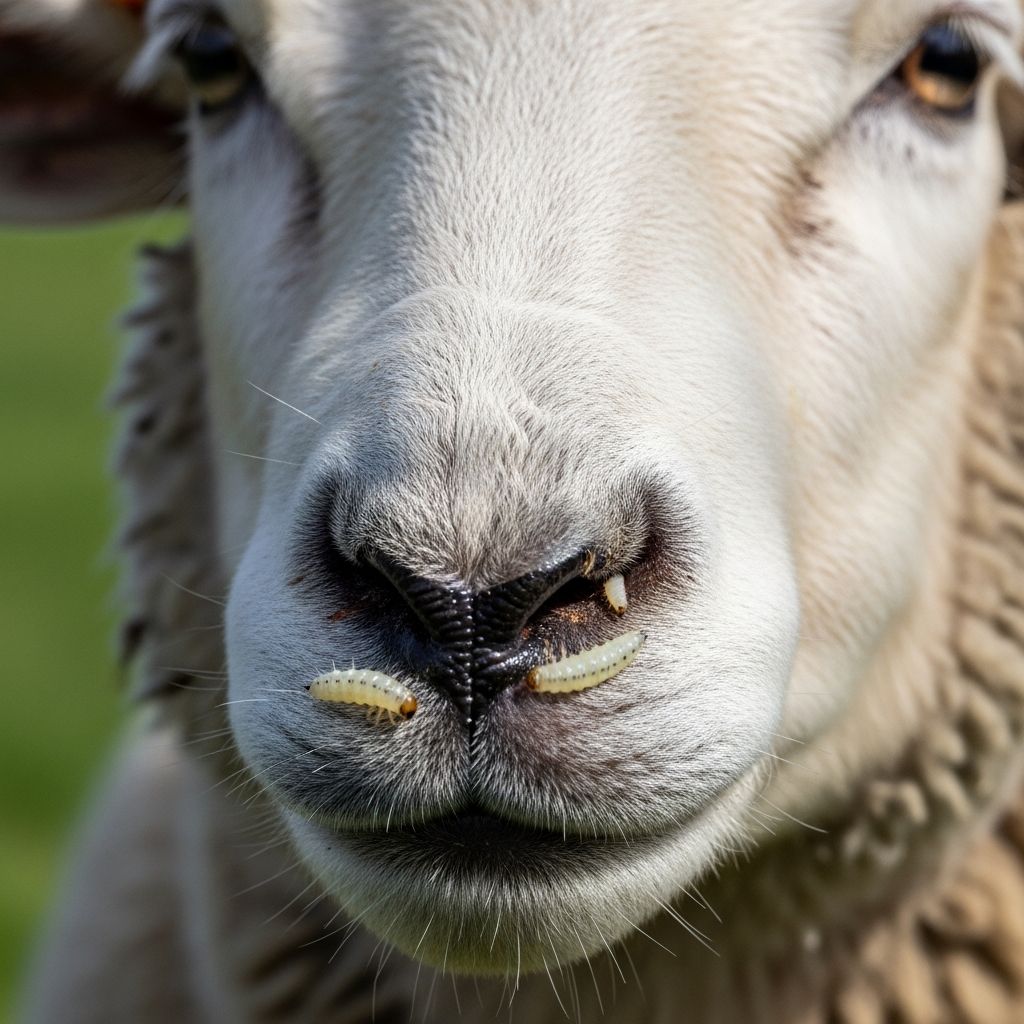
Nasal bot infestation, caused by the larvae of the sheep bot fly Oestrus ovis, poses a significant challenge to sheep and goat producers worldwide. This parasitic condition leads to respiratory irritation, reduced productivity, and occasional severe health complications in affected animals.
Understanding the Culprit: Oestrus ovis Biology
The sheep bot fly, scientifically known as Oestrus ovis, is an obligate parasite primarily targeting sheep and goats. Adult flies measure about 3 cm in length and do not feed; their sole purpose is reproduction. Females deposit first-instar larvae directly into the nostrils of hosts during flight, a behavior that causes immediate distress to the animals.
Once inside, these larvae migrate to the nasal cavities and sinuses, where they develop through three larval stages. Development can span from six weeks to ten months, often overwintering in the warm, moist nasal environment. Mature larvae are eventually expelled via sneezing, pupate in the soil, and emerge as adults after a few weeks to continue the cycle.
This fly thrives in diverse climates, from high-altitude regions at 3,700 meters to warmer areas, making it ubiquitous across Old and New World regions. While sheep and goats are primary hosts, accidental infestations occur in other species like llamas under certain conditions.
Recognizing the Signs of Infestation
Early detection is crucial for managing nasal bot myiasis. Animals exhibit behaviors aimed at relieving irritation from larval movement and fly attacks. Common observations include:
- Snorting, sneezing, and frequent nose rubbing against objects or flock mates.
- Stamping of front feet and short, erratic sprints across pastures.
- Clear or mucoid nasal discharge, sometimes haemorrhagic, leading to crusting around nostrils.
- Coughing, rapid breathing, and head shaking due to mucosal inflammation.
In light infestations (typically 2-20 larvae per host), signs may be mild, such as occasional discomfort without fever or appetite loss. Heavier burdens cause more pronounced respiratory distress, impaired smell, and secondary issues like bacterial pneumonia.
Reproductive impacts are notable: affected rams show reduced mating drive due to olfactory impairment, while ewes struggle to bond with lambs post-parturition. Lambs experience stunted growth, and overall production losses include decreased wool, meat, and milk yields.
Health Impacts and Complications
Beyond irritation, larvae cause mechanical damage via hooks and spines, triggering rhinitis, sinusitis, and turbinate inflammation. This creates a moist environment conducive to bacterial overgrowth, potentially escalating to pneumonia or, rarely, neurological issues if larvae penetrate the brain.
In severe cases, as seen in a Peruvian llama accidentally infested, larvae reach third-instar stage, contributing to hemorrhagic pneumonia and death. While sheep tolerate low larval counts (under 15), heavy loads lead to significant economic setbacks.
| Infestation Level | Symptoms | Potential Outcomes |
|---|---|---|
| Light (2-20 larvae) | Mild discharge, sneezing | Minimal production loss |
| Moderate | Respiratory distress, coughing | Reduced growth, wool/milk yield |
| Heavy | Bloody discharge, pneumonia | Death, severe economic loss |
Diagnostic Approaches
Diagnosing nasal bots relies on clinical signs, as no commercial tests exist. Persistent nasal discharge, especially in winter when pneumonia is less likely, raises suspicion. Differentiate from bacterial infections via history and exclusion.
Confirmation often occurs post-mortem or when expelled larvae are observed. Veterinarians may use endoscopy for live diagnosis, though this is uncommon in field settings. Risk assessment considers flock history, seasonal patterns, and co-mingling with untreated animals.
Treatment Strategies
Effective treatments target larval stages with systemic anthelmintics. Key options include:
- Macrocyclic lactones (MLs): Ivermectin, doramectin, abamectin, moxidectin—administered as drenches or injectables. A single dose often resolves symptoms within days.
- Closantel-based products: Such as Prodose Orange or Yellow LA, registered for nasal bots in sheep and goats.
Treat individual animals showing signs rather than entire flocks to curb resistance and environmental impact. For high-risk herds, biannual dosing—at summer’s start for new larvae and midwinter for overwintering ones—is recommended after veterinary consultation.
Avoid routine prophylaxis; base decisions on clinical evidence. In one farm report, ivermectin cleared symptoms in affected ewes, preventing flock-wide spread.
Prevention and Control Measures
Preventing adult fly activity is challenging due to lacking species-specific traps and limited repellents. Focus on larval control:
- Strategic deworming timed to fly seasons.
- Maintain clean pastures; remove expelled bots promptly to break the soil pupation cycle.
- Quarantine new stock and monitor mixed-species herds, as cross-infestation risks exist.
- Work with vets for tailored plans, minimizing unnecessary treatments to preserve drug efficacy.
Integrated management reduces reliance on chemicals, promoting sustainable flock health.
Economic and Production Considerations
Infestations erode profitability through veterinary costs, treatment expenses, and output declines. Reduced lamb weights, poorer wool quality, and lower milk from ewes compound losses. Proactive monitoring yields healthier herds and better returns.
Case Studies from the Field
On a U.S. farm, winter nasal discharge affected multiple ewes; ivermectin drench eliminated symptoms rapidly, with incidence dropping to 2/70 animals in subsequent years. In Peru, a llama’s fatal pneumonia highlighted atypical host vulnerability, underscoring biosecurity.
South African producers report success with closantel, restoring normal behavior and smell-dependent functions.
Frequently Asked Questions (FAQs)
What causes nasal bot in sheep?
Oestrus ovis flies deposit larvae in nostrils, leading to myiasis.
Is treatment always necessary?
No, light cases may resolve; treat based on symptoms and vet advice.
Can goats get nasal bots?
Yes, both sheep and goats are primary hosts.
How to differentiate from pneumonia?
Nasal bots cause clear discharge without fever; pneumonia involves systemic signs.
Does ivermectin work on all stages?
It targets larvae effectively, clearing infestations quickly.
References
- Nasal worm Infestation in Sheep and Goats — Virbac South Africa. Accessed 2026. https://za.virbac.com/home/every-health-care/nasal-worm-infestation-in-sheep-and-goats
- SkyLines Methods-Nasal Bots — Skylines Farm. Accessed 2026. https://skylinesfarm.com/parasitenasalbots.htm
- A case of nasal myiasis due to Oestrus ovis (Diptera – PMC – NIH — PMC. 2017-05-31. https://pmc.ncbi.nlm.nih.gov/articles/PMC5454528/
- Nasal bots – SCOPS — SCOPS. Accessed 2026. https://www.scops.org.uk/external-parasites/nasal-bots/
- Nasal Bot – WormBoss — WormBoss. Accessed 2026. https://wormboss.com.au/other-occasional-parasites-of-sheep-and-goats/nasal-bot/
- Sheep bot (head bot, nasal bot) Oestrus ovis – K-State’s entomology — Kansas State University Entomology. Accessed 2026. https://entomology.k-state.edu/doc/extension–med/vet/sheep-bot.pdf
Similar Articles








Read full bio of medha deb


