
Sheep Keds: Biology, Impact, and Management
Understanding the wingless fly parasites that threaten sheep health and wool quality
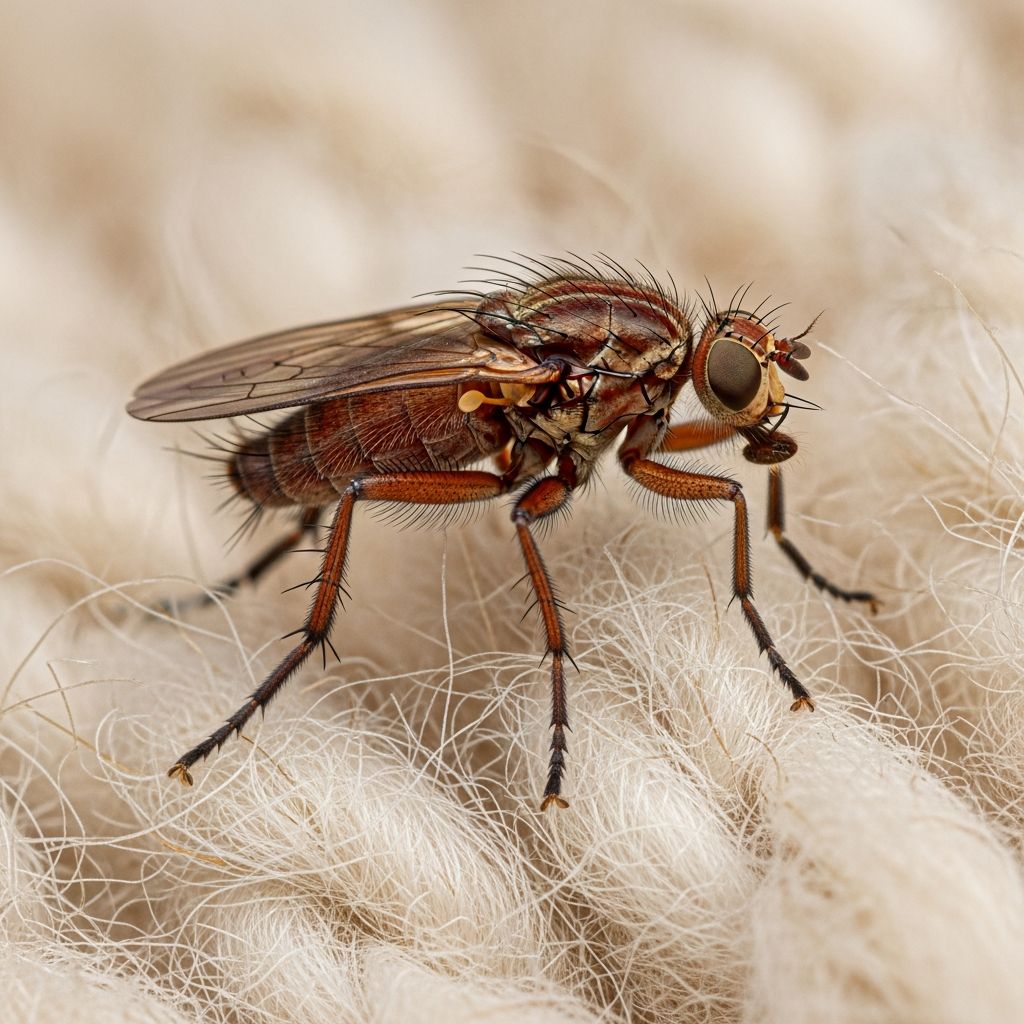
Among the numerous parasitic challenges that confront sheep producers worldwide, few are as economically significant yet manageable as infestation by sheep keds. These tiny, wingless insects represent a unique classification within the parasitic world, occupying a position distinct from more commonly recognized pests such as ticks or lice. For producers managing flocks of any size, understanding the nature of these parasites, their behavioral patterns, and their consequences for animal welfare becomes essential for maintaining profitable and healthy operations.
What Exactly Are Sheep Keds and Why Are They Misidentified?
The sheep ked, scientifically designated as Melophagus ovinus, belongs to the order Diptera, the same classification encompassing all true flies. This classification often surprises individuals familiar with sheep management, primarily because the common vernacular has perpetuated the misnomer “sheep tick” for generations. The confusion arises from superficial morphological resemblance to tick species, but closer examination reveals fundamental biological distinctions.
The most straightforward distinguishing characteristic involves leg count. Keds, being true insects, possess exactly six legs equipped with stout, powerful claws. In contrast, ticks belong to the arachnid class and display eight legs, establishing them as more closely related to spiders than to insects. Additionally, keds never detach from their host to seek new animals, whereas ticks regularly migrate between multiple hosts throughout their existence.
Physical examination reveals additional identifying features. Adult keds measure approximately 4 to 7 millimeters in length, rendering them notably larger than most louse species that occasionally affect sheep. Their coloration ranges from brown to reddish-brown, and their bodies appear distinctly flattened and leathery in texture. The entire surface is covered with short, bristly hairs that aid in clinging to wool fibers. The head structure is characteristically short and broad, while the most striking anatomical feature involves the piercing mouthparts that project forward from the head, specially adapted for penetrating capillaries and drawing blood.
Morphological and Biological Characteristics That Define the Species
Understanding the specific anatomical adaptations of sheep keds provides insight into their remarkable parasitic efficiency. The flattened body configuration enables these insects to navigate through dense wool with minimal impedance, positioning them in optimal locations for blood feeding. Their robust legs, tipped with prominent claws, provide secure attachment to wool fibers and skin, preventing dislodgment even when sheep attempt vigorous scratching or rubbing behaviors.
The specialized feeding apparatus represents perhaps their most significant evolutionary adaptation. Rather than employing the biting mechanisms characteristic of many parasitic arthropods, keds utilize piercing mouthparts that function similarly to hypodermic needles. These structures penetrate the epidermis and access capillary networks, allowing continuous blood consumption. A single ked requires multiple feeding episodes throughout each day, with individual feeding sessions lasting approximately 5 to 10 minutes. This frequent feeding demand reflects their relatively small body size and high metabolic requirements.
The behavioral preference for specific anatomical regions on sheep bodies demonstrates remarkable specificity. Keds preferentially congregate on areas with thinner wool coverage, including the neck, breast, shoulders, flanks, and rump. They notably avoid the dorsal surface of the body, where accumulated dust and debris create an inhospitable environment. This selective distribution pattern creates visible patches of damage and discoloration, facilitating diagnostic recognition.
The Reproductive Cycle and Developmental Progression
Perhaps the most unusual aspect of ked biology involves their reproductive strategy, which diverges substantially from the reproductive patterns observed in most fly species. Rather than depositing eggs that subsequently hatch into independent larvae, female keds have evolved a system of internal larval development and delivery of advanced developmental stages.
Each female ked produces a single fully developed larva at a time, retaining the larva internally until it reaches a developmental stage ready for pupation. During this internal retention period, the larva feeds on secretions from specialized “milk” glands located within the female’s reproductive tract, an adaptation paralleling similar mechanisms observed in certain mammalian species. This system ensures the developing larva receives adequate nutrition while remaining protected from environmental hazards and predation.
Upon birth, the female deposits the larva directly onto the wool of the host sheep, where it becomes firmly cemented in place. Within hours of emergence, the larval skin hardens and darkens, transforming into a protective puparium structure. This rapid hardening represents a crucial survival mechanism, as the puparium provides protection against environmental stress, predation, and most significantly, insecticidal treatments.
The pupal stage duration exhibits marked seasonal variation. During warmer months, pupae complete development in approximately 19 to 23 days, while winter conditions extend this period to 20 to 36 days. Once development concludes, the adult ked emerges and immediately begins seeking feeding opportunities on the host.
Female longevity and reproductive output: Adult female keds typically survive 100 to 120 days, during which each individual produces approximately 10 larvae. Some sources indicate this range may extend to 10-12 larvae per female, with females potentially living 4 to 5 months. Male keds demonstrate somewhat shorter lifespans, averaging 80 days according to certain sources, though other references suggest 2 to 3 months. This extended reproductive period enables substantial population growth within a flock, particularly during months when environmental conditions and management practices favor transmission.
Critical Dependency on the Host and Survival Off the Host
A fundamental aspect of ked biology involves their absolute dependence on living host animals. Unlike many parasitic insects capable of surviving extended periods in the environment, keds exhibit severe vulnerability when separated from their sheep. Adult keds that fall from or are removed from the host typically survive less than one week, with some individuals perishing within four days if unable to secure a blood meal. Engorged females may persist somewhat longer, surviving up to eight days while seeking a new host, but this represents the maximum tolerance under favorable conditions.
This vulnerability has important implications for flock management and parasite control strategies. The entire ked lifecycle occurs exclusively on the host animal, meaning environmental contamination with infective stages does not occur. Additionally, this characteristic indicates that separated or isolated sheep present minimal risk for transmitting infestation to other animals in the flock.
Pathological Consequences and Clinical Manifestations
The presence of sheep keds initiates a complex cascade of pathological changes affecting both the animal’s integumentary system and systemic health status. The primary mechanism of damage involves the direct irritation caused by the piercing mouthparts and the inflammatory response to repeated blood feeding.
Integumentary damage: Ked bites generate considerable pruritus, or itching sensation, distributed across much of the body despite the keds’ localized feeding sites. In response to this irritation, infested sheep engage in excessive scratching, biting, and rubbing behaviors, causing traumatic damage to the wool and underlying skin. The fleece becomes progressively thin, ragged, and soiled with debris. Most notably, ked excrement creates permanent brown discoloration throughout the wool, substantially decreasing its commercial value.
Beyond wool quality degradation, ked infestations create a characteristic hide defect termed a “cockle,” which negatively affects the grade and market value of sheep skins. This defect represents permanent damage that persists even after parasite eradication.
Systemic health effects: Heavy ked infestations impose significant systemic consequences, particularly in young lambs and pregnant ewes. The cumulative blood loss from numerous parasites feeding multiple times daily can precipitate anemia, characterized by reduced red blood cell counts and hemoglobin levels. Affected animals exhibit loss of vitality, becoming “unthrifty” with reduced growth rates and poor condition scores. In severe cases, the combination of blood loss and systemic inflammatory responses can substantially decrease the overall health and performance of the host.
Additional disease transmission: Beyond the direct damage inflicted by feeding activities, sheep keds serve as vectors for Trypanosoma melophagium, a protozoan parasite. Although this organism is classified as nonpathogenic, meaning it does not directly cause disease, its presence and transmission underscore the keds’ role in broader parasitic epidemiology.
Seasonality and Population Dynamics Within Flocks
Sheep ked populations exhibit pronounced seasonal fluctuations that influence management timing and strategic intervention points. Ked numbers increase substantially during winter months and early spring, periods coinciding with rapid spread through flocks, particularly when sheep are assembled in close quarters for feeding and shelter. The biological basis for this seasonality involves multiple interacting factors: cooler temperatures create favorable conditions for extended pupal development, close animal contact facilitates transmission, and the persistence of dense winter coats provides optimal habitat.
In contrast, summer months typically see declining ked populations, potentially related to shearing practices that remove the protective wool environment and may expose parasites to greater environmental stress and increased visibility for grooming and removal.
Diagnostic Approaches and Clinical Identification
Accurate diagnosis of sheep ked infestation relies primarily on visual inspection and identification of characteristic signs rather than laboratory analysis. Producers and veterinarians should examine the wool and underlying skin carefully, focusing on preferred feeding areas including the neck, shoulders, and underbelly.
The diagnostic findings include:
- Identification of wingless, hairy insects with the characteristic dark reddish-brown coloration and 4-7 millimeter body length
- Visible brown discoloration of wool resulting from ked excrement
- Evidence of skin irritation, scratching behavior, and potential scab formation
- Thin, ragged, dirty appearance of the fleece
- For severe infestations, signs of anemia or reduced condition in young or pregnant animals
Close visual inspection of affected sheep typically reveals the actual parasites crawling through the wool, particularly in areas of active feeding. The unique appearance of these wingless, bristly flies generally allows differentiation from other parasitic arthropods, although confusion with large lice species remains possible in some cases.
Frequently Asked Questions About Sheep Keds
Can sheep keds affect humans or other livestock species?
Sheep keds demonstrate extreme host specificity, with sheep representing their preferred and nearly exclusive host. While they occasionally bite humans and have limited success parasitizing goats, they do not establish themselves on these alternative hosts. Sheep keds are not zoonotic in any meaningful sense, presenting minimal health risk to human handlers.
How long can a ked survive without a host?
Adult keds survive less than one week when separated from sheep, typically perishing within 4-10 days depending on their nutritional status and environmental conditions. This brief survival period outside the host renders environmental transmission essentially nonexistent.
Are pupal stages susceptible to insecticidal treatments?
The hardened puparium provides substantial protection against insecticidal applications, rendering pupal stages resistant to most topical treatments. This resistance underscores the importance of treatment timing and potentially repeated applications to target emerging adults.
What management practices reduce ked transmission rates?
Avoiding close confinement of sheep, particularly during winter months, reduces transmission opportunities. Additionally, quarantine of newly acquired sheep for inspection before introduction to established flocks prevents parasite introduction. Regular shearing exposes parasites and may facilitate removal through grooming behaviors.
Economic and Production Significance
The economic impact of sheep ked infestations extends far beyond the direct discomfort experienced by affected animals. Wool value diminishes substantially due to discoloration, reduced staple strength from scratching damage, and overall fleece degradation. Hide defects lower skin market value. Most importantly, reduced weight gain and feed efficiency in infected animals decrease profitability, while management costs associated with parasite control consume additional resources.
Young lambs and pregnant ewes represent particularly vulnerable populations, as blood loss and systemic effects can severely impact production outcomes. For producers focused on premium wool markets or demonstrating commitment to animal welfare standards, ked control becomes an essential management priority.
Conclusion: Integrating Knowledge Into Flock Management
Sheep keds represent a sophisticated parasitic threat that has adapted remarkably well to permanent residence on their hosts. Understanding their unique biology—including their true identity as wingless flies, their specialized reproductive strategy, their extreme host specificity, and their dependence on continuous blood feeding—enables producers to implement effective management and control strategies. Recognition of seasonal fluctuations, awareness of clinical manifestations, and familiarity with diagnostic approaches facilitate early detection and intervention. While modern antiparasitic options have improved management options, maintaining thorough knowledge of ked biology remains foundational for protecting flock health and optimizing production outcomes.
References
- All About Ked: Meaning, Definition, and Usage — My Mortuary Cooler. 2024. https://www.mymortuarycooler.com/blogs/news/all-about-ked-meaning-definition-and-usage
- Darkfield Gallery – Sheep Ked Fly — Florida State University Olympus MIC-D Collection. 2024. https://micro.magnet.fsu.edu/optics/olympusmicd/galleries/darkfield/sheepkedfly1.html
- Sheep Keds – Integumentary System — Merck Veterinary Manual. 2024. https://www.merckvetmanual.com/integumentary-system/flies/sheep-keds
- Melophagus ovinus — Wikimedia Foundation. 2024. https://en.wikipedia.org/wiki/Melophagus_ovinus
- Sheep Ked (NPS National Capital Region True Flies) — iNaturalist. 2024. https://www.inaturalist.org/guide_taxa/370126
- Sheep Ked in Alaska’s Species — Alaska Department of Fish and Game. 2024. https://www.adfg.alaska.gov/index.cfm?adfg=disease.sheepked
- Sheep Keds — Texas A&M University Livestock Veterinary Entomology. 2024. https://livestockvetento.tamu.edu/insectspests/sheep-keds/
- Melophagus ovinus – Learn About Parasites — University of Saskatchewan Western College of Veterinary Medicine. 2024. https://wcvm.usask.ca/learnaboutparasites/parasites/melophagus-ovinus.php
Similar Articles








Read full bio of medha deb


