
Sheep Breeding Strategies: Expert Guide To Boost Lambing
Master advanced sheep breeding techniques to boost flock productivity, lambing success, and genetic improvement through proven management practices.
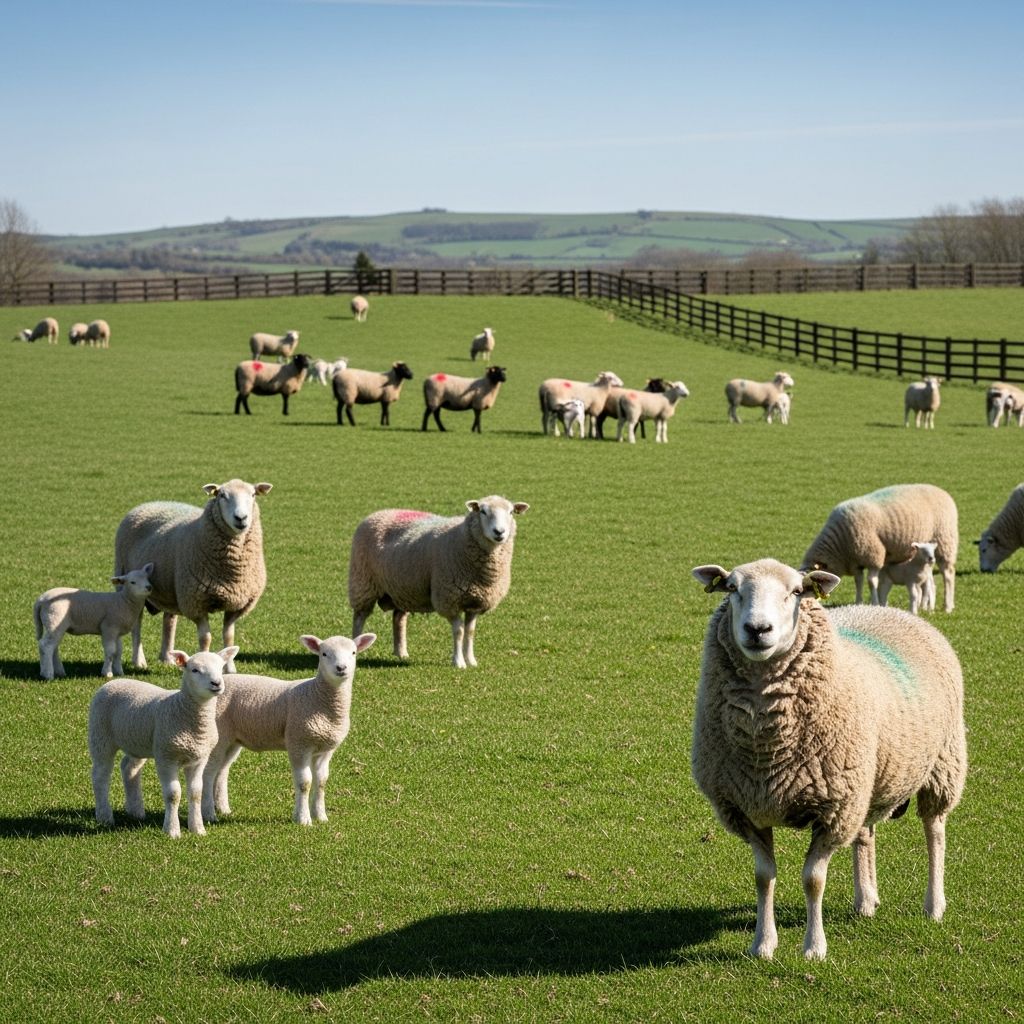
Successful sheep breeding hinges on integrating nutrition, genetics, health management, and precise timing to maximize lamb output and flock efficiency. Producers can achieve higher reproduction rates by adopting tailored systems that align with environmental conditions and market demands.
Foundational Principles of Flock Reproduction
Reproduction in sheep is influenced by seasonal breeding patterns, where most breeds exhibit estrus primarily in fall months due to shorter daylight. However, strategic interventions allow for year-round productivity. Key factors include ewe body condition, ram fertility, and environmental controls to synchronize cycles and enhance conception rates.
Maintaining optimal body condition scores (BCS) is critical; ewes at BCS 3-3.5 on a 1-5 scale enter breeding with higher fertility. Pre-breeding assessments guide feeding adjustments, ensuring energy reserves support ovulation and implantation.
Nutritional Optimization for Breeding Success
Nutrition drives reproductive performance, particularly through flushing—elevating energy intake 2-3 weeks before and during breeding. This practice increases ovulation rates by 20-30% in responsive flocks. Provide high-quality forage or 0.5-1 lb/day of grain per ewe alongside pasture.
- Assess BCS 60 days pre-breeding and post-weaning to tailor rations.
- Use creep feeding for lambs starting at 10-14 days with 20% protein feeds to promote early growth and future replacements.
- Secure forage testing to balance diets, minimizing grain costs while meeting late-gestation needs.
Post-weaning, dry off ewes with low-quality roughage to redirect energy toward reproductive recovery, checking udders daily for two weeks to detect issues early.
Ram Management and Selection Protocols
Rams are the genetic cornerstone of flock improvement. Select based on soundness exams 30 days pre-breeding, evaluating testes (firm, 30-40% body weight proportion), scrotal circumference (>34 cm for yearlings), and libido. Use teaser rams two weeks prior to introduce ewes and monitor synchrony.
| Ram Age | Minimum Scrotal Size (cm) | Ewes per Ram Ratio |
|---|---|---|
| Yearling | 34 | 50:1 |
| Mature | 36 | 40:1 |
| Ram Lamb | 28 | 20:1 |
Change raddle crayon colors every 18 days during 36-day breeding (covering two cycles) to track marks accurately. Shear rams and ewes 2-4 weeks pre-breeding to reduce heat stress.
Accelerated Lambing Systems for Year-Round Production
Traditional annual lambing limits cash flow; accelerated systems target 3 lambings in 2 years, increasing output by 50%. Starved basin (3 groups: 5-mo intervals) or 5-mo systems require prolific breeds like Finn, Romanov crosses, or Dorsets.
In the starved basin, manage three flocks lambing January, May, September, alternating breeding seasons: ovulatory (fall), transition (summer), anovulatory (spring). Intensive nutrition prevents BCS drops during lactation, with no recovery window pre-breeding.
- Use progestogen sponges or P.G. 600 for out-of-season induction.
- Early weaning at 30-45 days enables rapid rebreeding.
- Confinement suits accelerated plans, hand-lambing in sheds before range return.
Genetic Improvement and Selection Tools
Heritability of prolificacy is low (15-20%), demanding multi-generation selection via records. National Sheep Improvement Program (NSIP) expected progeny differences (EPDs) accelerate gains in growth, parasite resistance, and milk.
Select replacements at 120 days or 80 lbs from ewe lambs, culling barren ewes. For pasture systems, progeny test in field environments to counter genotype-environment interactions, boosting total merit index by matching production realities.
Simulation studies confirm field + station testing maximizes gains for fattening traits under grazing.
Health and Biosecurity in Breeding Flocks
Disease undermines breeding; implement FAMACHA for anemia checks biweekly on pasture, deworming after 12-hour fasts. Annual CD-T boosters, tetanus antitoxin pre-surgery, and 10% zinc sulfate footbaths control footrot.
- Trim hooves 1-2 times yearly post-shearing.
- Vaccinate ewes pre-lambing; cull parasite-susceptible animals.
- Clean pens yearly, provide dry access for non-pastured sheep.
Lambing and Postpartum Care Essentials
Post-lambing, use jugs for 2-5 days: clip/dip/strip umbilicals, check udder usage, administer 0.5 cc BoSE selenium. Separate singles from multiples for targeted feeding.
Monitor for mastitis via daily udder checks post-weaning. Stock at 5 sheep/acre, rotating pastures for parasite control.
Out-of-Season Breeding Enhancements
Boost off-season fertility via ram nutrition, fertility screening, and lighting (16L:8D). Vasectomized teasers advance puberty; melatonin implants aid anestrus ewes.
Common Challenges and Solutions
| Challenge | Solution |
|---|---|
| Low conception | Flushing, BCS optimization, ram exam |
| Parasite load | FAMACHA, rotation, resistant genetics |
| Seasonal limits | Accelerated systems, hormones |
| Nutrition gaps | Forage tests, creep feeds |
Frequently Asked Questions (FAQs)
What is ewe flushing and when to start?
Flushing boosts ovulation via increased energy 2-3 weeks pre-breeding through breeding.
How many ewes per ram?
40-50 for mature rams; adjust for terrain and age.
Best breeds for accelerated lambing?
Dorset, Merino, Finn crosses for out-of-season fertility.
How to improve lambing percentage?
Select via EPDs, cull non-performers, optimize nutrition.
Importance of BCS in reproduction?
BCS 3+ ensures energy for multiples and rebreeding.
References
- Sheep Best Management Practices — University of Maine Cooperative Extension. 2023. https://extension.umaine.edu/livestock/sheep-entrepreneurs/tools-resources-for-participants/sheep-best-management-practices/
- Optimization Strategies to Adapt Sheep Breeding Programs — PMC/NCBI. 2023-11-01. https://pmc.ncbi.nlm.nih.gov/articles/PMC10668732/
- Breeding Programs of Sheep — Merck Veterinary Manual. 2023. https://www.merckvetmanual.com/management-and-nutrition/management-of-reproduction-sheep/breeding-programs-of-sheep
- Reproductive Management of the Ewe Flock and the Ram — Ohio State University Extension. 2020-09-01. https://u.osu.edu/sheep/2020/09/01/reproductive-management-of-the-ewe-flock-and-the-ram/
- Sheep Production and Management — New Mexico State University. 2023. https://pubs.nmsu.edu/_circulars/CR604/index.html
Similar Articles








Read full bio of Sneha Tete


