

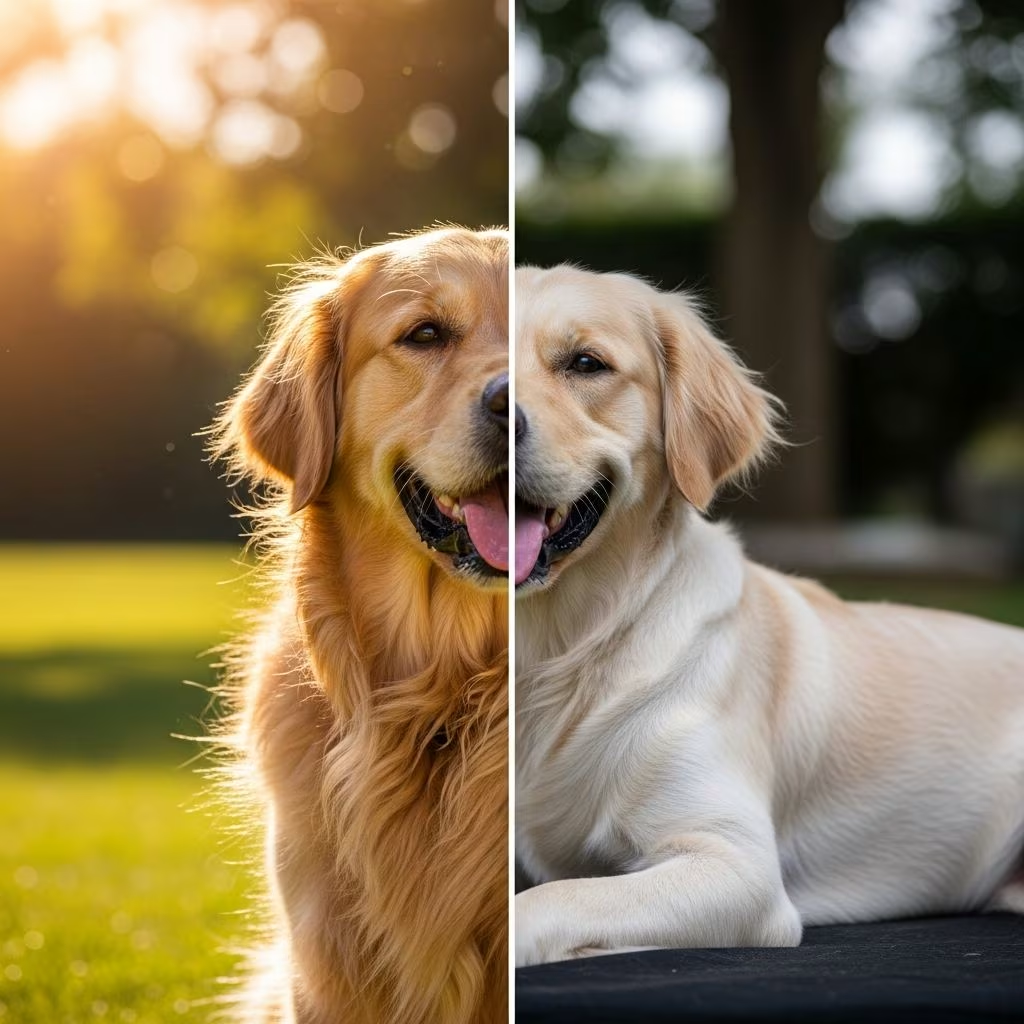
The idea that shaving a pet’s fur will help them stay cooler during hot weather is a common misconception among pet owners. In reality, a pet’s coat serves as a natural insulator that protects against overheating and sunburn, making shaving counterproductive for thermoregulation.
The Science of Thermoregulation in Pets
Pets like dogs and cats maintain their body temperature through complex physiological processes. Unlike humans, who rely heavily on sweating across the body, dogs primarily cool via panting, which evaporates moisture from their tongue and respiratory tract, while cats use similar panting alongside limited paw sweating. Fur, feathers, or hair acts as a barrier, trapping a layer of cool air near the skin while shielding from direct sun exposure.
Research on endothermic animals shows that hair coats create thermal windows where blood capillaries facilitate heat exchange. In warm conditions, fur allows heat to radiate outward gradually, preventing rapid overheating of the core body temperature, which for dogs hovers around 38.5°C ± 0.5°C. Removing this coat disrupts the boundary layer of air that insulates and cools, leading to higher skin temperatures and stress.
How Fur Functions as a Cooling Ally
A pet’s fur is not just decorative; it’s engineered for climate control. The coat’s structure—dense undercoat and guard hairs—traps warm air rising from the skin and cooler environmental air, creating a buffer zone. Studies using thermal modeling demonstrate that even in high ambient temperatures like 35°C, the hair-air interface remains only slightly warmer than the air, optimizing sensible heat loss.
- Insulation Layer: Fur keeps the skin from direct heat, much like a thatched roof ventilates a house.
- UV Protection: Light-colored fur reflects sunlight, reducing burn risk on exposed skin.
- Evaporative Support: It wicks moisture from paws and mouth during panting, enhancing cooling efficiency.
In double-coated breeds such as Golden Retrievers or German Shepherds, the undercoat is crucial. Improper removal compromises thermoregulation, increasing heatstroke risks in hot climates. Indoor tests on Newfoundland dogs showed coat interior temperatures reaching 30°C at room temps of 23-25°C, rising to 41°C under heat lamps—proving fur manages heat buildup effectively.
Risks Associated with Shaving Pets
Shaving removes this protective system, exposing skin to sunburn, insect bites, and temperature swings. Hairless breeds like Sphynx cats or Xoloitzcuintli dogs rely on glabrous skin for rapid heat exchange via vasodilation, but they still face challenges without fur’s minor insulation. For coated pets, post-shave regrowth can be uneven, leading to itchiness or ingrown hairs.
| Pet Type | Shaving Benefit Myth | Actual Risk |
|---|---|---|
| Double-Coated Dogs | Cools faster | Overheats quicker; skin burns |
| Single-Coated Cats | Reduces matting | Sun damage; poor insulation |
| Hairless Breeds | Not applicable | Already adapted; no shave needed |
Thermal imaging studies confirm that shaved areas show elevated surface temperatures under heat stress, as vascular responses alone can’t compensate without the coat’s modulation.
Breed-Specific Considerations for Heat Management
Not all pets handle heat identically. Brachycephalic (short-nosed) dogs like Pugs struggle more due to inefficient panting, while long-nosed breeds dissipate heat better. Cats with thick fur, such as Persians, benefit from brushing to remove dead undercoat without clipping to the skin.
Goats and other livestock research parallels pets: pigmented skin absorbs less heat, maintaining lower surface temps (32-37°C vs. higher in light-skinned). Similarly, dark-furred pets may need shaded areas, but their coat still prevents core overheating.
Effective Alternatives to Shaving for Summer Comfort
Instead of razors, focus on grooming that enhances natural cooling. Regular brushing removes loose fur, allowing air circulation without stripping protection. Provide constant fresh water, frozen treats, and cooling mats. Limit exercise to cooler hours and use fans or air conditioning.
- Brushing Routines: Daily for heavy shedders to thin the coat naturally.
- Hydration Boosts: Wet food or broths increase moisture intake.
- Shade and Ventilation: Outdoor pets need covered, breezy spots.
- Professional Trims: Light shaping for matted areas, preserving length.
Bathe with cool water to activate paw sweat glands, a minor but supportive mechanism. Avoid over-bathing, as it strips natural oils, leading to dry skin vulnerable to heat irritation.
Signs of Heat Stress and Emergency Response
Monitor for excessive panting, drooling, lethargy, or bright red gums—these signal overheating. Core temps above 40°C demand immediate cooling: move to shade, wet with cool (not ice-cold) water, and seek veterinary care. Prevention trumps reaction; shaved pets show quicker escalation.
FAQs on Pet Cooling and Grooming
Is a summer haircut safe for my dog?
No, full shaves disrupt insulation. Opt for de-shedding instead.
Do cats overheat like dogs?
Less so, but thick-furred breeds need brushing and cool environments.
What about electric clippers for mats?
Use sparingly on surface mats; consult groomers for breed-safe methods.
How does fur color affect cooling?
Darker fur absorbs more sun, but the coat still protects; provide shade.
Can shaved pets get sunburn?
Yes, apply pet-safe sunscreen to exposed areas.
Seasonal Grooming Calendar
| Month | Activity | Benefit |
|---|---|---|
| Spring | De-shedding brush | Preps for summer shedding |
| Summer | Light trims, baths | Enhances airflow |
| Fall | Coat conditioning | Prepares for winter insulation |
| Winter | Leave natural length | |
| Monitor for matting weekly | ||
Maintaining fur health year-round supports thermoregulation. Studies on avian and mammalian models underscore that environmental adaptation relies on intact coverings, with non-shivering thermogenesis aiding cold recovery but fur dominating heat loss.
For hairless pets, focus amplifies on skin care and direct cooling aids. Overall, embracing a pet’s natural coat fosters resilience against temperature extremes.
References
- Efficacy and Function of Feathers, Hair, and Glabrous Skin in Thermoregulation — PMC/NCBI. 2021-12-10. https://pmc.ncbi.nlm.nih.gov/articles/PMC8697956/
- Clipping the Dog Short for the Summer — Dream Dogz. 2023. https://www.dreamdogz.ie/clipping-the-dog-short-for-the-summer/
- The Science Behind Dog Grooming: Medical Evidence — Super Groomers. 2024-05-15. https://supergroomers.sg/the-science-behind-dog-grooming-medical-evidence-supporting-professional-pet-care/
- Do Dogs Sweat? Understanding Your Dog’s Cooling System — Sahara Pine Sah. 2023-08-20. https://saharapinesah.com/blog/do-dogs-sweat/
- Does Shaving Dogs and Cats Keep Them Cooler? — Hill’s Pet. 2024. https://www.hillspet.com/pet-care/routine-care/does-shaving-pets-keep-them-cooler



