

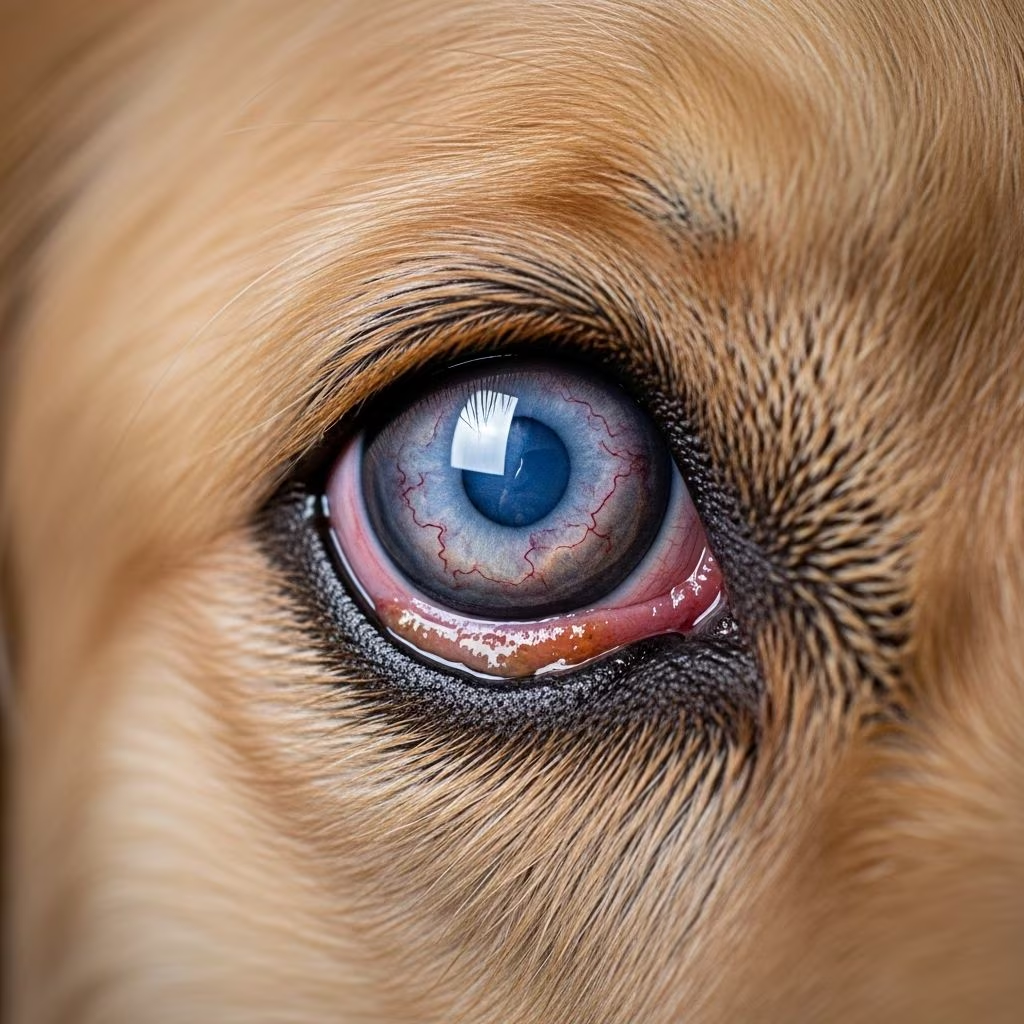
Deep corneal ulcers, descemetoceles, and iris prolapse represent some of the most urgent ophthalmic emergencies in small animals like dogs and cats. These conditions can rapidly threaten vision and even the integrity of the eyeball if not addressed promptly. Understanding their pathology, prompt diagnosis, and layered treatment approaches is crucial for veterinarians and pet owners alike.
Understanding the Anatomy of the Cornea
The cornea, the clear front surface of the eye, consists of five layers: epithelium, Bowman’s layer, stroma, Descemet’s membrane, and endothelium. The stroma makes up about 90% of its thickness, providing structural support. Damage here leads to stromal ulcers, where enzymatic breakdown causes rapid tissue loss, often called ‘melting ulcers.’ Brachycephalic breeds and those with dry eye (keratoconjunctivitis sicca) are predisposed due to poor tear production and exposure.
Progression to a descemetocele occurs when the ulcer erodes through the stroma to expose Descemet’s membrane, creating a thin, bulge-prone area at risk of rupture. Iris prolapse happens if rupture occurs, allowing iris tissue to extrude through the corneal defect. These stages demand immediate intervention.
Common Causes and Risk Factors
- Trauma: Scratches from claws, bushes, or foreign bodies initiate most ulcers.
- Infection: Bacteria like Pseudomonas (rods) or Staphylococcus (cocci) produce collagenases that digest stroma.
- Dry Eye (KCS): Reduced tears fail to protect and lubricate, common in breeds like Shih Tzus and Pugs.
- Underlying Diseases: Eyelid abnormalities (entropion, lagophthalmos) or medications delaying healing.
- Breed Predispositions: Boxers, Bulldogs, and cats with herpesvirus.
Early superficial ulcers heal quickly, but delays allow infection, turning them into aggressive stromal defects.
Recognizing Clinical Signs
Owners often notice squinting, pawing at the eye, tearing, or cloudiness. Key veterinary signs include:
- Corneal opacity or white infiltrate in stroma.
- Deep pit or crater-like defect visible with fluorescein stain (green uptake).
- For descemetocele: Clear, fluid-filled blister over Descemet’s.
- Iris prolapse: Pink iris tissue protruding through cornea, often with rupture.
- Secondary uveitis: Miosis, flare, hypopyon (pus in anterior chamber).
These signs indicate progression; rapid ‘melting’ can worsen in hours.
Diagnostic Approaches
Diagnosis starts with a thorough ophthalmic exam under sedation if needed. Essential tools:
| Test | Purpose | Key Findings |
|---|---|---|
| Fluorescein Stain | Outline epithelial defects | Green retention in ulcer bed |
| Schirmer Tear Test | Assess tear production | <15 mm/min indicates KCS |
| Cytology & Culture | Identify pathogens | Rods (Pseudomonas), cocci (Staph); guide antibiotics |
| Tonometry | Measure intraocular pressure | Low in uveitis, high if glaucoma secondary |
Culture swabs from ulcer base before treatment; cytology shows inflammatory cells or bacteria.
Medical Management Strategies
Initial therapy stabilizes the eye while awaiting culture results. Aggressively treat infection and enzymes.
Antibiotics
Topical broad-spectrum: Fluoroquinolones (ofloxacin, ciprofloxacin) for rods; chloramphenicol for cocci. Apply every 1-2 hours initially. Studies recommend neopolybac alone (96% coverage) or with ofloxacin/amikacin (99%). Systemic fluoroquinolones (marbofloxacin) for deep ulcers or grafts.
Anti-Collagenase Therapy
Serum or plasma (autologous preferred) every 2-4 hours inhibits matrix metalloproteinases (MMPs) from bacteria/leukocytes.
Pain and Inflammation Control
- Topical atropine/cyclopentolate: Dilates pupil, relieves spasms.
- Systemic NSAIDs (carprofen): Reduce uveitis.
Lubrication
Sodium hyaluronate or artificial tears frequently for KCS.
Monitor q4-6h; switch antibiotics if no improvement in 24-48h.
Surgical Interventions
Indicated for >50% stromal loss, descemetocele, or prolapse. Goal: Reinforce cornea, promote healing.
- Conjunctival Grafts: Pedicle or 360° graft covers defect; debride first.
- Biological Membranes: Porcine small-intestinal submucosa or amniotic membrane.
- Cyanoacrylate Glue: Seals descemetoceles temporarily.
- For Prolapse: Reposition iris, suture graft over rupture.
Post-op: Antibiotics, mydriatics, NSAIDs 4-8 weeks. Complications: Scarring, synechiae, cataract.
Prognosis and Long-Term Care
Superficial ulcers: 95% heal in 7 days. Stromal: Guarded, depends on depth/infection. Surgery boosts success to 80-90% vision preservation. Prevent recurrence: Treat KCS with tacrolimus ointment BID.
Follow-up: Weekly rechecks, taper meds gradually.
Prevention Tips for Pet Owners
- Trim nails of playmates.
- Protect eyes during outdoor play.
- Monitor breeds prone to KCS; regular tear tests.
- Seek vet care for any eye squinting ASAP.
Frequently Asked Questions (FAQs)
What if my dog has a corneal ulcer?
Don’t delay: Fluorescein confirms; start drops immediately. Refer if deep.
Can cats get these conditions?
Yes, often from herpesvirus; avoid keratotomy in cats.
How long until healing?
Superficial: 3-7 days; deep/surgical: Weeks to months.
Is surgery always needed?
No, but for stromal loss >50% or descemetocele, yes.
What home care post-treatment?
Prevent rubbing (cone collar), med schedule, clean gently.
References
- Treating corneal ulceration in dogs part 2: deep ulcers — Vet Times. 2023. https://www.vettimes.com/news/vets/small-animal-vets/treating-corneal-ulceration-in-dogs-part-2-deep-ulcers
- Antibiotic Recommendations for Treatment of Canine Stromal Corneal Ulcers — PMC/NCBI (Peer-reviewed). 2023-02-20. https://pmc.ncbi.nlm.nih.gov/articles/PMC9962943/
- Deep Stromal Corneal Ulcers, Descemetocele, and Iris Prolapse in Small Animals — Merck Veterinary Manual. 2024. https://www.merckvetmanual.com/emergency-medicine-and-critical-care/ophthalmic-emergencies-in-small-animals/deep-stromal-corneal-ulcers-descemetocele-and-iris-prolapse-in-small-animals
- Infected or Stromal Corneal Ulcers — Animal Vision Care. 2023. https://animalvisioncare.com/eye-conditions/canine/infected-or-stromal-corneal-ulcers/
- Corneal Ulcers in Dogs — Port City Veterinary Referral Hospital. 2023. https://www.portcityvet.com/blog/corneal-ulcers-in-dogs
- Corneal Ulceration in Dogs and Cats — VetBloom. 2023. https://vetbloom.com/corneal-ulceration-in-dogs-and-cats/
- Symptoms, Diagnosis and Treatment of Corneal Ulcers in Pets — Metro-Vet. 2023. https://metro-vet.com/symptoms-diagnosis-and-treatment-of-corneal-ulcers-in-pets/



