

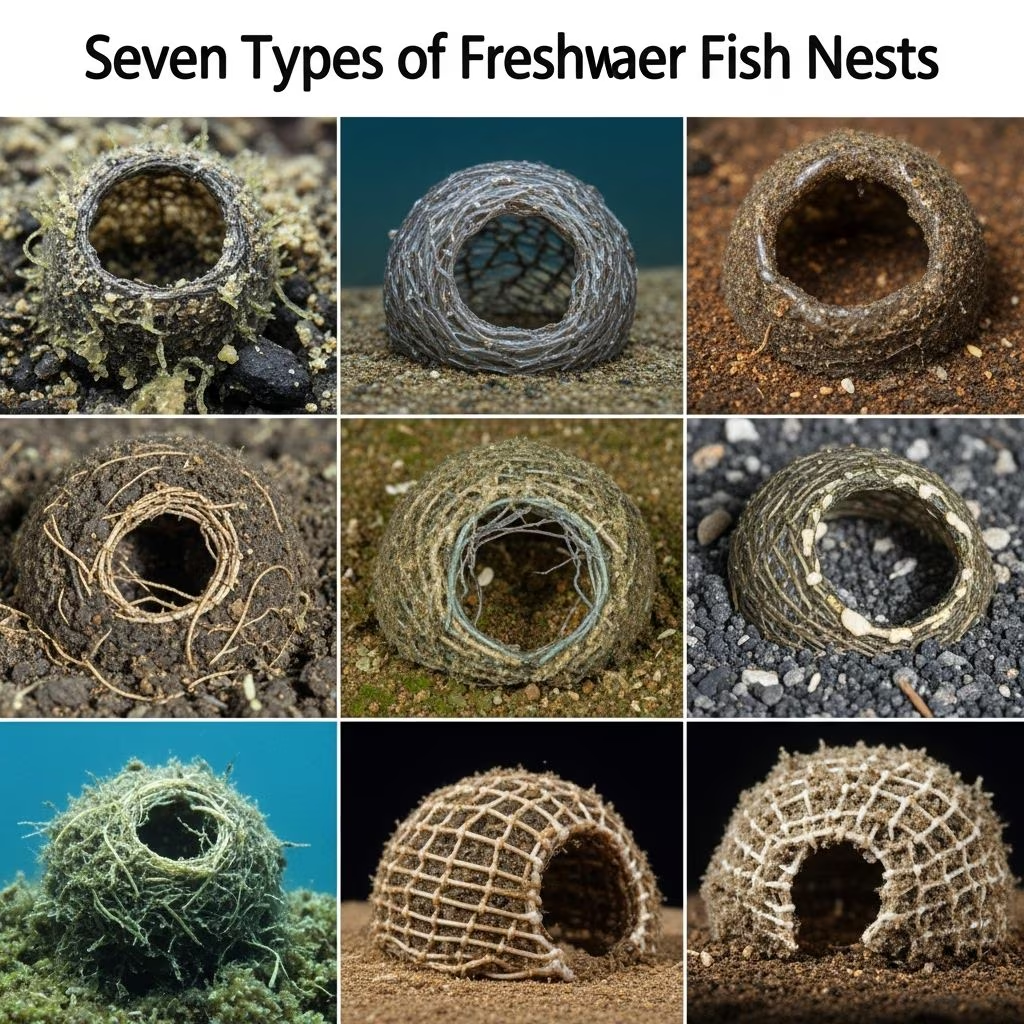
Understanding Freshwater Fish Nesting Behaviors
Freshwater fish exhibit remarkable diversity in their reproductive strategies, with nest-building being one of the most fascinating aspects of fish biology. Unlike many aquatic creatures that simply scatter eggs into the water column, numerous freshwater fish species invest considerable energy in constructing specialized nests to protect their offspring. This behavioral complexity demonstrates how evolution has shaped different species to maximize reproductive success in various freshwater environments.
Male fish are typically responsible for nest construction and maintenance, as they build attractive structures to entice females to spawn with them. After eggs are laid, the male guards the nest vigorously, fanning his tail to aerate the eggs, protecting them from predators, and hoping to attract additional females to increase his genetic contribution. Understanding these seven distinct nesting types provides insight into the incredible adaptability of freshwater fish species.
1. Pit-Diggers: The Excavators
Nest Characteristics: Pit-diggers create shallow depressions by excavating sand or gravel from the substrate. These pits serve as protected spawning sites where eggs can be laid and guarded.
Fish That Create These Nests: Many cichlid fish species are prolific pit-diggers, including the Lake Tanganyikan cichlid Xenotilapia ochrogenys. Sunfish species (Lepomis spp.) also employ this nesting strategy, making pit-digging one of the most common nesting behaviors among North American freshwater fish.
Pit-digging represents one of the most straightforward nesting approaches. These fish use their mouths and bodies to displace substrate material, creating a suitable depression for reproduction. The depth and diameter of these pits vary by species, but they typically provide enough protection to shield eggs from being swept away by currents while remaining shallow enough for parental supervision.
2. Cave-Spawners: The Rock Dwellers
Nest Characteristics: Cave-spawning fish utilize natural rock formations, including holes in rocks, crevices, areas underneath overhangs, and empty spaces between rocks in piles. Eggs are often laid on a cave’s roof or upper surfaces.
Fish That Create These Nests: Many cichlid species are cave-spawners, with the kribensis (Pelvicachromis pulcher) being a prime example of this nesting behavior.
Cave-spawning offers exceptional protection for developing eggs. By depositing eggs on cave ceilings or in protected crevices, parents minimize predation risk while ensuring water flow carries oxygen to the eggs. This nesting strategy is particularly effective in rocky stream environments where natural cave structures are abundant. The dark, enclosed environment of caves also reduces exposure to harmful ultraviolet radiation and provides security during the vulnerable early developmental stages.
3. Shell-Dwellers: The Mollusk Shell Specialists
Nest Characteristics: Shell-dwelling fish utilize empty snail shells measuring at least a couple of inches across, which are buried in sand substrate. These shells serve as natural protective chambers for eggs and fry.
Fish That Create These Nests: Lamprologus species, including Lamprologus ocellatus and Lamprologus callipterus, are notable shell-dwellers. Neolamprologus species, such as Neolamprologus brevis, also employ this strategy.
Shell-dwelling represents a unique adaptation where fish utilize pre-existing structures rather than constructing new ones. This behavior is particularly common among cichlids from Lake Tanganyika in Africa, where snail shells are plentiful. The shells provide ideal refuges, being hard to breach and offering multiple chambers for eggs and developing fry. Male shell-dwellers often guard their shells fiercely against competitors, as prime shells become valuable real estate in crowded aquatic habitats.
4. Mound-Builders: The Sand Architects
Nest Characteristics: Mound-builders construct sand or gravel mounds that serve as spawning sites and display structures. Notably, eggs are incubated in the female’s mouth rather than remaining in the mound.
Fish That Create These Nests: Callochromis cichlid fish and hornyhead chubs (Nicomis biguttatus) are characteristic mound-builders.
Mound-building represents a specialized nesting strategy where the constructed structure serves multiple purposes. Beyond providing a mating location, these mounds function as visual signaling devices, allowing males to display their fitness and territorial dominance to potential mates. The mounds can reach impressive sizes, with some species creating structures several inches high. This behavior demonstrates how nest-building can be sexually selected, increasing mating success beyond the simple protective function of sheltering eggs.
5. Bubble-Nest Builders: The Foam Masters
Nest Characteristics: Bubble-nest builders create collections of air bubbles at the water surface using mucus secreted from the male’s mouth and saliva. These nests may be anchored to floating plants or reinforced with plant material and twigs.
Fish That Create These Nests: Siamese fighting fish (Betta splendens) are perhaps the most famous bubble-nest builders. Gouramis, including the dwarf gourami (Colisa lalia), also construct bubble nests. Additionally, certain catfish species, such as the hoplo catfish (Megalechis thoracata) and Callichthys callichthys, employ this strategy.
Bubble-nest building is one of the most elaborate and visually impressive nesting behaviors. In the Paradise Fish (Macropodus opercularis), the male builds an extensive bubble nest before urging the female toward it. After spawning, the male collects eggs one by one and carefully inserts them into the bubbles, where they remain suspended at the water surface. Females can lay as many as 500 eggs in a single spawning event. The male then dedicates himself to guarding the nest, repairing damaged bubbles and protecting eggs from predators. This behavior showcases the remarkable parental investment some fish species make in their offspring.
6. Burrowers: The Underground Nesters
Nest Characteristics: Burrowers excavate holes into mud banks or in substrate beneath rocks or pieces of driftwood. These burrows provide secure, hidden locations for egg deposition and protection.
Fish That Create These Nests: Plecos, including Pterogoplichthys multiradiatus, are prolific burrowers. Mudskippers also employ burrowing strategies for nest site selection.
Burrowing offers exceptional protection by completely concealing nests from potential predators. Many species that utilize this strategy inhabit turbid or silty waters where visibility is limited and bottom-dwelling predators are common. The burrows often have narrow entrances that restrict access to eggs while still allowing adequate water circulation for oxygen exchange. Some burrowers even display sexually selected nest-building behavior, with males competing for specific burrow locations and females showing preferences for larger males with well-maintained burrows.
7. Stick-Built Nests: The Plant Weavers
Nest Characteristics: Stick-builders weave bits of plants into round nests featuring an opening on one side. The nest components are held together by secretions from the male’s kidneys. Some species create birdlike nests with plant material “glued” to the substrate.
Fish That Create These Nests: Sticklebacks are the primary stick-builders, with the brook stickleback (Culaea inconstans) and threespine stickleback (Gasterosteus aculeatus) being notable examples.
Stick-building represents one of the most sophisticated nesting behaviors among fish. The use of kidney secretions as an adhesive is a remarkable adaptation that allows fish to construct durable structures from plant material. These nests provide excellent camouflage within vegetated areas and offer multiple layers of protection. The distinctive opening allows the male to guard the entrance while remaining concealed within surrounding vegetation.
The Biology Behind Nest Building
Freshwater fish nest-building behavior involves complex biological and behavioral mechanisms. Nearly all freshwater fish are external fertilizers, meaning the female deposits eggs in a nest while the male swims over the nest to fertilize them. This reproductive strategy differs fundamentally from mammalian reproduction, allowing for high fecundity and rapid population recovery.
Research has revealed that nest-building behavior can be both naturally selected and sexually selected. Natural selection favors nest structures that protect eggs from environmental stressors and predation, while sexual selection may favor nests or nesting behaviors that increase mating success or help males compete for reproductive opportunities. Some species have evolved to keep wide nest openings for attacking egg predators more frequently, while others maintain narrow entrances to reduce predation risk, demonstrating the trade-offs involved in nest design.
Nesting Behaviors Across Fish Families
Scientific research has identified nest-building across forty different fish families, with nests being sorted into six main categories: bowls, burrows, foam nests, nests made of plant matter and animal parts, and nests made on clean rock surfaces. This diversity underscores the widespread evolutionary success of nest-building as a reproductive strategy in freshwater environments.
Some species construct particularly impressive structures. Heterotis (Heterotis niloticus) from Africa builds massive nests with walls of vegetation and mud floors, typically about 100 centimeters across with walls between 20 to 60 centimeters high. The Aba (Gymnarchus niloticus), also from Africa, constructs floating nests of similar dimensions with sides that rise above the water level, and adults protect young when they emerge after five days.
Frequently Asked Questions
Q: Why do male fish typically build nests rather than females?
A: Males build nests to attract females and signal their fitness and territorial quality. By constructing and maintaining attractive nests, males increase their chances of attracting multiple females to spawn, maximizing their reproductive success. The male’s ability to build and defend a nest demonstrates his resources and viability as a mate.
Q: How long do fish guard their nests?
A: Guarding duration varies significantly by species. Some males guard nests for only a few days, while others maintain vigilance for weeks. The length of parental care typically correlates with egg development time and the vulnerability of fry to predators in the specific environment.
Q: Can I observe fish nesting behavior in my home aquarium?
A: Yes, many aquarium fish species exhibit nesting behavior. Cichlids, bettas, and gouramis are popular aquarium fish known for their nest-building. Providing appropriate substrate, plants, rocks, or shells encourages nesting behavior. However, successful breeding requires careful attention to water parameters, temperature, and nutrition.
Q: Do all freshwater fish build nests?
A: No, only about 8% of North American minnows build nests for spawning. Many fish species reproduce through egg scattering, releasing eggs directly into the water column without constructing protective structures. Nest-building is an evolutionary strategy employed by specific fish families where it provides reproductive advantages.
Q: What adaptations allow fish to secrete materials for nest-building?
A: Some fish species possess specialized organs for producing adhesive secretions. Sticklebacks, for example, produce kidney secretions that function as a biological glue, allowing them to bind plant material together. Other species use mucus produced in their mouths to create bubble nests, demonstrating the remarkable diversity of biological adaptations.
Comparative Nesting Strategies Table
| Nesting Type | Substrate Used | Primary Fish Species | Protective Level | Construction Difficulty |
|---|---|---|---|---|
| Pit-Diggers | Sand/Gravel | Cichlids, Sunfish | Moderate | Low |
| Cave-Spawners | Natural Rock Formations | Kribensis, Cichlids | High | None (Uses existing) |
| Shell-Dwellers | Empty Snail Shells | Lamprologus, Neolamprologus | Very High | None (Uses existing) |
| Mound-Builders | Sand/Gravel | Callochromis, Hornyhead Chubs | Moderate | Moderate |
| Bubble-Nest Builders | Water Surface/Plants | Bettas, Gouramis, Catfish | Moderate | High |
| Burrowers | Mud Banks/Substrate | Plecos, Mudskippers | Very High | Moderate |
| Stick-Built Nests | Plant Material | Sticklebacks | High | Very High |
Conclusion
Freshwater fish exhibit seven distinct nesting strategies, each representing sophisticated evolutionary adaptations to specific environmental challenges and opportunities. From the simple pit-digging of cichlids to the elaborate bubble nests of bettas and the remarkable stick-built structures of sticklebacks, these behaviors showcase the incredible diversity of reproductive strategies in freshwater ecosystems. Understanding these nesting types enhances our appreciation for fish biology and provides valuable insights for anyone interested in aquarium keeping or fish conservation. Each nesting strategy reflects millions of years of evolutionary refinement, optimizing the chances of offspring survival in competitive freshwater environments.
References
- Seven Types of Freshwater Fish Nests — Chewy. 2024. https://www.chewy.com/education/fish/freshwater-fish/seven-types-of-freshwater-fish-nests
- Courtship, Territorial Behaviour & Nest Building In Fish — Earth Life. https://earthlife.net/fish-courtship-territorial-behaviour-nest-building/
- Sex lives of wild fish: genetic techniques provide new insights — Purdue University. 2001. https://www.purdue.edu/uns/html4ever/010413.DeWoody.nests.html
- How sexual and natural selection interact and shape the evolution of social behaviour and morphology in fishes — National Center for Biotechnology Information (NCBI). 2023. https://pmc.ncbi.nlm.nih.gov/articles/PMC10331916/
- Nest-Building Minnows — North American Native Fishes Association (NANFA). https://www.nanfa.org/articles/acnests.shtml
- Understanding the Spawning Habits of Fish — Spawn Fly Fish. https://spawnflyfish.com/blogs/knowledge-education/understanding-the-spawning-habits-of-fish
- Integrative approach on the diversity of nesting behaviour in fishes — Wiley Online Library. 2022. https://onlinelibrary.wiley.com/doi/abs/10.1111/faf.12632



