
Service Dogs: Rights, Laws and Fake Impostors
Unlock federal protections for legitimate service dogs while spotting and avoiding widespread impostors exploiting the system.
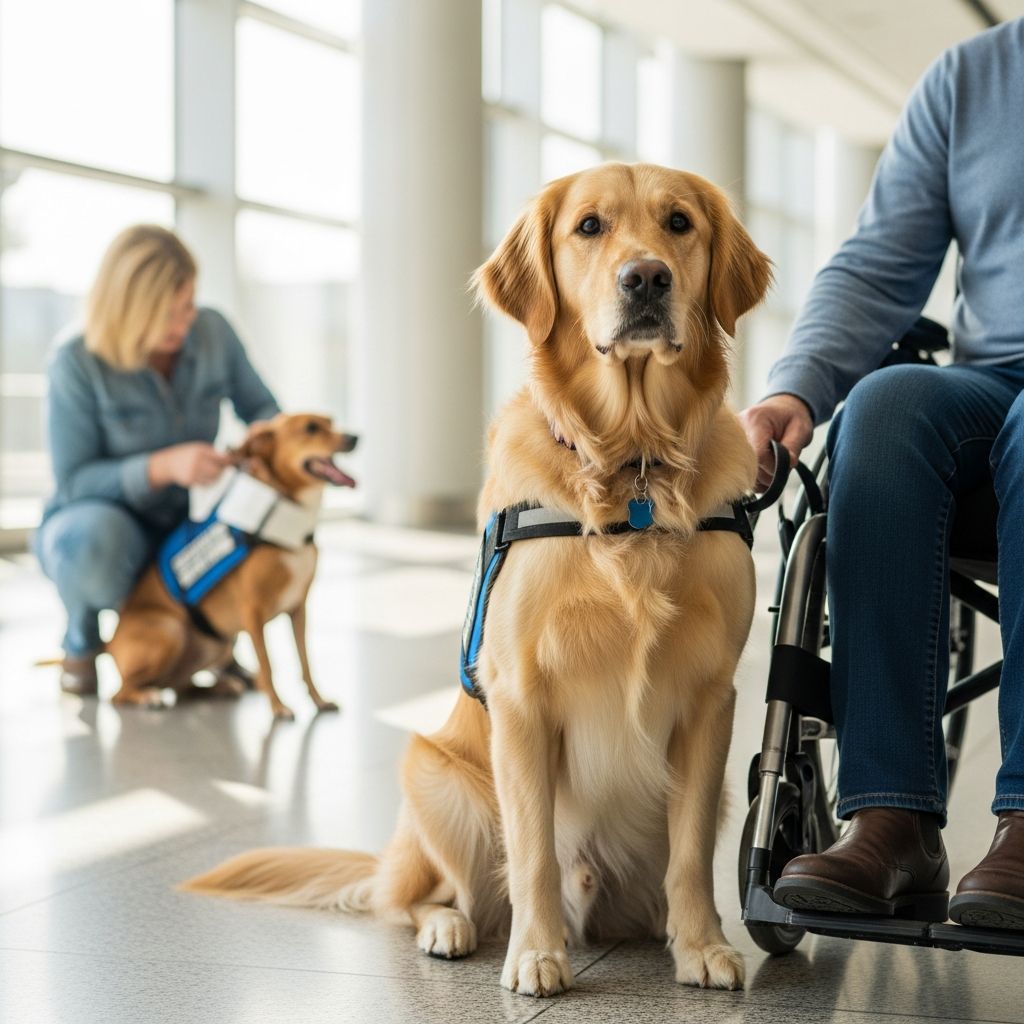
Service dogs play a vital role in enhancing the independence and quality of life for individuals with disabilities across the United States. Federal laws provide robust protections, ensuring these trained animals can accompany their handlers almost anywhere. However, a growing problem of impostor animals—often pets dressed in vests—threatens the system’s integrity. This article examines the legal framework, handler rights, verification processes, and strategies to distinguish genuine service dogs from fakes.
Defining a True Service Dog Under Federal Law
A service dog is precisely defined under key U.S. legislation as a dog individually trained to perform specific tasks or work directly related to a person’s disability. This excludes emotional support animals, therapy pets, or untrained companions. The Americans with Disabilities Act (ADA) limits service animals to dogs (and in some cases, miniature horses) that mitigate disabilities through trained behaviors like guiding the blind, alerting to seizures, or retrieving items.
Other federal laws expand or refine this definition slightly. For instance, the Air Carrier Access Act (ACAA) applies a similar standard for air travel, emphasizing dogs trained for physical, sensory, psychiatric, or intellectual disabilities. Importantly, no certification, vest, or ID is legally required—training and task performance are the sole criteria.
- Key Tasks Examples: Pulling a wheelchair, providing balance support, detecting low blood sugar, or interrupting harmful behaviors in psychiatric conditions.
- Exclusions: Pets providing mere comfort or emotional support do not qualify.
Major Federal Laws Protecting Service Dog Access
Several statutes collectively safeguard service dogs, applying to diverse settings from public businesses to workplaces. The ADA forms the cornerstone, with Titles II and III covering government entities and public accommodations, respectively.
| Law | Scope | Service Dog Protections |
|---|---|---|
| ADA (Titles II & III) | Public spaces, businesses, government | Full access; no breed/size bans |
| Fair Housing Act (FHA) | Housing | Allows service & assistance animals |
| Air Carrier Access Act (ACAA) | Airlines | Trained dogs permitted in cabin |
| Rehabilitation Act Sec. 504 | Federally funded programs | Required accommodations |
| ADA Title I | Workplaces (15+ employees) | Reasonable modifications |
The Department of Transportation maintains a broader definition for transit, including signal dogs and rescue tasks, ensuring consistency across modes.
Where Service Dogs Gain Legal Access
Legitimate service dogs must be accommodated in nearly all public and private spaces serving the public. Businesses cannot deny entry based on the dog’s presence alone, nor require proof of training.
- Retail Stores & Restaurants: Full access under ADA Title III.
- Hospitals & Doctors’ Offices: Permitted unless they pose a direct safety threat.
- Schools (K-12 & Higher Ed): Access for students with disabilities.
- Housing: No pet fees or breed restrictions under FHA.
- Public Transit & Airports: Accompanied travel required.
In workplaces, employers must allow service dogs as a reasonable accommodation, provided they don’t fundamentally disrupt operations.
How to Verify a Service Dog Legally
Public entities and businesses are restricted to two simple questions: (1) Is this a service animal required for a disability? (2) What tasks or work is it trained to perform? No further probing into medical details or proof is allowed. If the dog’s role is obvious (e.g., guiding a visually impaired person), no questions are needed.
Vests, patches, or certifications? These are not mandated and can be purchased by anyone online, fueling impostor issues. True service dogs respond calmly to commands and focus on their handler.
When Service Dogs Can Be Denied or Removed
Protections aren’t absolute. Dogs can be excluded for specific behavioral or hygiene failures:
- Out of control (growling, jumping, biting) without handler correction.
- Not housebroken (urinating/defecating indoors in public).
- Posing a direct threat to others’ safety.
- Fundamentally altering the activity (e.g., sterile lab environments).
Handlers must then access the space without the dog. Local vaccination and licensing rules still apply universally.
The Rise of Service Dog Impostors
Fake service dogs—often ill-behaved pets in vests—undermine public trust and endanger handlers of legitimate animals. The ADA’s initial vague language allowed abuse, leading to 2010 revisions specifying trained dogs only. Online vendors sell deceptive gear, exploiting loopholes.
Consequences include real service dogs being banned from venues due to prior bad experiences, heightening risks for disabled individuals.
Spotting Genuine vs. Fake Service Dogs
| Indicator | Genuine Service Dog | Fake Impostor |
|---|---|---|
| Behavior | Calm, focused, ignores distractions | Excited, pulls leash, begs for food |
| Response to Commands | Obeys handler instantly | Ignores or erratic |
| Gear | Overly flashy vests claiming ‘certification’ | |
| Handler Knowledge | Describes specific tasks clearly | Vague or evasive answers |
Report suspected fakes to management politely, focusing on behavior rather than accusing.
Training Standards and Federal Initiatives
Non-profits have established voluntary standards, now bolstered by congressional studies on protocols for raising and pairing dogs, especially for veterans. This aims to elevate industry benchmarks without mandating certification.
Frequently Asked Questions (FAQs)
Do service dogs need special certification?
No. Federal law prohibits requiring proof, vests, or licenses.
Can any dog be a service dog?
Only those individually trained for disability-related tasks qualify; pets do not.
What about miniature horses?
ADA allows them as service animals if trained equivalently to dogs.
Are emotional support animals the same?
No. They lack task training and aren’t protected in public under ADA Titles II/III, only in housing/travel.
Can businesses charge pet fees for service dogs?
No fees, deposits, or breed-based surcharges are permitted.
Empowering Handlers and Protecting the System
Understanding these laws equips disabled individuals to advocate effectively while educating the public combats impostors. Businesses benefit from clear guidelines, fostering inclusive environments. Ongoing federal efforts promise even stronger standards, ensuring service dogs fulfill their lifesaving roles without interference.
References
- Service Animals — ADA.gov. 2023. https://www.ada.gov/topics/service-animals/
- Service Animals and Assistance Animals — U.S. Department of Justice. 2024-01-15. https://www.justice.gov/servicemembers/service-animals-and-assistance-animals-0
- 28 CFR § 35.136 – Service animals — Legal Information Institute, Cornell Law School. 2023. https://www.law.cornell.edu/cfr/text/28/35.136
- What is the Americans with Disabilities Act (ADA) definition of a service animal? — U.S. Department of Transportation. 2024. https://www.transit.dot.gov/what-americans-disabilities-act-ada-definition-service-animal
- History of Service Dogs and Current Laws — Medical Service Dogs. 2023-05-10. https://www.medicalservicedogs.org/history-of-service-dogs-and-current-laws/
- Service Animals and Emotional Support Animals — ADA National Network. 2024-02-20. https://adata.org/guide/service-animals-and-emotional-support-animals
- Service Animals — U.S. Department of Transportation. 2024-03-01. https://www.transportation.gov/resources/individuals/aviation-consumer-protection/service-animals
Similar Articles








Read full bio of medha deb




