

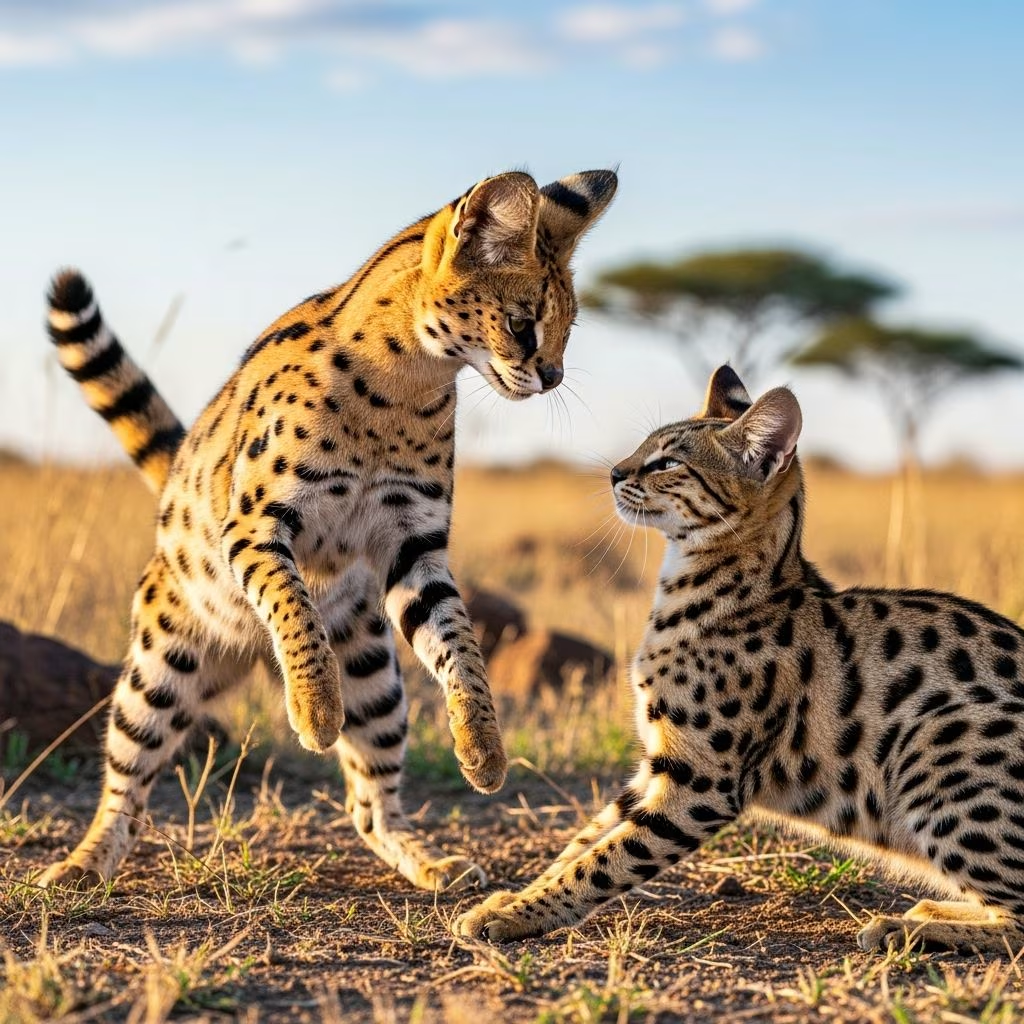
The Serval stands as a captivating wild feline from Africa’s savannas, renowned for its athletic prowess and keen senses. In contrast, the Savannah cat emerges as a human-engineered hybrid, blending Serval wildness with domestic cat docility, creating a pet that echoes untamed elegance in home settings.
Origins and Genetic Background
Servals (Leptailurus serval) roam sub-Saharan Africa’s grasslands, wetlands, and woodlands, thriving as solitary hunters adapted to diverse prey from rodents to birds. Their lineage traces back millennia as pure wildcats, untouched by domestication until recent exotic pet interests arose.
Savannah cats arose in the 1980s when breeders crossed female domestic cats with male Servals, aiming to capture wild aesthetics in a companion animal. First-generation (F1) Savannahs carry about 50% Serval DNA, with subsequent generations (F2 to F5 and beyond) diluting wild traits through further domestic breeding. Filial numbers denote wild content: F1 holds the highest at up to 75-100% Serval influence, while F5+ approaches typical house cat genetics.
Physical Characteristics Breakdown
Servals boast proportions optimized for predation: longest legs relative to body size among felines, oversized ears for ultrasonic prey detection, small heads on elongated necks, slender torsos, and short tails. Males weigh 19-44 pounds, females slightly less, with tawny coats etched in black spots, stripes, and white underbellies—earning the “giraffe cat” moniker.
Savannahs mirror this silhouette on a scaled-down frame. They feature long legs disproportionate to compact bodies, triangular heads, wide-set ears perched high, slender necks, and hooded eyes. Weights vary by generation: F1 males hit 25-30 pounds, tapering to 12-25 pounds in later gens. Coats display bold spots or marbled patterns in brown, silver, black, or smoke tabby shades, with short, coarse fur.
| Feature | Serval | Savannah (F1-F3) | Savannah (F4+) |
|---|---|---|---|
| Weight | 19-44 lbs | 20-30 lbs | 12-25 lbs |
| Height at Shoulder | Up to 24 inches | 17-21 inches | 14-18 inches |
| Leg Length | Extremely long | Very long | Long |
| Coat Pattern | Spots & stripes | Bold spots/marble | Softer spots |
Temperament and Behavior Profiles
Wild Servals embody independence, interacting solely for mating or kitten-rearing. They mark territories with urine, emit yowls, growls, purrs, and shrill cries, and demand vast enclosures due to 9-foot leaps and digging escapes. Hand-raised pets may bond selectively but retain wariness toward strangers and unyielding instincts.
- Solitary by nature: Minimal social bonds outside family units.
- Vocal extremes: From deep purrs to piercing calls.
- High energy: Needs expansive, secure outdoor spaces.
Savannahs infuse wild vigor into loyalty. They prove intelligent, playful, and adventurous, often fetching, leash-walking, and chirping vocally. Water fascinates them—many splash in showers or baths. Early F1-F3 gens skew skittish or aloof, demanding experienced owners; later gens mellow into affectionate family members, though boredom sparks mischief like counter-jumping.
- Dog-like devotion: Shadows owners, craves interaction.
- Prey drive: Chases, climbs, hunts relentlessly.
- Social flexibility: Bonds with humans, pets if socialized young.
Hunting Prowess and Adaptations
Servals excel as Africa’s top small-cat predators, employing “wait-and-pounce” tactics. Huge ears pinpoint rodent squeaks; legs propel aerial strikes, pinning prey under paws for neck bites. They hook fish or frogs with curved claws and hunt dawn/dusk via acute hearing.
Savannahs inherit agility: towering leaps, precise pounces, and curiosity-driven pursuits. Their Serval legacy fuels prowess against toys or pests, though domestic life channels it into play. High metabolism demands protein-rich diets mimicking wild feasts.
Care Requirements and Daily Needs
Enclosures and Exercise
Servals mandate zoo-like setups: 20×40-foot minimum enclosures with 12-foot fencing buried deep, topped roofs, climbing structures, and digging pits. Indoor confinement risks stress-induced destruction.
Savannahs require catios, tall trees, puzzle feeders, and leashed walks. Vertical space combats cabin fever; F1s need Serval-scale yards.
Grooming and Health Maintenance
Servals shed seasonally; minimal brushing suffices, but nails need trimming. Vet care demands exotic specialists for hybrid issues like hypertrophic cardiomyopathy or digestive sensitivities.
Savannahs, low-shedders, thrive on weekly brushes. Bathe as needed—they relish it. Monitor for Serval-inherited conditions: monitor heart health, provide taurine-enriched food.
Dietary Guidelines
Both favor raw or high-protein kibble: rodents, birds, insects for Servals; commercial carnivore formulas for Savannahs. Portion by activity—Servals devour 6-8% body weight daily.
Legal Status and Ownership Hurdles
Servals classify as wild animals in most U.S. states, banning private ownership or requiring permits, caging standards, and inspections. International laws vary; many nations prohibit imports.
Savannahs face breed-specific rules: F1-F3 often illegal without licenses due to wild traits; F4+ legalize broadly but banned in apartments or certain locales (e.g., Hawaii, New York City). Check local statutes—fines or confiscation loom for violations.
| Aspect | Serval | Savannah F1-F2 | Savannah F4+ |
|---|---|---|---|
| Legality | Restricted/Wild | Licensed in few areas | Generally legal |
| Cost | $10k+ | $15k-$20k | $1k-$5k |
| Suitability | Experts only | Experienced homes | Families OK |
Pros and Cons Comparison
Serval Advantages
- Peerless beauty and athleticism.
- Superior hunting display.
Serval Drawbacks
- Non-domestic; high escape risk.
- Legal barriers, massive costs.
Savannah Advantages
- Wild looks with pet temperament.
- Trainable, interactive fun.
Savannah Drawbacks
- Expensive early gens; variable personalities.
- Needs stimulation or turns destructive.
Which Feline Fits Your Home?
Opt for Servals only if you’re a licensed exotic enthusiast with acreage and tolerance for wild unpredictability. Savannahs suit active households craving adventure—earlier gens for pros, later for novices. Both demand commitment beyond average cats.
Frequently Asked Questions
Can Savannah cats be fully indoor pets?
Possible with ample enrichment, but they crave outdoor access to thrive.
Do Servals make good family pets?
Rarely; their instincts prioritize solitude over cuddles.
How do Savannah generations affect size?
F1-F2 largest (25-30 lbs); F4+ smaller (12-20 lbs).
Are Savannahs hypoallergenic?
No, but low-shedding coats ease allergies somewhat.
What is the lifespan of these breeds?
Servals: 10-20 years; Savannahs: 12-20 years.
References
- Serval Facts – Cat Breeds — Wisdom Panel. 2023. https://www.wisdompanel.com/en-us/cat-breeds/serval-leptailurus-serval
- Serval | San Diego Zoo Animals & Plants — San Diego Zoo Wildlife Alliance. 2024-01-15. https://animals.sandiegozoo.org/animals/serval
- Savannah Cat Breed Information — Purina US. 2025. https://www.purina.com/cats/cat-breeds/savannah
- Savannah Cat 101 – Personality, Traits, Price & Size — OutdoorBengal. 2024-06-10. https://www.outdoorbengal.com/blogs/cat-breeds/savannah-cat-101
- Savannah: Personality, Diet, Grooming, Training — Petplan. 2024-09-20. https://www.petplan.co.uk/cat-insurance/cat-breeds/savannah.html



