

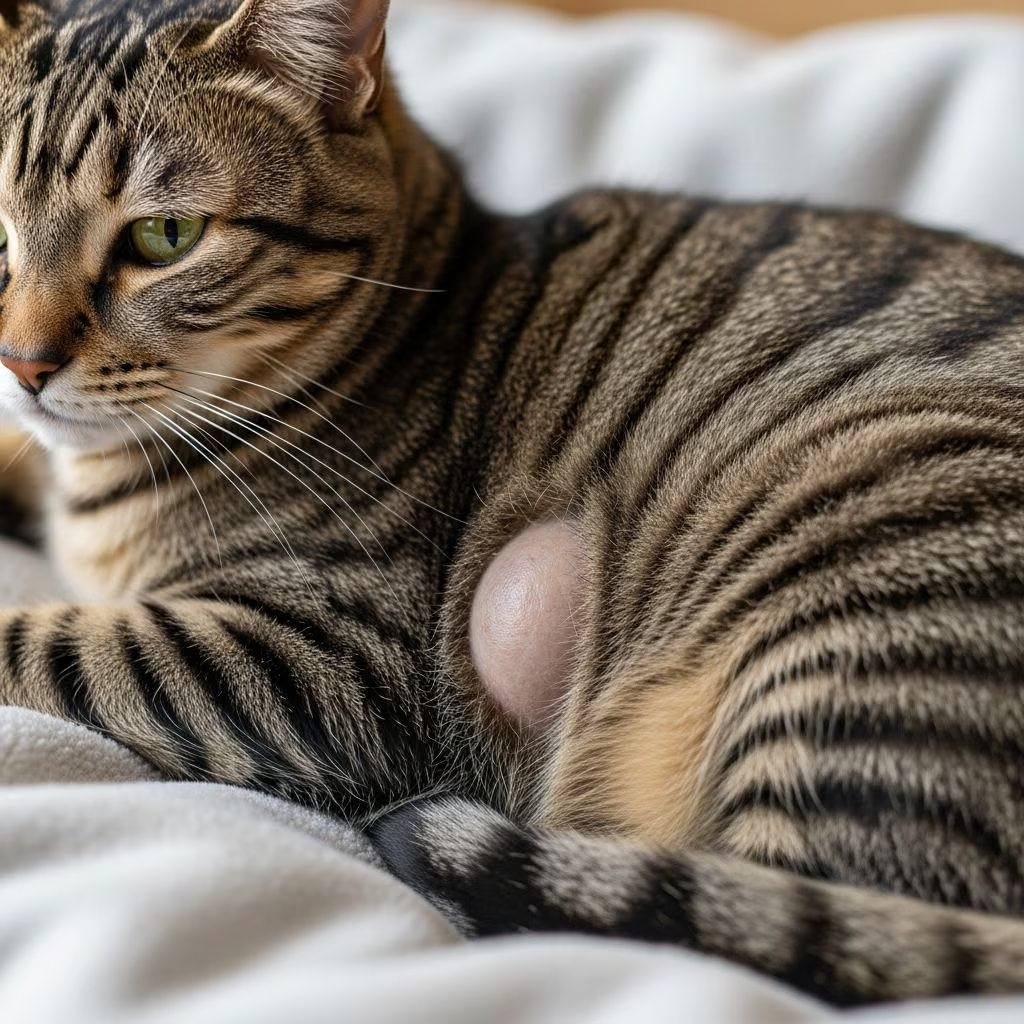
A seroma in cats is a collection of clear, serous fluid that accumulates in a pocket under the skin, most commonly after surgery like spaying or neutering, or following trauma. These fluid-filled swellings typically form in areas where tissue has been disrupted, creating ‘dead space’ that allows serum to pool. While alarming for cat owners, seromas are usually benign, non-painful, and resolve on their own as the body reabsorbs the fluid over days to weeks. However, monitoring is crucial since infection can turn a simple seroma into an abscess requiring prompt veterinary intervention.
What Is a Seroma in Cats?
Seromas develop when serous fluid— the clear liquid component of blood—leaks from damaged blood or lymphatic vessels into an empty cavity left by surgery or injury. In cats, this is frequently seen along the surgical incision line after spay procedures, where tissue layers haven’t fully adhered yet. The fluid pocket feels soft and fluctuant, like a water balloon, and is distinct from pus-filled abscesses or hematomas (blood collections), which are typically firmer, warmer, and painful.
Post-operative seromas emerge in the first few days after surgery, often over high-movement areas like the abdomen, flanks, or joints. Unlike infections, uncomplicated seromas cause no fever, lethargy, or appetite loss in cats. Their formation is exacerbated by inflammation, excessive activity, or reactions to sutures, but they rarely require intervention unless persistent or infected.
What Are the Signs of a Seroma in Cats?
Recognizing a seroma early helps differentiate it from serious complications. Common signs include:
- Noticeable soft, fluid-filled lump under or near a recent surgical incision, often squishy and movable.
- No pain on touch—cats tolerate palpation without discomfort, unlike infected sites.
- Mild swelling or bulging that may fluctuate slightly in size over days.
- Normal cat behavior: eating, drinking, and acting playful despite the lump.
Visual cues might include subtle redness around the incision without heat or pus. The lump typically appears 2-5 days post-op and feels cool or room temperature.
When to Worry: Red Flags Requiring Immediate Vet Attention
While most seromas are harmless, contact your veterinarian urgently if you observe:
- Swelling becomes **painful, warm, or rapidly enlarging**.
- **Redness, discharge, pus, or blood** from the site.
- Cat appears **unwell, lethargic, or stops eating**.
- **Fever, open wound dehiscence**, or skin color changes over the lump.
- Any **breathing difficulties** or systemic signs.
These indicate potential infection, abscess formation, or other issues like hernia. Early vet evaluation via fine-needle aspiration can confirm seroma fluid (clear, low-cell count) versus infected material.
What Are the Causes of a Seroma in Cats?
Seromas arise from disrupted tissue planes allowing fluid accumulation. Primary causes include:
| Cause | Description | Common in Cats? |
|---|---|---|
| Post-Surgical Dead Space | Empty cavities after tissue removal (e.g., ovaries in spay) where serum leaks from cut lymphatics. | Very common |
| Excessive Movement | Jumping or running prevents tissue adhesion, worsening fluid pocket. | Common in active cats |
| Suture Reaction | Inflammation from knots or material irritating tissue. | Rare |
| Licking/Scratching | Introduces irritation or bacteria, promoting fluid buildup. | Frequent without e-collar |
| Trauma or Inflammation | Injury without surgery causes serous leakage. | Less common |
In spay surgeries, drains are rarely used due to infection risk, leading to occasional seromas in 1-5% of cases, per veterinary reports. High-motion areas like joints amplify risk.
How Do Vets Diagnose a Seroma in Cats?
Diagnosis starts with history and exam: a soft, non-painful mass post-surgery strongly suggests seroma. Vets perform:
- Fine-needle aspirate: Draws clear, straw-colored fluid for cytology to rule out pus, blood, or neoplasia.
- Ultrasound: Confirms fluid pocket and assesses surrounding tissue.
- Physical palpation: Distinguishes from firm tumors or hematomas.
No imaging is routinely needed for small, typical cases.
How Do I Care for a Cat With a Seroma?
Home care focuses on rest and monitoring to promote natural resolution:
- Strict Confinement: Keep cat in a small room or crate for 7-14 days; no jumping or running.
- E-Collar or Recovery Suit: Prevent licking, which irritates and enlarges the seroma.
- Monitor Daily: Check size, temperature, and behavior; photo-document changes.
- Pain Meds if Prescribed: NSAIDs reduce inflammation but don’t drain fluid.
- Nutrition & Hydration: Ensure good appetite supports healing.
Avoid squeezing or home-draining—risks infection. Most resolve in 1-3 weeks.
Treatment Options for Seromas in Cats
Treatment is conservative first:
- Observation: 80-90% self-resolve without intervention.
- Aspiration: Vet removes fluid with needle; may refill if active.
- Anti-Inflammatories: Reduce swelling if reactive.
- Drain Placement: Rare, for large persistent seromas.
- Surgical Exploration: Last resort for non-resolving cases under anesthesia.
Antibiotics only if infected (confirmed by culture).
Prevention of Seromas in Cats
Proactive steps minimize risk:
- Follow post-op restrictions rigorously.
- Use e-collars immediately.
- Opt for absorbable sutures to avoid reactions.
- Minimize surgical trauma via skilled vets.
Confine for 10-14 days post-spay.
What Is the Prognosis for a Seroma in Cats?
Excellent—most resolve fully without sequelae. Infected cases need meds but recover well with care. Recurrence is low with proper rest. Small post-spay seromas have >95% good outcomes.
Frequently Asked Questions (FAQs)
Q: Will a seroma in my cat go away on its own?
A: Yes, most seromas resolve spontaneously as the body reabsorbs fluid within 1-3 weeks, provided the cat is rested.
Q: Is a seroma after cat spay dangerous?
A: Usually not; it’s benign unless infected. Monitor for red flags and confine your cat.
Q: Can I drain a seroma at home?
A: No—risks severe infection. Only vets should aspirate sterilely.
Q: How long does a cat seroma last?
A: Typically 7-21 days with proper care; larger ones may take longer.
Q: Does a seroma mean my cat’s spay surgery failed?
A: No, it’s a common healing variant, not a complication of poor surgery.
References
- Seroma in Cats: Causes, Prevention, Signs & Treatment (Vet Answer) — Catster (Ask the Vet). 2023. https://www.catster.com/ask-the-vet/seroma-in-cats/
- Cat Seroma After Spay: Causes And Care — Brinker Veterinary Hospital. 2024. https://brinkervet.com/blog/cat-seroma-after-spay/
- Post-Surgical Complications: Seromas — Spay Neuter Save Network. 2024-08-01. https://spayneutersavenetwork.org/view/08-01-2024-post-surgical-complications-seromas-080aef50
- Cat Spay Incision Lump: Is It Normal? — Pewaukee Veterinary Service. 2024. https://pewaukeeveterinaryservice.com/blog/cat-spay-incision-lump/
- What Is This Lump at My Pet’s Incision Site? — Spay Neuter Vets. 2024. https://www.spayneutervets.com/blog/post-surgery-lump-seroma
- Seroma: What Is It, Causes, Treatment, and More — Osmosis. 2024. https://www.osmosis.org/answers/seroma
- Spay Neuter Clinic Post Op FAQs — Greater Good Charities. 2024. https://greatergood.org/good-fix/post-op-faqs



