

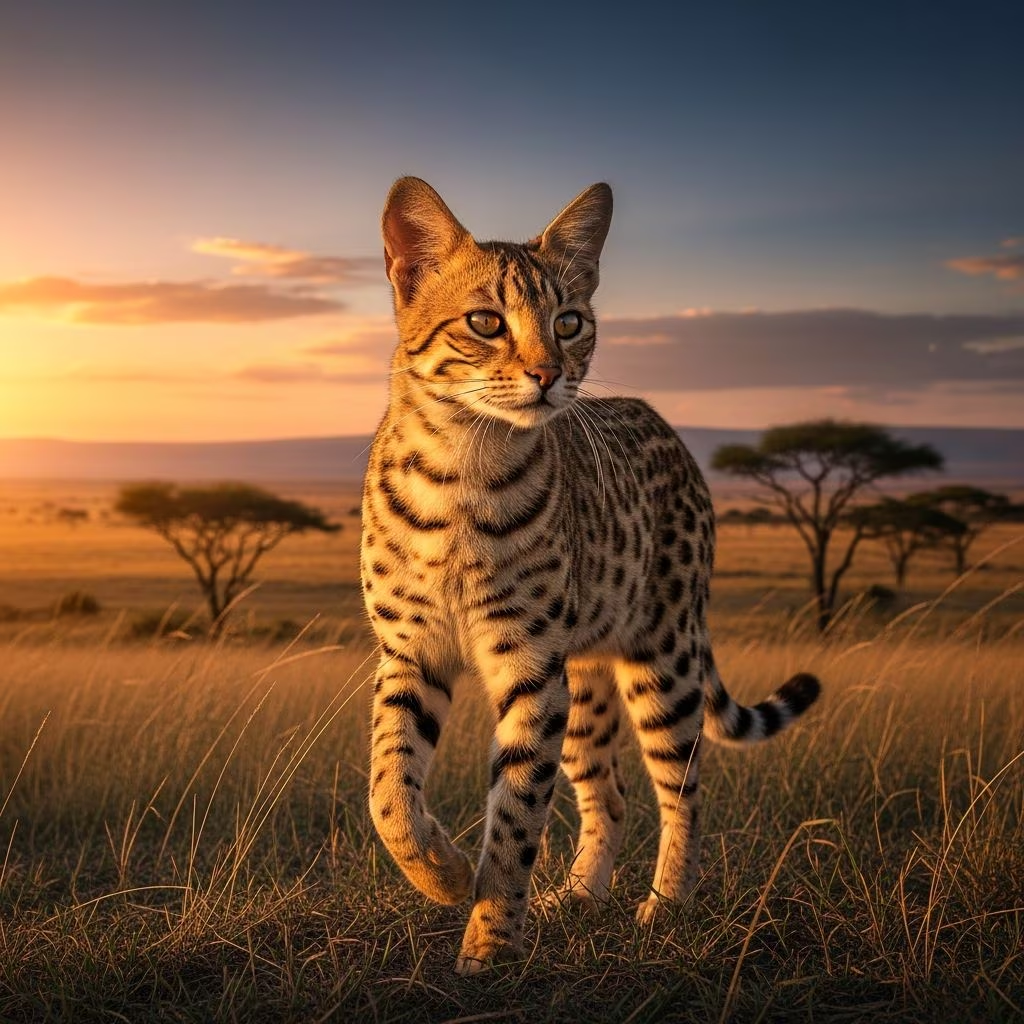
The Serengeti cat stands out as a mesmerizing domestic breed engineered to echo the sleek elegance of the African serval, blending exotic visuals with a loving, playful demeanor. Developed through selective crosses of Bengal and Oriental Shorthair cats, this breed delivers wild-inspired aesthetics without any recent wild ancestry, making it an ideal companion for enthusiasts craving adventure in a home-friendly package.
Origins and Breeding Legacy
In the early 1990s, conservation biologist Karen Sausman from California’s Kingsmark Cattery embarked on an innovative project to craft a cat resembling the serval—a medium-sized wild feline from African grasslands—using only domestic bloodlines. Her pioneering crosses between Bengals, known for their spotted coats from distant Asian leopard cat roots, and Oriental Shorthairs, prized for their lithe builds and large ears, yielded the first Serengeti kittens in 1994.
Unlike hybrids like the Savannah that incorporate serval genetics, Serengetis rely on generations-removed Bengal traits for their bold markings and athletic frames, paired with the Oriental’s sociable elegance. This approach ensured a fully domestic temperament while capturing the serval’s essence, named after Tanzania’s Serengeti National Park, home to abundant wild servals.
The breed’s path to legitimacy accelerated with The International Cat Association (TICA) granting preliminary recognition in 2001, followed by full advancement status. Today, it’s also noted by bodies like France’s LOOF as a ‘new generation’ feline, though it remains rare due to ongoing refinement by dedicated breeders focused on type perfection and vitality.
Distinctive Physical Attributes
Serengeti cats embody a medium-to-large stature with an elongated, muscular yet slender body supported by remarkably long legs—the longest among domestic breeds—enabling leaps up to seven feet high. Their heads are small and wedge-shaped, crowned by oversized, alert ears that tilt forward, enhancing their vigilant, serval-like gaze.
The coat is short, glossy, and luxuriously soft, featuring hand-painted dark spots on tawny, silver, or ebony grounds, with allowed colors including bronze, silver, ebony, and smoke. TICA standards emphasize a smooth silhouette without rosettes, prioritizing uniform spotting and a sleek neckline flowing into a whippy tail. Eyes range from gold to green, almond-shaped for an intense expression.
| Key Physical Trait | Description | Serval Comparison |
|---|---|---|
| Leg Length | Proportionally longest in domestics | Matches serval agility |
| Ears | Large, upright, rounded tips | Replicates wild alertness |
| Body Build | Lean, deep chest, high hips | Evokes savannah predator grace |
| Coat Pattern | Bold spots, no rosettes | Mimics serval camouflage |
Weighing 6-12 pounds, males are larger, with females more petite. Their fluid, bounding gait underscores their prowess, often scaling furniture or dashing like mini cheetahs indoors.
Personality and Behavioral Traits
Serengetis shine as extroverted dynamos, fusing Bengal curiosity with Oriental affection into a loyal, people-oriented soul. They thrive on interaction, shadowing owners like velcro companions and chirping enthusiastically— a vocal trait from Oriental roots—about daily happenings.
Highly active, they demand enrichment through climbing towers, puzzle feeders, and interactive wands to channel their high prey drive and athleticism. Fearless explorers, they relish leashed walks or secure enclosures, adapting well to multi-pet homes if socialized early, though their energy suits experienced owners over sedate laps.
- Playful Energy: Relentless zoomies and acrobatics keep homes lively.
- Social Bonds: Forms deep attachments, distressed by solitude.
- Intelligence: Learns tricks rapidly, solves challenges cleverly.
- Vocal Expression: Trills, meows, and growls during hunts or greetings.
- Adaptability: Friendly with strangers and pets post-introduction.
While not instantly cuddly, patience unlocks their devotion, revealing a blend of independence and warmth perfect for active lifestyles.
Health and Wellness Essentials
As a young breed, Serengetis benefit from hybrid vigor, showing no breed-specific genetic woes per current data. Lifespan averages 12-15 years with proactive care, though inheritance from Bengals or Orientals warrants vigilance for hypertrophic cardiomyopathy (HCM), progressive retinal atrophy (PRA), and amyloidosis via annual screenings.
Maintain peak condition with high-protein, grain-free diets supporting lean muscle, portioned to prevent obesity given their metabolism. Dental hygiene combats Oriental-influenced tartar, while regular vet checkups, vaccinations, and parasite prevention are standard.
Grooming and Daily Upkeep
Minimalist coat care suits their low-shedding sheen: weekly brushing distributes oils, reducing hairballs, with baths rare unless soiled. Nail trims biweekly, ear cleans monthly, and daily teeth brushing preserve hygiene.
Litter training succeeds with large, uncovered boxes matching their leg span; scratching posts galore satisfy claws. Harness training unlocks safe outdoor jaunts, vital for mental stimulation.
Choosing and Welcoming a Serengeti
Rarity drives costs from $1,000-$2,500 for pedigreed kittens from ethical catteries emphasizing health testing. Seek TICA-registered breeders providing contracts, guarantees, and socialization.
Kitten-proof tall perches and secure windows; enrich with cat trees, window perches, and toys. Early handling fosters confidence, pairing ideally with patient, interactive families sans tiny tots due to vigor.
Training and Enrichment Strategies
Capitalize on their smarts with clicker training for sits, highs, and fetches, using treats sparingly. Rotate toys to combat boredom, introducing foraging balls or laser pointers for hunts. Agility courses mimic savannah prowls, deepening bonds.
Ideal Homes and Lifestyle Matches
Thriving sans isolation, Serengetis excel in spacious abodes with playroom access, welcoming dogs or calm cats. Apartments work if vertically enriched, but rural setups with aviaries idealize their spirit.
Frequently Asked Questions
Are Serengeti cats hypoallergenic?
Not truly, but low-shedding coats minimize allergens; regular grooming aids allergy sufferers.
Can Serengeti cats go outside?
Prefer supervised harness walks or enclosures; traffic risks outweigh their curiosity.
How big do Serengeti cats get?
Males 10-12 lbs, females 6-8 lbs; leg length amplifies tall, lithe presence.
Do Serengeti cats get along with dogs?
Yes, with gradual intros; their confidence meshes with respectful canines.
What’s the Serengeti cat lifespan?
12-15 years, bolstered by genetic health and quality care.
Why Serengetis Captivate Modern Cat Lovers
This breed fuses visual drama with companionable zeal, offering serval splendor in a manageable form. For those ready to match their zest, Serengetis deliver endless joy through shared escapades and unwavering loyalty, a testament to innovative breeding artistry.
References
- The History And Origins Of The Serengeti Cat — Onya Magazine. N/A. https://www.onyamagazine.com/australian-affairs/the-history-and-origins-of-the-serengeti-cat/
- All about Serengeti cat breed — Animalia.bio. N/A. https://animalia.bio/pets/serengeti-cat
- Serengeti Cat Breed: Size, Appearance & Personality — Cats.com. N/A. https://cats.com/cat-breeds/serengeti-cat
- Serengeti Cat – Exotic House Cat — exotichousecat.com. N/A. http://exotichousecat.com/hybrid-cats/serengeti-cat/
- Serengeti – TICA – The International Cat Association — TICA.org. N/A. https://tica.org/breed/serengeti/



