

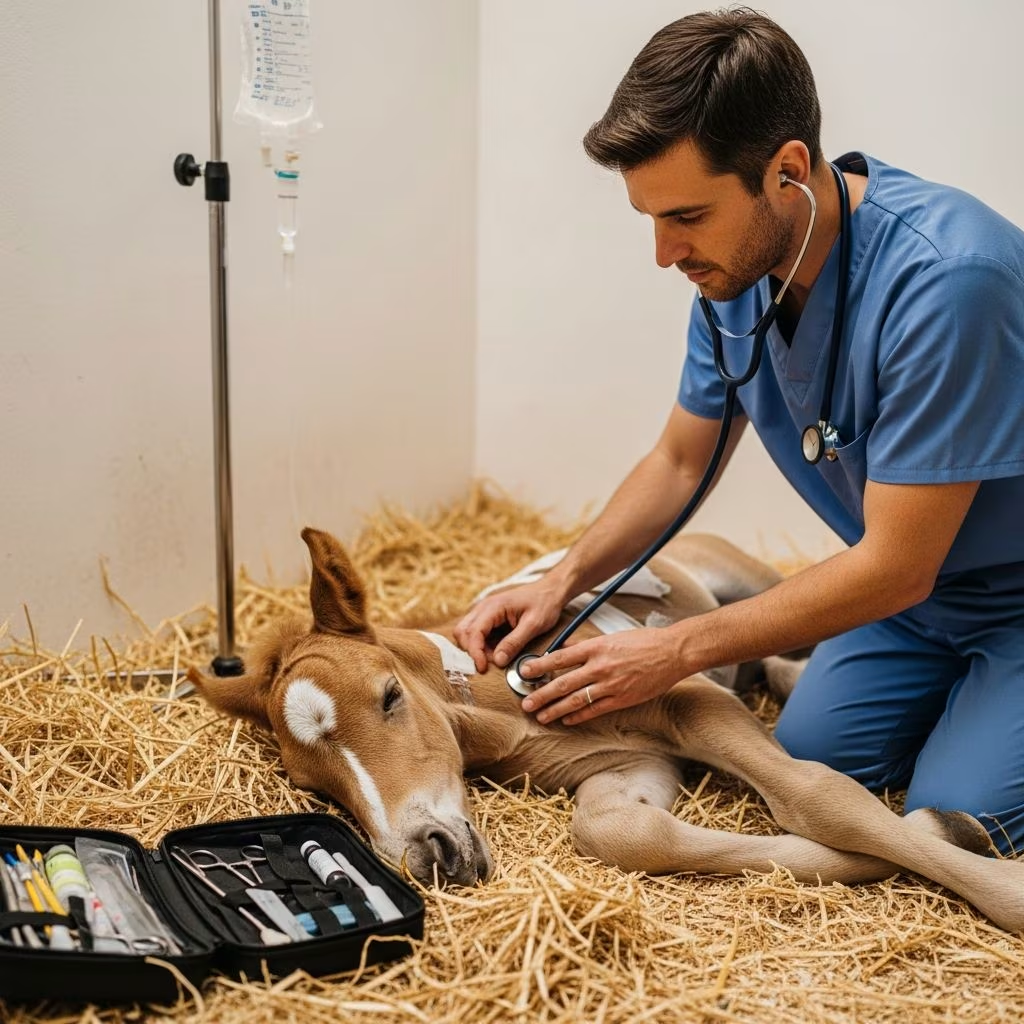
Sepsis represents a critical health crisis in newborn foals, often leading to high mortality if not addressed swiftly. This condition arises from systemic bacterial infections that overwhelm the foal’s immature immune system, making early detection and aggressive intervention essential for survival.
Understanding the Roots of Sepsis in Newborn Foals
Newborn foals face unique vulnerabilities that pave the way for sepsis development. Their immune systems are underdeveloped, featuring immature neutrophils with reduced chemotaxis and killing abilities, alongside naive T cells and less effective monocytes. These limitations hinder the foal’s capacity to combat invading pathogens effectively.
Bacterial culprits predominantly include Gram-negative organisms like Escherichia coli from the Enterobacteriaceae family, accounting for 60%-70% of cases. Gram-positive bacteria have seen a rise in prevalence, underscoring the need for culture-based identification to guide therapy. Infections often stem from environmental exposure, compounded by failures in passive immunity transfer from colostrum, poor placental health, or dystocia-related stress.
Recognizing Early Warning Signs
Clinical manifestations in septic foals evolve rapidly, starting subtly and progressing to severe compromise. Initial indicators include lethargy, weakness, diminished suckling, and prolonged recumbency. Owners may notice milk residue on the foal’s face from ineffective nursing attempts.
Advanced signs encompass inability to stand unaided, pale or inflamed mucous membranes, cold limbs, rapid shallow breathing, fever or hypothermia, and abdominal bloating from ileus or peritonitis. In terminal stages, foals exhibit shock with cyanosis, cardiovascular collapse, and muddy membranes. Respiratory distress, joint swelling, or neurological deficits may signal complications like pneumonia or septic arthritis.
- Lethargy and excessive sleeping: Often the first subtle cue.
- Poor appetite and suckling: Leading to dehydration and weakness.
- Respiratory abnormalities: Increased rate, effort, or abnormal lung sounds.
- Joint effusions: Indicating potential septic arthritis in 26-33% of cases.
- Neurological signs: Such as tremors or seizures from meningitis.
Diagnostic Approaches for Timely Confirmation
Diagnosing sepsis demands a multifaceted strategy due to the lack of a single definitive test. Blood cultures remain gold standard, though sensitivity varies; broad empirical antibiotics should commence post-sampling without delay.
Hematological hallmarks feature neutropenia, a high band-to-segmented neutrophil ratio, and toxic neutrophil changes like Döhle bodies or vacuolization. Hyperfibrinogenemia exceeding 600 mg/dL in foals under 24 hours suggests intrauterine infection. Biochemistry may reveal elevated creatinine from renal hypoperfusion or bilirubin from hepatic insult.
Sepsis scoring systems, adapted from human models, integrate history, clinical exam, and lab data to gauge infection likelihood and systemic inflammatory response syndrome (SIRS). Imaging like thoracic radiographs or ultrasound aids in pinpointing pneumonia or effusions, while synovial fluid analysis confirms joint involvement.
| Lab Parameter | Normal Range | Sepsis Indicator |
|---|---|---|
| Neutrophils | 2,000-6,000/μL | Neutropenia or degenerative left shift |
| Fibrinogen | <400 mg/dL | >600 mg/dL in <24h foals |
| Creatinine | 1-2 mg/dL | Elevated due to perfusion issues |
| Band:Segmented Ratio | <0.1 | High ratio suggestive of sepsis |
Comprehensive Treatment Protocols
Treatment hinges on early, goal-directed strategies targeting resuscitation, infection control, and supportive care. Intravenous fluids restore perfusion, addressing hypovolemia and shock; colloids or hypertonic saline may be added for severe cases.
Broad-spectrum antimicrobials, such as penicillin with gentamicin or ceftiofur, initiate therapy pending culture results. Dosages adjust for neonatal pharmacokinetics, often requiring 1-4 weeks of administration. Plasma transfusions (2L for a 50kg foal) supply antibodies, especially vital in failure of passive transfer.
Nutritional support via nasogastric tubing ensures caloric needs, preventing hypoglycemia. Anti-inflammatories like flunixin combat endotoxemia, while gastroprotectants (omeprazole, sucralfate) mitigate ulceration. Oxygen therapy, mechanical ventilation for hypercapnic hypoxemia, and meticulous nursing round out care.
For complications:
- Septic joints: Synovial lavage or arthrotomy.
- Pneumonia: Targeted antibiotics and respiratory support.
- Meningitis: CSF analysis and intrathecal antibiotics.
Prevention Strategies for At-Risk Foals
Proactive measures significantly curb sepsis incidence. Ensuring robust colostrum intake within hours of birth is paramount, providing passive immunity. Tube-feed 6-8 oz if suckling fails, using mare milk replacer as backup.
Mare hygiene, clean foaling environments, and monitoring high-risk births (prematurity, dystocia) are crucial. For unobserved births or failures, initiate short-term prophylactic antibiotics (48-72 hours) within 6-8 hours. Regular IgG testing verifies transfer success.
Prognosis and Long-Term Outlook
Survival rates range from 50%-81% in referral settings, influenced by infection severity, organ involvement, and treatment promptness. Pulmonary sepsis carries 35%-50% mortality, while joint infections impair future athleticism despite survival.
Many recover fully for successful careers, but early intensive care (often 1-4 weeks) is resource-intensive. Advances in perinatology have boosted outcomes, emphasizing vigilance.
Frequently Asked Questions (FAQs)
What is the most common cause of death in neonatal foals?
Sepsis or septicemia tops the list, especially in foals under 4 weeks.
How quickly does sepsis progress in foals?
Signs start subtly within 24 hours but can lead to collapse rapidly without intervention.
Is plasma transfusion necessary for all septic foals?
Highly recommended, particularly with failure of passive transfer, to bolster immunity.
Can septic foals become athletes later?
Yes, most survivors thrive athletically unless joint infections cause lasting damage.
What preventive step is critical at birth?
Immediate colostrum ingestion to secure antibodies.
References
- Sepsis in Foals – Management and Nutrition – MSD Veterinary Manual — MSD Veterinary Manual. 2023. https://www.msdvetmanual.com/management-and-nutrition/management-of-the-neonate/sepsis-in-foals
- Sepsis (Septicemia) in Foals – Causes, Treatment and … – Vetster — Vetster. Accessed 2026. https://vetster.com/en/conditions/horse/sepsis-septicemia
- NEONATAL SEPTICAEMIA IN FOALS – Vet Times — Vet Times. Accessed 2026. https://www.vettimes.co.uk/app/uploads/wp-post-to-pdf-enhanced-cache/1/neonatal-septicaemia-in-foals.pdf
- Equine Perinatology and Neonatal Sepsis – VetSpecialists.com — VetSpecialists. 2020-04-09. https://www.vetspecialists.com/vet-blog-landing/animal-health-articles/2020/04/09/equine-perinatology-and-neonatal-sepsis
- Equine neonatal sepsis: causes, consequences, diagnosis … – dvm360 — dvm360. Accessed 2026. https://www.dvm360.com/view/equine-neonatal-sepsis-causes-consequences-diagnosis-proceedings
- WHAT TO DO WITH THE SEPTIC FOAL – Veterinary Extension — University of Florida Extension. 2012. https://extension.vetmed.ufl.edu/files/2012/03/What-to-do-with-the-septic-foal.pdf
- A review of equine sepsis – PMC – NIH — National Center for Biotechnology Information. 2020. https://pmc.ncbi.nlm.nih.gov/articles/PMC7163761/



