

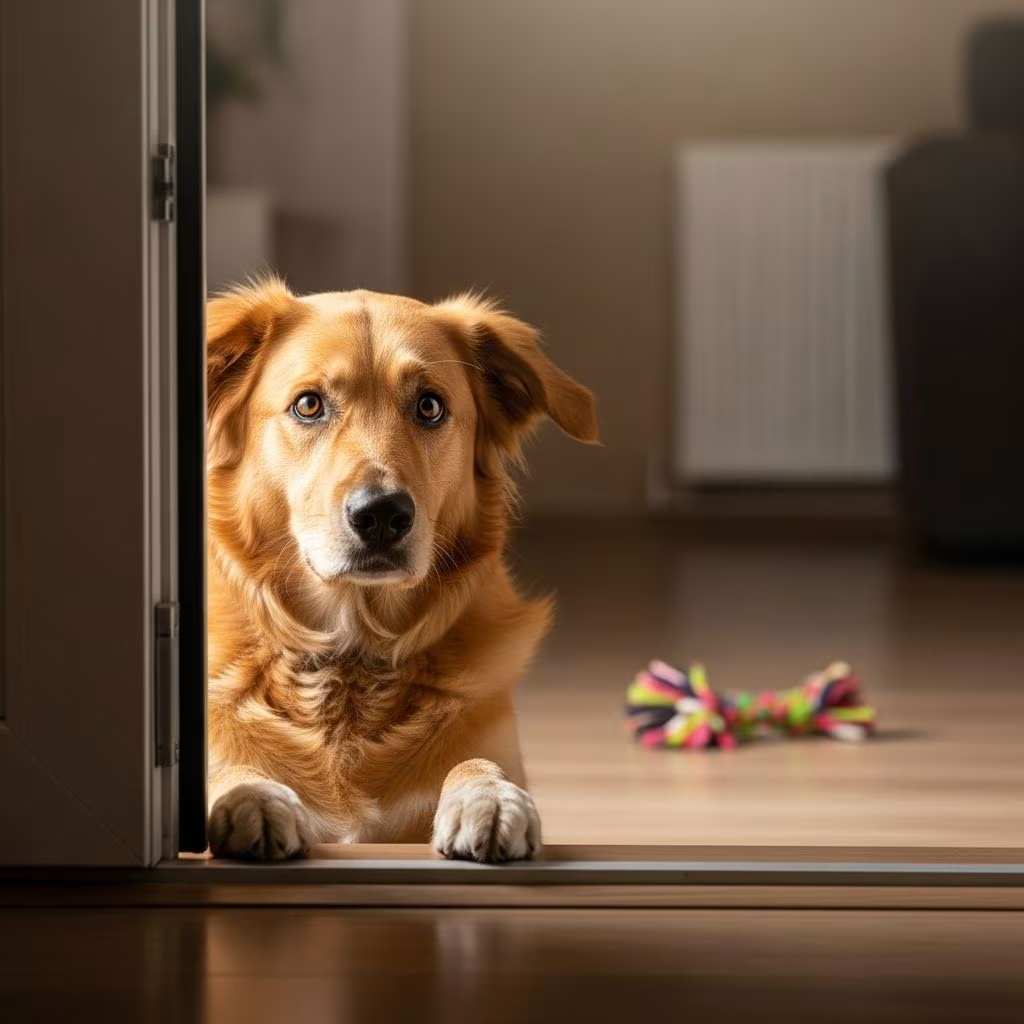
Separation anxiety in dogs is a common behavioral issue where dogs experience significant distress when left alone or separated from their owners, often manifesting in destructive behaviors, excessive vocalization, and house soiling. This condition affects many dogs, with research indicating that up to 8 out of 10 dogs struggle when left alone, though not all show obvious signs. Understanding and addressing separation anxiety is crucial to prevent distress for both the dog and owner, potentially avoiding relinquishment or euthanasia.
What Is Separation Anxiety in Dogs?
Separation anxiety is a panic disorder in dogs triggered by being unable to see, access, or follow their guardian, leading to intense distress. Unlike boredom or general misbehavior, it involves genuine panic, similar to a toddler’s reaction to parental absence. Dogs may engage in unwanted behaviors like property destruction or vocalizing specifically when alone, distinguishing it from other issues. Medical conditions must be ruled out first, as symptoms can overlap with diseases like seizures, diabetes, or cystitis.
Symptoms of Separation Anxiety in Dogs
Dogs with separation anxiety display predictable signs upon owner departure. Common symptoms include:
- Excessive vocalization: Barking, whining, or howling that persists after leaving.
- Destructive behavior: Chewing doors, furniture, or escaping attempts, often near exit points.
- House soiling: Urinating or defecating indoors despite being house-trained.
- Pacing or restlessness: Restless wandering, leading to sore feet or thin body condition.
- Coprophagia: Eating feces due to anxiety.
- Clinginess: Following owners room-to-room, decreased activity, or appetite loss before departures.
These behaviors typically start immediately after the owner leaves and subside upon return, confirming separation-related distress.
Causes of Separation Anxiety in Dogs
The exact cause remains unknown but involves multiple factors:
- Genetic predisposition: Some breeds or lines are more prone.
- Early experiences: Lack of crate training, prolonged isolation, abuse, or abandonment trauma.
- Environmental changes: Moving to a new home, new family members like babies, or schedule shifts.
- Medical issues: Conditions like hyperthyroidism or cognitive dysfunction.
Traumatic events or inconsistent early socialization exacerbate vulnerability, making dogs overly dependent on owners.
Diagnosis of Separation Anxiety
Diagnosis involves ruling out medical causes via veterinary exam and observing behaviors via video monitoring when alone. Vets assess history: behaviors occur only during absences, not when owner is home. Tools like anxiety scales help quantify severity. Differentiate from boredom (random destruction) or incomplete house training.
Treatment for Separation Anxiety in Dogs
Treatment combines behavior modification, environmental management, and sometimes medication. The most effective approach is systematic desensitization and counterconditioning, often supplemented by drugs initially. Success rates are high with consistent application, even by owners without expert help.
Behavior Modification Techniques
Core methods include:
- Desensitization: Gradually expose dog to departure cues (e.g., picking up keys) at low intensity, increasing slowly while rewarding calm.
- Counterconditioning: Pair alone time with positive rewards like treats to change emotional response.
- Crate/Pen Training (Decompression Training): Teach self-soothing in confinement for security.
- Alone Training: Progressive short absences building to longer ones.
Reduce dependency: Ignore pre-departure clinginess, provide toys/puzzles for alone time. Avoid punishment, as it worsens anxiety.
Medication Options
Veterinarian-prescribed drugs reduce baseline anxiety to enable training:
| Medication | Effects | Side Effects |
|---|---|---|
| Clomipramine | Improves separation behaviors, reduces pacing/barking. | Pancreatitis, vomiting, lethargy. |
| Fluoxetine (chewable) | Reduces anxiety signs alone or with therapy. | Lethargy, appetite loss. |
| Clonidine (low dose) | Improves with clomipramine. | Not specified in studies. |
| Alprazolam | Short-term anxiety relief. | Monitor closely; no sudden stop. |
Combine with behavior plans; meds alone are less effective long-term. Pheromone diffusers may help mildly.
Management Strategies
- Exercise before departures to tire dog.
- Confine safely to prevent injury (crate if trained).
- Consistent routine; short, frequent absences.
- Daycare or dog walkers for extended needs.
Prevention of Separation Anxiety
Prevent by building independence early:
- Crate train puppies gradually.
- Practice alone time daily from adoption.
- Avoid over-dependence; don’t reward clinginess.
- Socialize broadly; choose resilient breeds if possible.
For adopters: Seek history of alone tolerance; start training immediately.
When to See a Professional
Consult a vet for symptoms; if medical issues ruled out, seek certified behaviorist (e.g., veterinary behaviorist or IAABC trainer). Severe cases risk self-harm or escalation. Progress tracking via video essential.
Frequently Asked Questions (FAQs)
Can separation anxiety in dogs be cured?
Yes, most dogs improve significantly with consistent desensitization, counterconditioning, and sometimes medication; full resolution possible.
How long does treatment take?
Weeks to months, depending on severity and compliance; gradual progress expected.
Is crate training helpful?
Absolutely, when done positively; builds coping skills and prevents destructive access.
Will medication alone work?
No, best as adjunct to behavior modification for lasting change.
Can puppies get separation anxiety?
Yes, prevention starts young via early alone training.
Long-Term Management
Once improved, maintain with occasional alone practice. Life changes (moves) may trigger relapse; restart protocols early. Most dogs lead happy lives post-treatment.
References
- Separation Anxiety in Dogs: Symptoms, Causes & Treatments — Dogtopia. Accessed 2026. https://www.dogtopia.com/denver/separation-anxiety-in-dogs-symptoms-causes-treatments/
- Dog Separation Anxiety – Symptoms, Causes, and Training Tips — Dog Savvy. Accessed 2026. https://dogsavvyslc.com/blog/dog-separation-anxiety-symptoms-causes-treatment
- Canine separation anxiety: strategies for treatment and management — PMC (PubMed Central). 2020-09-01. https://pmc.ncbi.nlm.nih.gov/articles/PMC7521022/
- Separation Anxiety in Dogs: Causes, Symptoms, and Treatment — Northwoods Veterinary. Accessed 2026. https://northwoodsvet.com/separation-anxiety-in-dogs-causes-symptoms-and-treatment-in-north-charleston-sc/
- Separation Anxiety in Dogs — PetMD. Accessed 2026. https://www.petmd.com/dog/conditions/behavioral/separation-anxiety-dogs
- Separation Anxiety in Dogs — VCA Animal Hospitals. Accessed 2026. https://vcahospitals.com/know-your-pet/separation-anxiety-in-dogs
- Recognising separation-related behaviour and anxiety in dogs — RSPCA. Accessed 2026. https://www.rspca.org.uk/adviceandwelfare/pets/dogs/behaviour/separationrelatedbehaviour



