Senegal Parrots: Complete Care Guide For Owners
Discover why Senegal parrots bring joy, intelligence, and manageable care to bird enthusiasts seeking a loyal feathered friend.
Senegal Parrots as Ideal Companions
Senegal parrots, belonging to the Poicephalus genus, stand out as one of the most rewarding pet bird choices for enthusiasts seeking a balance of affection, intelligence, and low-maintenance living. Measuring around nine inches in length, these birds combine striking plumage with a temperament that suits various households, including apartments where noise levels matter.
Origins and Natural Habitat
In their native African savannas, Senegal parrots thrive in diverse environments from dense woodlands to open farmlands and marshy areas, often favoring regions with baobab and locust bean trees for nesting. This adaptability stems from their opportunistic feeding on seeds, fruits, and grains, which sometimes leads to conflicts with farmers growing millet and maize. Despite population declines due to pet trade trapping, the IUCN classifies them as Least Concern, though further monitoring is advised.
Wild Senegals form small flocks, showcasing social bonds that translate well to captive life. Their natural resilience aids in transitioning to home environments, provided owners replicate elements of their habitat through spacious cages and varied perches.
Distinctive Appearance and Physical Traits
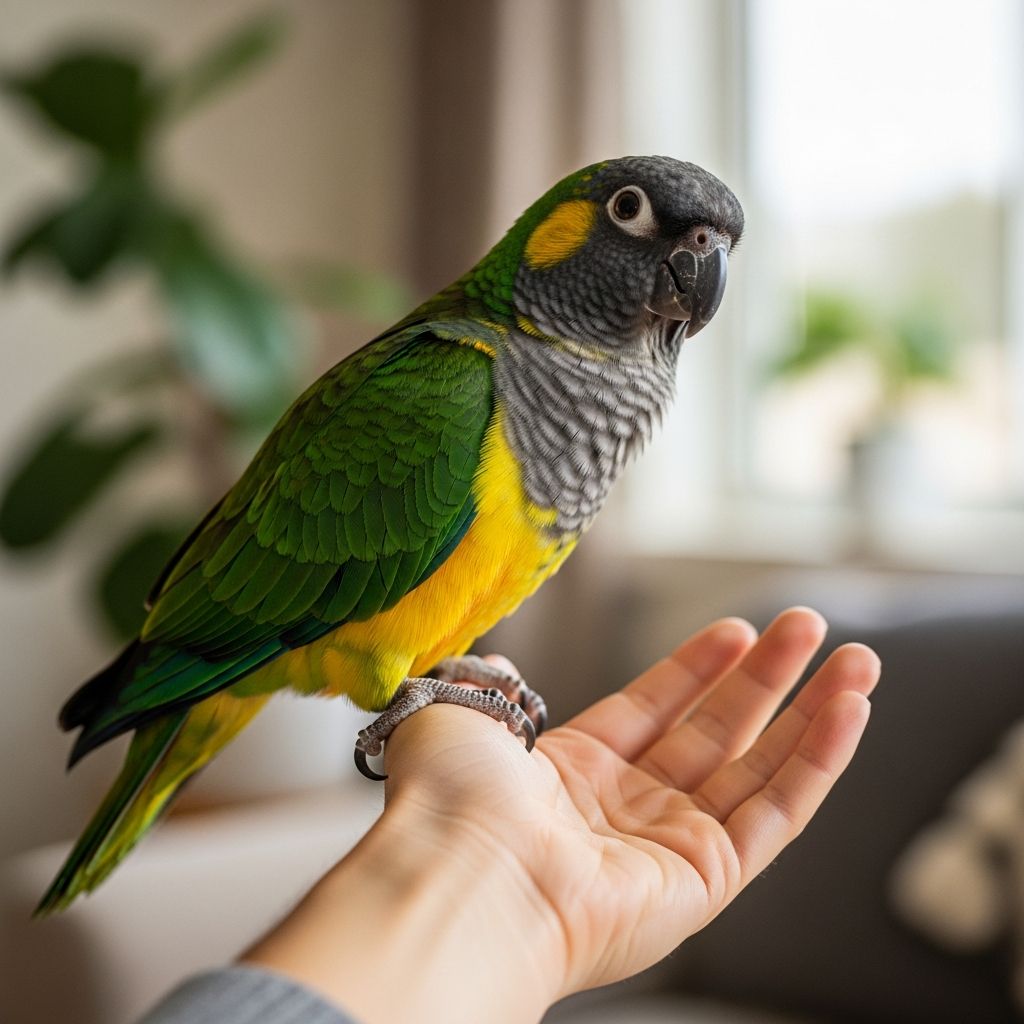
Senegal parrots boast a compact, robust build with predominantly dark green feathers accented by an iridescent green throat, vivid yellow chest, and orange thighs. Their grayish face frames striking yellow-orange eyes, black beak, and feet, giving them an alert, expressive look. Unlike flashier parrots, their understated elegance appeals to those preferring subtle beauty.
| Feature | Description |
|---|---|
| Length | Average 9 inches |
| Weight | 100-130 grams |
| Primary Colors | Dark green body, yellow chest, orange thighs |
| Eyes | Yellow-orange |
| Beak/Feet | Black |
This coloration not only aids camouflage in wild grassy areas but also makes them visually captivating pets. Juveniles grow rapidly, retaining downy underfeathers longer than many species, which supports their quick development.
Personality Traits and Social Dynamics
Known for their sweet-natured and calm demeanor, Senegal parrots bond deeply with one or a few humans, craving daily interaction without demanding constant attention like larger species. They exhibit clownish playfulness, intelligence for tricks and puzzles, and independence for solo toy play, making them versatile companions.
- Highly social yet content alone with stimulation
- Affectionate shoulder-sitters
- Intelligent problem-solvers
- Generally mellow, less needy than African Greys
However, they share some African Grey-like tendencies toward caution with novel stimuli, requiring gradual introductions to changes. Owners should monitor body language—raised feathers or pinned eyes signal discomfort—to foster trust. With age, many become cuddlier, enhancing long-term bonds.
Vocalization Patterns and Noise Levels
Among parrots, Senegals rank as quieter options, favoring chattering, whistling, and clucking over piercing screeches. They produce short, high-pitched calls when alarmed but rarely become chronic screamers, ideal for noise-sensitive homes. Mimicry skills focus more on sounds than extensive vocabulary, typically mastering 5-10 words with training.
Daily interaction minimizes boredom-induced noise. Unlike some Poicephalus relatives, they adapt well to household routines without excessive demands.
Essential Housing and Environmental Setup
A spacious cage—at least 24x24x30 inches—allows flight and movement, with horizontal bars for climbing. Place it in a draft-free, well-lit room away from kitchens to avoid fumes. Include natural wood perches of varying diameters, foot toys, and chewables like balsa or pine to satisfy foraging instincts.
- Durable stainless steel or powder-coated cage
- Multiple perches: natural branches preferred
- Foraging toys and shreddables
- Safe play gym for out-of-cage time (2-4 hours daily)
Humidity around 40-60% and temperatures of 70-80°F mimic their savanna origins, preventing respiratory issues.
Nutrition and Feeding Guidelines
A balanced diet mirrors their wild omnivory: high-quality pellets (60-70%), fresh veggies and fruits (20-30%), seeds/nuts (10%) as treats. Favorites include leafy greens, carrots, apples, and millet sprays. Avoid avocado, chocolate, and caffeine.
| Food Category | Examples | Portion |
|---|---|---|
| Pellets | Harrison’s, Zupreem | Main diet base |
| Vegetables | Kale, broccoli, peppers | Daily, chopped |
| Fruits | Banana, berries, papaya | 2-3 times weekly |
| Protein | Cooked beans, eggs | Occasional |
| Treats | Nuts, sprouted seeds | Sparingly |
Fresh water daily; consider baths via misting. Overfeeding seeds leads to obesity, so monitor weight.
Health Maintenance and Common Concerns
With lifespans exceeding 30 years, Senegals prove hardy but watch for feather plucking from boredom or stress, phobias from changes, and obesity. Annual vet checkups by an avian specialist catch issues early. Vaccinations aren’t routine, but parasite checks are.
- Signs of illness: lethargy, fluffed feathers, tail bobbing
- Preventive: beak/nail trims, wing clips if needed
- Accidents common: secure homes against flights into hazards
They’re less prone to behavioral vices than greys but thrive on enrichment.
Training Techniques for Better Bonding
Positive reinforcement with treats builds repertoire: step-up, targeting, tricks. Short sessions (10-15 minutes) daily leverage their smarts. Socialization from young exposes them to stimuli, curbing fears. Consistent routines earn trust, turning them into responsive pets.
Breeding Considerations for Enthusiasts
Breeding requires a large nest box with entry/exit ports, paired birds, and 10-12 hour dark periods. Clutch sizes are 3-4 eggs, incubating 22-25 days. Hand-feeding fledglings demands dedication due to their voracious appetites.
Frequently Asked Questions
Are Senegal parrots good for beginners?
Yes, their manageable size, quiet nature, and forgiving personality suit novices committed to daily interaction.
How much daily attention do they need?
1-2 hours of direct play plus out-of-cage time; toys fill gaps.
Do they talk well?
Limited vocabulary but excellent sound mimics; focus on whistles.
Can they live in apartments?
Generally yes, due to low volume, though excited screeches occur.
What toys suit them best?
Wood chewers, foot manipulatives, puzzles; rotate weekly.
References
- Senegal Parrots Make Excellent Companions — Everything Birds Online. Accessed 2026. https://everythingbirdsonline.com/pages/senegal-parrots-make-excellent-companions
- Senegal Parrot – Profile & Care Guide — Parrot Essentials. Accessed 2026. https://parrotessentials.co.uk/blog/senegal-parrot-profile-care-guide
- Senegal Parrots — BirdTricks. Accessed 2026. https://birdtricksstore.com/blogs/birdtricks-blog/senegal-parrots
- Senegal Parrot Info — Gingers Parrots. Accessed 2026. https://gingersparrots.org/new-page-2
- An Introduction to Senegal Parrots — Parrot Island Inc. Accessed 2026. https://www.parrotislandinc.com/articles/asenegals.htm
- Senegal Parrot Personality, Food & Care — Lafeber Co. Accessed 2026. https://lafeber.com/pet-birds/species/senegal-parrot/
- What Are Senegal Parrots Like As Pets? — Parrot Bliss. Accessed 2026. https://parrotbliss.com/senegal-parrots/
Similar Articles






Read full bio of medha deb